声
See also: 聲
| ||||||||
Translingual
| Stroke order | |||
|---|---|---|---|
 | |||
| Japanese | 声 |
|---|---|
| Simplified | 声 |
| Traditional | 聲 |
Han character
声 (Kangxi radical 33, 士+4, 7 strokes, cangjie input 土日竹 (GAH), four-corner 40207, composition ⿱士𠃜)
Related characters
- 聲 (Orthodox traditional form of 声)
References
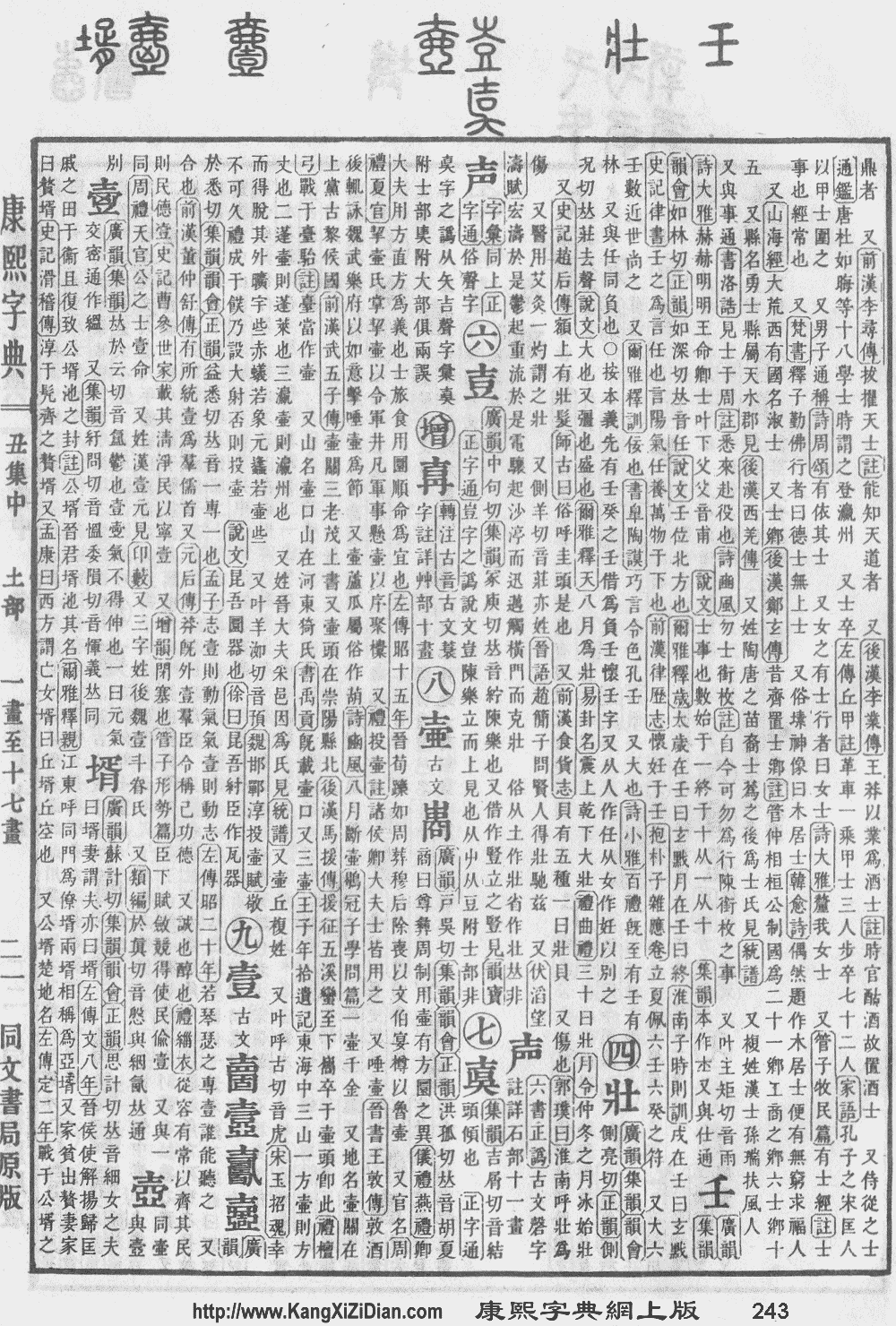
- Kangxi Dictionary: page 243, character 4
- Dai Kanwa Jiten: character 5645
- Dae Jaweon: page 483, character 6
- Hanyu Da Zidian (first edition): volume 1, page 429, character 1
- Unihan data for U+58F0
Chinese
Etymology 1
Simplified from 聲 (elimination of 殳 and 耳).
| For pronunciation and definitions of 声 – see 聲 (“sound; noise; voice; music; etc.”). (This character is the simplified and variant form of 聲). |
Notes:
|
Japanese
| 声 | |
| 聲 |
Readings
Etymology 1
| Kanji in this term |
|---|
| 声 |
| こえ Grade: 2 |
| kun’yomi |
| Alternative spelling |
|---|
| 聲 (kyūjitai) |
⟨ko2we⟩ → */kəwe/ → /koe/
From Old Japanese, from Proto-Japonic *kəway.
Further derivation unknown.
Noun
- voice
- 905 Kokin Wakashū (poem #16)[3]
- 野辺ちかく家居しせればうぐひすのなくなるこゑは朝な朝なきく
- nobe chikaku iei shisereba uguisu no naku naru koe ni wa asa na asa na kiku
- Because I make my home near the fields and meadows, each and every morning, I hear the song of the mountain thrush trilling spring.[4]
- 野辺ちかく家居しせればうぐひすのなくなるこゑは朝な朝なきく
- 905 Kokin Wakashū (poem #16)[3]
Derived terms
Derived terms
- 呻き声 (umekigoe, “groan, moan”)
- 声を殺す (koe o korosu)
- 声を出す (koe o dasu)
- 声色 (kowairo)
- 声色遣 (kowairozukai)
- 声先 (kowasaki)
- 声差 (kowazashi)
- 声尻 (kowajiri)
- 声絶 (kowadae)
- 声高 (kowadaka)
- 声遣 (kowazukai)
- 声付 (kowatsuki)
- 声作 (kowazukuri)
- 声作る (kowazukuru)
- 声繕 (kowazukuroi)
- 声音 (kowane)
- 声引 (kowabiki)
- 声低 (kowabiki)
- 声風 (kowaburi)
- 声技 (kowawaza)
Etymology 2
| Kanji in this term |
|---|
| 声 |
| しょう Grade: 2 |
| on’yomi |
| Alternative spelling |
|---|
| 聲 (kyūjitai) |
From Middle Chinese 聲 (MC syeng).
Pronunciation
- IPA(key): [ɕo̞ː]
Derived terms
References
- Matsumura, Akira, editor (2006), 大辞林 [Daijirin] (in Japanese), Third edition, Tōkyō: Sanseidō, →ISBN
- NHK Broadcasting Culture Research Institute, editor (1998), NHK日本語発音アクセント辞典 [NHK Japanese Pronunciation Accent Dictionary] (in Japanese), Tōkyō: NHK Publishing, →ISBN
- Kojima, Noriyuki with Arai Eizō (1989) [905] Shin Nihon Koten Bungaku Taikei 5: Kokin Wakashū (in Japanese), Iwanami Shoten, →ISBN
- Laurel Rasplica Rodd, Mary Catherine Henkenius (1996) Kokinshū - A Collection of Poems Ancient and Modern, page 29
Okinawan
Pronunciation
- IPA(key): [kʷiː]
Noun
声 (kwī)
References
- “くぃー【声】” in JLect - Japonic Languages and Dialects Database Dictionary, 2019.
This article is issued from Wiktionary. The text is licensed under Creative Commons - Attribution - Sharealike. Additional terms may apply for the media files.