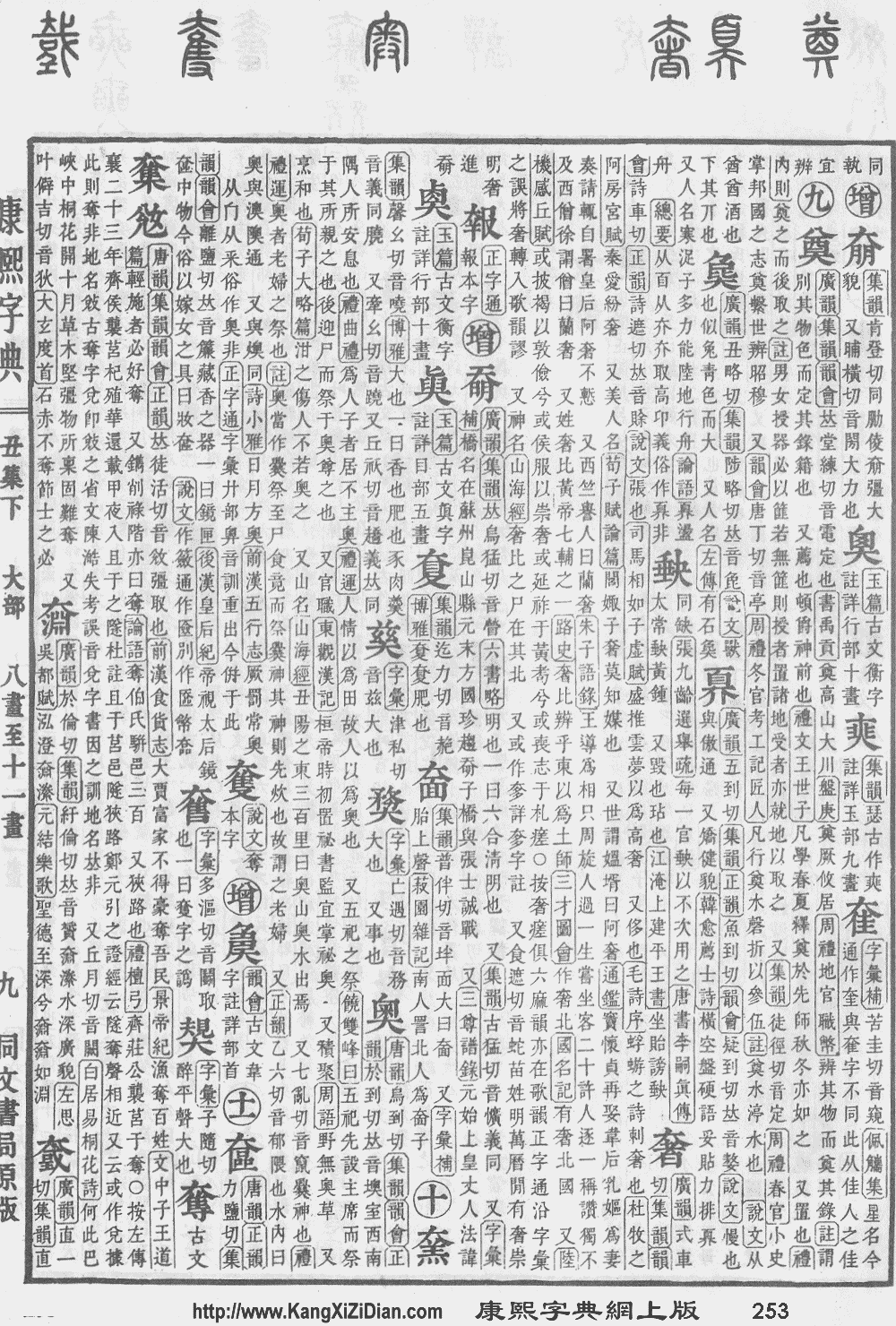
奡

奡 U+5961, 奡
CJK UNIFIED IDEOGRAPH-5961
← 奠
[U+5960]
CJK Unified Ideographs 奢 →
[U+5962]

Translingual

Han character

奡 (Kangxi radical 37, 大+9, 12 strokes, cangjie input 一山大中中 (MUKLL), four-corner 10336, composition ⿱𦣻夰)

References

  • Kangxi Dictionary: page 253, character 7
  • Dai Kanwa Jiten: character 5962
  • Dae Jaweon: page 514, character 32
  • Hanyu Da Zidian (first edition): volume 1, page 26, character 13
  • Unihan data for U+5961

Chinese

simp. and trad.
奡

Pronunciation


Rime
Character 奡
Reading # 1/1
Initial (聲) 疑 (31)
Final (韻) 豪 (89)
Tone (調) Departing (H)
Openness (開合) Open
Division (等) I
Fanqie 五到切
Baxter ngawH
Reconstructions
Zhengzhang
Shangfang
/ŋɑuH/
Pan
Wuyun
/ŋɑuH/
Shao
Rongfen
/ŋɑuH/
Edwin
Pulleyblank
/ŋawH/
Li
Rong
/ŋɑuH/
Wang
Li
/ŋɑuH/
Bernard
Karlgren
/ŋɑuH/
Expected
Mandarin
Reflex
ào
Expected
Cantonese
Reflex
ngou6
Zhengzhang system (2003)
Character 奡
Reading # 1/1
No. 87
Phonetic
component
奡
Rime
group
宵
Rime
subdivision
1
Corresponding
MC rime
傲
Old
Chinese
/*ŋaːws/
Notes 同傲,非夰聲

Definitions

奡

  1. (literary) Alternative form of 傲 (“arrogant; haughty”)
  2. (literary) strong; vigorous
  3. A legendary strong man.

Compounds

  • 排奡
  • 排奡縱橫/排奡纵横
  • 燾奡/焘奡

Japanese

Kanji

奡

(uncommon “Hyōgai” kanji)

  1. This term needs a translation to English. Please help out and add a translation, then remove the text {{rfdef}}.

Readings

Vietnamese

Han character

奡: Hán Nôm readings: ngáo, ngạo, ngoáo

  1. This term needs a translation to English. Please help out and add a translation, then remove the text {{rfdef}}.

References

This article is issued from Wiktionary. The text is licensed under Creative Commons - Attribution - Sharealike. Additional terms may apply for the media files.