妒

See also: 妬
妒 U+5992, 妒
CJK UNIFIED IDEOGRAPH-5992
← 妑
[U+5991]
CJK Unified Ideographs 妓 →
[U+5993]

Translingual

Japanese 妬
Simplified 妒
Traditional 妒

Han character

妒 (Kangxi radical 38, 女+4, 7 strokes, cangjie input 女竹尸 (VHS) or 女戈尸 (VIS), four-corner 41460, composition ⿰女户(GV) or ⿰女戶(HTJK))

References

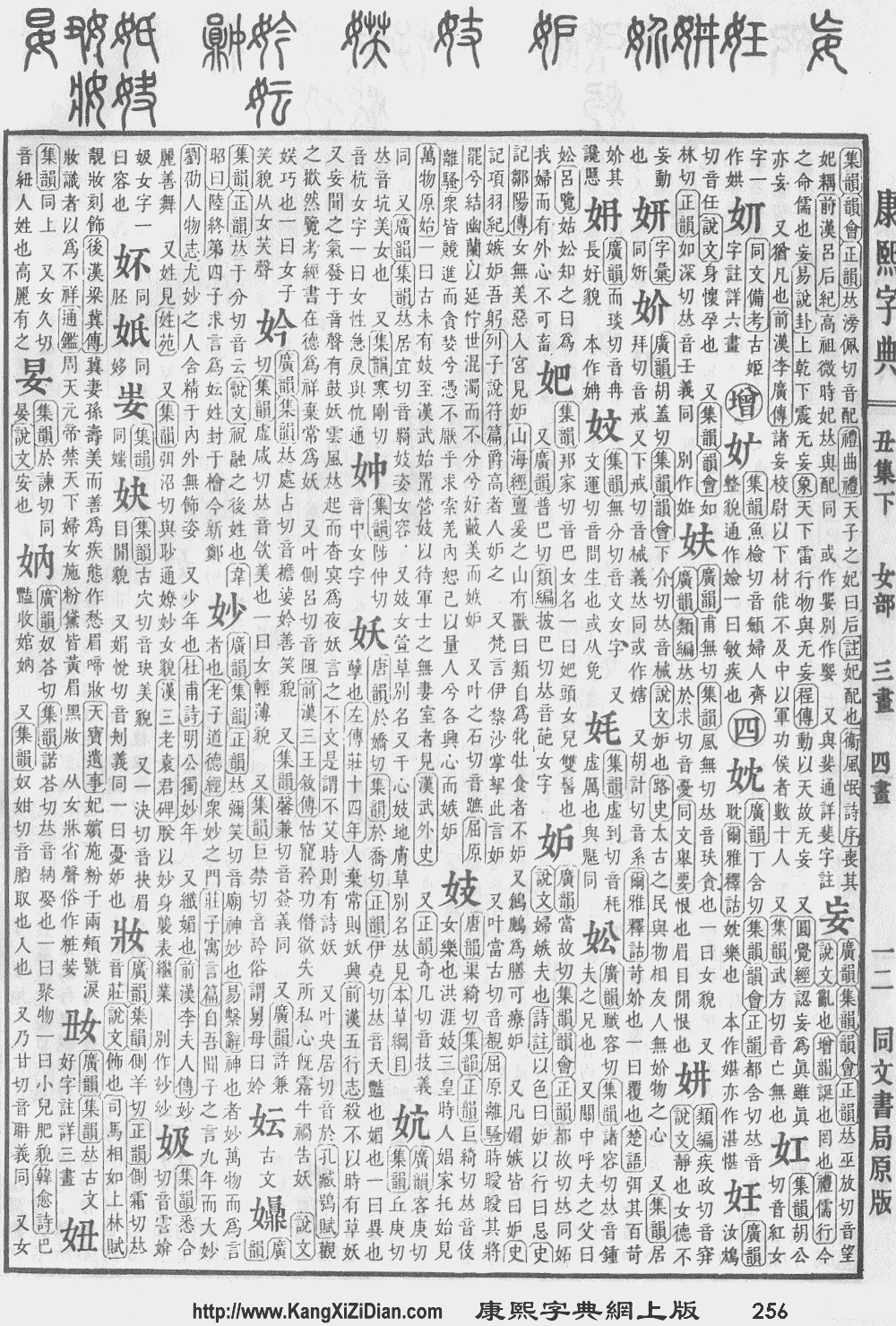
  • Kangxi Dictionary: page 256, character 16
  • Dai Kanwa Jiten: character 6082
  • Dae Jaweon: page 520, character 14
  • Hanyu Da Zidian (first edition): volume 2, page 1033, character 7
  • Unihan data for U+5992

Chinese

trad. 妒
simp. # 妒
alternative forms 妬/妒
姤

Glyph origin

Phono-semantic compound (形聲/形声, OC *tqaːs) : semantic 女 (“woman”) + phonetic 戶 (OC *ɡʷaːʔ).

《說文解字注》 considered it a corrupted form of 妬: Phono-semantic compound (形聲/形声, OC *tqaːs) : semantic 女 (“woman”) + phonetic 妬 (OC *taːɡs).

Pronunciation


Rime
Character 妒
Reading # 1/1
Initial (聲) 端 (5)
Final (韻) 模 (23)
Tone (調) Departing (H)
Openness (開合) Open
Division (等) I
Fanqie 當故切
Baxter tuH
Reconstructions
Zhengzhang
Shangfang
/tuoH/
Pan
Wuyun
/tuoH/
Shao
Rongfen
/toH/
Edwin
Pulleyblank
/tɔH/
Li
Rong
/toH/
Wang
Li
/tuH/
Bernard
Karlgren
/tuoH/
Expected
Mandarin
Reflex
dù
Expected
Cantonese
Reflex
dou3
Baxter–Sagart system 1.1 (2014)
Character 妒
Reading # 1/1
Modern
Beijing
(Pinyin)
dù
Middle
Chinese
‹ tuH ›
Old
Chinese
/*tˁak-s/
English jealous

Notes for Old Chinese notations in the Baxter–Sagart system:

* Parentheses "()" indicate uncertain presence;
* Square brackets "[]" indicate uncertain identity, e.g. *[t] as coda may in fact be *-t or *-p;
* Angle brackets "<>" indicate infix;
* Hyphen "-" indicates morpheme boundary;

* Period "." indicates syllable boundary.
Zhengzhang system (2003)
Character 妒
Reading # 1/1
No. 5291
Phonetic
component
戸
Rime
group
魚
Rime
subdivision
0
Corresponding
MC rime
妒
Old
Chinese
/*tqaːs/

Definitions

妒

  1. † (of a woman) to be jealous of her husband or another woman
  2. (by extension) to be jealous or envious of; to envy

Compounds

  • 多歪多妒
  • 妒婦/妒妇
  • 妒嫉 (dùjí)
  • 妒忌 (dùjì)
  • 妒能害賢/妒能害贤
  • 妒賢嫉能/妒贤嫉能
  • 妒賢疾能/妒贤疾能
  • 嫉妒 (jídù)
  • 嫉賢妒能/嫉贤妒能
  • 忌妒 (jìdù)
  • 悍妒
  • 掩賢妒善/掩贤妒善
  • 燕妒鶯慚/燕妒莺惭
  • 醋妒

References

Japanese

Kanji

妒

(uncommon “Hyōgai” kanji)

  1. Alternative form of 妬

Readings

Korean

Hanja

妒 (eumhun 샘낼 투 (saemnael tu))

  1. Alternative form of 妬 (“Hanja form? of 투 (“to envy”).”)

References

  • 국제퇴계학회 대구경북지부 (國際退溪學會 大邱慶北支部) (2007). Digital Hanja Dictionary, 전자사전/電子字典.

Vietnamese

Han character

妒: Hán Nôm readings: đố, đú

  1. This term needs a translation to English. Please help out and add a translation, then remove the text {{rfdef}}.
This article is issued from Wiktionary. The text is licensed under Creative Commons - Attribution - Sharealike. Additional terms may apply for the media files.