妓
| ||||||||
Translingual
Han character
妓 (Kangxi radical 38, 女+4, 7 strokes, cangjie input 女十水 (VJE), four-corner 44447, composition ⿰女支)
Derived characters
- 𣇠
References
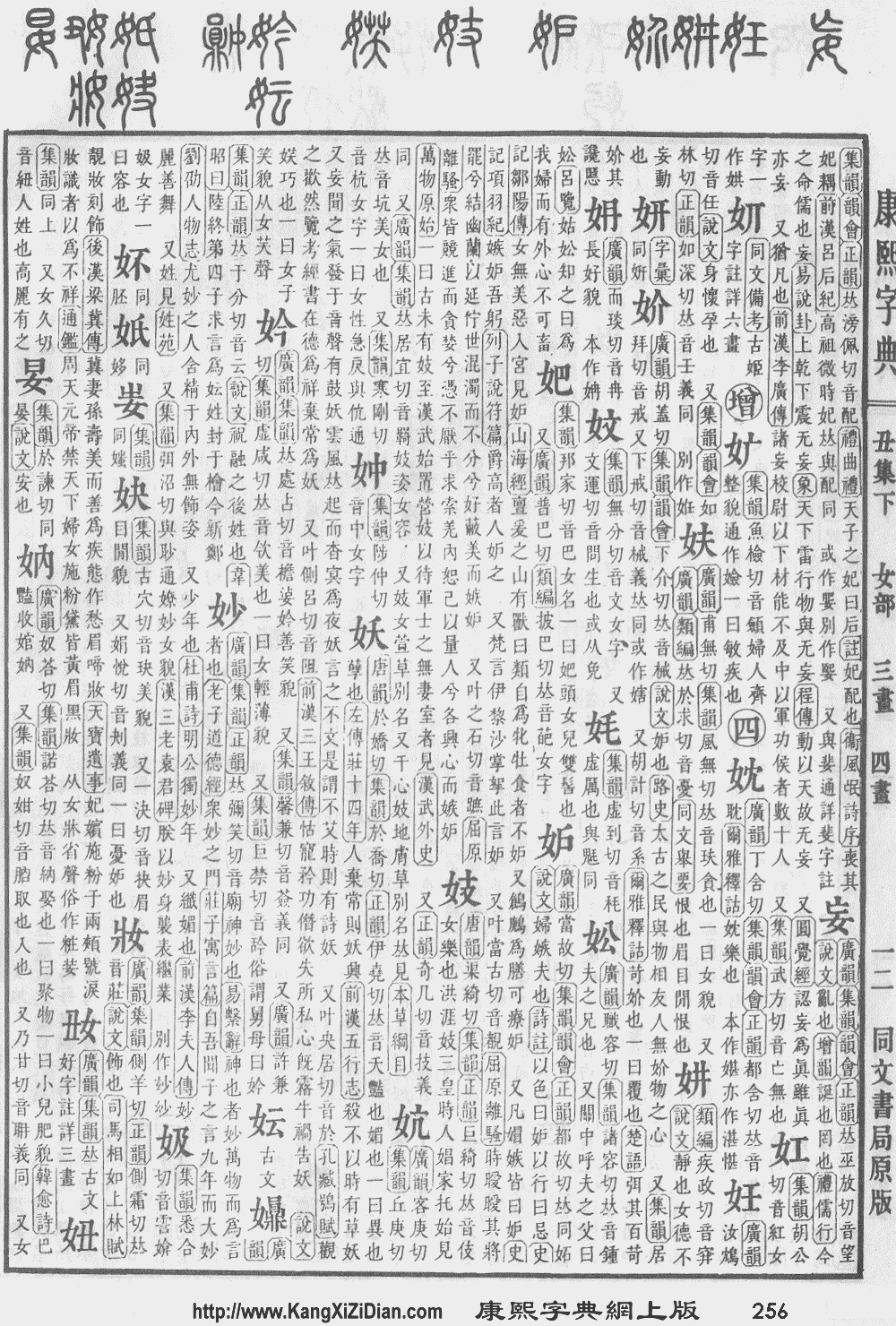
- Kangxi Dictionary: page 256, character 17
- Dai Kanwa Jiten: character 6083
- Dae Jaweon: page 520, character 15
- Hanyu Da Zidian (first edition): volume 2, page 1029, character 17
- Unihan data for U+5993
Chinese
| trad. | 妓 | |
|---|---|---|
| simp. # | 妓 | |
Glyph origin
| Historical forms of the character 妓 |
|---|
| Shuowen Jiezi (compiled in Han) |
| Small seal script |
 |
| Old Chinese | |
|---|---|
| 支 | *kje |
| 枝 | *kje |
| 肢 | *kje |
| 汥 | *kje, *ɡe, *ɡres |
| 衼 | *kje |
| 馶 | *kje, *qʰjes, *kes, *ɡe |
| 鳷 | *kje |
| 忮 | *kjes |
| 伎 | *kjes, *ɡe, *ɡreʔ |
| 豉 | *ɡjes |
| 翅 | *qʰjes |
| 翄 | *qʰjes, *ɡe |
| 妓 | *kre, *ɡreʔ |
| 庋 | *kreʔ, *kʷreʔ |
| 跂 | *kʰeʔ, *kʰes, *ɡe |
| 蚑 | *kʰes, *ɡe |
| 吱 | *kʰes |
| 岐 | *ɡe |
| 歧 | *ɡe |
| 鬾 | *ɡre, *ɡres |
| 技 | *ɡreʔ |
| 芰 | *ɡres |
| 攱 | *kʷreʔ, *kʷres |
| 庪 | *kʷreʔ |
| 頍 | *kʰʷeʔ |
| 屐 | *ɡreɡ |
Phono-semantic compound (形聲/形声, OC *kre, *ɡreʔ) : semantic 女 + phonetic 支 (OC *kje).
Etymology
Attested earliest in Shuowen Jiezi and Wèi-Jìn period's literature (possible pronunciations *kɨe or *gɨeX); a hypohetical OC form would be *kre (Schuessler, 2007).
Apparently loaned from Vietic (ancient 越 (yuè) in southern China). Compare Proto-Vietic *-keːʔ (“woman, female”) (whence Vietnamese cái (“female”) & gái (“girl, female”)), elsewhere in Mon-Khmer, Proto-Waic *krih girl", Proto-North-Bahnaric *kdri: "female". Alternatively, Wang (1982) relates this to 技 (jì, “skill”), yet this may be folk etymology (ibid.).
Schuessler also points to other foreign words which meant "woman, girl" yet referred to women of low social standing in ancient China; e.g. 嬖 (bì), 嬯 (tái) (ibid.).
Pronunciation 1
Definitions
妓
- (Classical, historical) female entertainer; female performer of song and dance
- prostitute
Synonyms
- (both senses): 娼 (chāng)
Compounds
Pronunciation 2
Definitions
妓
- Used in 妓姕.
Japanese
Compounds
- 愛妓 (aigi)
- 歌妓 (kagi)
- 歌舞妓 (kabuki)
- 官妓 (kangi)
- 妓生 (kīsen), 妓生 (gisei)
- 妓院 (giin)
- 妓家 (gika)
- 妓楽 (gigaku)
- 妓館 (gikan)
- 妓女 (gijo)
- 妓籍 (giseki)
- 妓名 (gimei)
- 妓夫 (gyū), 妓夫 (gifu)
- 妓楼 (girō)
- 芸妓 (geigi)
- 芸娼妓 (geishōgi)
- 絃妓 (gengi)
- 狎妓 (kōgi)
- 小妓 (shōgi)
- 娼妓 (shōgi)
- 新妓 (shinko)
- 雛妓 (sūgi)
- 声妓 (seigi)
- 美妓 (bigi)
- 舞妓 (bugi): female dancer
- 舞妓 (maiko): dancing girl, particularly a maiko
- 名妓 (meigi)
- 老妓 (rōgi)
| Kanji in this term |
|---|
| 妓 |
| ぎ Hyōgaiji |
| on’yomi |
Etymology
From Middle Chinese 妓 (“female entertainer”).
References
- Matsumura, Akira, editor (2006), 大辞林 [Daijirin] (in Japanese), Third edition, Tōkyō: Sanseidō, →ISBN
Korean
Etymology
From Middle Chinese 妓 (MC gjeX). Recorded as Middle Korean 기〯 (kǐ) (Yale: ki) in Hunmong Jahoe (訓蒙字會 / 훈몽자회), 1527.