徴
| ||||||||
Translingual
| Traditional | 徵 |
|---|---|
| Shinjitai | 徴 |
| Simplified | 征/徵 |
Han character
徴 (Kangxi radical 60, 彳+11, 14 strokes, cangjie input 竹人山土大 (HOUGK) or 難竹人山土 (XHOUG), composition ⿲彳⿱山王攵)
References
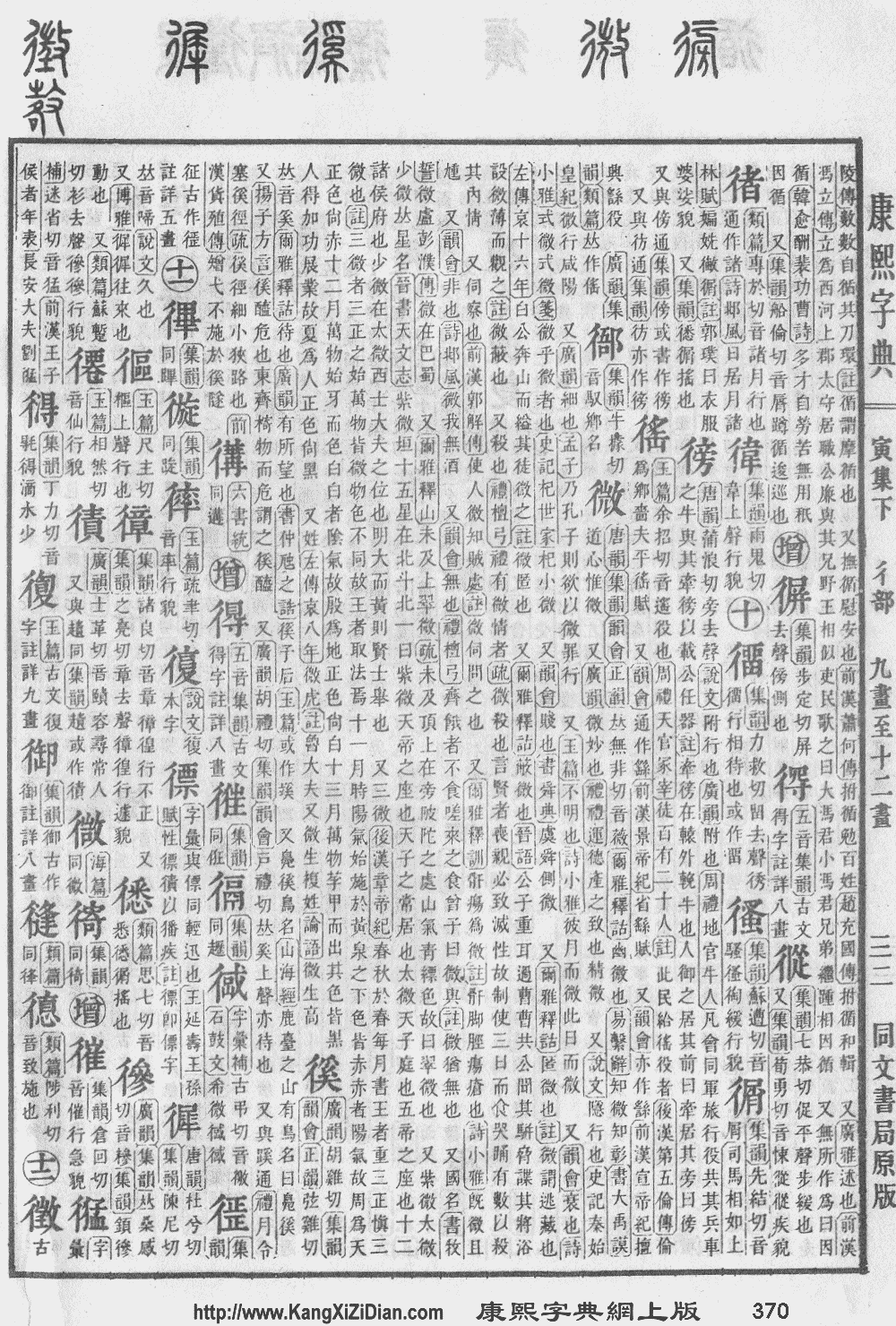
- Kangxi Dictionary: not present, would follow page 370, character 40
- Dai Kanwa Jiten: character 10238
- Dae Jaweon: page 697, character 25
- Hanyu Da Zidian (first edition): volume 2, page 840, character 7
- Unihan data for U+5FB4
Chinese
| For pronunciation and definitions of 徴 – see 徵 (“to convene; to assemble; to collect; etc.”). (This character is a variant form of 徵). |
Korean
This article is issued from Wiktionary. The text is licensed under Creative Commons - Attribution - Sharealike. Additional terms may apply for the media files.