徵
| ||||||||
Translingual
| Traditional | 徵 |
|---|---|
| Shinjitai | 徴 |
| Simplified | 征/徵 |
Han character
徵 (Kangxi radical 60, 彳+12, 15 strokes, cangjie input 竹人山土大 (HOUGK), four-corner 28240, composition ⿲彳⿳山一𡈼攵 or ⿲彳⿳山一壬攵)
References
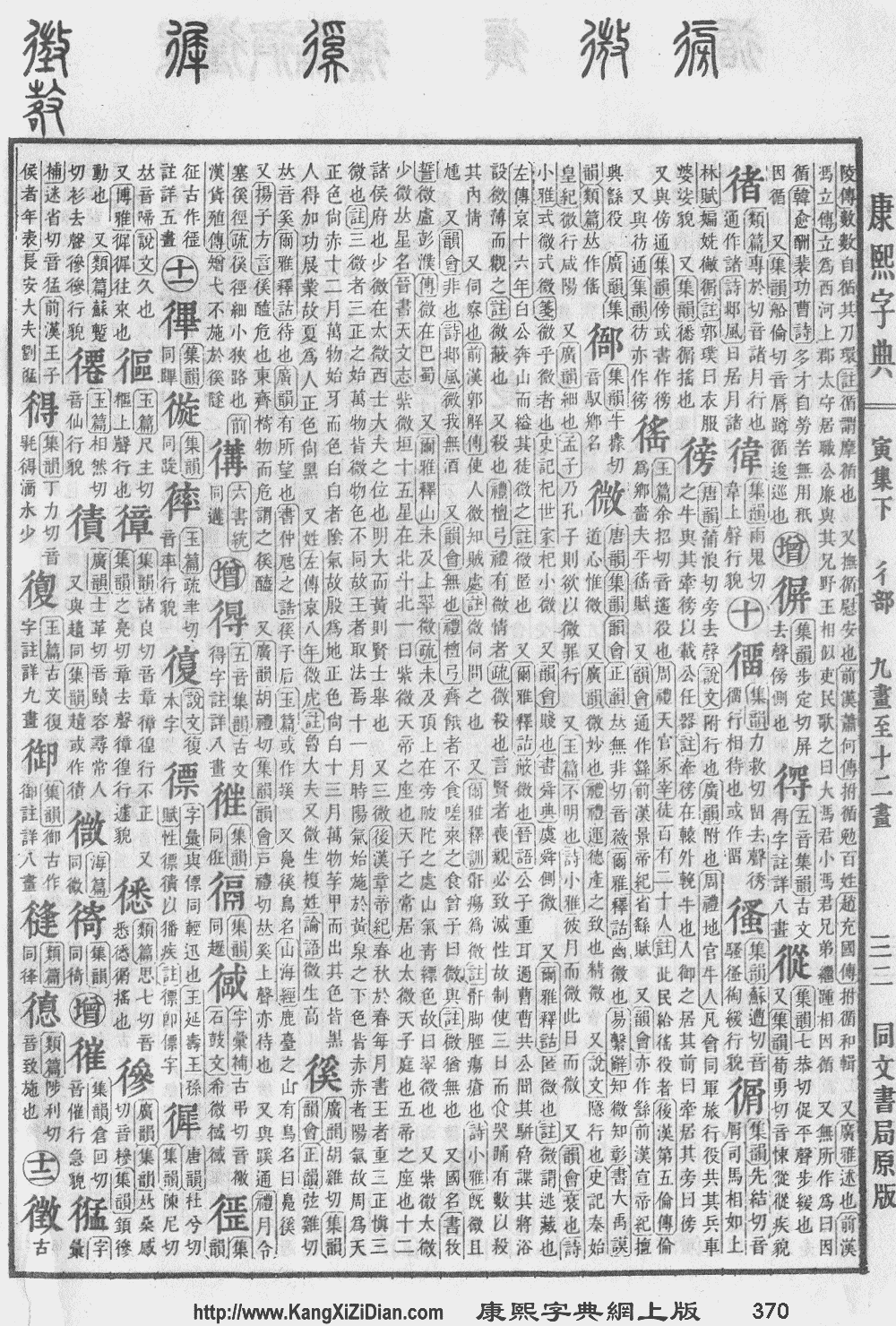
- Kangxi Dictionary: page 370, character 41
- Dai Kanwa Jiten: character 10239
- Dae Jaweon: page 697, character 27
- Hanyu Da Zidian (first edition): volume 2, page 842, character 7
- Unihan data for U+5FB5
Chinese
Glyph origin
Characters in the same phonetic series (徵) (Zhengzhang, 2003)
Ideogrammic compound (會意/会意) : 彳 (“movement”) + 𭖒 (“knife”) + 攵 (“to strike”) – originally meaning punishment.
Originally written as 𭖒 in oracle bone script; pictogram (象形) of a knife with tooth-shaped protrusions on the back. Variants which added 止 (“foot”) were common. In bronze inscriptions, 彳 was often added to the character as well. In bamboo slips, 止 was replaced with 攵, arriving at the modern form.
Pronunciation
Definitions
徵
See also
- 症 (zhèng, “symptom”)
Compounds
- 三徵七辟
- 休徵/休征
- 保留徵收/保留征收
- 信而有徵/信而有征 (xìn'éryǒuzhēng)
- 停徵/停征
- 公用徵收/公用征收
- 副性徵/副性征 (fùxìngzhēng)
- 區段徵收/区段征收
- 咎徵/咎征
- 固徵/固征
- 土地徵收/土地征收
- 帶徵/带征
- 帶徵銀/带征银
- 帶罪徵收/带罪征收
- 徵信/征信 (zhēngxìn)
- 徵信社/征信社
- 徵信錄/征信录
- 徵候/征候 (zhēnghòu)
- 徵兆/征兆 (zhēngzhào)
- 徵兵/征兵 (zhēngbīng)
- 徵兵制/征兵制
- 徵兵制度/征兵制度
- 徵募/征募 (zhēngmù)
- 徵友/征友
- 徵召/征召 (zhēngzhào)
- 徵名責實/征名责实
- 徵士/征士
- 徵婚/征婚
- 徵庸/征庸
- 徵引/征引 (zhēngyǐn)
- 徵才/征才 (zhēngcái)
- 徵招/征招
- 徵收/征收 (zhēngshōu)
- 徵啟/征启
- 徵文/征文 (zhēngwén)
- 徵求/征求 (zhēngqiú)
- 徵求啟事/征求启事
- 徵狀/征状
- 徵用/征用 (zhēngyòng)
- 徵發/征发 (zhēngfā)
- 徵稅/征税 (zhēngshuì)
- 徵稿/征稿 (zhēnggǎo)
- 徵答/征答
- 徵聘/征聘 (zhēngpìn)
- 徵訂/征订 (zhēngdìng)
- 徵詢/征询 (zhēngxún)
- 徵調/征调 (zhēngdiào)
- 徵象/征象 (zhēngxiàng)
- 徵購/征购 (zhēnggòu)
- 徵辟
- 徵逐/征逐
- 徵選/征选 (zhēngxuǎn)
- 徵集/征集 (zhēngjí)
- 徵風召雨/征风召雨
- 性徵/性征 (xìngzhēng)
- 應徵/应征 (yìngzhēng)
- 應徵信/应征信
- 旁徵博引/旁征博引 (pángzhēngbóyǐn)
- 暴斂橫徵/暴敛横征
- 有徵/有征
- 杞宋無徵/杞宋无征
- 無徵不信/无征不信
- 照價徵稅/照价征税
- 特徵/特征 (tèzhēng)
- 瑞徵/瑞征
- 生命徵象/生命征象 (shēngmìng zhēngxiàng)
- 病徵/病征 (bìngzhēng)
- 直接徵稅/直接征税
- 稽徵/稽征
- 第一性徵/第一性征 (dì-yī xìngzhēng)
- 第二性徵/第二性征 (dì-èr xìngzhēng)
- 納徵/纳征
- 綜合徵/综合征 (zōnghézhēng)
- 緩徵/缓征
- 考徵/考征
- 螽斯之徵/螽斯之征
- 表徵/表征 (biǎozhēng)
- 課徵/课征
- 談徵/谈征
- 象徵/象征 (xiàngzhēng)
- 象徵主義/象征主义 (xiàngzhēngzhǔyì)
- 象徵性/象征性 (xiàngzhēngxìng)
- 貴徵/贵征
- 酒食徵逐/酒食征逐
- 開徵/开征 (kāizhēng)
- 額徵/额征
Pronunciation
Definitions
徵
- (music) the fourth tone in the ancient Chinese pentatonic scale, comparable to sol in the Western solfège system
- 徵者,止也,陽氣止;……。 [Classical Chinese, trad.]
- From: Ban Gu, The Comprehensive Discussions in the White Tiger Hall, 79 CE, translated based on Tjan Tjoe Som's version
- Zhǐ zhě, zhǐ yě, yángqì zhǐ;....... [Pinyin]
- Zhǐ means zhǐ ‘to stop’; the yang-fluid has stopped; [...].
征者,止也,阳气止;……。 [Classical Chinese, simp.]
Japanese
| 徴 | |
| 徵 |
Kanji
徵
(“Jinmeiyō” kanji used for names, kyūjitai kanji, shinjitai form 徴)
- This term needs a translation to English. Please help out and add a translation, then remove the text
{{rfdef}}.
Korean
Vietnamese
This article is issued from Wiktionary. The text is licensed under Creative Commons - Attribution - Sharealike. Additional terms may apply for the media files.