慕
| ||||||||
Translingual
Han character
慕 (Kangxi radical 61, 心+10, 14 strokes, cangjie input 廿日大心 (TAKP), four-corner 44333, composition ⿱莫㣺)
References
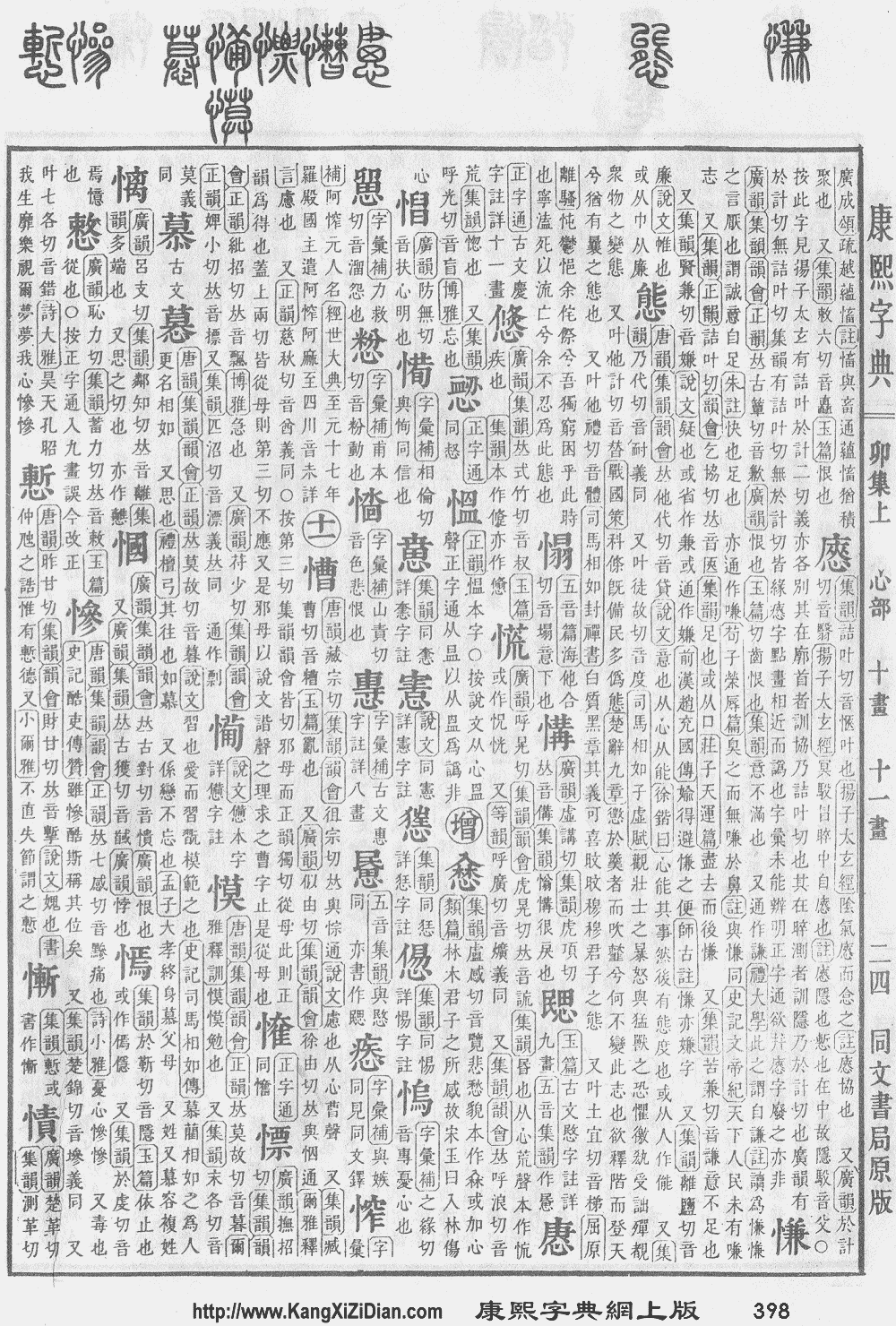
- Kangxi Dictionary: page 398, character 32
- Dai Kanwa Jiten: character 11088
- Dae Jaweon: page 737, character 27
- Hanyu Da Zidian (first edition): volume 4, page 2340, character 3
- Unihan data for U+6155
Chinese
| trad. | 慕 | |
|---|---|---|
| simp. # | 慕 | |
Glyph origin
| Historical forms of the character 慕 | ||
|---|---|---|
| Western Zhou | Shuowen Jiezi (compiled in Han) | Liushutong (compiled in Ming) |
| Bronze inscriptions | Small seal script | Transcribed ancient scripts |
 |
 |
 |
Characters in the same phonetic series (莫) (Zhengzhang, 2003)
Phono-semantic compound (形聲/形声, OC *maːɡs) : phonetic 莫 (OC *maːɡ) + semantic 㣺 (“heart”).
Pronunciation
Compounds
- 不慕
- 企慕 (qǐmù)
- 仰慕 (yǎngmù)
- 傾慕/倾慕 (qīngmù)
- 嚮慕/向慕 (xiàngmù)
- 孺慕
- 弋者何慕
- 心慕手追
- 心慕筆追/心慕笔追
- 思慕 (sīmù)
- 怨慕
- 想慕
- 愛慕/爱慕 (àimù)
- 感慕
- 慕勢/慕势
- 慕化
- 慕古
- 慕名
- 慕名而來/慕名而来
- 慕容 (Mùróng)
- 慕效
- 慕義/慕义
- 慕羶
- 慕藺/慕蔺
- 慕道 (mùdào)
- 慕顧/慕顾
- 戀慕/恋慕 (liànmù)
- 敬慕 (jìngmù)
- 景慕 (jǐngmù)
- 欽慕/钦慕 (qīnmù)
- 歆慕 (xīnmù)
- 永慕
- 注慕
- 渴慕 (kěmù)
- 百慕達/百慕达 (Bǎimùdá)
- 終天之慕/终天之慕
- 羨慕/羡慕 (xiànmù)
- 羶慕
- 蟻慕/蚁慕
- 貪位慕祿/贪位慕禄
- 貪榮慕利/贪荣慕利
- 貪財慕勢/贪财慕势
- 趨財慕勢/趋财慕势
- 軫慕/轸慕
- 那達慕/那达慕 (nàdámù)
- 鄉風慕義/乡风慕义
Japanese
Korean
Vietnamese
This article is issued from Wiktionary. The text is licensed under Creative Commons - Attribution - Sharealike. Additional terms may apply for the media files.