墓
| ||||||||
Translingual
| Stroke order | |||
 | |||
Han character
墓 (Kangxi radical 32, 土+10, 13 (Mainland China, Japan), 14 (Hong Kong) strokes, cangjie input 廿日大土 (TAKG), four-corner 44104, composition ⿱莫土)
Derived characters
- 𭂥, 𫮲, 𮁒
References
- Kangxi Dictionary: page 238, character 12
- Dai Kanwa Jiten: character 5431
- Dae Jaweon: page 476, character 19
- Hanyu Da Zidian (first edition): volume 1, page 470, character 9
- Unihan data for U+5893
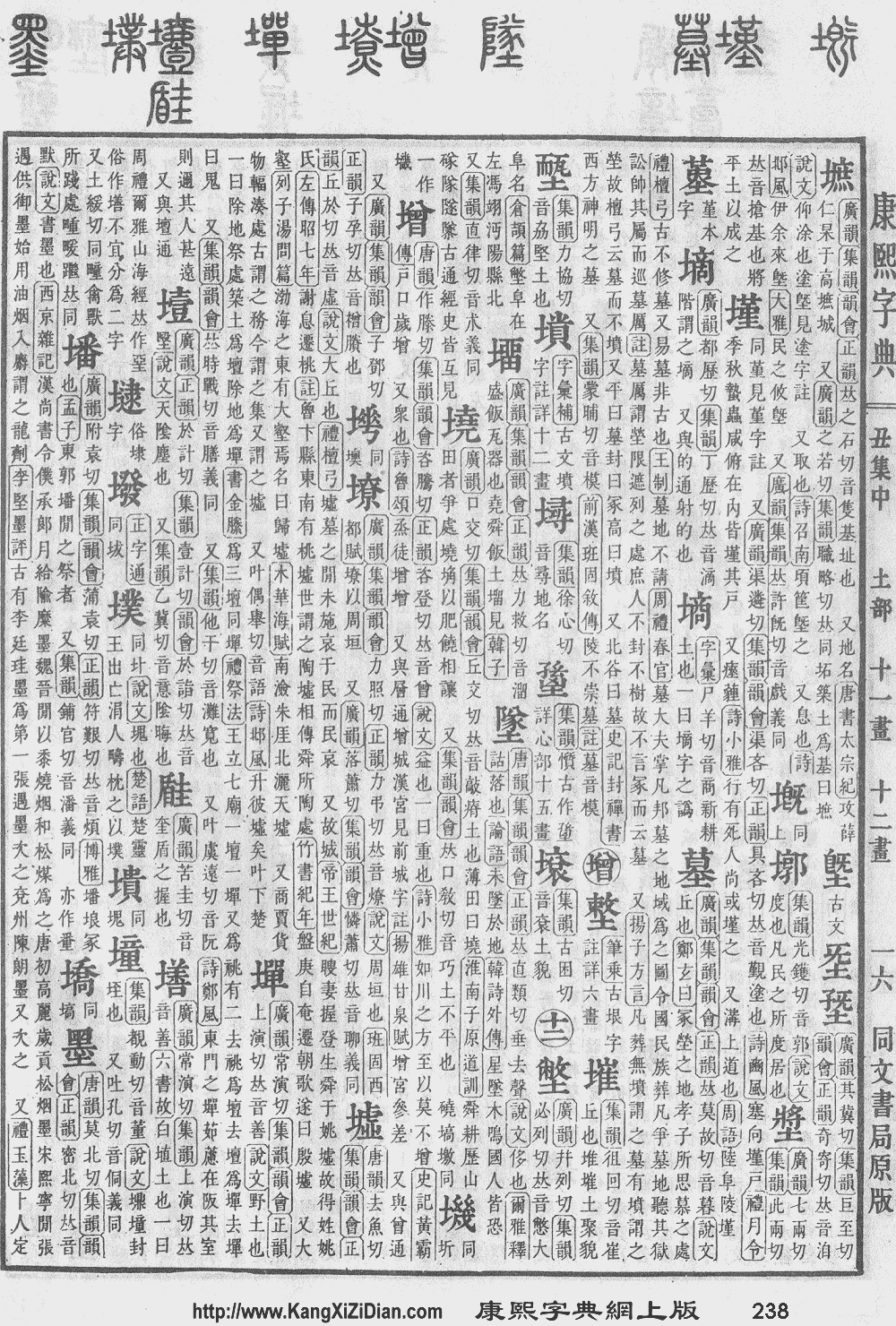
Chinese
| trad. | 墓 | |
|---|---|---|
| simp. # | 墓 | |
| 2nd round simp. | 圶 | |
Glyph origin
| Historical forms of the character 墓 |
|---|
| Shuowen Jiezi (compiled in Han) |
| Small seal script |
 |
Phono-semantic compound (形聲/形声, OC *maːɡs) : phonetic 莫 (OC *maːɡ) + semantic 土.
Pronunciation
Synonyms
- (grave):
Compounds
- 丘墓
- 修墓
- 公墓 (gōngmù)
- 冢墓
- 墓券
- 墓園/墓园 (mùyuán)
- 墓地 (mùdì)
- 墓坑 (mùkēng)
- 墓室 (mùshì)
- 墓木
- 墓木已拱 (mùmùyǐgǒng)
- 墓生兒子/墓生儿子
- 墓田
- 墓碑 (mùbēi)
- 墓碣
- 墓祭 (mùjì)
- 墓穴 (mùxué)
- 墓群 (mùqún)
- 墓葬 (mùzàng)
- 墓表
- 墓記/墓记
- 墓誌/墓志 (mùzhì)
- 墓誌銘/墓志铭 (mùzhìmíng)
- 墓道 (mùdào)
- 墓門/墓门
- 墟墓
- 墳墓/坟墓 (fénmù)
- 壟墓/垄墓
- 封墓
- 廬墓/庐墓
- 徒不上墓
- 掃墓/扫墓 (sǎomù)
- 掘墓人 (juémùrén)
- 掃墓節/扫墓节
- 易墓
- 痟狗舂墓壙/痟狗舂墓圹 (siáu káu cheng bōng-khòng) (Min Nan)
- 盜墓/盗墓 (dàomù)
- 省墓 (xǐngmù)
- 祖墓 (zǔmù)
- 自掘墳墓/自掘坟墓 (zìjuéfénmù)
- 覆墓
- 誓墓
- 諛墓/谀墓
- 鎮墓獸/镇墓兽
- 陵墓 (língmù)
- 鞭墓
References
- “墓”, in 漢語多功能字庫 (Multi-function Chinese Character Database), 香港中文大學 (the Chinese University of Hong Kong), 2014–
Japanese
Compounds
- 墓碣 (boketsu): a tombstone, a headstone
- 墓誌銘 (boshimei): an extra inscription at the end of a tombstone inscription, such as a short poem
- 墓表 (bohyō): the text on a tombstone, giving the deceased's name, dates of birth and death, and other details
- 墓地 (bochi): a cemetery, a graveyard
- 支石墓 (shisekibo): a dolmen
Etymology 1
| Kanji in this term |
|---|
| 墓 |
| はか Grade: 5 |
| kun’yomi |
From Old Japanese, from Proto-Japonic *paka. First attested in the Nihon Shoki of 720 CE.[1]
Ultimate derivation unknown. One possibility is that the final ka may be 処 (ka, suffix denoting place), as in the term 住み処 (sumika, “dwelling, home, abode”, literally “living place”).
Derived terms
Etymology 2
| Kanji in this term |
|---|
| 墓 |
| ぼ Grade: 5 |
| on’yomi |
From Middle Chinese 墓 (muoᴴ, “grave, tomb”). Compare modern Min Nan readings bō͘, bōng.
Pronunciation
- IPA(key): [bo̞]
Usage notes
Seldom used in isolation. More commonly encountered in compounds.
Derived terms
References
- “墓”, in 日本国語大辞典 (Nihon Kokugo Daijiten, “Nihon Kokugo Daijiten”) (in Japanese), concise edition, Tōkyō: Shogakukan, 2000
- Matsumura, Akira, editor (2006), 大辞林 [Daijirin] (in Japanese), Third edition, Tōkyō: Sanseidō, →ISBN
Korean
Etymology 1
Irregularly shifted from Middle Chinese 墓 (MC muH), perhaps due to confusion with the hanja 廟 (myo, “temple”).
| Historical Readings | ||
|---|---|---|
| Dongguk Jeongun Reading | ||
| Dongguk Jeongun, 1448 | 몽〮 (Yale: mwó) | |
| Middle Korean | ||
| Text | Eumhun | |
| Gloss (hun) | Reading | |
| Hunmong Jahoe, 1527 | 무덤〮 (Yale: mwùtém) | 묘〯 (Yale: mywǒ) |
| Sinjeung Yuhap, 1576 | 분묘 (Yale: pwunmywo) | 묘 (Yale: mywo) |
Pronunciation
- (SK Standard/Seoul) IPA(key): [mjo(ː)]
- Phonetic hangul: [묘(ː)]
- Though still prescribed in Standard Korean, most speakers in both Koreas no longer distinguish vowel length.
Compounds
Etymology 2
Presumably the original form.
Pronunciation
- (Yukjin) IPA(key): [mó]
Usage notes
- Yukjin speakers still use the orthodox pronunciation in compounds, e.g. 묘디(墓地) (myodi) for 묘지(墓地) (myoji).
- This form appears to have historically been more common throughout the peninsula, as even southern dialects still sporadically have the derived term 못자리 (motjari, “gravesite”).
References
- 곽충구 (Kwak Chung-gu) (2018) “漢字語(方言) 속의 特異 漢字音—동북방언을 중심으로— [Unusual character readings in (dialectal) Sino-Korean vocabulary: focusing on the Northeastern dialect]”, in Gugeohak, volume 88, pages 3—32