斑
| ||||||||
Translingual
Han character
斑 (Kangxi radical 67, 文+8, 12 strokes, cangjie input 一土卜大土 (MGYKG), four-corner 11114, composition ⿲𤣩文王 or ⿴玨文)
Derived characters
- 癍 𢴬 𤡰 𫫨 𬷱
References
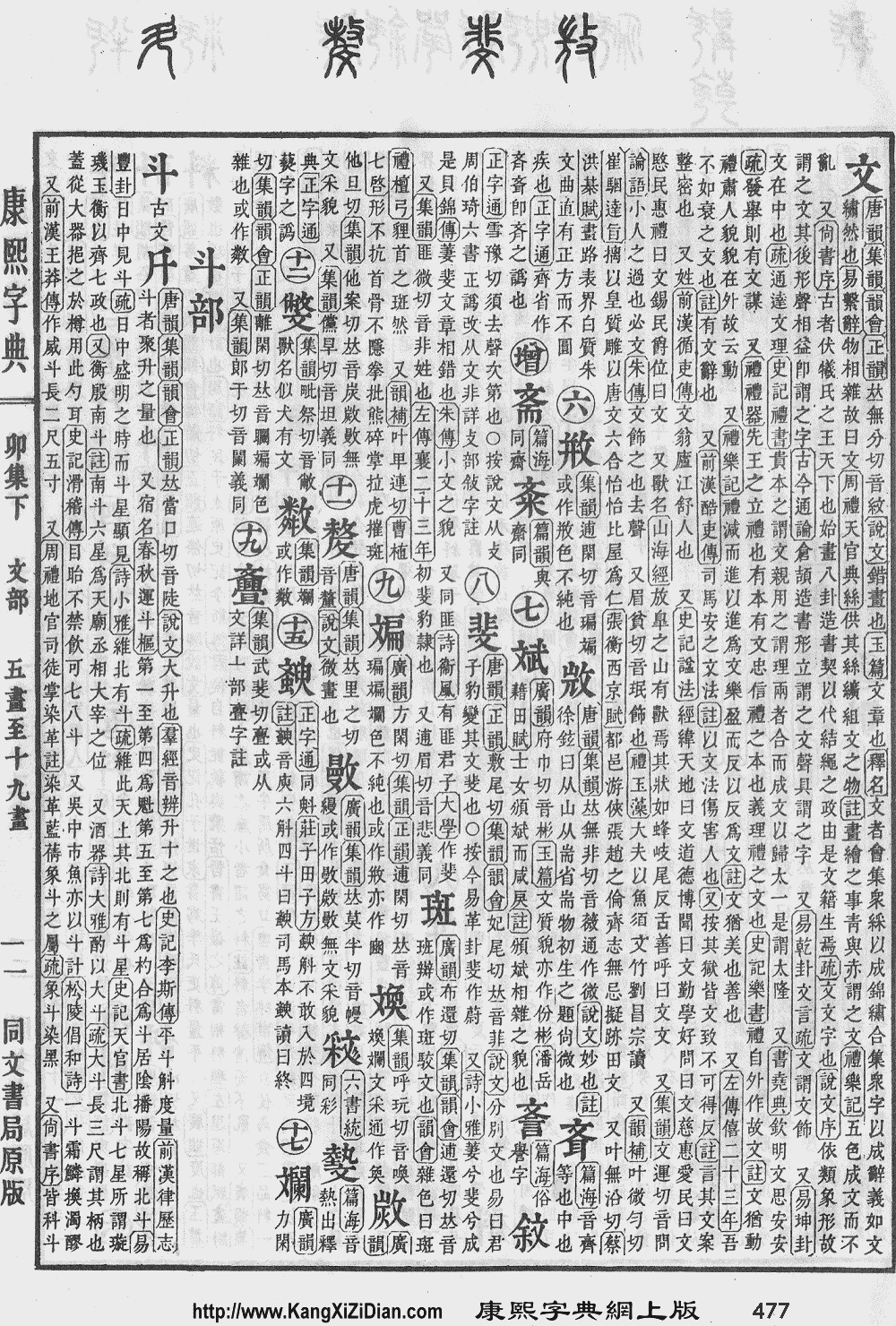
- Kangxi Dictionary: page 477, character 11
- Dai Kanwa Jiten: character 13470
- Dae Jaweon: page 835, character 11
- Hanyu Da Zidian (first edition): volume 2, page 1123, character 4
- Unihan data for U+6591
Chinese
| simp. and trad. |
斑 | |
|---|---|---|
| alternative forms | 辬 班 䃑 | |
Glyph origin
Pronunciation
Definitions
斑
Compounds
- 一斑 (yībān)
- 三斑家蚊
- 光斑 (guāngbān)
- 剝落斑殘/剥落斑残
- 可見一斑/可见一斑 (kějiànyībān)
- 壽斑/寿斑
- 斑光銅礦/斑光铜矿
- 斑剝/斑剥
- 斑哥
- 斑岩 (bānyán)
- 斑斑 (bānbān)
- 斑斑點點/斑斑点点
- 斑斕/斑斓 (bānlán)
- 斑狀齒/斑状齿
- 斑疹 (bānzhěn)
- 斑疹傷寒/斑疹伤寒 (bānzhěn shānghán)
- 斑痕 (bānhén)
- 斑白 (bānbái)
- 斑禿/斑秃 (bāntū)
- 斑竹 (bānzhú)
- 斑竹壋/斑竹垱 (Bānzhúdàng)
- 斑節蝦/斑节虾
- 斑紋/斑纹 (bānwén)
- 斑芝 (pan-chi) (Min Nan)
- 斑蚊
- 斑蝶
- 斑蝥 (bānmáo)
- 斑衣
- 斑衣戲彩/斑衣戏彩
- 斑銅礦/斑铜矿 (bāntóngkuàng)
- 斑青鱗魚/斑青鳞鱼
- 斑頸鳩/斑颈鸠
- 斑飛虱
- 斑馬/斑马 (bānmǎ)
- 斑馬線/斑马线 (bānmǎxiàn)
- 斑駁/斑驳 (bānbó)
- 斑駁陸離/斑驳陆离 (bānbólùlí)
- 斑騅/斑骓
- 斑驢/斑驴
- 斑鬢/斑鬓 (bānbìn)
- 斑魚/斑鱼
- 斑鳩/斑鸠 (bānjiū)
- 斑鳩跌彈/斑鸠跌弹
- 斑點/斑点 (bāndiǎn)
- 斒斑
- 斕斑/斓斑 (lánbān)
- 晒斑
- 母斑
- 汗斑 (hànbān)
- 牙菌斑 (yájūnbān)
- 璘斑
- 略見一斑/略见一斑
- 白斑 (báibān)
- 石斑魚/石斑鱼 (shíbānyú)
- 窺見一斑/窥见一斑
- 窺豹一斑/窥豹一斑
- 紫斑病
- 緻密斑/致密斑 (zhìmìbān)
- 羊斑
- 耀斑 (yàobān)
- 花斑癬/花斑癣 (huābānxuǎn)
- 葉斑病/叶斑病
- 蒙古斑 (měnggǔbān)
- 蘚斑/藓斑
- 虎體元斑/虎体元斑
- 血跡斑斑/血迹斑斑
- 譜斑/谱斑
- 陸離斑駁/陆离斑驳
- 雀斑
- 黃斑/黄斑 (huángbān)
- 黑斑 (hēibān)
- 黑斑蚊 (hēibānwén)
Etymology 2
| For pronunciation and definitions of 斑 – see 癍 (“abnormal pigmentary deposits on the skin; flecks”). (This character is the second-round simplified form of 癍). |
Notes:
|
References
- “斑”, in 漢語多功能字庫 (Multi-function Chinese Character Database), 香港中文大學 (the Chinese University of Hong Kong), 2014–
Japanese
Etymology 1
| Kanji in this term |
|---|
| 斑 |
| まだら Grade: S |
| kun’yomi |
| For pronunciation and definitions of 斑 – see the following entry. | ||
| ||
| (This term, 斑, is an alternative spelling of the above term.) |
Korean
Hanja
斑 • (ban) (hangeul 반, revised ban, McCune–Reischauer pan, Yale pan)
- This term needs a translation to English. Please help out and add a translation, then remove the text
{{rfdef}}.
Vietnamese
This article is issued from Wiktionary. The text is licensed under Creative Commons - Attribution - Sharealike. Additional terms may apply for the media files.