飯
| ||||||||
 | ||||||||
Translingual
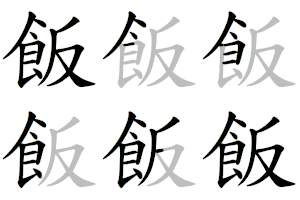
| Stroke order | |||
|---|---|---|---|
 | |||
Han character
飯 (Kangxi radical 184, 食+4, 13 strokes in Chinese, 12 strokes in Japanese, cangjie input 人戈竹水 (OIHE), four-corner 81747, composition ⿰飠反(GHTJV) or ⿰𩙿反(K))
Derived characters
- 𪾗
References
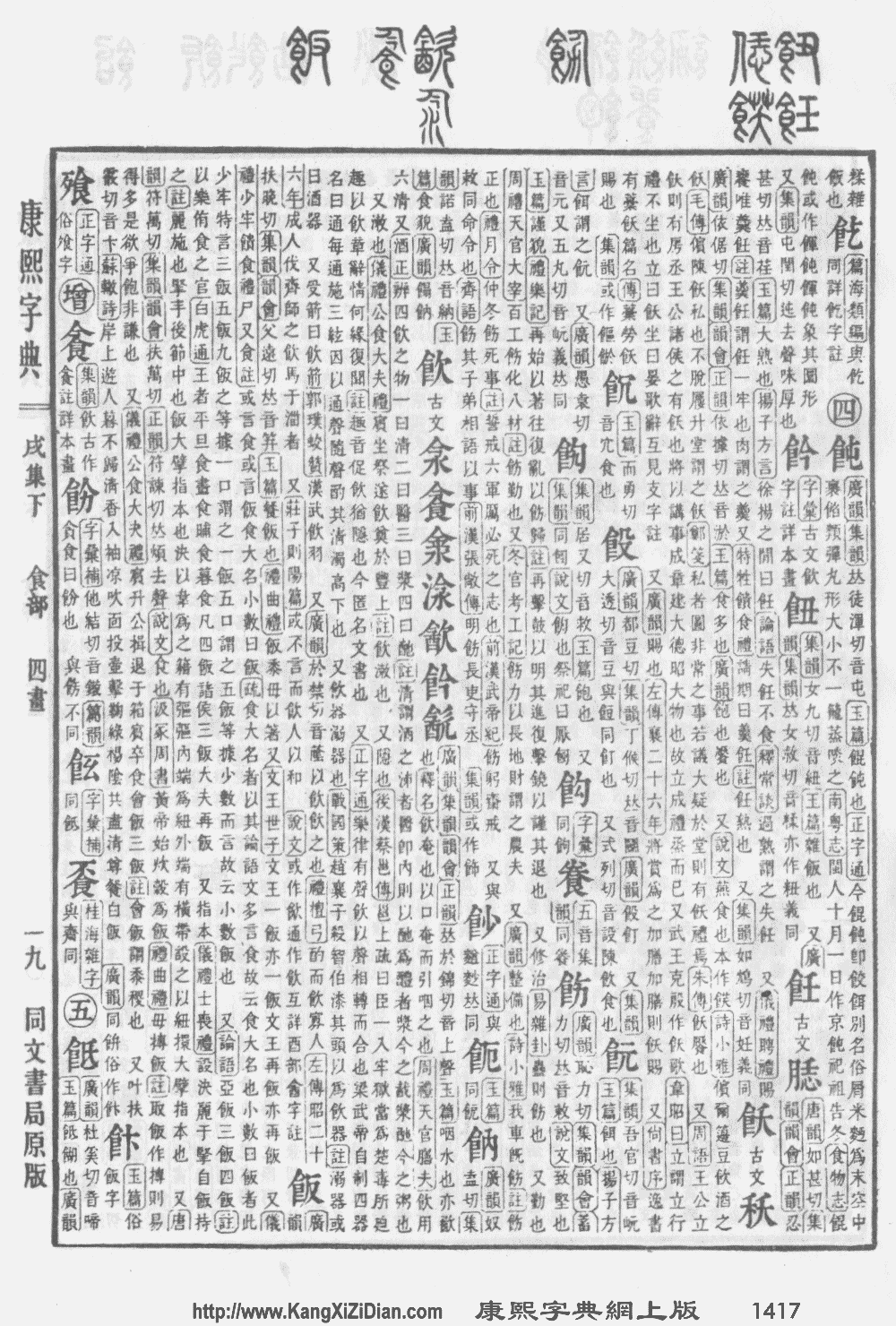
- Kangxi Dictionary: page 1417, character 27
- Dai Kanwa Jiten: character 44064
- Dae Jaweon: page 1941, character 21
- Hanyu Da Zidian (first edition): volume 7, page 4444, character 5
- Unihan data for U+98EF
- Unihan data for U+FA2A
Chinese
| trad. | 飯 | |
|---|---|---|
| simp. | 饭 | |
Glyph origin
| Historical forms of the character 飯 | ||
|---|---|---|
| Western Zhou | Warring States | Shuowen Jiezi (compiled in Han) |
| Bronze inscriptions | Chu slip and silk script | Small seal script |
 |
 |
 |
Phono-semantic compound (形聲/形声, OC *bonʔ, *bons) : semantic 食 (“food”) + phonetic 反 (OC *panʔ, *pʰan).
Etymology 1
Compare Proto-Mon-Khmer *puuŋ (“cooked rice”), whence Mon ပုၚ် (pɜŋ, “cooked rice”) (Ferlus, 1988).
Pronunciation 1 is the exopassive derivation of pronunciation 2, meaning "what is eaten" (Schuessler, 2007).
Pronunciation 1
Definitions
飯
Synonyms
Pronunciation 2
Compounds
- 一口飯/一口饭
- 一飯之恩/一饭之恩
- 一飯千金/一饭千金
- 三茶六飯/三茶六饭
- 下飯/下饭 (xiàfàn)
- 下飯菜兒/下饭菜儿
- 下馬飯/下马饭
- 不茶不飯/不茶不饭
- 丟飯碗/丢饭碗 (diū fànwǎn)
- 中飯/中饭 (zhōngfàn)
- 乞食飯牛/乞食饭牛
- 乾飯/干饭 (gānfàn)
- 代飯/代饭
- 份兒飯/份儿饭 (fènrfàn)
- 便飯/便饭 (biànfàn)
- 倒頭飯/倒头饭
- 做飯/做饭 (zuòfàn)
- 八寶飯/八宝饭 (bābǎofàn)
- 公事飯/公事饭
- 冷飯/冷饭 (lěngfàn)
- 出飯/出饭 (chūfàn)
- 剩飯/剩饭 (shèngfàn)
- 包飯/包饭 (bāofàn)
- 午飯/午饭 (wǔfàn)
- 卯飯/卯饭
- 吃偏飯/吃偏饭
- 吃大鍋飯/吃大锅饭 (chī dàguōfàn)
- 吃太平飯/吃太平饭
- 吃子孫飯/吃子孙饭
- 吃死飯/吃死饭
- 吃派飯/吃派饭
- 吃洋飯/吃洋饭
- 吃現成飯/吃现成饭
- 吃白飯/吃白饭 (chī báifàn)
- 吃自在飯/吃自在饭
- 吃葷飯/吃荤饭
- 吃衙門飯/吃衙门饭
- 各衣另飯/各衣另饭
- 吃開口飯/吃开口饭
- 吃飯/吃饭 (chīfàn)
- 吃飯傢伙/吃饭家伙
- 吃飯家伙
- 吐飯成蜂/吐饭成蜂
- 吃飯防噎/吃饭防噎
- 含飯/含饭
- 啗飯/啗饭
- 嗄飯/嗄饭
- 噴飯/喷饭 (pēnfàn)
- 噇飯/噇饭
- 圓飯/圆饭
- 埋鍋造飯/埋锅造饭 (mái guō zàofàn)
- 塵飯塗羹/尘饭涂羹
- 夜飯/夜饭 (yèfàn)
- 大鍋飯/大锅饭 (dàguōfàn)
- 大飯店/大饭店
- 夾生飯/夹生饭 (jiāshengfàn)
- 完飯/完饭
- 客飯/客饭
- 家常便飯/家常便饭 (jiāchángbiànfàn)
- 家常茶飯/家常茶饭
- 家常飯/家常饭 (jiāchángfàn)
- 小菜飯/小菜饭
- 工本飯米/工本饭米
- 年夜飯/年夜饭 (niányèfàn)
- 年飯/年饭 (niánfàn)
- 弄飯/弄饭
- 強飯為嘉/强饭为嘉
- 房飯錢/房饭钱
- 扁擔飯/扁担饭
- 打火造飯/打火造饭
- 打破飯碗/打破饭碗
- 扒飯/扒饭 (páfàn)
- 打飯/打饭 (dǎfàn)
- 打齋飯/打斋饭
- 把飯叫饑/把饭叫饥
- 找飯碗/找饭碗
- 搭飯/搭饭
- 搶飯碗/抢饭碗 (qiǎngfànwǎn)
- 摶沙作飯/抟沙作饭
- 摶飯/抟饭
- 撩水飯/撩水饭
- 擺飯/摆饭
- 攤飯/摊饭
- 放飯流歠/放饭流歠
- 整飯/整饭
- 方便米飯/方便米饭
- 早飯/早饭 (zǎofàn)
- 晌飯/晌饭 (shǎngfàn)
- 晨炊星飯/晨炊星饭
- 晚飯/晚饭 (wǎnfàn)
- 會飯/会饭
- 朝飯/朝饭 (zhāofàn)
- 木桶飯/木桶饭 (mùtǒngfàn)
- 歕飯/𬅫饭
- 殘湯剩飯/残汤剩饭
- 殘羹冷飯/残羹冷饭
- 殘羹剩飯/残羹剩饭 (cángēngshèngfàn)
- 殘茶剩飯/残茶剩饭
- 每飯不忘/每饭不忘
- 水飯/水饭
- 沒頓飯時/没顿饭时
- 油飯/油饭 (yóufàn)
- 泡飯/泡饭 (pàofàn)
- 泥飯碗/泥饭碗
- 派飯/派饭
- 混一口飯/混一口饭
- 清茶淡飯/清茶淡饭
- 淡飯/淡饭
- 混飯吃/混饭吃 (hùnfànchī)
- 淡飯清茶/淡饭清茶
- 淨飯王/净饭王 (Jìngfàn Wáng)
- 湯飯/汤饭
- 漂母進飯/漂母进饭
- 滷肉飯/卤肉饭 (lǔròufàn)
- 潑賸飯/泼剩饭
- 炒冷飯/炒冷饭 (chǎo lěngfàn)
- 炊沙成飯/炊沙成饭
- 炊砂作飯/炊砂作饭
- 煮飯/煮饭 (zhǔfàn)
- 煲飯/煲饭
- 蒸沙成飯/蒸沙成饭
- 燒飯/烧饭 (shāofàn)
- 燴飯/烩饭
- 爛飯/烂饭 (lànfàn)
- 爺羹娘飯/爷羹娘饭
- 爺飯娘羹/爷饭娘羹
- 版築飯牛/版筑饭牛
- 牢飯/牢饭 (láofàn)
- 現成飯/现成饭
- 瓷飯碗/瓷饭碗
- 用飯/用饭 (yòngfàn)
- 甯戚飯牛/甯戚饭牛
- 留飯/留饭
- 白米飯/白米饭
- 白飯/白饭 (báifàn)
- 白飯王/白饭王
- 白飯青芻/白饭青刍
- 盛飯/盛饭 (chéngfàn)
- 看天吃飯/看天吃饭 (kàntiānchīfàn)
- 砸飯碗/砸饭碗 (záfànwǎn)
- 禮先壹飯/礼先壹饭
- 稀飯/稀饭 (xīfàn)
- 竹筒飯/竹筒饭 (zhútǒngfàn)
- 米飯/米饭 (mǐfàn)
- 粗茶淡飯/粗茶淡饭 (cūchádànfàn)
- 粗衣淡飯/粗衣淡饭
- 粗飯/粗饭
- 粢飯/粢饭 (cífàn)
- 粟飯/粟饭 (sùfàn)
- 粥飯僧/粥饭僧
- 粢飯糕/粢饭糕 (cīfàngāo)
- 粢飯糰/粢饭团 (cífàntuán)
- 糝飯/糁饭
- 素飯/素饭
- 紙飯碗/纸饭碗
- 綠豆稀飯/绿豆稀饭
- 羹飯/羹饭
- 老米飯/老米饭
- 自在飯/自在饭
- 茶思飯想/茶思饭想
- 茶遲飯晏/茶迟饭晏
- 茶飯/茶饭 (cháfàn)
- 茶飯不思/茶饭不思
- 茶飯無心/茶饭无心
- 茶餘飯後/茶余饭后 (cháyúfànhòu)
- 茶餘飯飽/茶余饭饱
- 蓋飯/盖饭 (gàifàn)
- 行飯/行饭
- 衣架飯囊/衣架饭囊
- 襯飯/衬饭
- 要飯/要饭 (yàofàn)
- 要飯的/要饭的 (yàofànde)
- 討飯/讨饭 (tǎofàn)
- 豆腐飯/豆腐饭
- 賞口飯吃/赏口饭吃
- 趕飯擔/赶饭担 (gǎnfàndàn)
- 過飯/过饭
- 酒囊飯袋/酒囊饭袋
- 酒瓮飯囊
- 酒足飯飽/酒足饭饱
- 酒醉飯飽/酒醉饭饱
- 酒飯/酒饭 (jiǔfàn)
- 配飯/配饭 (phòe-pn̄g)
- 金飯碗/金饭碗
- 鐺底焦飯/铛底焦饭
- 鐵飯碗/铁饭碗 (tiěfànwǎn)
- 長休飯/长休饭
- 長期飯票/长期饭票
- 開飯/开饭 (kāifàn)
- 隨茶隨飯/随茶随饭
- 離娘飯/离娘饭
- 電飯鍋/电饭锅 (diànfànguō)
- 食飯/食饭 (sik6 faan6)
- 飯來張口,衣來伸手/饭来张口,衣来伸手
- 飯來開口/饭来开口
- 飯前酒/饭前酒
- 飯勺/饭勺 (fànsháo)
- 飯匙倩/饭匙倩
- 飯單/饭单 (fàndān)
- 飯囊/饭囊
- 飯囊衣架/饭囊衣架
- 飯囊酒瓮
- 飯囊酒甕/饭囊酒瓮
- 飯坑酒囊/饭坑酒囊
- 飯坩/饭坩 (pn̄g-khaⁿ) (Min Nan)
- 飯堂/饭堂 (fàntáng)
- 飯局/饭局 (fànjú)
- 飯店/饭店 (fàndiàn)
- 飯店兒/饭店儿
- 飯店回蔥/饭店回葱
- 飯座兒/饭座儿
- 飯廳/饭厅 (fàntīng)
- 飯後鐘/饭后钟
- 飯攤/饭摊
- 飯攤兒/饭摊儿
- 飯時/饭时
- 飯桌/饭桌 (fànzhuō)
- 飯桌兒/饭桌儿
- 飯桶/饭桶 (fàntǒng)
- 飯盒/饭盒 (fànhé)
- 飯盒兒/饭盒儿
- 飯碗/饭碗 (fànwǎn)
- 飯磬/饭磬
- 飯票/饭票 (fànpiào)
- 飯票兒/饭票儿
- 飯筒/饭筒
- 飯籮/饭箩
- 飯粘/饭粘
- 飯粒/饭粒 (fànlì)
- 飯粒兒/饭粒儿
- 飯糗如草/饭糗如草
- 飯糗茹草/饭糗茹草
- 飯糝/饭糁
- 飯糰/饭团 (fàntuán)
- 飯腥/饭腥
- 飯莊/饭庄 (fànzhuāng)
- 飯菜/饭菜 (fàncài)
- 飯蔬飲水/饭蔬饮水
- 飯袋/饭袋
- 飯轍/饭辙
- 飯量/饭量 (fànliàng)
- 飯鋪/饭铺 (fànpù)
- 飯鋪兒/饭铺儿
- 飯錢/饭钱
- 飯鍋/饭锅 (fànguō)
- 飯鏟/饭铲
- 飯門/饭门
- 飯門兒/饭门儿
- 飯頭/饭头
- 飯食/饭食 (fànshí)
- 飯食兒/饭食儿
- 飯飽丟箸/饭饱丢箸
- 飯飽弄箸/饭饱弄箸
- 飯館/饭馆 (fànguǎn)
- 飯館兒/饭馆儿 (fànguǎnr)
- 鬼飯疙瘩/鬼饭疙瘩
- 魯肉飯/鲁肉饭 (lǔròufàn)
- 鹵肉飯/卤肉饭 (lǔròufàn)
- 鹽水飯/盐水饭
- 麥飯/麦饭
- 齋飯/斋饭 (zhāifàn)
Pronunciation
Synonyms
References
- “飯”, in 漢語多功能字庫 (Multi-function Chinese Character Database), 香港中文大學 (the Chinese University of Hong Kong), 2014–
- “Entry #9249”, in 臺灣閩南語常用詞辭典 [Dictionary of Frequently-Used Taiwan Minnan] (overall work in Mandarin and Hokkien), Ministry of Education, R.O.C., 2023.
Japanese
| Shinjitai | 飯 | |
| Kyūjitai [1] |
飯 飯or 飯+ ︀? |
|
| 飯󠄀 飯+ 󠄀?(Adobe-Japan1) | ||
| 飯󠄄 飯+ 󠄄?(Hanyo-Denshi) (Moji_Joho) | ||
| The displayed kanji may be different from the image due to your environment. See here for details. | ||
Readings
Compounds
Etymology 1
| Kanji in this term |
|---|
| 飯 |
| はん Grade: 4 |
| kan’on |
(This etymology is missing or incomplete. Please add to it, or discuss it at the Etymology scriptorium.)
Pronunciation
- IPA(key): [hã̠ɴ]
Noun
飯 • (han)
- This term needs a translation to English. Please help out and add a translation, then remove the text
{{rfdef}}.
Etymology 2
| Kanji in this term |
|---|
| 飯 |
| いい Grade: 4 |
| kun’yomi |
⟨ipi1⟩ → */ipʲi/ → /ifi/ → /iwi/ → /iː/
From Old Japanese, also used as 借音 (shakuon) kana for ⟨pi1⟩.
Derived terms
- See Japanese terms spelled with 飯 read as いい
Etymology 3
| Kanji in this term |
|---|
| 飯 |
| めし Grade: 4 |
| kun’yomi |
The 連用形 (ren'yōkei, “stem or continuative form”) of verb 召す (mesu, “to call”).[2]
Usage notes
This is an informal way to refer to food, and 食う (kuu) is a correspondingly informal way to say "eat".
Derived terms
- See Japanese terms spelled with 飯 read as めし
Derived terms
- 飯借り (mamakari)
- 飯事 (mamagoto)
- 飯子菜 (mamakona)
- 飯焚き (mamataki)
Etymology 5
| Kanji in this term |
|---|
| 飯 |
| まんま Grade: 4 |
| kun’yomi |
(This etymology is missing or incomplete. Please add to it, or discuss it at the Etymology scriptorium.)
References
- “飯”, in 漢字ぺディア (Kanjipedia) (in Japanese), 日本漢字能力検定協会, 2015–2024
- Matsumura, Akira, editor (2006), 大辞林 [Daijirin] (in Japanese), Third edition, Tōkyō: Sanseidō, →ISBN
- Kindaichi, Kyōsuke et al., editors (1974), 新明解国語辞典 [Shin Meikai Kokugo Jiten] (in Japanese), Second edition, Tōkyō: Sanseidō
- Hirayama, Teruo, editor (1960), 全国アクセント辞典 (Zenkoku Akusento Jiten, “Nationwide Accent Dictionary”) (in Japanese), Tōkyō: Tōkyōdō, →ISBN
- Shōgaku Tosho (1988) 国語大辞典(新装版) [Unabridged Dictionary of Japanese (Revised Edition)] (in Japanese), Tōkyō: Shogakukan, →ISBN
Korean
Vietnamese
References
- Trần (1999).
- Trần (2004).