曲
| ||||||||
Translingual
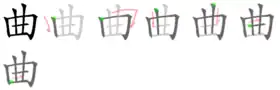
| Stroke order | |||
|---|---|---|---|
 | |||
Han character
曲 (Kangxi radical 73, 曰+2, 6 strokes, cangjie input 廿田 (TW) or 廿月金 (TBC) or 難廿田 (XTW), four-corner 55600, composition ⿻曰⿰丨丨)
References
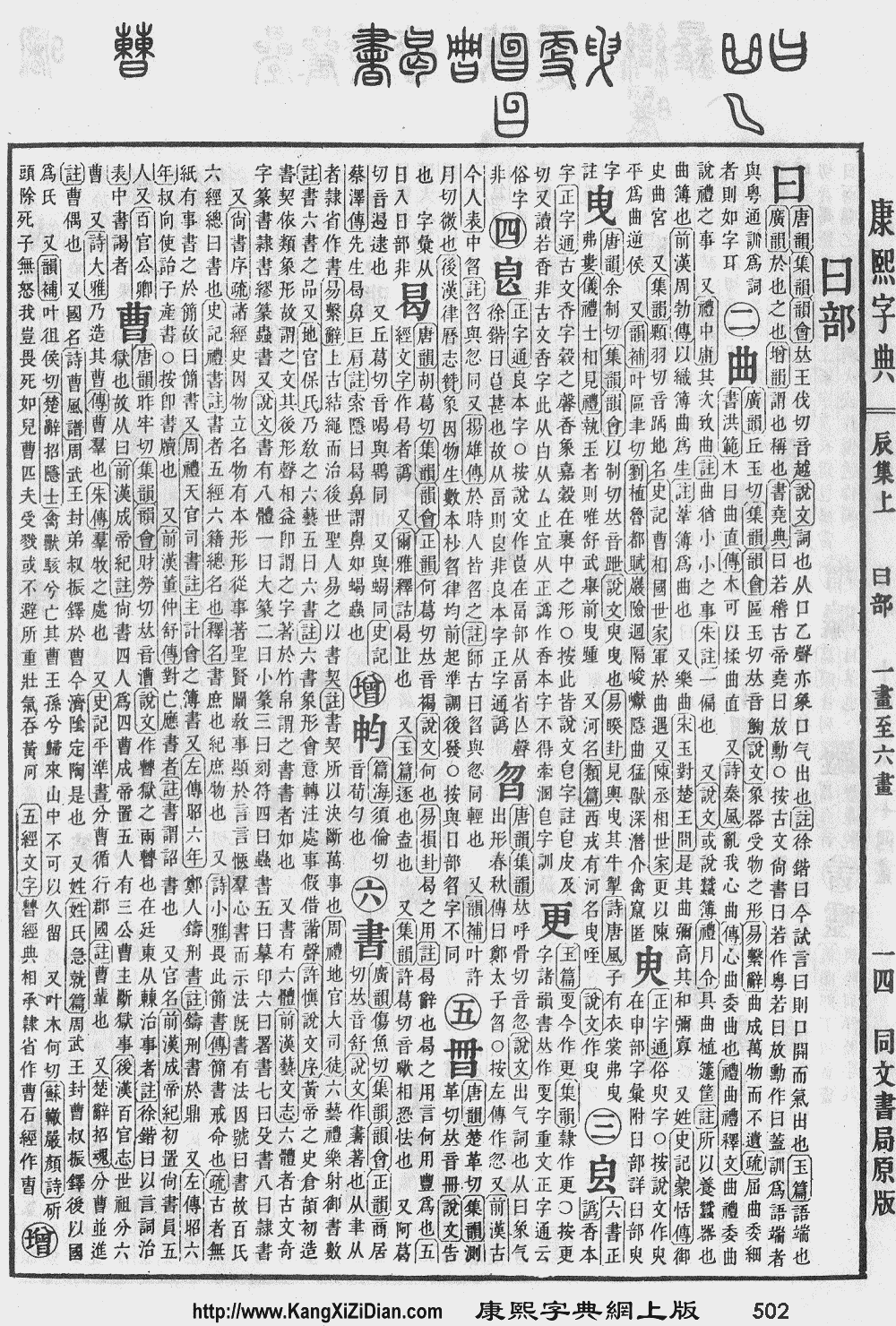
- Kangxi Dictionary: page 502, character 2
- Dai Kanwa Jiten: character 14280
- Dae Jaweon: page 873, character 4
- Hanyu Da Zidian (first edition): volume 2, page 1484, character 2
- Unihan data for U+66F2
Chinese
| simp. and trad. |
曲 | |
|---|---|---|
| alternative forms | 𠚖 𡆪 ⿱ 丷 𡆪 | |
Glyph origin
| Historical forms of the character 曲 | |||
|---|---|---|---|
| Shang | Western Zhou | Shuowen Jiezi (compiled in Han) | Liushutong (compiled in Ming) |
| Oracle bone script | Bronze inscriptions | Small seal script | Transcribed ancient scripts |
 |
 |
 |
 |
Ideogram (指事) – a bent object.
Etymology 1
- to bend, bent, curved, crooked, wrong
- From Proto-Sino-Tibetan *(k/ʔ)uk (“bend, crooked, return, back, year”) (STEDT). Cognate with Tibetan འགུགས ('gugs, “to bend”), Burmese ကောက် (kauk, “bent, curved, crooked”) (Hill, 2019). Compare Proto-Mon-Khmer *gɔk (“be crooked, bent, lame”) (Schuessler, 2007).
Pronunciation 1
Definitions
曲
Compounds
- 三回九曲
- 不顧曲直/不顾曲直
- 九曲洞
- 乞留曲律
- 二次曲線/二次曲线
- 二次曲面
- 保留曲線/保留曲线
- 千里一曲
- 卷曲 (quánqū)
- 圓錐曲線/圆锥曲线 (yuánzhuī qūxiàn)
- 土中曲蟮
- 坊曲
- 委曲 (wěiqū)
- 委曲成全
- 委曲求全 (wěiqūqiúquán)
- 學習曲線/学习曲线
- 審曲面勢/审曲面势
- 小廉曲謹/小廉曲谨
- 屈曲 (qūqū)
- 平面曲線/平面曲线
- 龐琴曲線/庞琴曲线
- 弓腰曲背
- 彎彎曲曲/弯弯曲曲
- 彎曲/弯曲 (wānqū)
- 心曲 (xīnqū)
- 感人心曲
- 扭曲 (niǔqū)
- 扭曲作直
- 拗曲作直
- 拳曲 (quánqū)
- 捲曲/卷曲 (juǎnqū)
- 撓直為曲/挠直为曲
- 文曲星
- 是非曲直 (shìfēiqūzhí)
- 曲別針/曲别针 (qūbiézhēn)
- 曲匝
- 曲園/曲园
- 曲士
- 曲媚取容
- 曲學詖行/曲学诐行
- 曲學阿世/曲学阿世 (qūxué'ēshì)
- 曲室
- 曲宴
- 曲射炮
- 曲尺 (qūchǐ)
- 曲局
- 曲庇
- 曲律
- 曲徑/曲径
- 曲徑通幽/曲径通幽
- 曲從/曲从
- 曲心矯肚/曲心矫肚
- 曲意 (qūyì)
- 曲意逢迎 (qūyìféngyíng)
- 曲房
- 曲折 (qūzhé)
- 曲折縈紆/曲折萦纡 (qūzhéyíngyū)
- 曲折離奇/曲折离奇 (qūzhélíqí)
- 曲拗
- 曲撓/曲挠
- 曲曲彎彎/曲曲弯弯
- 曲曲折折
- 曲柄笠
- 曲棍球 (qūgùnqiú)
- 曲欄/曲栏 (qūlán)
- 曲水 (Qūshuǐ)
- 曲水流觴/曲水流觞
- 曲江 (Qūjiāng)
- 曲江宴
- 曲江池
- 曲流
- 曲率 (qūlǜ)
- 曲球
- 曲瓊/曲琼
- 曲盡人情/曲尽人情
- 曲盡其妙/曲尽其妙
- 曲直 (qūzhí)
- 曲直分明
- 曲禮/曲礼
- 曲突徙薪 (qūtūxǐxīn)
- 曲筆/曲笔
- 曲線/曲线
- 曲線板/曲线板
- 曲線美/曲线美 (qūxiànměi)
- 曲肱之樂/曲肱之乐
- 曲肱而枕
- 曲背
- 曲致
- 曲臺/曲台
- 曲蓋/曲盖
- 曲薄
- 曲蟮
- 曲裡拐彎/曲里拐弯
- 曲裡拐彎兒/曲里拐弯儿
- 曲裾 (qūjū)
- 曲解 (qūjiě)
- 曲說/曲说 (qūshuō)
- 曲謹/曲谨
- 曲赦
- 曲躬躬
- 曲軸/曲轴 (qūzhóu)
- 曲辮子/曲辫子
- 曲道
- 曲阜 (Qūfù)
- 曲阻
- 曲院 (qūyuàn)
- 曲隱/曲隐
- 曲霉 (qūméi)
- 曲靖 (Qūjìng)
- 曲面 (qūmiàn)
- 曲頸甑/曲颈甑 (qūjǐngzèng)
- 曲體/曲体
- 樛曲
- 款曲 (kuǎnqū)
- 武曲星
- 歪曲 (wāiqū)
- 水曲
- 汀曲
- 河曲智叟
- 流觴曲水/流觞曲水 (liúshāngqūshuǐ)
- 海曲 (hǎiqū)
- 浮詞曲說/浮词曲说
- 盤旋曲折/盘旋曲折
- 盤曲/盘曲 (pánqū)
- 私曲 (sīqū)
- 空間曲線/空间曲线
- 紆曲/纡曲
- 縱曲枉直/纵曲枉直
- 苟容曲從/苟容曲从
- 薄曲
- 蜷曲 (quánqū)
- 蟠曲 (pánqū)
- 衷曲 (zhōngqū)
- 褶曲
- 褶曲山脈/褶曲山脉
- 襟曲
- 西布曲明 (xībùqūmíng)
- 詰曲/诘曲
- 迂曲 (yūqū)
- 迂迂曲曲
- 迂迴曲折/迂回曲折 (yūhuíqūzhé)
- 遠引曲喻/远引曲喻
- 邪曲
- 部曲 (bùqū)
- 鄉曲/乡曲 (xiāngqū)
- 鄉曲之譽/乡曲之誉
- 鄰曲/邻曲
- 阿意曲從/阿意曲从
- 雙曲線/双曲线 (shuāngqūxiàn)
- 離奇曲折/离奇曲折
- 靜脈曲張/静脉曲张 (jìngmài qūzhāng)
- 飲水曲肱/饮水曲肱
- 鬈曲 (quánqū)
Pronunciation 2
Compounds
- 一曲
- 一曲千金
- 一曲陽關/一曲阳关
- 三部曲 (sānbùqǔ)
- 主題曲/主题曲 (zhǔtíqǔ)
- 交響曲/交响曲 (jiāoxiǎngqǔ)
- 作曲 (zuòqǔ)
- 佛曲
- 但曲
- 俚曲 (lǐqǔ)
- 催眠曲 (cuīmiánqǔ)
- 元曲 (yuánqǔ)
- 六十種曲/六十种曲
- 冷板曲
- 前奏曲
- 副曲
- 創意曲/创意曲
- 劇曲/剧曲
- 北曲 (běiqǔ)
- 協奏曲/协奏曲 (xiézòuqǔ)
- 南曲 (nánqǔ)
- 受難曲/受难曲 (shòunànqǔ)
- 同工異曲/同工异曲 (tónggōngyìqǔ)
- 名曲 (míngqǔ)
- 周郎顧曲/周郎顾曲
- 唱曲 (chàngqǔ)
- 圓舞曲/圆舞曲 (yuánwǔqǔ)
- 地方戲曲/地方戏曲
- 塞上曲
- 塞下曲
- 夜曲 (yèqǔ)
- 大協奏曲/大协奏曲
- 大曲 (dàqǔ)
- 奏鳴曲/奏鸣曲 (zòumíngqǔ)
- 奏鳴曲式/奏鸣曲式 (zòumíngqǔshì)
- 套曲
- 妙曲
- 安魂曲 (ānhúnqǔ)
- 小夜曲 (xiǎoyèqū)
- 小插曲
- 小曲 (xiǎoqǔ)
- 小步舞曲
- 岔曲 (chàqǔ)
- 崑曲/昆曲 (kūnqǔ)
- 州曲
- 幻想曲 (huànxiǎngqǔ)
- 序曲 (xùqǔ)
- 度曲
- 彌撒曲/弥撒曲 (mísāqǔ)
- 念曲叫曲
- 慢曲
- 戀曲/恋曲 (liànqǔ)
- 戲曲/戏曲 (xìqǔ)
- 抗戰歌曲/抗战歌曲
- 拔山曲
- 拳不離手,曲不離口/拳不离手,曲不离口 (quánbùlíshǒu, qūbùlíkǒu)
- 採蓮曲/采莲曲
- 揚州清曲/扬州清曲
- 插曲 (chāqǔ)
- 搖籃曲/摇篮曲 (yáolánqǔ)
- 敘事曲/叙事曲
- 散曲 (sǎnqǔ)
- 敦煌曲子
- 文曲 (wénqǔ)
- 曲壇/曲坛
- 曲子 (qǔzi)
- 曲學/曲学
- 曲度
- 曲式 (qǔshì)
- 曲牌 (qǔpái)
- 曲目 (qǔmù)
- 曲笛 (qǔdí)
- 曲終人散/曲终人散 (qǔzhōngrénsàn)
- 曲終奏雅/曲终奏雅
- 曲藝/曲艺 (qǔyì)
- 曲話/曲话
- 曲調/曲调 (qǔdiào)
- 曲譜/曲谱 (qǔpǔ)
- 曲高和寡 (qǔgāohèguǎ)
- 月光曲
- 樂曲/乐曲 (yuèqǔ)
- 欸乃曲
- 歌曲 (gēqǔ)
- 民俗曲藝/民俗曲艺
- 民謠歌曲/民谣歌曲
- 法曲
- 波蘭舞曲/波兰舞曲
- 流亡曲
- 流行歌曲 (liúxíng gēqǔ)
- 浪漫曲
- 牌子曲
- 狂想曲 (kuángxiǎngqǔ)
- 獨曲/独曲
- 異曲同工/异曲同工 (yìqǔtónggōng)
- 當曲河/当曲河
- 白雪曲
- 神曲 (shénqǔ)
- 粵曲/粤曲 (yuèqǔ)
- 細曲/细曲
- 終曲/终曲
- 組曲/组曲 (zǔqū)
- 編曲/编曲 (biānqǔ)
- 練習曲/练习曲 (liànxíqǔ)
- 練聲曲/练声曲
- 自度曲
- 舞曲 (wǔqǔ)
- 藝術歌曲/艺术歌曲
- 螾廬曲談/螾庐曲谈
- 衿曲
- 西曲
- 詞曲/词曲 (cíqǔ)
- 詼諧曲/诙谐曲
- 譜曲/谱曲 (pǔqǔ)
- 變奏曲/变奏曲 (biànzòuqǔ)
- 赴曲
- 輪唱曲/轮唱曲
- 輪旋曲/轮旋曲
- 迴旋曲/回旋曲 (huíxuánqǔ)
- 進行曲/进行曲 (jìnxíngqǔ)
- 道曲
- 鄭衛之曲/郑卫之曲
- 酒曲 (jiǔqū)
- 長干曲
- 間奏曲/间奏曲 (jiānzòuqǔ)
- 雨村曲話/雨村曲话
- 顧曲/顾曲
- 顧曲周郎/顾曲周郎
- 饒舌歌曲/饶舌歌曲
- 鼓子曲
Etymology 2
| For pronunciation and definitions of 曲 – see 麯. (This character is the simplified form of 麯). |
Notes:
|
References
- “曲”, in 漢語多功能字庫 (Multi-function Chinese Character Database), 香港中文大學 (the Chinese University of Hong Kong), 2014–
Japanese
Readings
Compounds
Compounds
- 曲解 (kyokkai)
- 曲技 (kyokugi)
- 曲芸 (kyokugei)
- 曲射 (kyokusha)
- 曲折 (kyokusetsu)
- 曲面 (kyokumen)
- 曲目 (kyokumoku)
- 曲論 (kyokuron)
- 曲者 (kusemono)
- 交声曲 (kōseikyoku): cantata
- 小夜曲 (sayokyoku), 小夜曲 (shōyakyoku): serenade
- 奏鳴曲 (sōmeikyoku): sonata
- 夜曲 (yakyoku): serenade
- 練習曲 (renshūkyoku): etude
| Kanji in this term |
|---|
| 曲 |
| きょく Grade: 3 |
| on’yomi |
Pronunciation
References
- Matsumura, Akira, editor (2006), 大辞林 [Daijirin] (in Japanese), Third edition, Tōkyō: Sanseidō, →ISBN
- NHK Broadcasting Culture Research Institute, editor (1998), NHK日本語発音アクセント辞典 [NHK Japanese Pronunciation Accent Dictionary] (in Japanese), Tōkyō: NHK Publishing, →ISBN
Korean
Hanja
Compounds
Compounds
- 곡곡 (曲曲, gokgok, “a winding mountain or road, abbreviation of 坊坊曲曲, which means everywhere.”)
- 곡관 (曲管, gokgwan, “bent pipe or tube”)
- 곡론 (曲論, gongnon, “sophistry”)
- 곡률 (曲率, gongnyul, “curvature”)
- 곡마 (曲馬, gongma, “circus”)
- 곡면 (曲面, gongmyeon, “curved surface”)
- 곡명 (曲名, gongmyeong, “musical title”)
- 곡목 (曲目, gongmok, “musical items, titles”)
- 곡사 (曲射, goksa, “high-angle fire”)
- 곡선 (曲線, gokseon, “curve”)
- 곡예 (曲藝, gogye, “acrobatic artistry”)
- 곡자 (曲子, gokja, “leaven, malt”)
- 곡조 (曲調, gokjo, “tune, melody”)
- 곡절 (曲折, gokjeol, “underlying reasons for behavior”)
- 곡직 (曲直, gokjik, “right and/or wrong, good and/or bad”)
- 곡척 (曲尺, gokcheok, “steel square, carpenter's square”)
- 곡필 (曲筆, gokpil, “unfair authorship”)
- 곡학 (曲學, gokhak, “unfair scholarship”)
- 곡해 (曲解, gokhae, “misunderstanding, misinterpretation”)
- 곡필 (曲笔, gokpil, “to write in a cloak of reality”)
- 곡직 (曲直, gokjik, “right and wrong”)
- 곡방 (曲房, gokbang, “a secret room beyond the reach of one's eyes.”)
- 곡학 (曲学, gokhak, “lopsided narrow-minded press; a man of low learning and good knowledge”)
- 곡해 (曲解, gokhae, “to misinterpret objective facts or the original intentions of others”)
- 곡의 (曲意, gogui, “to bow down to a person”)
- 가곡 (歌曲, gagok, “song, aria, melody”)
- 작곡 (作曲, jakgok, “musical composition”)
- 방방곡곡 (坊坊曲曲, bangbanggokgok, “everywhere”)
Vietnamese
Han character
曲: Hán Việt readings: khúc (
曲: Nôm readings: khúc[1][2][3][4][5][6]
Compounds
Compounds
References
- Nguyễn (2014).
- Nguyễn et al. (2009).
- Trần (2004).
- Bonet (1899).
- Génibrel (1898).
- Taberd & Pigneau de Béhaine (1838).
This article is issued from Wiktionary. The text is licensed under Creative Commons - Attribution - Sharealike. Additional terms may apply for the media files.