曳
See also: 曵
| ||||||||
Translingual
Han character
曳 (Kangxi radical 73, 曰+2, 6 strokes, cangjie input 中田心 (LWP), four-corner 50006)
Derived characters
References
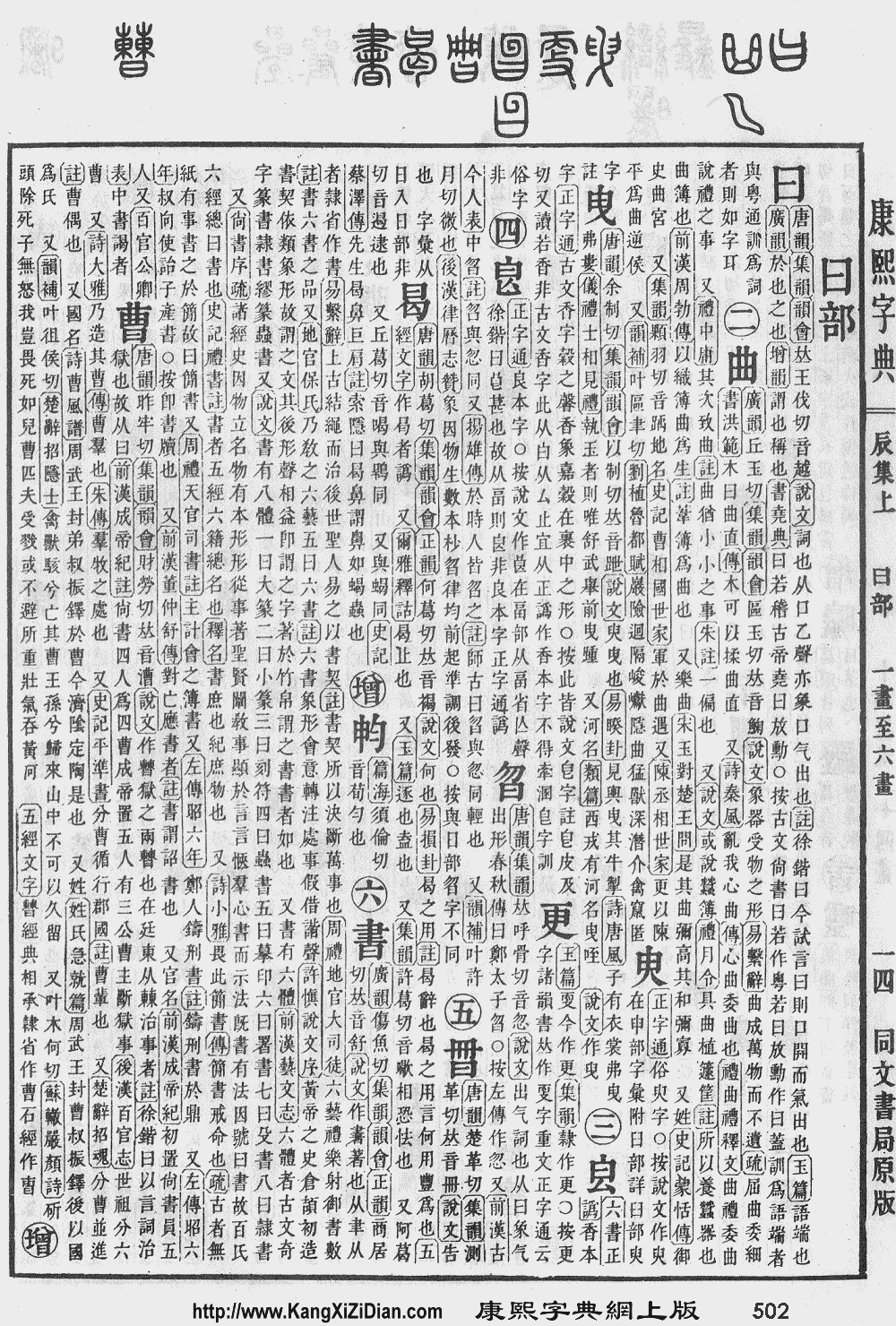
- Kangxi Dictionary: page 502, character 4
- Dai Kanwa Jiten: character 14282
- Dae Jaweon: page 874, character 1
- Hanyu Da Zidian (first edition): volume 2, page 1486, character 5
- Unihan data for U+66F3
Chinese
Glyph origin
| Historical forms of the character 曳 | |
|---|---|
| Shuowen Jiezi (compiled in Han) | Liushutong (compiled in Ming) |
| Small seal script | Transcribed ancient scripts |
 |
 |
Etymology 1
| simp. and trad. |
曳 | |
|---|---|---|
Possibly related to 抴 (OC *lebs, *led, “to pull”) (Wang, 1982; Schuessler, 2007).
Pronunciation
Definitions
曳
- to drag; to pull
- 填然鼓之,兵刃既接,棄甲曳兵而走。 [Classical Chinese, trad.]
- From: Mencius, c. 4th century BCE
- Tián rán gǔ zhī, bīng rèn jì jiē, qì jiǎ yè bīng ér zǒu. [Pinyin]
- The soldiers move forward to the sound of the drums; and after their weapons have been crossed, on one side they throw away their coats of mail, trail their arms behind them, and run.
填然鼓之,兵刃既接,弃甲曳兵而走。 [Classical Chinese, simp.]
- (literary) to float in the wind; to sway
- (obsolete) tired; fatigued
Compounds
Pronunciation
Definitions
曳
Synonyms
Dialectal synonyms of 頑皮 (“naughty”) [map]
Antonyms
- (antonym(s) of “naughty”): (Cantonese) 乖 (gwaai1)
Compounds
- 曳曳 (yèyè)
References
- Dictionary of Chinese Character Variants (教育部異體字字典), A01832
- “曳”, in 漢語多功能字庫 (Multi-function Chinese Character Database), 香港中文大學 (the Chinese University of Hong Kong), 2014–
Japanese
Readings
(Can we verify(+) this pronunciation?)
Compounds
Usage notes
Used in Old Japanese as 借音 (shakuon) kana for ⟨ye⟩.
Pronunciation
- IPA(key): [e̞ː]
Derived terms
Korean
Hanja
曳 (eum 예 (ye))
- This term needs a translation to English. Please help out and add a translation, then remove the text
{{rfdef}}.
Vietnamese
This article is issued from Wiktionary. The text is licensed under Creative Commons - Attribution - Sharealike. Additional terms may apply for the media files.