杣
| ||||||||
Translingual
Han character
杣 (Kangxi radical 75, 木+3, 7 strokes, cangjie input 木山 (DU), four-corner 42970, composition ⿰木山)
Derived characters
- 𡷻
References
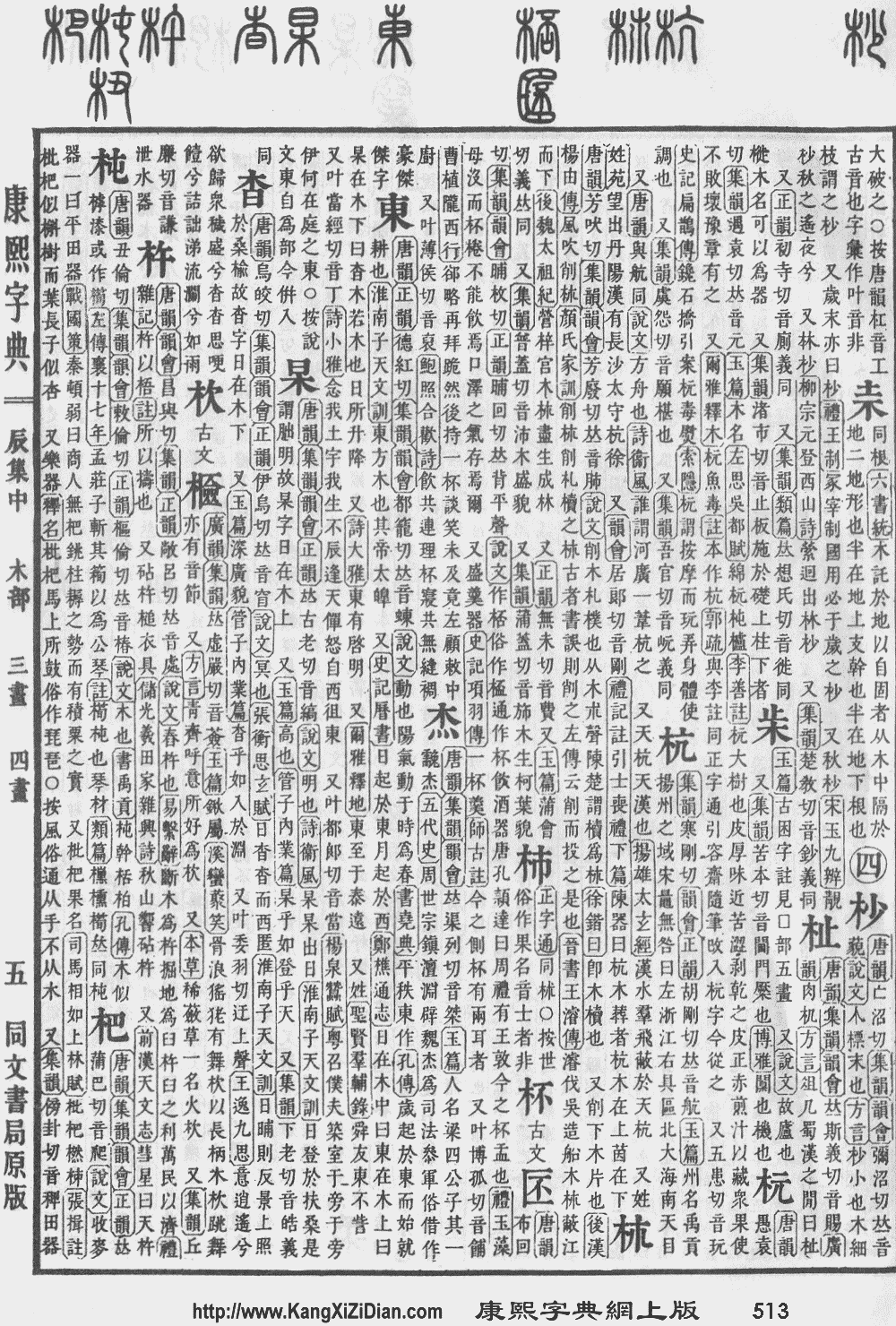
- Kangxi Dictionary: not present, would follow page 513, character 1
- Dai Kanwa Jiten: character 14488
- Dae Jaweon: page 898, character 10
- Hanyu Da Zidian (first edition): volume 8 (in addendum), page 19, character 12
- Unihan data for U+6763
Chinese
| simp. and trad. |
杣 | |
|---|---|---|
Pronunciation
Definitions
杣
- The meaning of this term is uncertain. Possibilities include:
- A variant form of 櫋 (mián).
- 瓦屋則用磚裹杣簷,草屋則用泥圬上下,既防延燒,且易救護。 [Classical Chinese, trad.]
- From: 王禎 (Wang Zhen) 《王禎農書·卷二十二》
- Wǎ wū zé yòng zhuān guǒ shān yán, cǎo wū zé yòng ní wū shàngxià, jì fáng yán shāo, qiě yì jiùhù. [Pinyin]
- (please add an English translation of this usage example)
瓦屋则用砖裹杣檐,草屋则用泥圬上下,既防延烧,且易救护。 [Classical Chinese, simp.]
- A variant form of 櫋 (mián).
Japanese
Etymology
| Kanji in this term |
|---|
| 杣 |
| そま Hyōgaiji |
| kun’yomi |
⟨so1ma⟩ → */sʷoma/ → /soma/
From Old Japanese.
(This etymology is missing or incomplete. Please add to it, or discuss it at the Etymology scriptorium.)
Pronunciation
Noun
杣 • (soma)
- a timberland
- Synonym: 杣山 (somayama)
- lumber, timber
- Synonym: 杣木 (somagi)
- a lumberjack, woodcutter
- Synonym: 杣人 (somabito)
Derived terms
Derived terms
- 杣板 (somaita)
- 杣入り (somairi)
- 杣入れ (somaire)
- 杣角 (somakaku)
- 杣方, 杣形 (somakata)
- 杣川 (somagawa)
- 杣木 (somagi)
- 杣下し (somakudashi)
- 杣小屋 (somagoya)
- 杣田 (Somata)
- 杣田 (Somada)
- 杣田細工 (Somada-zaiku)
- 杣出し (somadashi)
- 杣立つ (somatatsu)
- 杣作り (somatsukuri)
- 杣取り (somadori)
- 杣判 (somahan)
- 杣人 (somabito), 杣人 (somaudo)
- 杣夫 (somafu)
- 杣道 (somamichi)
- 杣山 (somayama)
- 蓬が杣 (yomogi ga soma)
- 我が立つ杣 (waga tatsu soma)
References
- Matsumura, Akira, editor (2006), 大辞林 [Daijirin] (in Japanese), Third edition, Tōkyō: Sanseidō, →ISBN
Vietnamese
References
- Trần (2004).
This article is issued from Wiktionary. The text is licensed under Creative Commons - Attribution - Sharealike. Additional terms may apply for the media files.