用
See also: 甩
| ||||||||
| ||||||||
Translingual
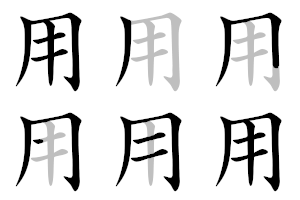
| Stroke order | |||
|---|---|---|---|
 | |||
Han character
用 (Kangxi radical 101, 用+0, 5 strokes, cangjie input 月手 (BQ), four-corner 77220, composition ⿵⺆𰀁 or ⿻丨月)
- Kangxi radical #101, ⽤.
Derived characters
References
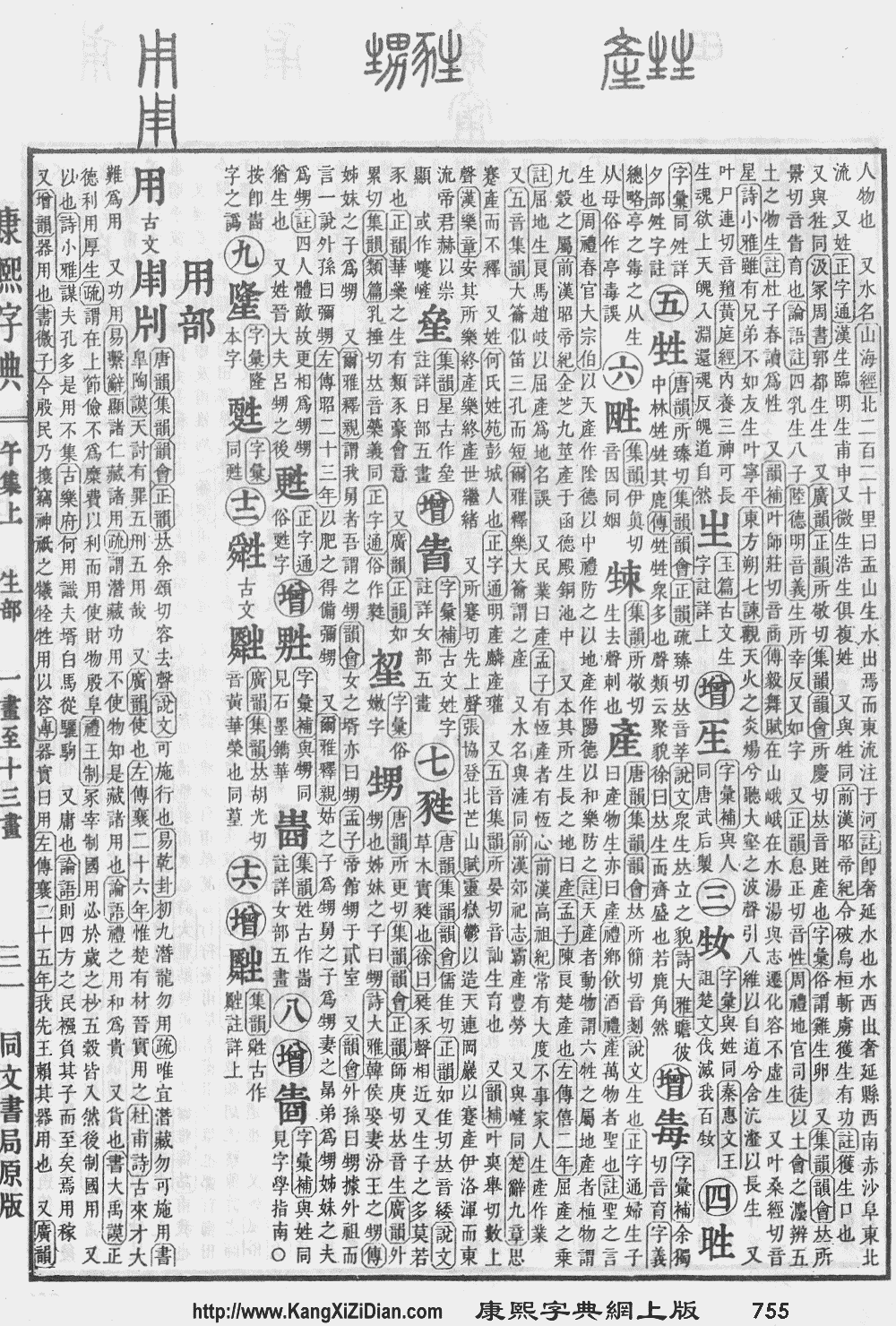
- Kangxi Dictionary: page 755, character 24
- Dai Kanwa Jiten: character 21703
- Dae Jaweon: page 1166, character 1
- Hanyu Da Zidian (first edition): volume 1, page 97, character 5
- Unihan data for U+7528
Chinese
| simp. and trad. |
用 | |
|---|---|---|
| alternative forms | ||
Glyph origin
| Historical forms of the character 用 | ||||||||||
|---|---|---|---|---|---|---|---|---|---|---|
| Shang | Western Zhou | Spring and Autumn | Warring States | Shuowen Jiezi (compiled in Han) | Liushutong (compiled in Ming) | |||||
| Bronze inscriptions | Oracle bone script | Bronze inscriptions | Oracle bone script | Bronze inscriptions | Bronze inscriptions | Chu slip and silk script | Qin slip script | Ancient script | Small seal script | Transcribed ancient scripts |
 |
 |
 |
 |
 |
 |
 |
 |
 |
 |
 |
Characters in the same phonetic series (用) (Zhengzhang, 2003)
Etymology
From Proto-Sino-Tibetan *z(j)um ~ *zuŋ, provisionally set up by STEDT. Cognates to 傭 (OC loŋ) and 庸 (OC loŋ), outside Sinitic, Southern Bai zv³¹ (“to use”) Burmese သုံး (sum:, “to use”), Ersu zi⁵⁵ (“to use”), Nuosu ꌬ (ssi, “to use”), Pa'o Karen [script needed] (sūŋ, “to use”).
Sun (1999) and Schuessler (2007) consider this word a cognate to Tibetan ལོངས (longs, “use”)
Pronunciation
Definitions
用
- to use; to employ; to operate
- use; utility; usefulness
- (honorific) to eat; to drink
- expenses; outlay
- with; by; using
- (chiefly used in the negative or interrogative) to need
- (literary) therefore
- (obsolete) because of; due to; because
- 子曰:「伯夷叔齊,不念舊惡,怨是用希。」 [Classical Chinese, trad.]
- From: The Analects of Confucius, c. 475 – 221 BCE, translated based on James Legge's version
- Zǐyuē: “Bóyí Shūqí, bùniànjiù'è, yuàn shìyòng xī.” [Pinyin]
- The Master said, "Bo Yi and Shu Qi did not keep the former wickednesses of men in mind, and hence (i.e. "because of this") the resentments directed towards them were few."
子曰:「伯夷叔齐,不念旧恶,怨是用希。」 [Classical Chinese, simp.]
- a surname
Synonyms
- (to use):
- 使出 (shǐchū)
- 使用 (shǐyòng)
- 利用 (lìyòng)
- 動用/动用 (dòngyòng)
- 取用 (qǔyòng)
- 吸納/吸纳 (xīnà)
- 善用 (shànyòng) (to put to good use)
- 套用 (tàoyòng) (to apply mechanically)
- 實用/实用 (shíyòng)
- 應用/应用 (yìngyòng)
- 採用/采用 (cǎiyòng)
- 採納/采纳 (cǎinà)
- 搬 (bān) (to apply mechanically)
- 搬動/搬动 (bāndòng)
- 施用 (shīyòng)
- 沿用 (yányòng) (to continue to use)
- 硬套 (yìngtào) (to apply mechanically)
- 起動/起动 (Quanzhou Hokkien, Xiamen Hokkien)
- 運用/运用 (yùnyòng)
- 錄用/录用 (lùyòng)
- 須/须 (xū) (literary)
Dialectal synonyms of 用 (“to use”) [map]
| Variety | Location | Words |
|---|---|---|
| Formal (Written Standard Chinese) | 用, 使用 | |
| Mandarin | Beijing | 使, 用 |
| Jinan | 使, 用 | |
| Xi'an | 使喚 | |
| Wuhan | 用 | |
| Chengdu | 用, 使 | |
| Guilin | 用 | |
| Yangzhou | 用 | |
| Hefei | 使, 用 | |
| Malaysia | 用 | |
| Singapore | 用 | |
| Cantonese | Guangzhou | 用, 使 |
| Hong Kong | 用, 使 | |
| Yangjiang | 使 | |
| Singapore (Guangfu) | 用 | |
| Gan | Nanchang | 用 |
| Hakka | Meixian | 用 |
| Jin | Taiyuan | 使喚, 用 |
| Northern Min | Jian'ou | 使 |
| Eastern Min | Fuzhou | 使 |
| Southern Min | Xiamen | 用 |
| Penang (Hokkien) | 用 | |
| Singapore (Hokkien) | 用 | |
| Chaozhou | 用, 使 | |
| Singapore (Teochew) | 用 | |
| Zhongshan Min | Shaxi (Longdu) | 用 |
| Wu | Suzhou | 用 |
| Wenzhou | 用 | |
| Xiang | Changsha | 用 |
| Shuangfeng | 用 | |
Dialectal synonyms of 用 (“with; by; using”) [map]
| Variety | Location | Words |
|---|---|---|
| Formal (Written Standard Chinese) | 用, 拿 | |
| Mandarin | Beijing | 拿, 用 |
| Jinan | 用, 拿 | |
| Xi'an | 用, 拿 | |
| Wuhan | 用, 架, 拿 | |
| Chengdu | 拿, 使 | |
| Yangzhou | 拿, 用 | |
| Hefei | 用, 拿 | |
| Cantonese | Guangzhou | 用, 攞 |
| Hong Kong | 用, 攞 | |
| Yangjiang | 用, 捰 | |
| Gan | Nanchang | 用, 拿 |
| Hakka | Meixian | 用 |
| Jin | Taiyuan | 拿, 用 |
| Northern Min | Jian'ou | 使 |
| Eastern Min | Fuzhou | 使, 獲 |
| Southern Min | Xiamen | 用 |
| Jinjiang | 用 | |
| Manila (Hokkien) | 用 | |
| Chaozhou | 用 | |
| Wu | Suzhou | 拿, 用 |
| Wenzhou | 用, 𧵊 | |
| Xiang | Changsha | 用, 拿 |
| Shuangfeng | 用 | |
Compounds
- 一心二用 (yīxīn'èryòng)
- 一搭兩用/一搭两用
- 一舉兩用/一举两用
- 不中用
- 不受用
- 不為人用/不为人用
- 不用
- 不用客氣/不用客气 (bùyòng kèqì)
- 不用心
- 不用忙
- 不用愁
- 不用看
- 不用著急/不用着急
- 不用說/不用说 (bùyòngshuō)
- 不用費事/不用费事
- 不經用/不经用
- 並用/并用 (bìngyòng)
- 中用 (zhōngyòng)
- 中用錢/中用钱
- 乏用
- 亂用/乱用 (luànyòng)
- 互用
- 交互作用
- 享用 (xiǎngyòng)
- 代用 (dàiyòng)
- 代用品 (dàiyòngpǐn)
- 代謝作用/代谢作用
- 任用 (rènyòng)
- 任賢用能/任贤用能
- 何用
- 作用 (zuòyòng)
- 使心用腹
- 供用 (gōngyòng)
- 佷用
- 使用 (shǐyòng)
- 使用借貸/使用借贷
- 使用權/使用权 (shǐyòngquán)
- 使用率
- 使用錢/使用钱
- 侵用
- 信用 (xìnyòng)
- 便用
- 保用 (bǎoyòng)
- 信用交易
- 信用卡 (xìnyòngkǎ)
- 信用狀/信用状 (xìnyòngzhuàng)
- 信用額度/信用额度 (xìnyòng édù)
- 侵蝕作用/侵蚀作用
- 候用
- 借用 (jièyòng)
- 停用 (tíngyòng)
- 備用/备用 (bèiyòng)
- 備用品/备用品 (bèiyòngpǐn)
- 備用車胎/备用车胎
- 備而不用/备而不用 (bèi'érbùyòng)
- 僱用/雇用 (gùyòng)
- 光化作用
- 光合作用 (guānghé zuòyòng)
- 光敏作用
- 兌用/兑用
- 免疫作用
- 內用/内用 (nèiyòng)
- 兩用/两用 (liǎngyòng)
- 公用 (gōngyòng)
- 公用事業/公用事业 (gōngyòng shìyè)
- 公用徵收/公用征收
- 公用程式
- 公用費率/公用费率
- 公用限制
- 公用電話/公用电话 (gōngyòng diànhuà)
- 共用 (gòngyòng)
- 兼用 (jiānyòng)
- 冒用 (màoyòng)
- 冰河作用
- 凝結作用/凝结作用
- 刁蹬用強/刁蹬用强
- 分解作用
- 利息費用/利息费用
- 別有用心/别有用心 (biéyǒuyòngxīn)
- 利用 (lìyòng)
- 剛愎自用/刚愎自用 (gāngbìzìyòng)
- 剛戾自用/刚戾自用
- 剝蝕作用/剥蚀作用
- 剛褊自用/刚褊自用
- 剝離作用/剥离作用
- 副作用 (fùzuòyòng)
- 功用 (gōngyòng)
- 動用/动用 (dòngyòng)
- 動用家事/动用家事
- 包用
- 化學作用/化学作用
- 占用 (zhànyòng)
- 卵用雞/卵用鸡 (luǎnyòngjī)
- 反作用
- 反作用力 (fǎnzuòyònglì)
- 取用 (qǔyòng)
- 受用
- 取精用弘
- 古為今用/古为今用
- 同化作用 (tónghuà zuòyòng)
- 合成作用
- 合用 (héyòng)
- 各盡其用/各尽其用
- 吹蝕作用/吹蚀作用
- 吸附作用
- 呼吸作用 (hūxī zuòyòng)
- 商用 (shāngyòng)
- 善用 (shànyòng)
- 器用 (qìyòng)
- 嚼用
- 回春作用
- 回用
- 回饋作用/回馈作用
- 固定作用
- 固氮作用 (gùdàn zuòyòng)
- 國用/国用
- 均夷作用
- 執兩用中/执两用中
- 墊用/垫用
- 外用 (wàiyòng)
- 外用藥/外用药 (wàiyòng yào)
- 大器小用 (dàqì-xiǎoyòng)
- 大材小用 (dàcái-xiǎoyòng)
- 大為受用/大为受用
- 大用
- 套用 (tàoyòng)
- 妙用 (miàoyòng)
- 妙用無窮/妙用无穷
- 委用 (wěiyòng)
- 學以致用/学以致用 (xuéyǐzhìyòng)
- 學有所用/学有所用
- 學非所用/学非所用
- 官用
- 家用 (jiāyòng)
- 家用電器/家用电器 (jiāyòng diànqì)
- 家用電玩/家用电玩
- 家用電腦/家用电脑 (jiāyòng diànnǎo)
- 實用/实用 (shíyòng)
- 實用主義/实用主义 (shíyòng zhǔyì)
- 寬打窄用/宽打窄用
- 將士用命/将士用命
- 專款專用/专款专用
- 專用/专用 (zhuānyòng)
- 對品調用/对品调用
- 小材大用
- 崩解作用
- 工業用圖/工业用图
- 工業用水/工业用水
- 工用
- 師心自用/师心自用 (shīxīnzìyòng)
- 常用詞/常用词 (chángyòngcí)
- 廢物利用/废物利用
- 廣用試紙/广用试纸
- 引用 (yǐnyòng)
- 彊本節用/强本节用
- 得用
- 御用 (yùyòng)
- 徵用/征用 (zhēngyòng)
- 心無二用/心无二用 (xīnwú'èryòng)
- 心理作用
- 急用 (jíyòng)
- 恩威並用/恩威并用
- 惡用/恶用
- 感情作用
- 感情用事
- 意氣用事/意气用事 (yìqìyòngshì)
- 慣用/惯用 (guànyòng)
- 慢用 (mànyòng)
- 慣用語/惯用语 (guànyòngyǔ)
- 應用/应用 (yìngyòng)
- 應用數學/应用数学 (yìngyòng shùxué)
- 應用文/应用文 (yìngyòngwén)
- 應用科學/应用科学 (yìngyòng kēxué)
- 應用程式/应用程式 (yìngyòng chéngshì)
- 應用軟體/应用软体
- 成岩作用
- 成礦作用/成矿作用
- 才大難用/才大难用
- 投射作用
- 抄用 (chāoyòng)
- 抗頡作用/抗颉作用
- 抵用
- 拆用
- 拒用
- 持用
- 挪用 (nuóyòng)
- 排出作用
- 排水作用
- 採用/采用 (cǎiyòng)
- 換位作用/换位作用
- 援用 (yuányòng)
- 搬運作用/搬运作用
- 撥用/拨用
- 擅用
- 擢用 (zhuóyòng)
- 擴散作用/扩散作用
- 支用 (zhīyòng)
- 收用
- 改用 (gǎiyòng)
- 效用 (xiàoyòng)
- 啟用/启用 (qǐyòng)
- 敘用/叙用
- 施用 (shīyòng)
- 施謀用智/施谋用智
- 施謀用計/施谋用计
- 日用 (rìyòng)
- 日用品 (rìyòngpǐn)
- 春化作用
- 晉用/晋用
- 替代作用
- 有個屁用/有个屁用
- 有用 (yǒuyòng)
- 朋分花用
- 服用 (fúyòng)
- 材大難用/材大难用
- 枉用心機/枉用心机
- 柄用
- 核子作用
- 械用
- 棄瑕取用/弃瑕取用
- 棄瑕錄用/弃瑕录用
- 楚材晉用/楚材晋用
- 標籤作用/标签作用
- 機關用盡/机关用尽
- 毗尼日用
- 民用 (mínyòng)
- 民用品
- 民用機場/民用机场
- 氨化作用
- 氧化作用
- 永不錄用/永不录用
- 求賢用士/求贤用士
- 沒中用/没中用
- 沒用/没用 (méiyòng)
- 沉積作用/沉积作用
- 沿用 (yányòng)
- 派上用場/派上用场 (pàishàngyòngchǎng)
- 洗出作用
- 活學活用/活学活用
- 流用
- 活用 (huóyòng)
- 派用人員/派用人员
- 消化作用
- 浪用
- 淨化作用/净化作用
- 混合使用
- 淘選作用/淘选作用
- 潛龍勿用/潜龙勿用
- 濫吃濫用/滥吃滥用
- 濫用/滥用 (lànyòng)
- 濾過作用/滤过作用
- 火山作用 (huǒshān zuòyòng)
- 無所用心/无所用心 (wúsuǒyòngxīn)
- 無用/无用 (wúyòng)
- 蒸散作用
- 營業費用/营业费用
- 物盡其用/物尽其用 (wùjìnqíyòng)
- 狠愎自用
- 甄用
- 用一當十/用一当十
- 用不著/用不着 (yòngbùzháo)
- 用世
- 用之不竭 (yòngzhībùjié)
- 用事 (yòngshì)
- 用人 (yòngrén)
- 用代楮敬
- 用來/用来 (yònglái)
- 用光 (yòngguāng)
- 用兵 (yòngbīng)
- 用兵如神 (yòngbīngrúshén)
- 用具 (yòngjù)
- 用其所長/用其所长
- 用刑 (yòngxíng)
- 用力 (yònglì)
- 用功 (yònggōng)
- 用勁/用劲 (yòngjìn)
- 用匯/用汇
- 用印
- 用命 (yòngmìng)
- 用品 (yòngpǐn)
- 用地 (yòngdì)
- 用場/用场 (yòngchǎng)
- 用夏變夷/用夏变夷
- 用天因地
- 用完 (yòngwán)
- 用工夫
- 用度 (yòngdù)
- 用心 (yòngxīn)
- 用心用意
- 用心竭力
- 用心良苦
- 用志不分
- 用情 (yòngqíng)
- 用意 (yòngyì)
- 用戶/用户 (yònghù)
- 用手
- 用料 (yòngliào)
- 用是
- 用智鋪謀/用智铺谋
- 用武 (yòngwǔ)
- 用武之地
- 用水 (yòngshuǐ)
- 用法 (yòngfǎ)
- 用特
- 用盡/用尽 (yòngjìn)
- 用盡心思/用尽心思
- 用盡心機/用尽心机
- 用管窺天/用管窥天
- 用膳 (yòngshàn)
- 用舍失宜
- 用舍行藏
- 用茶
- 用處/用处 (yòngchù)
- 用行舍藏
- 用計鋪謀/用计铺谋
- 用詞/用词 (yòngcí)
- 用語/用语 (yòngyǔ)
- 用費/用费 (yòngfèi)
- 用賢任能/用贤任能
- 用途 (yòngtú)
- 用逸待勞/用逸待劳
- 用錢/用钱
- 用錢如水/用钱如水
- 用非其人
- 用非所學/用非所学
- 用韻/用韵
- 用項/用项
- 用飯/用饭 (yòngfàn)
- 用餐 (yòngcān)
- 甭用
- 留心用意
- 異化作用/异化作用 (yìhuà zuòyòng)
- 異用字/异用字 (yìyòngzì)
- 百無一用/百无一用
- 盜用/盗用 (dàoyòng)
- 相互作用 (xiānghù zuòyòng)
- 省喫儉用/省吃俭用 (shěngchījiǎnyòng)
- 省用足財/省用足财
- 石化作用
- 硝化作用
- 礦化作用/矿化作用
- 神機妙用/神机妙用
- 萬用/万用 (wànyòng)
- 私用
- 租用 (zūyòng)
- 移情作用
- 移用 (yíyòng)
- 竊用/窃用
- 節用/节用
- 節用厚生/节用厚生
- 節用愛人/节用爱人
- 節用裕民/节用裕民
- 管用 (guǎnyòng)
- 糖解作用
- 經世致用/经世致用
- 緊用項/紧用项
- 績用/绩用
- 罕用 (hǎnyòng)
- 習用/习用 (xíyòng)
- 老朽無用/老朽无用
- 耐用 (nàiyòng)
- 聘用 (pìnyòng)
- 聘用人員/聘用人员
- 聚礦作用/聚矿作用
- 聽用/听用
- 自作自用
- 自淨作用/自净作用
- 自用 (zìyòng)
- 自用車/自用车
- 致用
- 舍短用長/舍短用长
- 花用
- 著用/着用
- 蒲鞭不用
- 藥用/药用 (yàoyòng)
- 藥用植物/药用植物
- 虹吸作用
- 補償作用/补偿作用
- 襲用/袭用 (xíyòng)
- 言聽計用/言听计用
- 試用/试用 (shìyòng)
- 誤用/误用 (wùyòng)
- 調用/调用 (diàoyòng)
- 財用/财用
- 費用/费用 (fèiyòng)
- 貼補家用/贴补家用
- 資用/资用
- 購用/购用
- 起用 (qǐyòng)
- 軍用/军用 (jūnyòng)
- 軍用機場/军用机场 (jūnyòng jīchǎng)
- 轉化作用/转化作用
- 迴饋作用/回馈作用
- 連用/连用 (liányòng)
- 通用 (tōngyòng)
- 進用/进用
- 運用/运用 (yùnyòng)
- 運用自如/运用自如
- 道謀是用/道谋是用
- 道路用地
- 遣辭用句/遣辞用句
- 適材適用/适材适用
- 適用/适用 (shìyòng)
- 選用/选用 (xuǎnyòng)
- 邊際效用/边际效用
- 重用 (zhòngyòng)
- 量才錄用/量才录用
- 量材錄用/量材录用
- 鈣化作用/钙化作用
- 錐刀之用/锥刀之用
- 錄用/录用 (lùyòng)
- 防衛作用/防卫作用
- 隨插即用/随插即用
- 離峰用電/离峰用电
- 零用 (língyòng)
- 零用金
- 零用錢/零用钱 (língyòngqián)
- 需用
- 韓信用兵/韩信用兵
- 頂用/顶用 (dǐngyòng)
- 須用/须用
- 顎化作用/颚化作用
- 類推作用/类推作用
- 風化作用/风化作用
- 食用 (shíyòng)
- 食用根
- 食用色素 (shíyòng sèsù)
- 飲用/饮用 (yǐnyòng)
- 體用/体用
- 鹽析作用/盐析作用
Descendants
Others:
References
- “用”, in 漢語多功能字庫 (Multi-function Chinese Character Database), 香港中文大學 (the Chinese University of Hong Kong), 2014–
- Dictionary of Chinese Character Variants (教育部異體字字典), A02627
Japanese
Readings
Usage notes
Formerly used as man'yōgana for the back-vowel variant (甲類) of よ, romanized as yo1.
Noun
用 • (yō)
Korean
Etymology
From Middle Chinese 用 (MC yowngH). Recorded as Middle Korean 용 (yong) (Yale: yong) in Sinjeung Yuhap (新增類合 / 신증유합), 1576.
Pronunciation
- (SK Standard/Seoul) IPA(key): [jo(ː)ŋ]
- Phonetic hangul: [용(ː)]
- Though still prescribed in Standard Korean, most speakers in both Koreas no longer distinguish vowel length.
Compounds
Compounds
- 용달 (用達, yongdal)
- 용도 (用途, yongdo)
- 용돈 (用돈, yongdon)
- 용량 (用量, yongnyang)
- 용례 (用例, yongnye)
- 용무 (用務, yongmu)
- 용법 (用法, yongbeop)
- 용변 (用便, yongbyeon)
- 용병 (用兵, yongbyeong)
- 용수 (用水, yongsu)
- 용어 (用語, yong'eo)
- 용언 (用言, yong'eon)
- 용역 (用役, yong'yeok)
- 용의 (用意, yong'ui)
- 용인 (用人, yong'in)
- 용지 (用紙, yongji)
- 도용 (盜用, doyong)
- 무용 (無用, muyong)
- 사용 (使用, sayong)
- 선용 (善用, seonyong)
- 악용 (惡用, agyong)
- 오용 (誤用, oyong)
- 유용 (有用, yuyong)
- 유용 (流用, yuyong)
- 이용 (利用, iyong)
- 차용 (借用, chayong)
- 활용 (活用, hwaryong)
Vietnamese
This article is issued from Wiktionary. The text is licensed under Creative Commons - Attribution - Sharealike. Additional terms may apply for the media files.