泥
| ||||||||
| ||||||||
Translingual
Han character
泥 (Kangxi radical 85, 水+5, 8 strokes, cangjie input 水尸心 (ESP), four-corner 37111, composition ⿰氵尼)
References
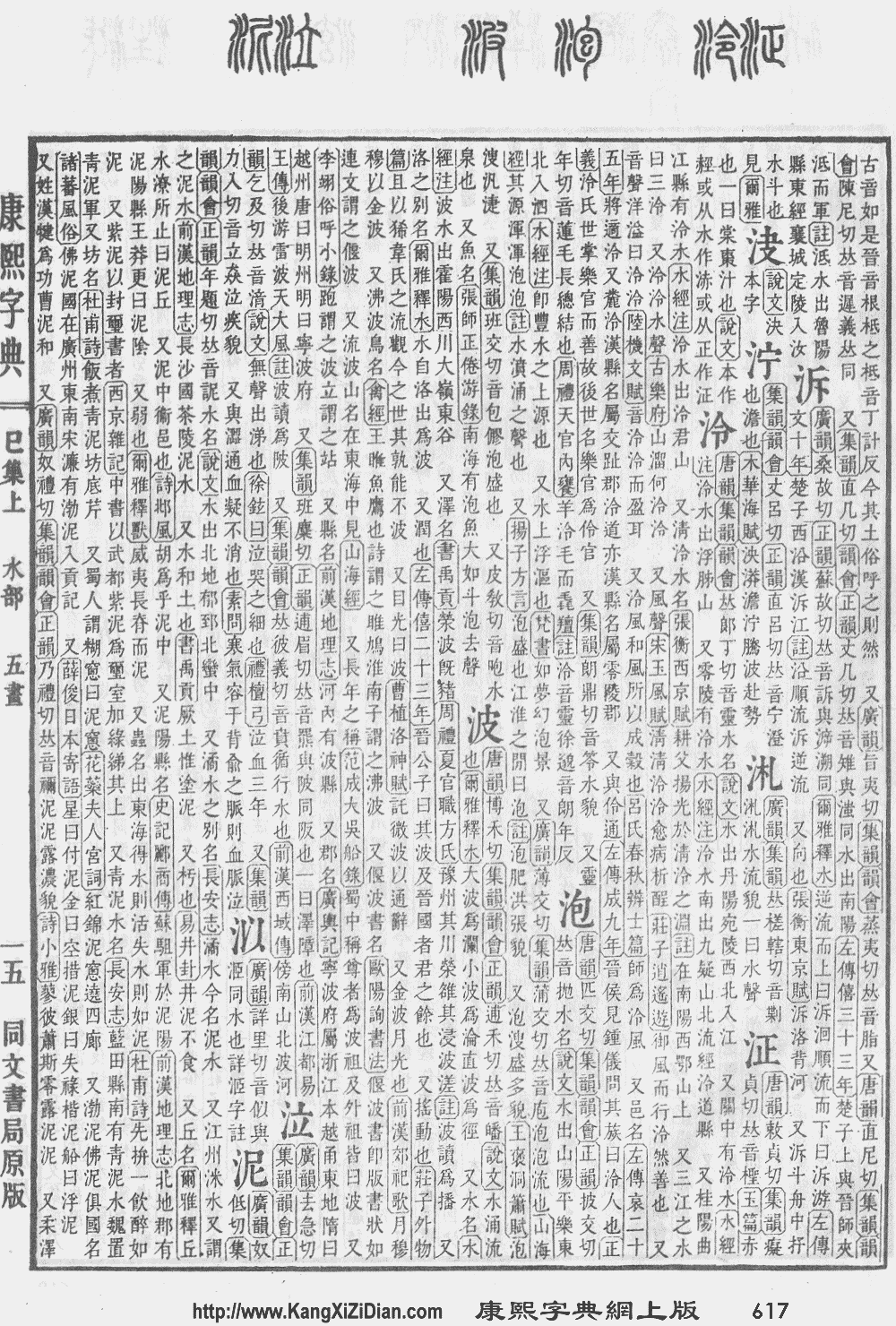
- Kangxi Dictionary: page 617, character 11
- Dai Kanwa Jiten: character 17311
- Dae Jaweon: page 1012, character 8
- Hanyu Da Zidian (first edition): volume 3, page 1595, character 8
- Unihan data for U+6CE5
- Unihan data for U+F9E3
Chinese
| trad. | 泥 | |
|---|---|---|
| simp. # | 泥 | |
| alternative forms | ||
Glyph origin
| Historical forms of the character 泥 |
|---|
| Shuowen Jiezi (compiled in Han) |
| Small seal script |
 |
Phono-semantic compound (形聲/形声, OC *niːl, *niːls) : semantic 氵 (“water”) + phonetic 尼 (OC *nil).
Etymology 1
Schuessler (2007) suggests it is of Sino-Tibetan origin and compares it to Lai [script needed] (nôoy-I, nǒoy-II, “be muddy”), which STEDT derives from Proto-Kuki-Chin *nooy ~ *naay (“muddy; dirty”). According to Schuessler (2007), 泥 (OC *niːl, “mud”) is also cognate with 濘 (OC *neːŋs) but not with 涅 (OC *niːɡ), and is distinct from 泥 (OC *niːls, “impeded”).
On the other hand, STEDT compares 泥 (OC *niːl, *niːls) to Proto-Sino-Tibetan *s-njak (“filth(y); excrement”), to which 敜 (OC *nɯːb) and 涅 (OC *niːɡ) are also compared.
Pronunciation
Definitions
泥
- mud (Classifier: 嚿 c; 坺 c)
- (dialectal) soil; earth
- any mush-like substance
- (obsolete) paint (used on walls)
- An ancient river in modern Hunan
- An ancient river in modern Gansu
- (obsolete) weak
- (Chinese mythology) a kind of animal that lived in sea
- a surname
- (~母) (Chinese linguistics) the Middle Chinese initial of 泥 (MC nej)
Synonyms
Compounds
- 一丸泥
- 丸泥
- 判若雲泥/判若云泥
- 削鐵如泥/削铁如泥
- 印泥 (yìnní)
- 叉灰泥
- 和稀泥 (huò xī ní)
- 困處泥塗/困处泥涂
- 土泥
- 垢泥
- 壁上泥皮
- 如泥
- 封泥
- 帶水拖泥/带水拖泥
- 拖泥帶水/拖泥带水 (tuōnídàishuǐ)
- 抹稀泥
- 排泥閥/排泥阀
- 敷彩泥塑
- 曳尾泥塗/曳尾泥涂
- 木雕泥塑
- 末泥
- 棗泥/枣泥
- 水泥 (shuǐní)
- 水泥叢林/水泥丛林 (shuǐní cónglín)
- 水泥漆
- 水泥熟料
- 水泥船
- 汙泥/污泥 (wūní)
- 泥中
- 泥中刺
- 泥中隱刺/泥中隐刺
- 泥丸 (níwán)
- 泥人 (nírén)
- 泥人張/泥人张
- 泥土 (nítǔ)
- 泥地
- 泥坑 (níkēng)
- 泥坯
- 泥垢 (nígòu)
- 泥垣宮/泥垣宫
- 泥堆
- 泥塑
- 泥塗/泥涂
- 泥塘 (nítáng)
- 泥塑木雕
- 泥塞竹管
- 泥多佛大
- 泥娃娃 (níwáwa)
- 泥孩兒/泥孩儿
- 泥封
- 泥封函谷
- 泥崩
- 泥工 (nígōng)
- 泥巴
- 泥掌
- 泥板岩 (níbǎnyán)
- 泥水 (níshuǐ)
- 泥水匠 (níshuǐjiàng)
- 泥水工 (níshuǐgōng)
- 泥水自蔽
- 泥汙/泥污
- 泥沙 (níshā)
- 泥沙俱下
- 油泥 (yóuní)
- 泥沼 (nízhǎo)
- 沼泥
- 泡沫水泥
- 泥流 (níliú)
- 泥活字
- 泥淖 (nínào)
- 泥滓
- 泥漿/泥浆 (níjiāng)
- 泥潦
- 泥濘/泥泞 (nínìng)
- 泥火山 (níhuǒshān)
- 泥灰
- 泥灶
- 泥炭 (nítàn)
- 泥煤 (níméi)
- 泥牆/泥墙
- 泥版
- 泥牛
- 泥牛入海 (níniú-rùhǎi)
- 泥犁
- 泥瓦匠 (níwǎjiàng)
- 泥療/泥疗
- 泥盆紀/泥盆纪 (Nípén Jì)
- 泥石流 (níshíliú)
- 泥磚/泥砖
- 泥窗
- 泥肥
- 泥胎
- 泥胎兒/泥胎儿
- 泥腳/泥脚
- 泥腿
- 泥腿光棍
- 泥船渡河
- 泥蟠
- 泥豬/泥猪
- 泥豬瓦狗/泥猪瓦狗
- 泥足巨人
- 泥醉
- 泥金
- 泥金帖子
- 泥金箋/泥金笺
- 泥鞋窄襪/泥鞋窄袜
- 泥頭/泥头
- 泥頭酒/泥头酒
- 泥飯碗/泥饭碗
- 泥首
- 泥馬/泥马
- 泥鰍/泥鳅 (níqiū)
- 泥鰻/泥鳗
- 泥點兒/泥点儿
- 泥龍/泥龙
- 洗泥
- 淈泥
- 淤泥 (yūní)
- 澄泥硯/澄泥砚
- 火泥
- 爐石水泥/炉石水泥
- 爛泥/烂泥 (lànní)
- 爛醉如泥/烂醉如泥
- 牆上泥皮/墙上泥皮
- 砍鐵如泥/砍铁如泥
- 稀泥 (xīní)
- 紫泥
- 紫泥封
- 綠泥石/绿泥石
- 罡神泥鬼
- 膠泥/胶泥
- 臭泥
- 芋泥 (yùní)
- 蒜泥 (suànní)
- 醉如泥
- 金泥
- 鋼骨水泥/钢骨水泥
- 障泥
- 雪泥鴻爪/雪泥鸿爪
- 雲泥/云泥 (yúnní)
- 雲泥之別/云泥之别 (yúnnízhībié)
- 雲泥異路/云泥异路
- 霑泥絮/沾泥絮
- 青泥
- 黃泥塘/黄泥塘 (Huángnítáng)
Etymology 2
Schuessler (2007) suggests it is the exopassive derivation of 敜 (OC *nɯːb, “to stop up”) or 涅 (OC *niːɡ, “to stop up”) and is distinct from 泥 (OC *niːl, “mud”).
Pronunciation
Definitions
泥
- to hold up; to bog down
- 雖小道,必有可觀者焉,致遠恐泥,是以君子不為也。 [Classical Chinese, trad.]
- From: The Analects of Confucius, c. 475 – 221 BCE, translated based on James Legge's version
- Suī xiǎodào, bì yǒu kěguān zhě yān, zhì yuǎn kǒng nì, shìyǐ jūnzǐ bù wéi yě. [Pinyin]
- (please add an English translation of this usage example)
虽小道,必有可观者焉,致远恐泥,是以君子不为也。 [Classical Chinese, simp.]
- to plaster; to cover with plaster
- stubborn; obstinate
- 拘泥 ― jūní ― to rigidly adhere to
- to pester using soft words
- to be obsessed with and be reluctant to let go of
Pronunciation
Definitions
泥
- Only used in 泥泥.
Pronunciation
Definitions
泥
- Only used in 泥母.
Etymology 5
| For pronunciation and definitions of 泥 – see 涅 (“black mud; melanterite; etc.”). (This character is a variant form of 涅). |
References
- “泥”, in 漢語多功能字庫 (Multi-function Chinese Character Database), 香港中文大學 (the Chinese University of Hong Kong), 2014–
- Dictionary of Chinese Character Variants (教育部異體字字典), A02161
- Dictionary of Chinese Character Variants (教育部異體字字典), B00771-003-1
- (Hakka) Lau, Chun-fat. Hakka Pinyin Dictionary (Chinese). Hong Kong: The Chinese University Press, 1997 (Chinese IME supplement) →ISBN.
- (Min Nan) Taiwan Min Nan Common Words Dictionary (臺灣閩南語常用詞辭典)
Japanese
Readings
Etymology
| Kanji in this term |
|---|
| 泥 |
| どろ Grade: S |
| kun’yomi |
Derived terms
- 泥沼 (doronuma): bog
- 泥仕合 (dorojiai): mudslinging
Korean
Etymology
From Middle Chinese 泥 (MC nej|nejH). Recorded as Middle Korean 니 (ni) (Yale: ni) in Hunmong Jahoe (訓蒙字會 / 훈몽자회), 1527.
Vietnamese
Han character
泥: Hán Nôm readings: nề, nê, nệ, nè, nể, nễ, nơi
- This term needs a translation to English. Please help out and add a translation, then remove the text
{{rfdef}}.
References
- Nom Foundation
- Lê Sơn Thanh, "Nom-Viet.dat", WinVNKey (details)