歐
See also: 欧
| ||||||||
Translingual
| Japanese | 欧 |
|---|---|
| Simplified | 欧 |
| Traditional | 歐 |
Han character
歐 (Kangxi radical 76, 欠+11, 15 strokes, cangjie input 尸口弓人 (SRNO), four-corner 77782, composition ⿰區欠)
Descendants
References
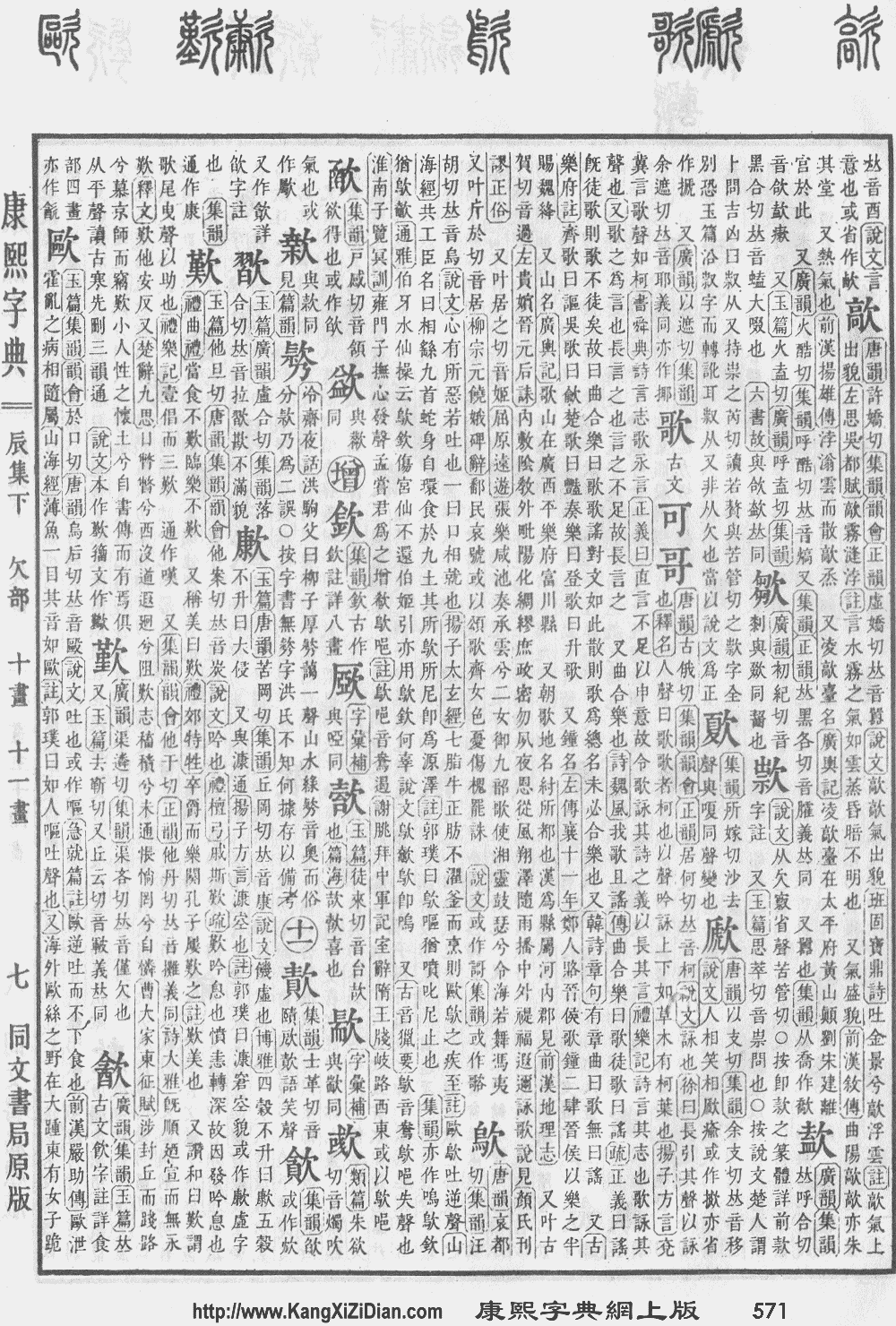
- Kangxi Dictionary: page 571, character 27
- Dai Kanwa Jiten: character 16185
- Dae Jaweon: page 959, character 21
- Hanyu Da Zidian (first edition): volume 3, page 2149, character 12
- Unihan data for U+6B50
Chinese
| trad. | 歐 | |
|---|---|---|
| simp. | 欧 | |
Glyph origin
| Historical forms of the character 歐 | |
|---|---|
| Shuowen Jiezi (compiled in Han) | Liushutong (compiled in Ming) |
| Small seal script | Transcribed ancient scripts |
 |
 |
Characters in the same phonetic series (區) (Zhengzhang, 2003)
Phono-semantic compound (形聲/形声, OC *qoː, *qoːʔ) : phonetic 區 (OC *qoː, *kʰo) + semantic 欠 (“to yawn; to exhale”) – to vomit (original form of 嘔).
Etymology 1
(This etymology is missing or incomplete. Please add to it, or discuss it at the Etymology scriptorium.)
Pronunciation
Definitions
歐
Synonyms
Compounds
- 僕歐/仆欧 (pú'ōu)
- 北歐/北欧 (Běi-Ōu)
- 南歐/南欧 (Nán-Ōu)
- 印歐/印欧 (Yìn-Ōu)
- 大小歐陽/大小欧阳
- 東南歐/东南欧
- 東歐/东欧 (Dōng-Ōu)
- 東歐集團/东欧集团
- 歐亞/欧亚
- 歐亞大陸/欧亚大陆
- 歐佩克/欧佩克 (Ōupèikè)
- 歐元/欧元 (ōuyuán)
- 歐克/欧克 (ōukè)
- 歐冶子/欧冶子
- 歐冶鑄劍/欧冶铸剑
- 歐刀/欧刀
- 歐化/欧化 (ōuhuà)
- 歐吉桑/欧吉桑 (ōujísāng)
- 歐姆/欧姆 (ōumǔ)
- 歐姆定律/欧姆定律 (Ōumǔ dìnglǜ)
- 歐巴桑/欧巴桑 (ōubāsāng)
- 歐市/欧市
- 歐廟/欧庙 (Ōumiào)
- 歐式/欧式 (ōushì)
- 歐戰/欧战
- 歐文/欧文 (Ōuwén)
- 歐普藝術/欧普艺术
- 歐李/欧李
- 歐歌/欧歌
- 歐母畫荻/欧母画荻 (ōu mǔ huàdí)
- 歐氏管/欧氏管 (ōushìguǎn)
- 歐洲/欧洲 (Ōuzhōu)
- 歐洲美元/欧洲美元
- 歐洲議會/欧洲议会 (Ōuzhōu Yìhuì)
- 歐羅巴州/欧罗巴州
- 歐美/欧美 (Ōu-Měi)
- 歐耳/欧耳
- 歐胡島/欧胡岛
- 歐虞體/欧虞体
- 歐裔/欧裔 (ōuyì)
- 歐遊/欧游 (Ōuyóu)
- 歐陽/欧阳 (Ōuyáng)
- 歐風/欧风
- 歐風美雨/欧风美雨 (ōufēngměiyǔ)
- 歐體/欧体
- 泛歐/泛欧
- 西歐/西欧 (Xī-Ōu)
- 西歐聯盟/西欧联盟
- 西歐集團/西欧集团
Etymology 2
| For pronunciation and definitions of 歐 – see 嘔 (“to vomit; etc.”). (This character is a variant form of 嘔). |
References
- Dictionary of Chinese Character Variants (教育部異體字字典), A02062
- “歐”, in 漢語多功能字庫 (Multi-function Chinese Character Database), 香港中文大學 (the Chinese University of Hong Kong), 2014–
Korean
Etymology
From a corrupted or unorthodox reading. The original reading is 우 (u) based on Middle Chinese 歐 (MC 'uw).
| Historical readings |
|---|
|
Pronunciation
- (SK Standard/Seoul) IPA(key): [ku]
- Phonetic hangul: [구]
Vietnamese
This article is issued from Wiktionary. The text is licensed under Creative Commons - Attribution - Sharealike. Additional terms may apply for the media files.