驅
| ||||||||
Translingual
| Traditional | 驅 |
|---|---|
| Shinjitai | 駆 |
| Simplified | 驱 |
Han character
驅 (Kangxi radical 187, 馬+11, 21 strokes, cangjie input 尸火尸口口 (SFSRR), four-corner 71316, composition ⿰馬區)
References
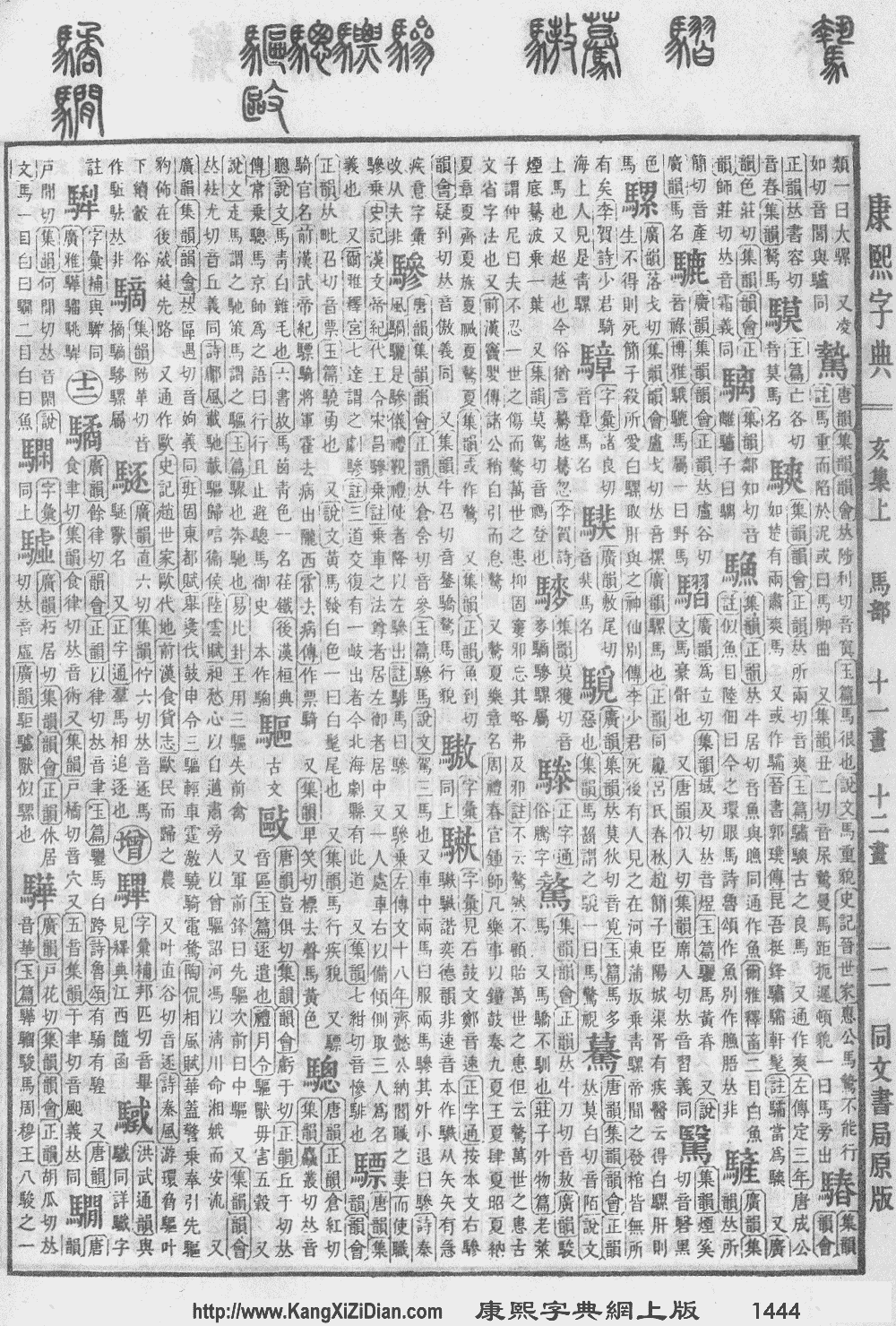
- Kangxi Dictionary: page 1444, character 24
- Dai Kanwa Jiten: character 44968
- Dae Jaweon: page 1968, character 21
- Hanyu Da Zidian (first edition): volume 7, page 4574, character 1
- Unihan data for U+9A45
Chinese
| trad. | 驅 | |
|---|---|---|
| simp. | 驱 | |
| alternative forms | 駆 駈 | |
Glyph origin
| Historical forms of the character 驅 |
|---|
| Shuowen Jiezi (compiled in Han) |
| Small seal script |
 |
Characters in the same phonetic series (區) (Zhengzhang, 2003)
Phono-semantic compound (形聲/形声, OC *kʰo, *kʰos) : semantic 馬 (“horse”) + phonetic 區 (OC *qoː, *kʰo).
Pronunciation
Definitions
驅
- to drive (a horse or a car); to spur
- 子有車馬,弗馳弗驅。 [Pre-Classical Chinese, trad.]
- From: The Classic of Poetry, c. 11th – 7th centuries BCE, translated based on James Legge's version
- Zǐ yǒu chēmǎ, fú chí fú qū. [Pinyin]
- You have carriages and horses,
But you will not drive them.
子有车马,弗驰弗驱。 [Pre-Classical Chinese, simp.]
- to run quickly
- to expel; to disperse
- to compel
- Short for 驅逐艦/驱逐舰 (qūzhújiàn, “destroyer”).
Compounds
- 並駕齊驅/并驾齐驱 (bìngjiàqíqū)
- 光驅/光驱 (guāngqū)
- 先驅/先驱 (xiānqū)
- 驅使/驱使 (qūshǐ)
- 驅動/驱动 (qūdòng)
- 驅動力/驱动力 (qūdònglì)
- 驅動器/驱动器 (qūdòngqì)
- 驅動程序/驱动程序 (qūdòng chéngxù)
- 驅動輪/驱动轮 (qūdònglún)
- 驅役/驱役
- 驅散/驱散 (qūsàn)
- 驅病/驱病
- 驅走/驱走 (qūzǒu)
- 驅趕/驱赶 (qūgǎn)
- 驅車/驱车 (qūchē)
- 驅逐/驱逐 (qūzhú)
- 驅逐令/驱逐令
- 驅逐出境/驱逐出境
- 驅逐艦/驱逐舰 (qūzhújiàn)
- 驅邪/驱邪 (qūxié)
- 驅除/驱除 (qūchú)
- 驅除韃虜/驱除鞑虏
- 驅魔/驱魔 (qūmó)
- 驅魔趕鬼/驱魔赶鬼
Korean
Vietnamese
This article is issued from Wiktionary. The text is licensed under Creative Commons - Attribution - Sharealike. Additional terms may apply for the media files.