涕
See also: 洟
| ||||||||
Translingual
Han character
涕 (Kangxi radical 85, 水+7, 10 strokes, cangjie input 水金弓竹 (ECNH), four-corner 38127, composition ⿰氵弟)
References
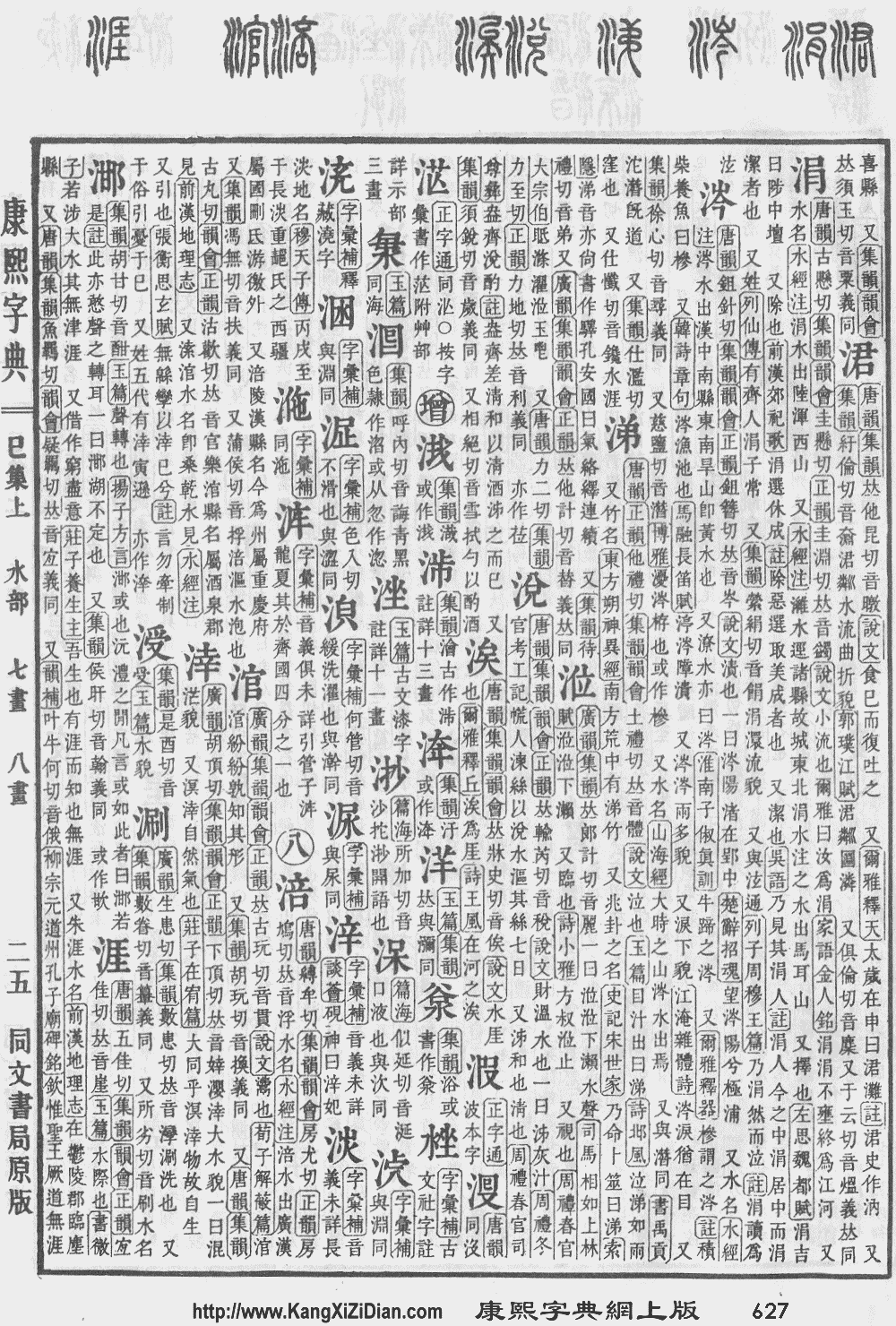
- Kangxi Dictionary: page 627, character 4
- Dai Kanwa Jiten: character 17543
- Dae Jaweon: page 1029, character 8
- Hanyu Da Zidian (first edition): volume 3, page 1633, character 5
- Unihan data for U+6D95
Chinese
| simp. and trad. |
涕 | |
|---|---|---|
| 2nd round simp. | ⿰氵⿹兯丿 | |
Glyph origin
Characters in the same phonetic series (弟) (Zhengzhang, 2003)
Phono-semantic compound (形聲/形声, OC *tʰiːlʔ, *tʰiːls) : semantic 氵 + phonetic 弟 (OC *diːlʔ, *diːls).
Etymology
From Proto-Sino-Tibetan *m-t(w)əj-n ~ m-ti-s (“water”). Cognate with 洟 (OC *l̥ʰiːls, *lil).
Pronunciation
Synonyms
Dialectal synonyms of 眼淚 (“tears”) [map]
Dialectal synonyms of 鼻涕 (“nasal mucus”) [map]
Compounds
- 出涕
- 含涕
- 垂涕
- 屑涕
- 感涕
- 感激流涕
- 感激涕泗
- 感激涕零 (gǎnjītìlíng)
- 慟哭流涕/恸哭流涕
- 拾人涕唾
- 排愁破涕
- 掩涕
- 攬涕/揽涕
- 泣涕
- 洵涕
- 流涕 (liútì)
- 涕泗 (tìsì)
- 涕泣 (tìqì)
- 涕泗交下
- 涕泗交流
- 涕泗交頤/涕泗交颐
- 涕泗橫流/涕泗横流 (tìsì héngliú)
- 涕泗滂沱
- 涕泗縱橫/涕泗纵横
- 涕洟
- 涕淚/涕泪
- 涕淚交下/涕泪交下
- 涕淚交加/涕泪交加
- 涕淚交垂/涕泪交垂
- 涕淚交流/涕泪交流
- 涕淚交集/涕泪交集
- 涕淚交零/涕泪交零
- 涕淚俱下/涕泪俱下
- 涕淚縱橫/涕泪纵横
- 涕筆俱下/涕笔俱下
- 涕零 (tìlíng)
- 滴滴涕 (dīdītì)
- 牛山下涕
- 痛哭流涕 (tòngkūliútì)
- 破涕為笑/破涕为笑 (pòtìwéixiào)
- 隕涕/陨涕
- 雨涕 (yùtì)
- 鼻涕 (bítì)
References
- “涕”, in 漢語多功能字庫 (Multi-function Chinese Character Database), 香港中文大學 (the Chinese University of Hong Kong), 2014–
Japanese
Kanji
涕
- This term needs a translation to English. Please help out and add a translation, then remove the text
{{rfdef}}.
Korean
Hanja
涕 (eum 체 (che))
- This term needs a translation to English. Please help out and add a translation, then remove the text
{{rfdef}}.
Vietnamese
This article is issued from Wiktionary. The text is licensed under Creative Commons - Attribution - Sharealike. Additional terms may apply for the media files.