禮
| ||||||||
| ||||||||
Translingual
| Traditional | 禮 |
|---|---|
| Simplified | 礼 |
| Japanese | 礼 |
| Korean | 禮 |
Alternative forms
In Traditional Chinese, the component on the left of U+79AE is 礻. In Korean hanja and Japanese kyūjitai, the component on the left of U+79AE is 示 rather than 礻, which is also the historical form that appears in the Kangxi dictionary. A CJK compatibility ideograph exists at U+F9B6 to reflect the form found in the Kangxi dictionary.
Han character
禮 (Kangxi radical 113, 示+13, 18 strokes, cangjie input 戈火廿田廿 (IFTWT), four-corner 35218, composition ⿰礻豊(GHTV) or ⿰示豊(JK or U+F9B6))
Derived characters
- 𡅏, 𡓾, 𡤠, 𢹿, 𣠲, 𧕬, 𨰋
Related characters
- 礼 (Japanese shinjitai and Simplified Chinese)
References
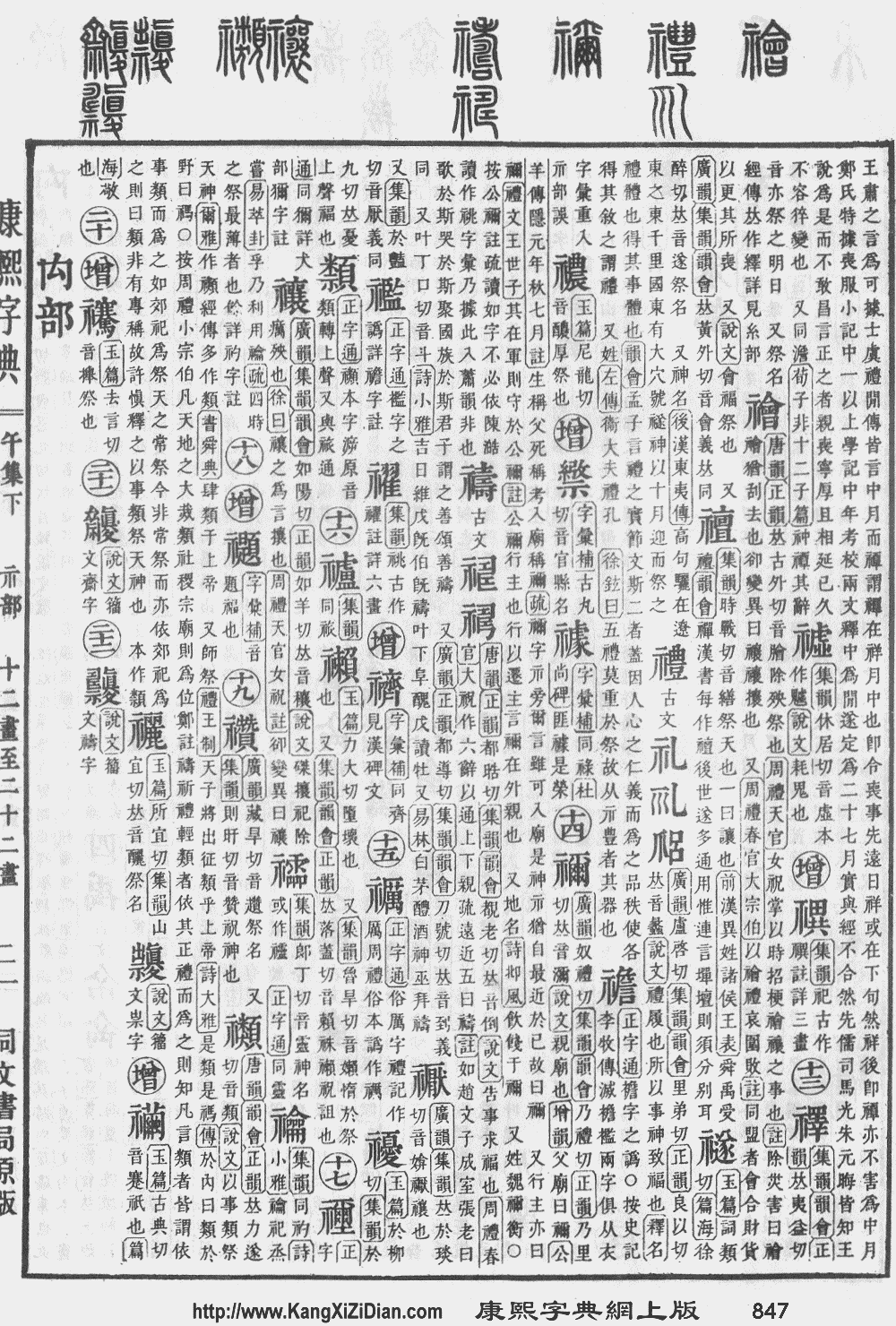
- Kangxi Dictionary: page 847, character 7
- Dai Kanwa Jiten: character 24844
- Dae Jaweon: page 1268, character 9
- Hanyu Da Zidian (first edition): volume 4, page 2409, character 14
- Unihan data for U+79AE
- Unihan data for U+F9B6
Chinese
| trad. | 禮 | |
|---|---|---|
| simp. | 礼 | |
| alternative forms | ||
Glyph origin
| Historical forms of the character 禮 | |||||
|---|---|---|---|---|---|
| Shang | Western Zhou | Warring States | Shuowen Jiezi (compiled in Han) | ||
| Oracle bone script | Bronze inscriptions | Bronze inscriptions | Chu slip and silk script | Ancient script | Small seal script |
 |
 |
 |
 |
 |
 |
Phono-semantic compound (形聲/形声, OC *riːʔ) and ideogrammic compound (會意/会意) : semantic 礻 (“altar”) + phonetic 豊 (OC *riːʔ, “ceremony”) – performing rites at the altar.
Originally written 豊, see there for more.
Etymology
Uncertain. Schuessler (2007) proposes that this is an old areal etymon. Compare Tibetan ཞེ་ས (zhe sa, “respect, honor, deference”), རྗེ་བོ (rje bo, “lord, nobleman”), རྗེད (rjed, “to honor; reverence”); Mru [script needed] (ri, “ritual”) is possibly borrowed from Austroasiatic (cf. Mon [script needed] (rèh seh, “to respect, to revere”); Thin Khmu [script needed] (rɛh, “to lift up”); both from Proto-Mon-Khmer *reh (“to raise up, to exalt”)).
Pronunciation
Definitions
禮
- ritual; rite; ceremony
- 我孔熯矣、式禮莫愆。 [Pre-Classical Chinese, trad.]
- From: The Classic of Poetry, c. 11th – 7th centuries BCE, translated based on James Legge's version
- Wǒ kǒng shàn yǐ, shì lǐ mò qiān. [Pinyin]
- We are very much exhausted, and have performed every ceremony without error.
我孔熯矣、式礼莫愆。 [Pre-Classical Chinese, simp.]- 卒廷見相如,畢禮而歸之。 [Classical Chinese, trad.]
- From: The Records of the Grand Historian, by Sima Qian, c. 91 BCE
- Zú tíng jiàn Xiāngrú, bì lǐ ér guī zhī. [Pinyin]
- In the end, (King Zhaoxiang of Qin) granted (Lin) Xiangru an audience at his court, completed the ceremonies, and sent him back.
卒廷见相如,毕礼而归之。 [Classical Chinese, simp.]
- rules of etiquette; rules of propriety
- 夫子循循然善誘人,博我以文,約我以禮。 [Classical Chinese, trad.]
- From: The Analects of Confucius, c. 475 – 221 BCE, translated based on James Legge's version
- Fūzǐ xúnxún rán shànyòu rén, bó wǒ yǐ wén, yuē wǒ yǐ lǐ. [Pinyin]
- The Master, by orderly method, skillfully leads men on. He enlarged my mind with learning, and taught me the restraints of propriety.
夫子循循然善诱人,博我以文,约我以礼。 [Classical Chinese, simp.]- 夫禮者,所以定親疏,決嫌疑,別同異,明是非也。 [Classical Chinese, trad.]
- From: The Book of Rites, c. 4th – 2nd century BCE
- Fú lǐ zhě, suǒyǐ dìng qīnshū, jué xiányí, bié tóngyì, míng shìfēi yě. [Pinyin]
- They are the rules of propriety, that furnish the means of determining (the observances towards) relatives, as near and remote; of settling points which may cause suspicion or doubt; of distinguishing where there should be agreement, and where difference; and of making clear what is right and what is wrong.
夫礼者,所以定亲疏,决嫌疑,别同异,明是非也。 [Classical Chinese, simp.]
- courtesy; etiquette; manners
- present; gift (Classifier: 份 m c)
- to treat with respect and courtesy
- 48th tetragram of the Taixuanjing; "ritual" (𝌵)
- a surname
Usage notes
Usually, a single 禮/礼 (lǐ) refers to a gift that involves more serious social interaction. For gifts between friends, 禮物/礼物 (lǐwù) is used instead.
Compounds
- 下水禮/下水礼
- 三禮/三礼 (Sānlǐ)
- 下禮/下礼
- 不禮/不礼
- 九禮/九礼
- 乾禮/干礼
- 二禮/二礼
- 五禮/五礼
- 亢禮/亢礼
- 交禮/交礼
- 以禮待人/以礼待人
- 以禮相待/以礼相待
- 伏禮/伏礼
- 作禮/作礼
- 做禮拜/做礼拜
- 備受禮遇/备受礼遇
- 儀禮/仪礼 (yílǐ)
- 優禮/优礼 (yōulǐ)
- 先禮後兵/先礼后兵 (xiānlǐhòubīng)
- 克己復禮/克己复礼 (kèjǐfùlǐ)
- 免禮/免礼
- 八般大禮/八般大礼
- 六禮/六礼
- 典禮/典礼 (diǎnlǐ)
- 冇禮/冇礼
- 冒禮/冒礼
- 最敬禮/最敬礼 (zuìjìnglǐ)
- 冠禮/冠礼 (guànlǐ)
- 凶禮
- 分庭伉禮/分庭伉礼
- 分庭抗禮/分庭抗礼 (fēntíngkànglǐ)
- 制禮/制礼
- 制禮作樂/制礼作乐
- 割禮/割礼 (gēlǐ)
- 半禮/半礼
- 卑禮厚幣/卑礼厚币
- 卑辭厚禮/卑辞厚礼
- 博文約禮/博文约礼 (bówényuēlǐ)
- 卦禮/卦礼
- 厚禮/厚礼 (hòulǐ)
- 受禮/受礼
- 司禮/司礼
- 古蹟巡禮/古迹巡礼
- 吉禮/吉礼 (jílǐ)
- 周禮/周礼 (zhōulǐ)
- 喚禮/唤礼 (huànlǐ)
- 喝禮/喝礼
- 喪禮/丧礼 (sānglǐ)
- 嘉禮/嘉礼 (jiālǐ)
- 回禮/回礼 (huílǐ)
- 圖書禮券/图书礼券
- 執禮/执礼
- 壽禮/寿礼 (shòulǐ)
- 夏禮/夏礼
- 夔龍禮樂/夔龙礼乐
- 多禮/多礼
- 大戴禮/大戴礼
- 大戴禮記/大戴礼记
- 大禮/大礼
- 大禮堂/大礼堂
- 大禮帽/大礼帽 (dàlǐmào)
- 大禮拜/大礼拜 (dàlǐbài)
- 大禮服/大礼服
- 失禮/失礼 (shīlǐ)
- 好賢禮士/好贤礼士 (hàoxiánlǐshì)
- 妙禮/妙礼
- 婚禮/婚礼 (hūnlǐ)
- 定禮/定礼
- 客禮/客礼
- 富而好禮/富而好礼
- 射禮/射礼
- 導德齊禮/导德齐礼
- 小戴禮記/小戴礼记
- 小禮拜/小礼拜 (xiǎolǐbài)
- 少禮/少礼 (xiǎolǐ)
- 就禮/就礼
- 展禮/展礼
- 常禮/常礼
- 常禮服/常礼服
- 年禮/年礼 (niánlǐ)
- 廢禮/废礼
- 廠禮拜/厂礼拜 (chǎnglǐbài)
- 彬彬有禮/彬彬有礼 (bīnbīnyǒulǐ)
- 彩禮/彩礼 (cǎilǐ)
- 復禮/复礼
- 復禮克己/复礼克己
- 怯禮/怯礼
- 恩禮/恩礼
- 悖禮/悖礼
- 慢條廝禮/慢条厮礼
- 慢條斯禮/慢条斯礼
- 慢條絲禮/慢条丝礼
- 慢騰斯禮/慢腾斯礼
- 懺禮/忏礼
- 成丁禮/成丁礼
- 成年禮/成年礼 (chéngniánlǐ)
- 成禮/成礼
- 戴禮/戴礼
- 抗禮/抗礼
- 折節禮士/折节礼士
- 拜禮/拜礼
- 拘禮/拘礼 (jūlǐ)
- 拜見禮/拜见礼
- 敘禮/叙礼 (xùlǐ)
- 敬禮/敬礼 (jìnglǐ)
- 敬賢禮士/敬贤礼士 (jìngxiánlǐshì)
- 施禮/施礼 (shīlǐ)
- 既夕禮/既夕礼
- 晨參暮禮/晨参暮礼
- 晚禮服/晚礼服 (wǎnlǐfú)
- 暮禮晨參/暮礼晨参
- 曲禮/曲礼
- 有禮/有礼 (yǒulǐ)
- 朝參暮禮/朝参暮礼
- 殊禮/殊礼 (shūlǐ)
- 水禮/水礼
- 注目禮 (zhùmùlǐ)
- 洗禮/洗礼 (xǐlǐ)
- 浮禮/浮礼
- 浸禮/浸礼 (jìnlǐ)
- 浸禮會/浸礼会
- 演禮/演礼
- 漢禮器碑/汉礼器碑
- 無禮/无礼 (wúlǐ)
- 無禮貌/无礼貌
- 焚香頂禮/焚香顶礼
- 燕禮/燕礼
- 牲禮/牲礼 (shēnglǐ)
- 牽羊成禮/牵羊成礼
- 獻禮/献礼 (xiànlǐ)
- 甘言厚禮/甘言厚礼
- 畢業典禮/毕业典礼 (bìyè diǎnlǐ)
- 病不拘禮/病不拘礼
- 盡禮/尽礼
- 相禮/相礼
- 瞻禮/瞻礼 (zhānlǐ)
- 知書達禮/知书达礼 (zhīshūdálǐ)
- 知禮/知礼
- 短禮/短礼
- 破土典禮/破土典礼
- 祭禮/祭礼 (jìlǐ)
- 禫禮/禫礼
- 禮上/礼上
- 禮不親授/礼不亲授
- 禮俗/礼俗 (lǐsú)
- 禮俗所拘/礼俗所拘
- 禮儀/礼仪 (lǐyí)
- 禮元/礼元 (Lǐyuán)
- 禮先壹飯/礼先壹饭
- 禮券/礼券 (lǐquàn)
- 禮制/礼制 (lǐzhì)
- 禮品/礼品 (lǐpǐn)
- 禮品店/礼品店 (lǐpǐndiàn)
- 禮品書/礼品书
- 禮單/礼单
- 禮器/礼器 (lǐqì)
- 禮器碑/礼器碑
- 禮堂/礼堂 (lǐtáng)
- 禮壞樂崩/礼坏乐崩
- 禮壞樂缺/礼坏乐缺
- 禮士親賢/礼士亲贤
- 禮多人不怪/礼多人不怪 (lǐ duō rén bù guài)
- 禮奢寧儉/礼奢宁俭
- 禮存寧儉/礼存宁俭
- 禮官/礼官
- 禮尚往來/礼尚往来 (lǐshàngwǎnglái)
- 禮崩樂壞/礼崩乐坏 (lǐbēngyuèhuài)
- 禮席/礼席
- 禮帽/礼帽 (lǐmào)
- 禮度/礼度
- 禮廢樂崩/礼废乐崩
- 禮意/礼意
- 禮憲/礼宪
- 禮懺/礼忏
- 禮成/礼成 (lǐchéng)
- 禮拜/礼拜 (lǐbài)
- 禮拜堂/礼拜堂 (lǐbàitáng)
- 禮拜天/礼拜天 (lǐbàitiān)
- 禮拜寺/礼拜寺 (lǐbàisì)
- 禮教/礼教 (lǐjiào)
- 禮教吃人/礼教吃人
- 禮數/礼数 (lǐshù)
- 禮數周到/礼数周到
- 禮數款段/礼数款段
- 禮文/礼文
- 禮書/礼书
- 禮服/礼服 (lǐfú)
- 禮案/礼案
- 禮樂/礼乐 (lǐyuè)
- 禮樂崩壞/礼乐崩坏
- 禮樂為鉤/礼乐为钩
- 禮法/礼法 (lǐfǎ)
- 禮炮/礼炮 (lǐpào)
- 禮無不答/礼无不答
- 禮物/礼物 (lǐwù)
- 禮生/礼生
- 禮盒/礼盒 (lǐhé)
- 禮節/礼节 (lǐjié)
- 禮節往來/礼节往来
- 禮經/礼经 (lǐjīng)
- 禮義/礼义 (lǐyì)
- 禮義之邦/礼义之邦
- 禮義廉恥/礼义廉耻 (lǐyìliánchǐ)
- 禮聘/礼聘
- 禮花/礼花
- 禮行貨/礼行货
- 禮記/礼记 (Lǐjì)
- 禮請/礼请
- 禮讓/礼让 (lǐràng)
- 禮讓為國/礼让为国
- 禮讚/礼赞 (lǐzàn)
- 禮貌/礼貌 (lǐmào)
- 禮貌運動/礼貌运动
- 禮賢下士/礼贤下士 (lǐxiánxiàshì)
- 禮賢好士/礼贤好士
- 禮賢接士/礼贤接士
- 禮賢遠佞/礼贤远佞
- 禮路兒/礼路儿
- 禮車/礼车
- 禮輕意重/礼轻意重
- 禮遇/礼遇 (lǐyù)
- 禮運/礼运
- 禮部/礼部 (Lǐbù)
- 禮部尚書/礼部尚书
- 禮部試/礼部试
- 禮金/礼金 (lǐjīn)
- 禮鑒/礼鉴
- 禮門義路/礼门义路
- 禮闈/礼闱
- 禮防/礼防
- 禮順人情/礼顺人情
- 禮餅/礼饼
- 禮髯/礼髯
- 禮鳳/礼凤
- 禮鼠/礼鼠
- 立禮/立礼 (Lìlǐ)
- 笄禮/笄礼
- 答禮/答礼
- 節禮/节礼 (jiélǐ)
- 紅白大禮/红白大礼
- 網路婚禮/网路婚礼
- 縟禮/缛礼
- 繁文縟禮/繁文缛礼
- 繁禮多儀/繁礼多仪
- 老不拘禮/老不拘礼
- 聘禮/聘礼 (pìnlǐ)
- 脈禮/脉礼
- 苛禮/苛礼
- 茶禮/茶礼
- 茶紅酒禮/茶红酒礼
- 菲禮/菲礼
- 落成典禮/落成典礼
- 葬禮/葬礼 (zànglǐ)
- 落禮兒/落礼儿
- 薄禮/薄礼 (bólǐ)
- 虛禮/虚礼 (xūlǐ)
- 行禮/行礼 (xínglǐ)
- 衣冠禮樂/衣冠礼乐
- 表禮/表礼
- 見禮/见礼
- 見面禮/见面礼 (jiànmiànlǐ)
- 親家禮道/亲家礼道
- 覲禮/觐礼
- 觀禮/观礼 (guānlǐ)
- 詩書禮樂/诗书礼乐
- 詩禮/诗礼
- 詩禮之家/诗礼之家
- 詩禮人家/诗礼人家
- 詩禮傳家/诗礼传家
- 謝禮/谢礼 (xièlǐ)
- 識禮知書/识礼知书
- 議禮/议礼
- 財禮/财礼 (cáilǐ)
- 賀禮/贺礼 (hèlǐ)
- 賓主禮/宾主礼
- 賓禮/宾礼
- 賠禮/赔礼 (péilǐ)
- 贄見禮/贽见礼
- 贊禮/赞礼 (zànlǐ)
- 贈禮/赠礼 (zènglǐ)
- 贐禮/赆礼
- 越禮/越礼
- 趙禮讓肥/赵礼让肥
- 軍禮/军礼 (jūnlǐ)
- 巡禮/巡礼 (xúnlǐ)
- 送禮/送礼 (sònglǐ)
- 通禮/通礼
- 逸禮/逸礼
- 進見禮/进见礼
- 過禮/过礼
- 道禮/道礼
- 道禮數/道礼数
- 還禮/还礼 (huánlǐ)
- 鄉射禮/乡射礼
- 鄉飲酒禮/乡饮酒礼
- 重禮/重礼 (zhònglǐ)
- 門禮/门礼
- 閉幕典禮/闭幕典礼
- 開元禮/开元礼
- 閨門禮法/闺门礼法
- 陪禮/陪礼
- 陰禮/阴礼
- 雙禮/双礼
- 非禮/非礼 (fēilǐ)
- 頂禮/顶礼 (dǐnglǐ)
- 頂禮膜拜/顶礼膜拜 (dǐnglǐ móbài)
- 頌禮/颂礼
- 顏勤禮碑/颜勤礼碑
- 首映典禮/首映典礼
References
- “禮”, in 漢語多功能字庫 (Multi-function Chinese Character Database), 香港中文大學 (the Chinese University of Hong Kong), 2014–
Korean
Etymology
From Middle Chinese 禮 (MC lejX).
| Historical readings |
|---|
|
Pronunciation
- (SK Standard/Seoul) IPA(key): [ɾje̞] ~ [je̞]
- Phonetic hangul: [례/예]
Compounds
- 무례 (無禮, murye, “rudeness”)
- 예절 (禮節, yejeol, “manners, etiquette”)
- 예식 (禮式, yesik, “ceremony”)
- 예의 (禮儀, yeui, “manners, etiquette”)
- 혼례 (婚禮, hollye, “wedding”)
- 예배 (禮拜, yebae, “worship”)
- 결례 (缺禮, gyeollye, “discourtesy”)
- 다례 (茶禮, darye, “tea ceremony”)
- 사례 (謝禮, sarye, “return, reward”)
- 답례 (答禮, damnye, “return, reward”)
- 경례 (敬禮, gyeongnye, “salute”)
- 세례 (洗禮, serye, “baptism”)
- 장례 (葬禮, jangnye, “funeral”)
Vietnamese
| chữ Hán Nôm in this term |
|---|
| 禮 |
Han character
禮: Hán Việt readings: lễ (
禮: Nôm readings: lễ[1][2][4], lạy[3][5], lẻ[1][3][5][4], lẫy[2][3][5][4], rẽ[2][3], rẩy[2][5], lẩy[3][5], lãi[3][4], lể[5][4], lởi[3], lỡi[3], lấy[3], lảy[4], rẻ[4]
References
- Nguyễn (2014).
- Nguyễn et al. (2009).
- Trần (2004).
- Taberd & Pigneau de Béhaine (1838).
- Hồ (1976).