眷
| ||||||||
Translingual
Han character
眷 (Kangxi radical 109, 目+6, 11 strokes, cangjie input 火手月山 (FQBU), four-corner 90603, composition ⿱龹目(GHT) or ⿱𠔉目(JKV))
References
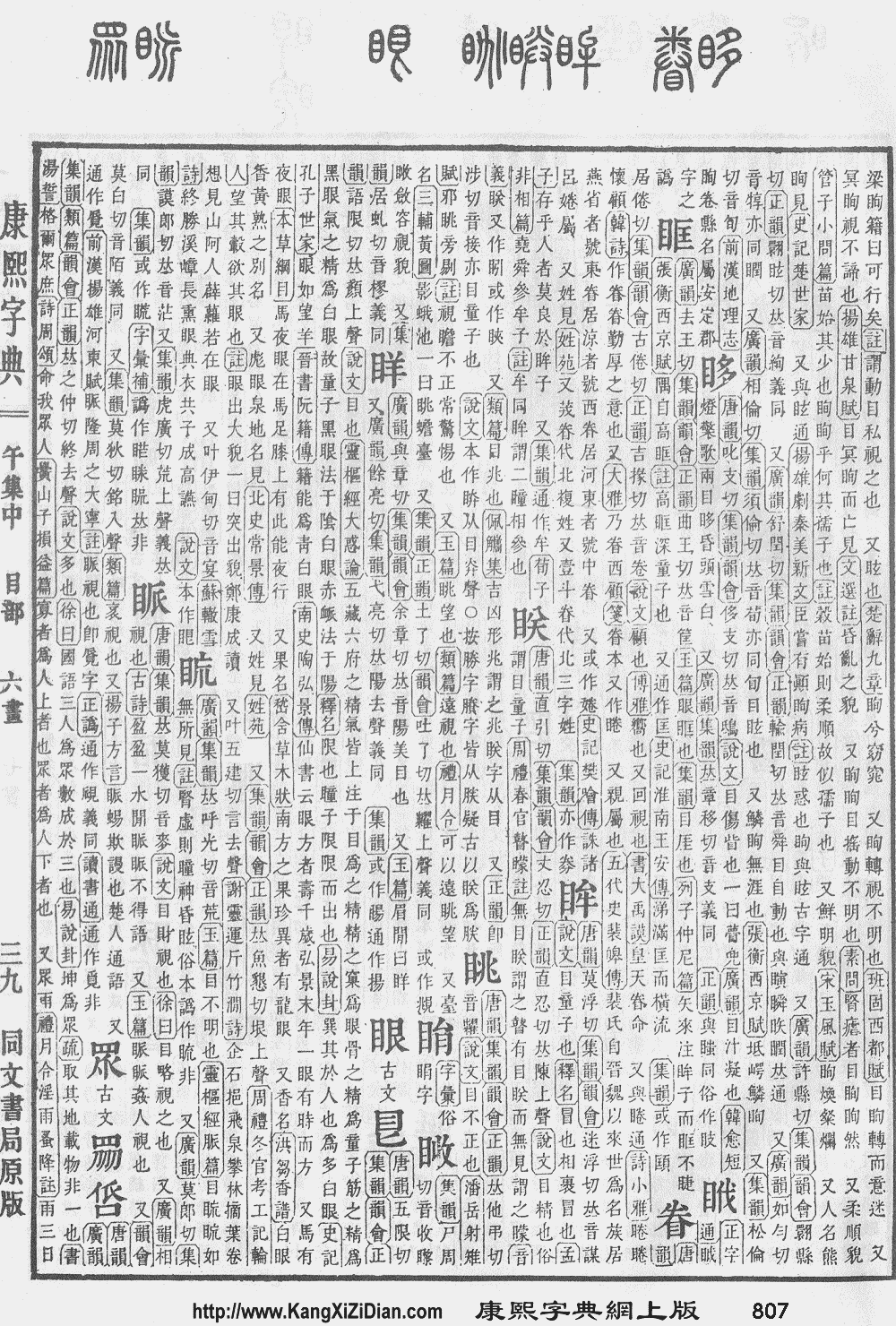
- Kangxi Dictionary: page 807, character 4
- Dai Kanwa Jiten: character 23311
- Dae Jaweon: page 1222, character 19
- Hanyu Da Zidian (first edition): volume 4, page 2487, character 13
- Unihan data for U+7737
Chinese
Glyph origin
Characters in the same phonetic series (龹) (Zhengzhang, 2003)
Phono-semantic compound (形聲/形声, OC *krons) : phonetic 龹 () + semantic 目 (“eye”).
Pronunciation
Definitions
眷
- relatives
- 武職人員也是三年一換。官兵都不准攜眷來臺,除少數例外。 [Taiwanese Mandarin, trad.]
- From: February 2018, 臺灣歷史地圖 增訂版, →ISBN, →OCLC, page 48, column 1
- Wǔzhí rényuán yěshì sān nián yī huàn. Guānbīng dōu bùzhǔn xī juàn lái Tái, chú shǎoshù lìwài. [Pinyin]
- (please add an English translation of this usage example)
武职人员也是三年一换。官兵都不准携眷来台,除少数例外。 [Taiwanese Mandarin, simp.]
Pronunciation
Compounds
- 一家眷屬/一家眷属
- 三親六眷/三亲六眷
- 三親四眷/三亲四眷
- 乃眷
- 九眷
- 交門親眷/交门亲眷
- 僑眷/侨眷 (qiáojuàn)
- 內眷/内眷 (nèijuàn)
- 天眷
- 女眷
- 姻眷
- 存眷
- 宅眷
- 宸眷
- 家眷 (jiājuàn)
- 寶眷/宝眷 (bǎojuàn)
- 少親失眷/少亲失眷
- 忝眷
- 恩眷
- 挈眷
- 攜家帶眷/携家带眷
- 攜眷/携眷
- 敝眷
- 眷佑 (juànyòu)
- 眷保
- 眷區/眷区 (juànqū)
- 眷口
- 眷姻
- 眷屬/眷属 (juànshǔ)
- 眷念 (juànniàn)
- 眷念無斁/眷念无𭣧
- 眷愛/眷爱 (juàn'ài)
- 眷懷/眷怀
- 眷戀/眷恋 (juànliàn)
- 眷族
- 眷晚生
- 眷村 (juàncūn)
- 眷注
- 眷生
- 眷眷
- 眷眷之心
- 眷舍
- 眷言
- 眷遇
- 眷顧/眷顾 (juàngù)
- 眷齒/眷齿
- 神仙眷屬/神仙眷属
- 美眷
- 美眷姻
- 親眷/亲眷 (qīnjuàn)
- 軍眷/军眷
Japanese
Kanji
眷
- This term needs a translation to English. Please help out and add a translation, then remove the text
{{rfdef}}.
Korean
Hanja
眷 (eum 권 (gwon))
- This term needs a translation to English. Please help out and add a translation, then remove the text
{{rfdef}}.
Vietnamese
This article is issued from Wiktionary. The text is licensed under Creative Commons - Attribution - Sharealike. Additional terms may apply for the media files.