舂
| ||||||||
Translingual
Han character
舂 (Kangxi radical 134, 臼+5, 11 strokes, cangjie input 手大竹難 (QKHX), four-corner 50777, composition ⿱𡗗臼)
Usage notes
- This character is not to be confused with 春 (
U+6625) which is visually similar but unrelated.
References
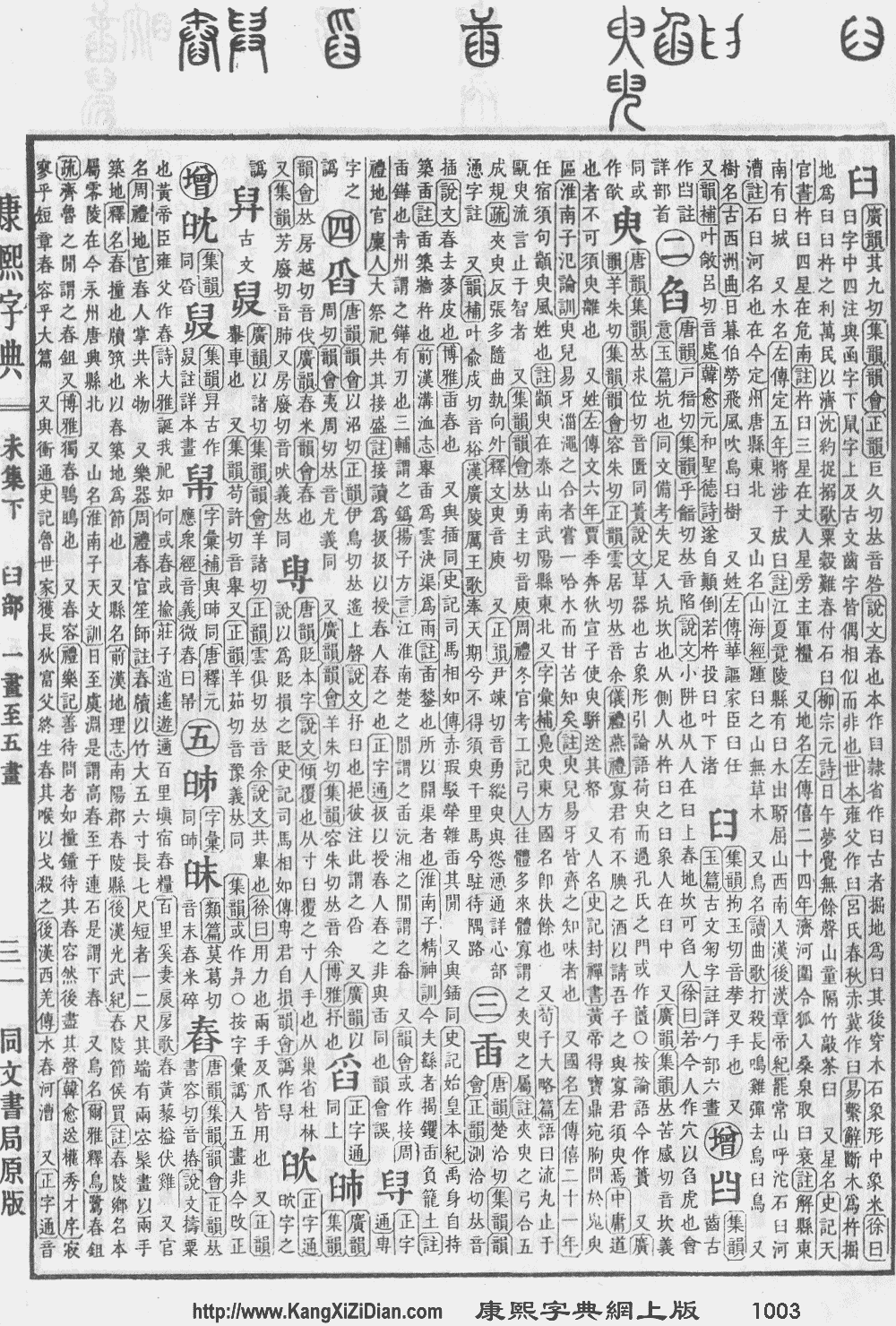
- Kangxi Dictionary: page 1003, character 20
- Dai Kanwa Jiten: character 30195
- Dae Jaweon: page 1460, character 14
- Hanyu Da Zidian (first edition): volume 5, page 3039, character 4
- Unihan data for U+8202
Chinese
| simp. and trad. |
舂 | |
|---|---|---|
| alternative forms | 㫪 nonclassical | |
Glyph origin
| Historical forms of the character 舂 | |||
|---|---|---|---|
| Shang | Western Zhou | Shuowen Jiezi (compiled in Han) | Liushutong (compiled in Ming) |
| Oracle bone script | Bronze inscriptions | Small seal script | Transcribed ancient scripts |
 |
 |
 |
 |
Characters in the same phonetic series (舂) (Zhengzhang, 2003)
Ideogrammic compound (會意/会意) : 廾 (“both hands”) + 午 (“pestle”) + 臼 (“mortar”) – using both hands to pound with a mortar and pestle.
Pronunciation
Definitions
舂
Compounds
References
- “舂”, in 漢語多功能字庫 (Multi-function Chinese Character Database), 香港中文大學 (the Chinese University of Hong Kong), 2014–
Japanese
Readings
- Go-on: しゅ (shu)
- Kan-on: しょう (shō)
- Kun: うすずく (usuzuku, 舂く)←うすづく (usuduku, 舂く, historical); うすつく (usutsuku, 舂く)
Korean
Vietnamese
Han character
- This term needs a translation to English. Please help out and add a translation, then remove the text
{{rfdef}}.
References
This article is issued from Wiktionary. The text is licensed under Creative Commons - Attribution - Sharealike. Additional terms may apply for the media files.