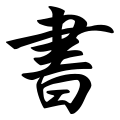
書
 | ||||||||
| ||||||||
Translingual
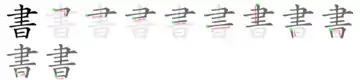
| Stroke order | |||
|---|---|---|---|
 | |||
Han character
書 (Kangxi radical 73, 曰+6, 10 strokes, cangjie input 中土日 (LGA), four-corner 50601, composition ⿳𦘒一曰)
References
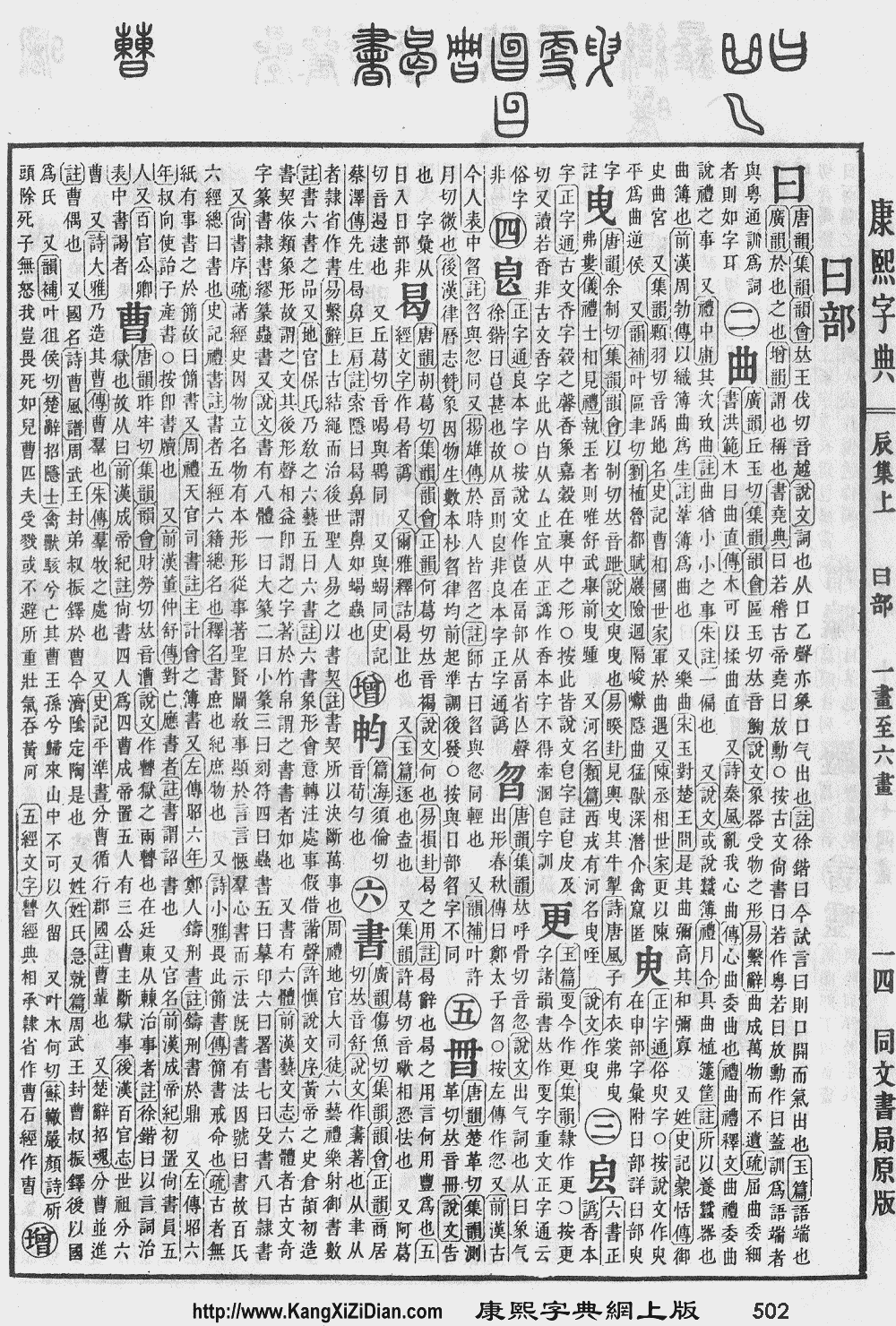
- Kangxi Dictionary: page 502, character 12
- Dai Kanwa Jiten: character 14294
- Dae Jaweon: page 874, character 18
- Hanyu Da Zidian (first edition): volume 2, page 1509, character 9
- Unihan data for U+66F8
- Unihan data for U+2F8CC
Chinese
| trad. | 書 | |
|---|---|---|
| simp. | 书 | |
| alternative forms | 𦘠 𰭽 | |
書 (1)
Glyph origin
| Historical forms of the character 書 | ||
|---|---|---|
| Western Zhou | Shuowen Jiezi (compiled in Han) | Liushutong (compiled in Ming) |
| Bronze inscriptions | Small seal script | Transcribed ancient scripts |
 |
 |
 |
Characters in the same phonetic series (者) (Zhengzhang, 2003)
| Old Chinese | |
|---|---|
| 觰 | *rtaːʔ, *rtaː |
| 諸 | *tjaː, *tja |
| 者 | *tjaːʔ |
| 堵 | *tjaːʔ, *taːʔ |
| 赭 | *tjaːʔ |
| 撦 | *l̥ʰjaːʔ |
| 扯 | *tʰjaːʔ |
| 闍 | *djaː, *taː |
| 奢 | *hljaː |
| 鍺 | *toːlʔ |
| 都 | *taː |
| 醏 | *taː |
| 覩 | *taːʔ |
| 睹 | *taːʔ |
| 暏 | *taːʔ |
| 賭 | *taːʔ |
| 帾 | *taːʔ |
| 楮 | *taːʔ, *tʰaʔ |
| 屠 | *daː, *da |
| 瘏 | *daː |
| 廜 | *daː |
| 鷵 | *daː |
| 緒 | *ljaʔ |
| 豬 | *ta |
| 猪 | *ta |
| 瀦 | *ta |
| 藸 | *ta, *da |
| 櫫 | *ta |
| 褚 | *taʔ, *tʰaʔ |
| 著 | *taʔ, *tas, *da, *taɡ, *daɡ |
| 箸 | *tas, *das |
| 儲 | *da |
| 躇 | *da |
| 櫧 | *tja |
| 藷 | *tja, *djas |
| 蠩 | *tja |
| 煮 | *tjaʔ |
| 渚 | *tjaʔ |
| 煑 | *tjaʔ |
| 陼 | *tjaʔ |
| 翥 | *tjas |
| 署 | *djas |
| 薯 | *djas |
| 曙 | *djas |
| 書 | *hlja |
| 暑 | *hjaʔ |
| 鐯 | *taɡ |
| 擆 | *taɡ |
| 櫡 | *taɡ |
Phono-semantic compound (形聲/形声, OC *hlja) : semantic 聿 (“writing brush”) + phonetic 者 (OC *tjaːʔ).
Etymology
Unknown (Schuessler, 2007).
Pronunciation
Definitions
書
- book; codex (Classifier: 本; 冊/册; 部)
- letter; document
- form of a written or printed Chinese character; style of calligraphy; script; font
- (literary) Chinese character; writing; script
- 項籍少時學書,不成,去;學劍,又不成。項梁怒之。籍曰:「書足以記姓名而已。劍一人敵,不足學,學萬人敵。」 [Classical Chinese, trad.]
- From: The Records of the Grand Historian, by Sima Qian, c. 91 BCE
- Xiàng Jí shàoshí xué shū, bùchéng, qù; xué jiàn, yòu bùchéng. Xiàng Liáng nù zhī. Jí yuē: “Shū zúyǐ jì xìngmíng éryǐ. Jiàn yī rén dí, bùzú xué, xué wàn rén dí.” [Pinyin]
- As a child, Xiang Yu tried to learn (to read and write) Chinese characters but failed and gave it up; then he tried to learn swordplay, but failed too. Xiang Liang was angry with him. Yu said, "Characters are useful for writing names only. Neither is swordplay worth learning as it can only stand up to one person. I want to learn something that can resist ten thousand people.
项籍少时学书,不成,去;学剑,又不成。项梁怒之。籍曰:「书足以记姓名而已。剑一人敌,不足学,学万人敌。」 [Classical Chinese, simp.]
- (literary) the art of calligraphy
- (historical) ancient government post in charge of secretarial duties
- (historical) imperial edict
- storytelling
- to write
- (Cantonese, education) teaching materials (Classifier: 課/课 c; 堂 c) (clarification of this definition is needed)
- Short for 書經/书经 (Shūjīng, “the Classic of History”).
- a surname
Synonyms
Dialectal synonyms of 書 (“book”) [map]
- (letter):
- 信
- 信件 (xìnjiàn)
- 信函 (xìnhán)
- 信札 (xìnzhá)
- 八行 (bāháng) (literary)
- 八行書/八行书 (bāhángshū) (literary)
- 函件 (hánjiàn)
- 手書/手书 (shǒushū) (literary)
- 手簡/手简 (shǒujiǎn) (literary)
- 書信/书信 (shūxìn) (formal)
- 書函/书函 (shūhán)
- 書札/书札 (shūzhá) (literary)
- 書牘/书牍 (shūdú) (literary)
- 書簡/书简 (shūjiǎn) (literary)
- 筆札/笔札 (bǐzhá) (literary, figurative)
- 簡/简 (jiǎn) (literary, or in compounds)
- 鴻/鸿 (hóng) (literary, figurative)
Dialectal synonyms of 信 (“letter”) [map]
Compounds
- 上書/上书 (shàngshū)
- 下書/下书 (xiàshū)
- 三朝書/三朝书
- 不書/不书
- 中書/中书 (zhōngshū)
- 丹書/丹书
- 代書/代书 (dàishū)
- 休書/休书 (xiūshū)
- 佐書/佐书
- 但書/但书 (dànshū)
- 佛書/佛书
- 來書/来书
- 修書/修书 (xiūshū)
- 偶書/偶书
- 偽書/伪书 (wěishū)
- 傳道書/传道书 (Chuándàoshū)
- 全書/全书 (quánshū)
- 八書/八书
- 六書/六书 (liùshū)
- 兵書/兵书 (bīngshū)
- 冊書/册书
- 出書/出书 (chūshū)
- 分書/分书
- 刑書/刑书
- 判書/判书
- 刻書/刻书
- 券書/券书 (quànshū)
- 制書/制书
- 叢書/丛书 (cóngshū)
- 古書/古书 (gǔshū)
- 史書/史书 (shǐshū)
- 周書/周书
- 商書/商书
- 唸書/念书 (niànshū)
- 唱書/唱书
- 善書/善书
- 四書/四书 (Sìshū)
- 回書/回书 (huíshū)
- 國書/国书 (guóshū)
- 團書/团书
- 圖書/图书 (túshū)
- 圖書館/图书馆 (túshūguǎn)
- 坤書/坤书
- 填書/填书
- 夏書/夏书 (Xià Shū)
- 大書/大书 (dàshū)
- 天書/天书 (tiānshū)
- 奉書/奉书
- 女書/女书 (Nǚshū)
- 奴書/奴书
- 好書/好书
- 子書/子书
- 字書/字书 (zìshū)
- 宋書/宋书
- 官書/官书
- 宣誓書/宣誓书 (xuānshìshū)
- 家書/家书 (jiāshū)
- 寄書/寄书 (jìshū)
- 密書/密书 (mìshū)
- 寫書/写书 (xiěshū)
- 寶書/宝书
- 專書/专书
- 尚書/尚书 (shàngshū)
- 尺書/尺书
- 左書/左书
- 帛書/帛书 (bóshū)
- 弔書/吊书
- 御書/御书
- 復書/复书
- 志書/志书 (zhìshū)
- 快書/快书 (kuàishū)
- 念書/念书 (niànshū)
- 情書/情书 (qíngshū)
- 憲書/宪书
- 戒書/戒书
- 戰書/战书 (zhànshū)
- 房書/房书
- 手書/手书 (shǒushū)
- 批書/批书
- 投書/投书 (tóushū)
- 指書/指书
- 捎書/捎书
- 捷書/捷书 (jiéshū)
- 損書/损书
- 摹書/摹书
- 擁書/拥书
- 攻書/攻书
- 故書/故书
- 教書/教书 (jiāoshū)
- 敕書/敕书 (chìshū)
- 文書/文书 (wénshū)
- 新書/新书 (xīnshū)
- 方書/方书
- 日書/日书 (rìshū)
- 春書/春书
- 晒書
- 晉書/晋书
- 晾書/晾书
- 曆書/历书 (lìshū)
- 曝書/曝书
- 書中自有顏如玉/书中自有颜如玉 (shū zhōng zì yǒu yán rú yù)
- 書中自有黃金屋/书中自有黄金屋 (shū zhōng zì yǒu huángjīn wū)
- 書丹/书丹 (shūdān)
- 書亭/书亭 (shūtíng)
- 書信/书信 (shūxìn)
- 書傳/书传
- 書僮/书僮
- 書儀/书仪
- 書冊/书册 (shūcè)
- 書函/书函 (shūhán)
- 書刀/书刀 (shūdāo)
- 書刊/书刊 (shūkān)
- 書包/书包 (shūbāo)
- 書卷/书卷 (shūjuàn)
- 書卷氣/书卷气 (shūjuànqì)
- 書口/书口 (shūkǒu)
- 書史/书史
- 書名/书名 (shūmíng)
- 書吏/书吏
- 書名號/书名号 (shūmínghào)
- 書呈/书呈
- 書呆子/书呆子 (shūdāizi)
- 書品/书品
- 書商/书商 (shūshāng)
- 書單/书单 (shūdān)
- 書坊/书坊 (shūfāng)
- 書城/书城 (shūchéng)
- 書城路/书城路 (Shūchénglù)
- 書場/书场
- 書報/书报 (shūbào)
- 書塾/书塾
- 書壇/书坛 (shūtán)
- 書夾/书夹
- 書契/书契 (shūqì)
- 書套/书套 (shūtào)
- 書子/书子
- 書學/书学
- 書客/书客 (shūkè)
- 書家/书家 (shūjiā)
- 書寓/书寓
- 書寫/书写 (shūxiě)
- 書局/书局 (shūjú)
- 書屋/书屋
- 書展/书展 (shūzhǎn)
- 書市/书市 (shūshì)
- 書帙/书帙
- 書帕/书帕
- 書帷/书帷
- 書帽/书帽
- 書店/书店 (shūdiàn)
- 書庫/书库 (shūkù)
- 書廚/书厨 (shūchú)
- 書影/书影 (shūyǐng)
- 書後/书后
- 書心/书心
- 書房/书房 (shūfáng)
- 書扉/书扉
- 書手/书手
- 書攤/书摊 (shūtān)
- 書攤兒/书摊儿
- 書啟/书启
- 書會/书会
- 書本/书本 (shūběn)
- 書札/书札 (shūzhá)
- 書本兒/书本儿 (shūběnr)
- 書林/书林
- 書柬/书柬 (shūjiǎn)
- 書架/书架 (shūjià)
- 書格/书格
- 書案/书案 (shū'àn)
- 書桌/书桌 (shūzhuō)
- 書桌兒/书桌儿
- 書格子/书格子
- 書業/书业 (shūyè)
- 書櫃/书柜 (shūguì)
- 書櫥/书橱 (shūchú)
- 書歸正傳/书归正传
- 書殼/书壳
- 書法/书法 (shūfǎ)
- 書淫/书淫 (shūyín)
- 書牘/书牍 (shūdú)
- 書物/书物
- 書理/书理
- 書生/书生 (shūshēng)
- 書生氣/书生气 (shūshēngqì)
- 書畫/书画 (shūhuà)
- 書疏/书疏
- 書痴/书痴
- 書癡/书痴
- 書皮/书皮 (shūpí)
- 書皮兒/书皮儿
- 書目/书目 (shūmù)
- 書眉/书眉
- 書社/书社 (shūshè)
- 書種/书种
- 書稿/书稿 (shūgǎo)
- 書空/书空
- 書策/书策
- 書篋/书箧 (shūqiè)
- 書箱/书箱 (shūxiāng)
- 書簏/书簏
- 書簡/书简 (shūjiǎn)
- 書籍/书籍 (shūjí)
- 書籤/书签 (shūqiān)
- 書籤兒/书签儿
- 書紳/书绅
- 書經/书经 (shūjīng)
- 書翰/书翰
- 書聖/书圣
- 書背/书背
- 書脊/书脊 (shūjǐ)
- 書腦/书脑
- 書膽/书胆
- 書舖/书铺 (shūpù)
- 書茶館兒/书茶馆儿
- 書號/书号 (shūhào)
- 書號兒/书号儿
- 書蝨/书虱
- 書蟲/书虫 (shūchóng)
- 書蠹/书蠹
- 書衣/书衣
- 書裙/书裙
- 書記/书记 (shūjì)
- 書評/书评 (shūpíng)
- 書譜/书谱 (Shū Pǔ)
- 書跡/书迹 (shūjì)
- 書辦/书办
- 書迷/书迷 (shūmí)
- 書鋪/书铺 (shūpù)
- 書錄/书录
- 書鎮/书镇 (shūzhèn)
- 書院/书院 (shūyuàn)
- 書面/书面 (shūmiàn)
- 書面語/书面语 (shūmiànyǔ)
- 書頁/书页 (shūyè)
- 書題/书题
- 書館/书馆 (shūguǎn)
- 書香/书香 (shūxiāng)
- 書體/书体 (shūtǐ)
- 書鼓/书鼓
- 書齋/书斋 (shūzhāi)
- 本書/本书 (běnshū)
- 村書/村书
- 板書/板书 (bǎnshū)
- 校書/校书
- 梁書 (Liáng Shū)
- 梵書/梵书
- 楷書/楷书 (kǎishū)
- 榜書/榜书 (bǎngshū)
- 樣書/样书
- 模書/模书
- 檄書/檄书
- 正書/正书
- 殳書/殳书
- 法書/法书 (fǎshū)
- 洋書/洋书
- 洛書/洛书
- 溫書/温书 (wēnshū)
- 漢書/汉书 (Hànshū)
- 漆書/漆书 (qīshū)
- 焚書/焚书 (fénshū)
- 爰書/爰书 (yuánshū)
- 牓書/榜书
- 玉書/玉书
- 理書/理书
- 琴書/琴书
- 璽書/玺书 (xǐshū)
- 生書/生书
- 異書/异书
- 盟書/盟书
- 盡信書不如無書/尽信书不如无书 (jìn xìn shū bùrú wú shū)
- 直書/直书 (zhíshū)
- 相書/相书
- 看書/看书 (kànshū)
- 真書/真书 (zhēnshū)
- 睒書/睒书 (iêm2 ze1)
- 短書/短书
- 祕書/秘书 (mìshū)
- 祟書/祟书
- 禁書/禁书 (jìnshū)
- 禮書/礼书
- 私書/私书 (sīshū)
- 移書/移书
- 竹書/竹书 (zhúshū)
- 策書/策书
- 筋書/筋书
- 篆書/篆书 (zhuànshū)
- 箭書/箭书
- 簡書/简书
- 簿書/簿书
- 素書/素书
- 紫書/紫书
- 經書/经书 (jīngshū)
- 編書/编书
- 緯書/纬书 (wěishū)
- 繒書/缯书
- 署書/署书
- 羽書/羽书 (yǔshū)
- 翻書/翻书
- 聘書/聘书 (pìnshū)
- 聽書/听书 (tīngshū)
- 背書/背书 (bèishū)
- 臨書/临书
- 致書/致书 (zhìshū)
- 舊書/旧书 (jiùshū)
- 草書/草书 (cǎoshū)
- 著書/著书 (zhùshū)
- 蓄書/蓄书
- 蕊書/蕊书
- 薦書/荐书
- 藏書/藏书 (cángshū)
- 蘚書/藓书
- 蟲書/虫书
- 蠟書/蜡书
- 蠻書/蛮书
- 血書/血书
- 行書/行书 (xíngshū)
- 覺書/觉书 (juéshū)
- 觀書/观书 (guānshū)
- 評書/评书 (píngshū)
- 詔書/诏书 (zhàoshū)
- 詩書/诗书 (shīshū)
- 說書/说书 (shuōshū)
- 諫書/谏书
- 講書/讲书 (jiǎngshū)
- 謗書/谤书 (bàngshū)
- 證書/证书 (zhèngshū)
- 譜書/谱书
- 護書/护书
- 讀書/读书 (dúshū)
- 讀書人/读书人 (dúshūrén)
- 貼書/贴书
- 買書/买书
- 貶書/贬书
- 賭書/赌书
- 赦書/赦书
- 車書/车书
- 軍書/军书
- 載書/载书 (zàishū)
- 辟書
- 辭書/辞书 (císhū)
- 通書/通书 (tōngshū)
- 逸書/逸书 (yìshū)
- 達書/达书
- 遺書/遗书
- 還書/还书 (huánshū)
- 鄉書/乡书
- 醫書/医书 (yīshū)
- 錦書/锦书
- 長書/长书
- 閒書/闲书
- 關書/关书
- 附書/附书
- 降書/降书
- 除書/除书
- 陳書/陈书
- 隋書/隋书
- 隸書/隶书 (lìshū)
- 雁書/雁书
- 雜書/杂书
- 離書/离书
- 音書/音书
- 韻書/韵书 (yùnshū)
- 類書/类书 (lèishū)
- 飛書/飞书
- 飽讀詩書/饱读诗书 (bǎodúshīshū)
- 魏書/魏书
- 魚書/鱼书
- 鶴書/鹤书
- 黑書/黑书
- 默書/默书 (mòshū)
- 鼓書/鼓书
References
- “書”, in 漢語多功能字庫 (Multi-function Chinese Character Database), 香港中文大學 (the Chinese University of Hong Kong), 2014–
- “Entry #6098”, in 臺灣閩南語常用詞辭典 [Dictionary of Frequently-Used Taiwan Minnan] (overall work in Mandarin and Hokkien), Ministry of Education, R.O.C., 2023.
Japanese
Readings
Compounds
- 書順 (kakijun)
- 書初 (kakizome)
- 書院 (shoin)
- 書家 (shoka)
- 書架 (shoka)
- 書画 (shoga)
- 書簡 (shokan)
- 書記 (shoki)
- 書式 (shoshiki)
- 書写 (shosha)
- 書籍 (shoseki)
- 書体 (shotai)
- 書道 (shodō)
- 書法 (shohō)
- 書面 (shomen)
- 書物 (shomotsu)
- 書類 (shorui)
- 書棚 (shodana)
- 楷書 (kaisho)
- 教科書 (kyōkasho)
- 行書 (gyōsho)
- 原書 (gensho)
- 辞書 (jisho)
- 新書 (shinsho)
- 聖書 (seisho)
- 清書 (seisho)
- 誓書 (seisho)
- 正書法 (seishohō)
- 草書 (sōsho)
- 叢書 (sōsho)
- 縦書 (tategaki)
- 伝道の書 (Dendō no Sho, “Ecclesiastes”)
- 読書 (dokusho)
- 図書 (tosho)
- 図書館 (toshokan)
- 葉書 (hagaki)
- 秘書 (hisho)
- 文書 (bunsho)
- 洋書 (yōsho)
- 横書 (yokogaki)
- 落書 (rakugaki)
- 和書 (washo)
Pronunciation
Etymology 2
| Kanji in this term |
|---|
| 書 |
| ふみ Grade: 2 |
| kun’yomi |
Alternative forms
Pronunciation
References
- Matsumura, Akira, editor (2006), 大辞林 [Daijirin] (in Japanese), Third edition, Tōkyō: Sanseidō, →ISBN
- NHK Broadcasting Culture Research Institute, editor (1998), NHK日本語発音アクセント辞典 [NHK Japanese Pronunciation Accent Dictionary] (in Japanese), Tōkyō: NHK Publishing, →ISBN
Korean
Etymology
From Middle Chinese 書 (MC syo). Recorded as Middle Korean 셔 (sye) (Yale: sye) in Hunmong Jahoe (訓蒙字會 / 훈몽자회), 1527.
Compounds
Compounds
- 각서 (覺書, gakseo)
- 낙서 (落書, nakseo)
- 독서 (讀書, dokseo)
- 문서 (文書, munseo)
- 백서 (白書, baekseo)
- 본서 (本書, bonseo)
- 비서 (秘書, biseo)
- 사서 (司書, saseo)
- 서기 (書記, seogi)
- 서당 (書堂, seodang)
- 서류 (書類, seoryu)
- 서면 (書面, seomyeon)
- 서방 (書房, seobang)
- 서신 (書信, seosin)
- 서예 (書藝, seoye)
- 서체 (書體, seoche)
- 서원 (書院, seowon)
- 서재 (書齋, seojae)
- 서적 (書籍, seojeok)
- 서평 (書評, seopyeong)
- 성서 (聖書, seongseo)
- 엽서 (葉書, yeopseo)
- 원서 (原書, wonseo)
- 유서 (遺書, yuseo)
- 저서 (著書, jeoseo)
- 서점 (書店, seojeom)
- 서재 (書齋, seojae)
- 도서 (圖書, doseo)
- 도서관 (圖書館, doseogwan)
- 전도서 (傳道書, Jeondoseo, “Ecclesiastes”)
Okinawan
Compounds
- 書物 (shimuchi)
- 上書ち ('wāgachi)
- 下書ち (shichagachi)
This article is issued from Wiktionary. The text is licensed under Creative Commons - Attribution - Sharealike. Additional terms may apply for the media files.