芝
| ||||||||
| ||||||||
Translingual
Han character
芝 (Kangxi radical 140, 艸+3, 7 strokes in traditional Chinese, 6 strokes in mainland China and Japanese and Korean, cangjie input 廿戈弓人 (TINO), four-corner 44307, composition ⿱艹之)
Derived characters
- 𡝳, 徔, 𪫿, 𣷸, 𣔰, 𤦧, 𮐘
References
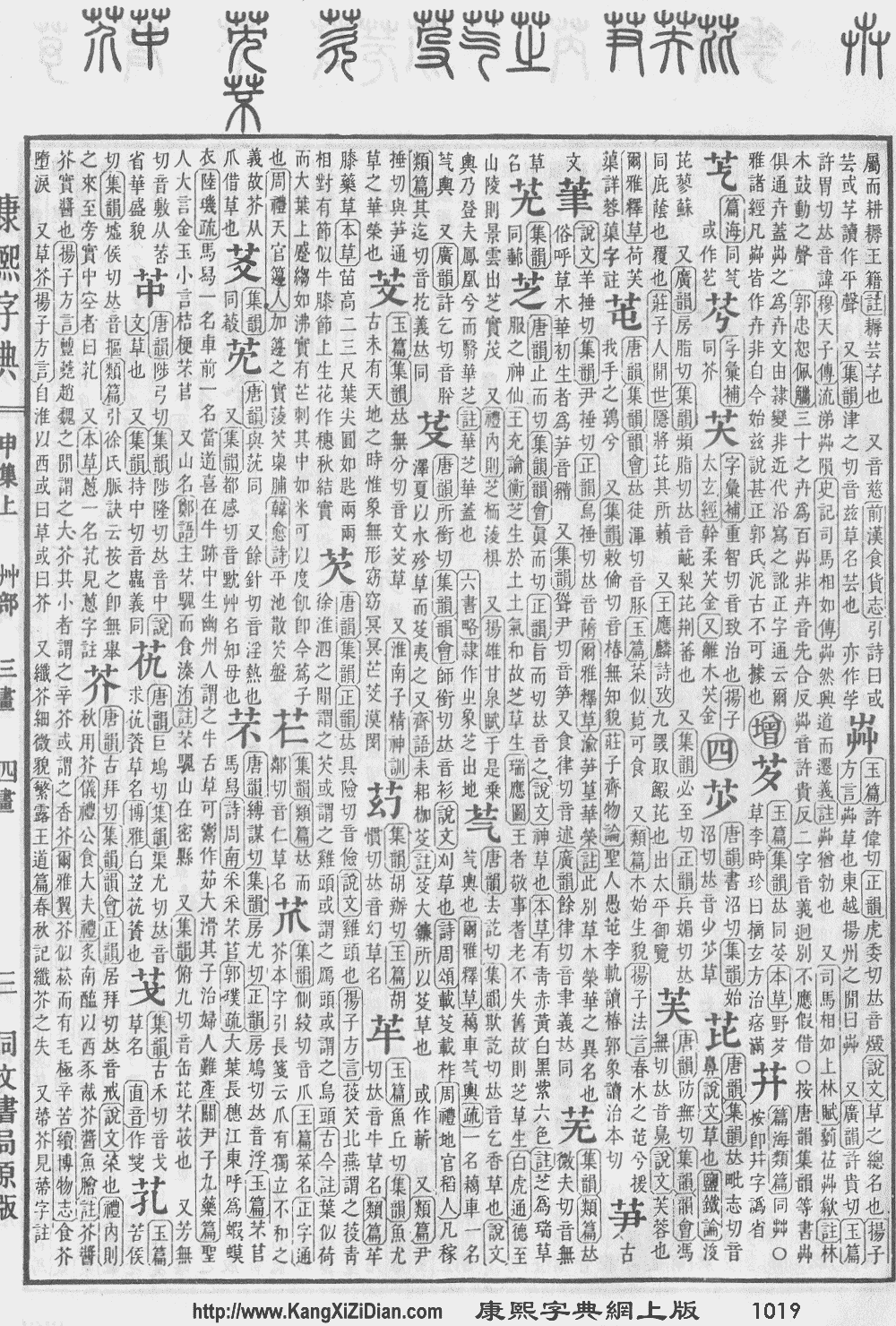
- Kangxi Dictionary: page 1019, character 15
- Dai Kanwa Jiten: character 30699
- Dae Jaweon: page 1477, character 3
- Hanyu Da Zidian (first edition): volume 5, page 3176, character 5
- Unihan data for U+829D
- Unihan data for U+2F991
Chinese
| trad. | 芝 | |
|---|---|---|
| simp. # | 芝 | |
| alternative forms | 𦭩 | |
Glyph origin
| Historical forms of the character 芝 |
|---|
| Shuowen Jiezi (compiled in Han) |
| Small seal script |
 |
Phono-semantic compound (形聲/形声, OC *tjɯ) : semantic 艹 (“grass”) + phonetic 之 (OC *tjɯ) – a type of plant.
Pronunciation
Definitions
芝
Compounds
- 三芝 (Sānzhī)
- 劉蘭芝/刘兰芝
- 張芝/张芝
- 得挹芝眉
- 斑芝 (pan-chi) (Min Nan)
- 焚芝
- 焚芝鋤蕙/焚芝锄蕙
- 王仙芝
- 瑞芝
- 紫芝
- 紫芝眉宇
- 肉芝
- 芝儀/芝仪
- 芝加哥 (Zhījiāgē)
- 芝宇
- 芝標/芝标
- 芝焚蕙嘆/芝焚蕙叹
- 芝田
- 芝眉
- 芝艾俱焚
- 芝草 (zhīcǎo)
- 芝草無根/芝草无根
- 芝蘭/芝兰
- 芝蘭之化/芝兰之化
- 芝蘭之室/芝兰之室
- 芝蘭氣味/芝兰气味
- 芝蘭玉樹/芝兰玉树
- 芝顏/芝颜
- 芝麻 (zhīma)
- 芝麻官 (zhīmaguān)
- 芝麻小事 (zhīmaxiǎoshì)
- 芝麻油 (zhīmayóu)
- 芝麻灣/芝麻湾 (Zhīmawān)
- 芝麻秸
- 芝麻糊 (zhīmahù)
- 芝麻綠豆/芝麻绿豆 (zhīma lǜdòu)
- 芝麻醬/芝麻酱 (zhīmajiàng)
- 鄭芝龍/郑芝龙
- 野芝麻
- 雲芝/云芝
- 靈芝/灵芝 (língzhī)
- 龍芝茶/龙芝茶
Japanese
Readings
Etymology 1
| Kanji in this term |
|---|
| 芝 |
| しば Grade: S |
| kun’yomi |
From Old Japanese. One of the oldest attested words in the Japanese language, used in the Man'yōshū and Nihon Shoki.
This character usually means a type of fungus in Chinese. However, it was also used phonetically in 芝麻 (*chimæ, “sesame”) (modern Mandarin 芝麻 (zhīmá)), and it seems that the Japanese use of this character for the sense of grass may have come from this sesame sense in Chinese.
Noun
芝 • (shiba)
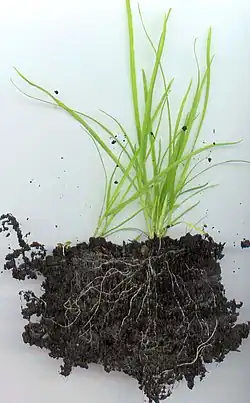
- grass, turf, green
-
- 芝付乃 御宇良佐伎奈流 根都古具佐 安比見受安良婆 安礼古非米夜母。
- Shibatsuki no Miurasaki naru netsukogusa ahi mizu araba are kohi meyamo.
- The anemone flowers on grassy Miura Point; if we hadn't seen each other, I probably wouldn't be so in love.
- 芝付乃 御宇良佐伎奈流 根都古具佐 安比見受安良婆 安礼古非米夜母。
-
- Short for 芝見 (shibami): hiding in the grass and spying on one's enemies or scouting out the situation; a spy in the grass
Derived terms
- 芝草 (shibakusa): longer form of 芝 (shiba)
- 芝居 (shibai)
- 芝屋 (shibaya): archaic synonym of 芝居 (shibai)
- 芝生 (shibafu)
- 芝地 (shibachi): synonym of 芝生 (shibafu)
- 芝芋 (shibaimo)
- 芝引 (shibahiki)
- 芝浦 (shibaura)
- 芝浜 (shibahama): synonym of 芝浦 (shibaura), or a type of rakugo
- 芝火 (shibabi)
- 芝蝦 (shiba ebi), 芝海老 (shiba ebi)
- 芝刈 (shiba kari)
- 芝刈機 (shiba kariki)
- 芝起 (shiba okoshi)
- 芝の砌 (shiba no migiri)
- 芝居唄 (shibai uta)
- 芝居絵 (shibai e)
- 芝居掛 (shibaigakari)
- 芝居気 (shibaigi), 芝居気 (shibaige)
- 芝居心 (shibaigokoro): synonym of 芝居気 (shibaigi)
- 芝居座 (shibaiza)
- 芝居子 (shibaiko)
- 芝居者 (shibai mono)
- 芝居酒盛 (shibai sakamori), 芝酒盛 (shiba sakamori)
- 芝居小屋 (shibaigoya)
- 芝居染みる (shibaijimiru)
- 芝居銭 (shibaisen)
- 芝居茶屋 (shibaijaya)
- 芝居町 (shibai machi)
- 芝居唐人 (shibai tōjin)
- 芝居鳶 (shibai tonbi)
- 芝居番付 (shibai banzuke)
- 芝居話 (shibaibanashi)
- 芝魚 (shibazakana), 芝肴 (shibazakana)
- 芝競 (shiba kurabe)
- 芝繋 (shiba tsunagi)
- 芝見 (shibami)
- 芝原 (shibahara)
- 芝公園 (shiba kōen)
- 芝采 (shibazai)
- 芝菜 (shibana)
- 芝桜 (shibazakura)
- 芝山 (shibayama)
- 芝山古墳群 (Shibayama Kofun-gun): a group of kofun tombs in Chiba Prefecture
- 芝煮 (shibani)
- 芝手 (shibate)
- 芝手水 (shibachōzu)
- 芝焼 (shibayaki): synonym of 野焼 (noyaki)
- 芝大神宮 (Shiba Daijingū)
- 芝神明 (Shiba Shinmei): synonym of 芝大神宮 (Shiba Daijingū)
- 芝神明祭 (Shiba Shinmei Matsuri)
- 芝菅 (shibasuge)
- 芝摺 (shibasuri)
- 芝切 (shibakiri)
- 芝切神事 (Shibakiri Shinji)
- 芝全交 (Shiba Zenkō)
- 芝祐泰 (Shiba Sukehiro)
- 芝打 (shiba uchi)
- 芝打長 (shiba uchinaga)
- 芝茸 (shibatake): synonym of 網茸 (amitake), a type of mushroom
- 芝築地 (shibatsuiji)
- 芝田楽 (shiba dengaku)
- 芝土居 (shiba doi)
- 芝突 (shibatsuki)
- 芝能 (Shiba Nō): synonym of 薪能 (Takigi Nō), a type of Noh play
- 芝派 (shibaha)
- 芝野 (shibano)
- 芝矢 (shibaya)
- 芝蘭堂 (Shirandō): an academy of Western learning in the late Edo period
- 芝離宮 (Shiba Rikyū): an imperial villa, formerly located on the shores of the bay in Minato-ku, Tōkyō, later converted into a park
- 芝露 (shiba tsuyu): dew on grass
Conjugation
| Katsuyōkei ("stem forms") | ||||
|---|---|---|---|---|
| Mizenkei ("imperfective") | 芝し | しばし | shiba shi | |
| Ren’yōkei ("continuative") | 芝し | しばし | shiba shi | |
| Shūshikei ("terminal") | 芝する | しばする | shiba suru | |
| Rentaikei ("attributive") | 芝する | しばする | shiba suru | |
| Kateikei ("hypothetical") | 芝すれ | しばすれ | shiba sure | |
| Meireikei ("imperative") | 芝せよ¹ 芝しろ² |
しばせよ¹ しばしろ² |
shiba seyo¹ shiba shiro² | |
| Key constructions | ||||
| Passive | 芝される | しばされる | shiba sareru | |
| Causative | 芝させる 芝さす |
しばさせる しばさす |
shiba saseru shiba sasu | |
| Potential | 芝できる | しばできる | shiba dekiru | |
| Volitional | 芝しよう | しばしよう | shiba shiyō | |
| Negative | 芝しない | しばしない | shiba shinai | |
| Negative continuative | 芝せず | しばせず | shiba sezu | |
| Formal | 芝します | しばします | shiba shimasu | |
| Perfective | 芝した | しばした | shiba shita | |
| Conjunctive | 芝して | しばして | shiba shite | |
| Hypothetical conditional | 芝すれば | しばすれば | shiba sureba | |
| ¹ Written imperative ² Spoken imperative | ||||
Etymology 2
| Kanji in this term |
|---|
| 芝 |
| しざま Grade: S |
| kun’yomi |
Compound of し (shi, adjectival ending) + 様 (sama, “kind, type”).[2] The sama changes to zama as an instance of rendaku (連濁). The kanji 芝 was used as an ateji, probably based on its on'yomi of shi.
Pronunciation
- IPA(key): [ɕiza̠ma̠]
Noun
芝 • (shizama)
- (grammar, obsolete) “shi-type”, referring to the i adjective in Japanese grammar, specifically the ク活用 (ku katsuyō, “ku inflection”), corresponding to modern Japanese adjectives ending in -i but not -shii
- This is the nomenclature used in the grammar devised by 富士谷成章 (Fujitani Nariakira), a classical Japanese scholar and grammarian in the middle Edo period. Modern i adjectives still had the 終止形 (shūshikei, “terminal form”) ending in -shi in the mid-Edo period, hence Fujitani's description of these as the “shi-type” of adjective.
Etymology 3
| Kanji in this term |
|---|
| 芝 |
| し Grade: S |
| on’yomi |
From Middle Chinese 芝 (*chi). Compare modern Mandarin 芝 (zhī).
Pronunciation
- IPA(key): [ɕi]
Derived terms
- 芝翫下駄 (Shikangeta): a type of geta sandal popular in the Edo period
- 芝翫縞 (Shikanjima): a particular striped pattern for kimono, popular in the Edo period
- 芝翫茶 (Shikancha): a color for dying cloth, a slightly reddish-purple shade of chestnut
- 芝仙延年 (shisen ennen): a theme for traditional painting in China, Korea, and Japan, depicting the 万年茸 (mannentake) mushroom, pines, and rocky crags
- 芝仙祝寿 (shisenshukuju): a theme for traditional painting in China, Korea, and Japan, depicting the 万年茸 (mannentake) mushroom, cranes (the birds), bamboo, and plum trees
- 芝草 (shisō): alternate for 万年茸 (mannentake), a type of mushroom
- 芝眉 (shibi): an honorific term for referring to someone else's face
- 芝蘭 (shiran): fragrant grass; (metaphorically) an excellent person
- 霊芝 (reishi): alternate for 万年茸 (mannentake), a type of mushroom
Etymology 4
Used as ateji in various surnames.
References
- NHK Broadcasting Culture Research Institute, editor (1998), NHK日本語発音アクセント辞典 [NHK Japanese Pronunciation Accent Dictionary] (in Japanese), Tōkyō: NHK Publishing, →ISBN
- Shōgaku Tosho (1988) 国語大辞典(新装版) [Unabridged Dictionary of Japanese (Revised Edition)] (in Japanese), Tōkyō: Shogakukan, →ISBN
Korean
Hanja
芝 • (ji) (hangeul 지, revised ji, McCune–Reischauer chi, Yale ci)
- This term needs a translation to English. Please help out and add a translation, then remove the text
{{rfdef}}.