襲
See also: 袭
| ||||||||
Translingual
Han character
襲 (Kangxi radical 145, 衣+16, 22 strokes, cangjie input 卜心卜竹女 (YPYHV), four-corner 01732, composition ⿱龍衣)
References
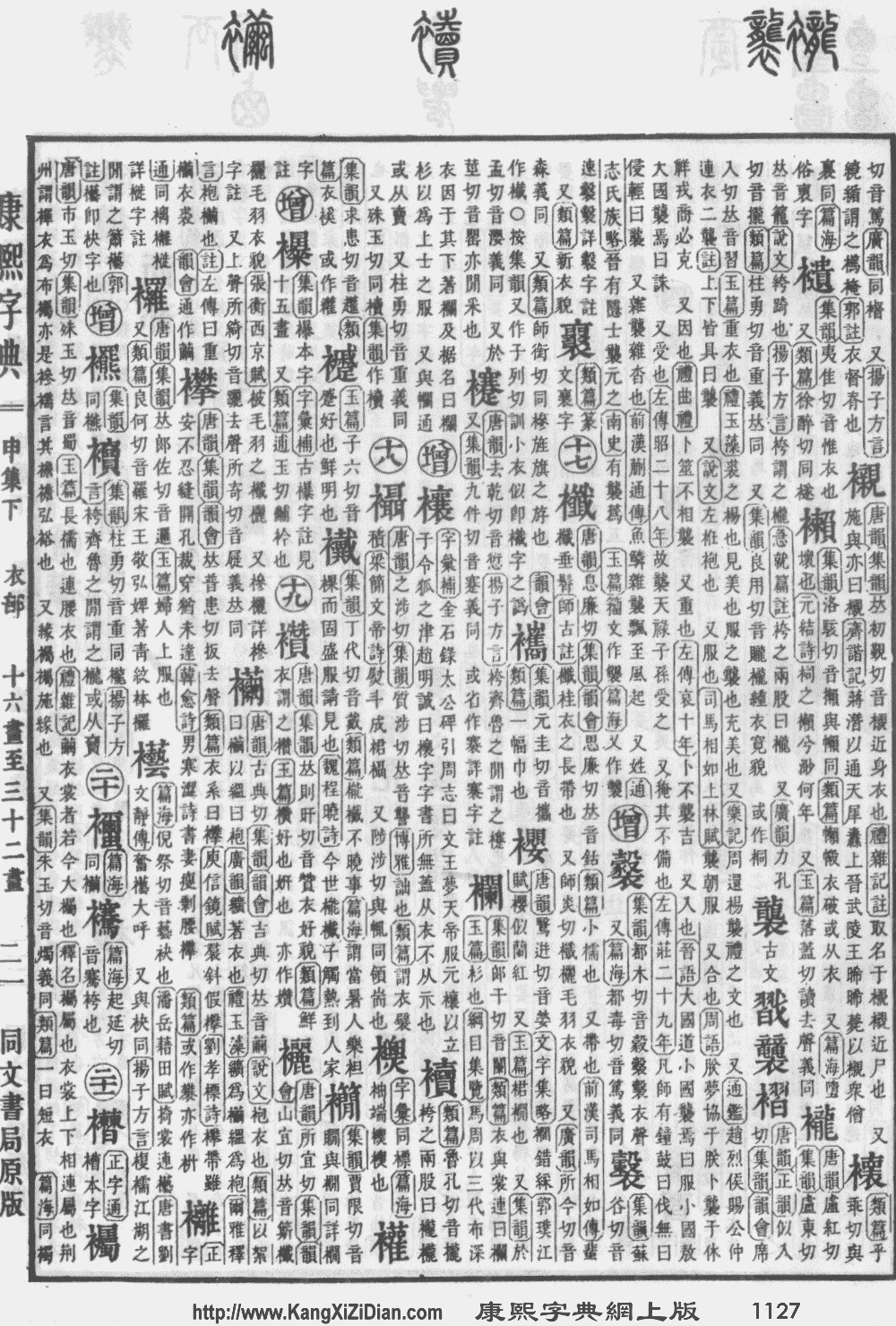
- Kangxi Dictionary: page 1127, character 6
- Dai Kanwa Jiten: character 34717
- Dae Jaweon: page 1594, character 17
- Hanyu Da Zidian (first edition): volume 5, page 3121, character 2
- Unihan data for U+8972
Chinese
| trad. | 襲 | |
|---|---|---|
| simp. | 袭 | |
| alternative forms | 𧟟 㦻 𧟛 | |
Glyph origin
Phono-semantic compound (形聲/形声, OC *ljɯb) : phonetic 龖 (OC *l'ɯːb) + semantic 衣 (“cloth”).
The bronze inscription and Shuowen zhouwen forms were in the form of 𧟟. The Shuowen small seal script form and subsquent forms are in the form of 襲, as the phonetic component 龖 has been reduced to 龍.
Pronunciation
Definitions
襲
- to attack; to raid
- to follow the pattern; to carry on as before
- to lap over; to superpose
- to inherit
- 無貴賤,尸襲其官長之官爵田祿。 [Classical Chinese, trad.]
- From: The Book of Lord Shang, circa 3rd century BCE, translated based on J.J.L. Duyvendak's version
- Wú guìjiàn, shī xí qí guāncháng zhī guānjuétiánlù. [Pinyin]
- In neither high nor low offices should here be an automatic hereditary succession to the office, rank, lands or emoluments of officials.
无贵贱,尸袭其官长之官爵田禄。 [Classical Chinese, simp.]
- Classifier for a suit or set of clothes.
- a surname
Compounds
- 世襲/世袭 (shìxí)
- 什襲/什袭
- 什襲珍藏/什袭珍藏
- 來襲/来袭 (láixí)
- 侵襲/侵袭 (qīnxí)
- 偷襲/偷袭 (tōuxí)
- 剽襲/剽袭
- 勞師襲遠/劳师袭远
- 勦襲/剿袭
- 吹襲/吹袭 (chuīxí)
- 因襲/因袭 (yīnxí)
- 夜襲/夜袭 (yèxí)
- 奇襲/奇袭 (qíxí)
- 寒氣襲人/寒气袭人
- 封襲/封袭
- 廕襲/荫袭
- 抄襲/抄袭 (chāoxí)
- 承襲/承袭 (chéngxí)
- 掩襲/掩袭 (yǎnxí)
- 東抄西襲/东抄西袭
- 河川襲奪/河川袭夺
- 沿襲/沿袭 (yánxí)
- 異香襲人/异香袭人
- 相襲/相袭
- 空襲/空袭 (kōngxí)
- 空襲警報/空袭警报
- 突然襲擊/突然袭击 (tūránxíjī)
- 突襲/突袭 (tūxí)
- 葺襲/葺袭
- 蔭襲/荫袭
- 襲人/袭人
- 襲人故智/袭人故智
- 襲以成俗/袭以成俗
- 襲位/袭位
- 襲取/袭取 (xíqǔ)
- 襲吉/袭吉
- 襲奪/袭夺
- 襲奪河/袭夺河
- 襲封/袭封
- 襲捲/袭卷
- 襲擊/袭击 (xíjī)
- 襲步/袭步
- 襲用/袭用 (xíyòng)
- 襲跡/袭迹
- 襲逆/袭逆
- 襲逮/袭逮
- 襲雜/袭杂
- 蹈常襲故/蹈常袭故 (dǎochángxígù)
- 蹈襲/蹈袭 (dǎoxí)
- 蹈襲故常/蹈袭故常 (dǎoxígùcháng)
- 進襲/进袭
- 重規襲矩/重规袭矩
- 雜襲/杂袭
Pronunciation
Japanese
Readings
Korean
Vietnamese
This article is issued from Wiktionary. The text is licensed under Creative Commons - Attribution - Sharealike. Additional terms may apply for the media files.