無
| ||||||||
Translingual
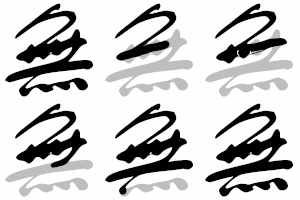
| Stroke order (cursive) | |||
|---|---|---|---|
 | |||
Han character
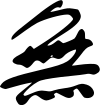
無 (Kangxi radical 86, 火+8, 12 strokes, cangjie input 人廿火 (OTF), four-corner 80331, composition ⿱⿳𠂉卌一灬)
Derived characters
Related characters
Further reading
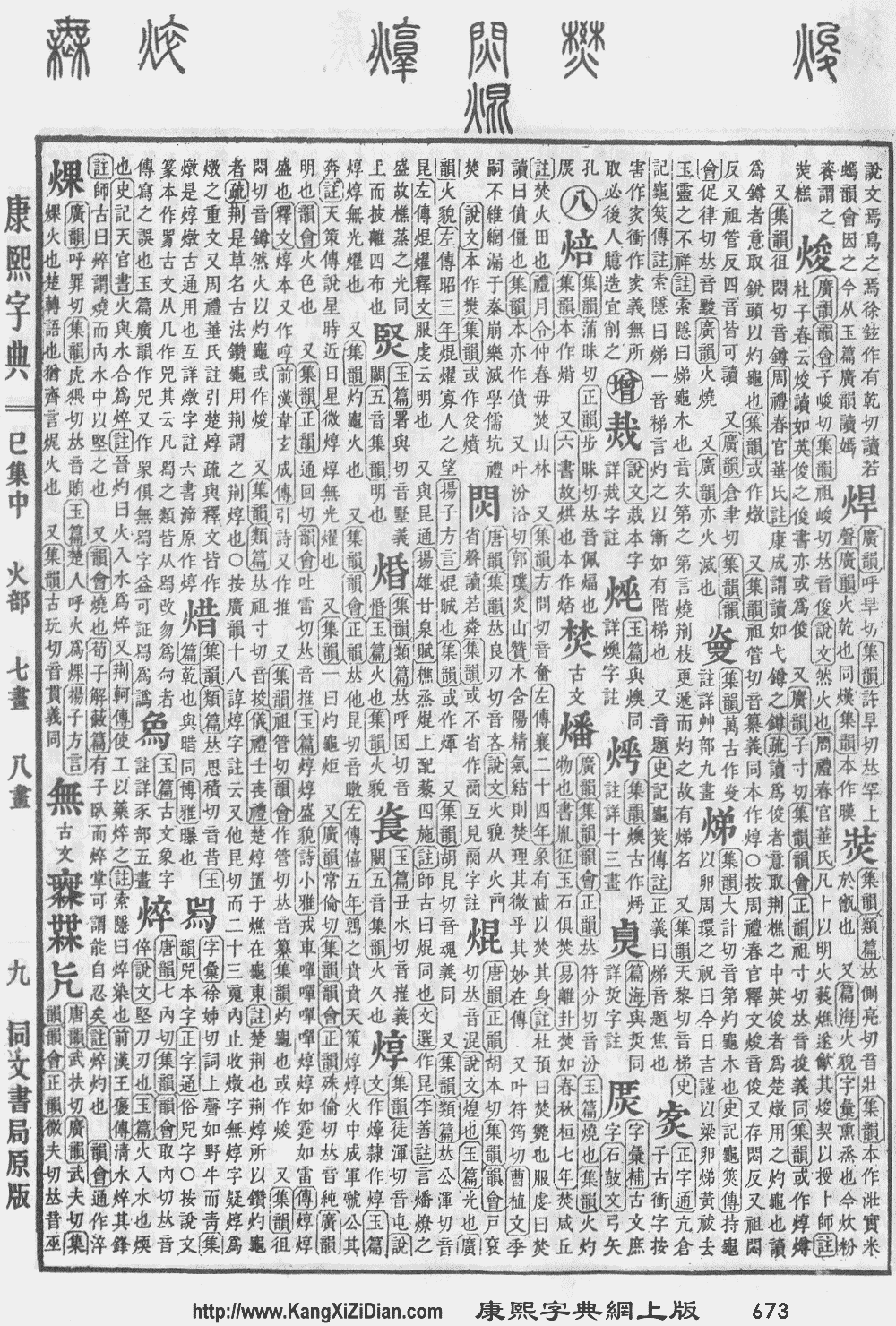
- Kangxi Dictionary: page 673, character 26
- Dai Kanwa Jiten: character 19113
- Dae Jaweon: page 1081, character 24
- Hanyu Da Zidian (first edition): volume 3, page 2211, character 15
- Unihan data for U+7121
Chinese
| trad. | 無 | |
|---|---|---|
| simp. | 无 | |
| alternative forms | ||
Glyph origin
| Historical forms of the character 無 | |||||
|---|---|---|---|---|---|
| Shang | Western Zhou | Warring States | Shuowen Jiezi (compiled in Han) | Liushutong (compiled in Ming) | |
| Oracle bone script | Bronze inscriptions | Chu slip and silk script | Qin slip script | Small seal script | Transcribed ancient scripts |
 |
 |
 |
 |
 |
 |
Pictogram (象形) . A man dancing with something long held in both hands.
This character is borrowed for “have no”, and the character 舞 (wǔ) is used for the original sense.
Etymology 1
Core Sino–Tibetan. From Proto-Sino-Tibetan *ma (“no, not”); cognate with Tibetan མ་ (ma, “not”) and Burmese မ (ma., “not”).
Cognate with:
- 微 (OC *mɯl, “not, no”)
- 毋 (OC *ma, “do not”)
- 勿 (OC *mɯd, “not, don't”)
- 未 (OC *mɯds, “not yet, haven't”)
- 靡 (OC *mralʔ, “not, no”)
- 亡 (OC *maŋ, “not have; to flee, to disappear, to die”)
- 沒 (OC *mɯːd, “to end, to disappear, to drown”)
- 莫 (OC *maːɡ, “none, nobody, nothing; do not; can not”)
Attested profusely in Classical Chinese, this word is the prototypical negation particle in the *m- series of Chinese negatives. In the oracle bone script, however, 無 is not frequently used, and its homophone (or near-homophone) 毋 (OC *ma) is used instead.
See 不 (OC *pɯ, *pɯʔ, *pɯ', “not”) for more on negative particles in Old Chinese.
Pronunciation
Definitions
無
- (literary or Hakka, Min) to not have something; there is not ...
- 也許一想起某某是唯一可鍾意 才來害怕無下次其實多麼諷刺 [Literary Cantonese, trad.]
- From: 2019, 林家謙 [Terence Lam], 下一位前度 [NEXT]
- jaa5 heoi2 jat1 soeng2 hei2 mau5 mau5 si6 wai4 jat1 ho2 zung1 ji3, coi4 loi4 hoi6 paa3 mou4 haa6 ci3 kei4 sat6 do1 mo1 fung3 ci3 [Jyutping]
- Maybe once I think of someone as the only one I can love, I would be afraid that there would not be a next time, but it's actually quite ridiculous
也许一想起某某是唯一可钟意 才来害怕无下次其实多么讽刺 [Literary Cantonese, simp.]
- (literary or Min) Negation particle preceding verbs and adjectives. not
- (literary or Min) have not
- (literary or Hakka, Min) Interrogative particle.
- (Hakka, Min) if not; otherwise (placed at the start of a sentence)
- (Hokkien, Teochew) Particle used after a verb to indicate that a goal has not or cannot been accomplished.
- † regardless of; no matter whether
- † nothing; nil
- 從無到有/从无到有 ― cóng wú dào yǒu ― start from nothing, from scratch
- † Alternative form of 毋 (wú, “do not”)
- without; -less; un-
Synonyms
| Variety | Location | Words |
|---|---|---|
| Formal (Written Standard Chinese) | 不到 | |
| Mandarin | Taiwan | 不到 |
| Malaysia | 不到 | |
| Singapore | 不到 | |
| Cantonese | Guangzhou | 唔到 |
| Hong Kong | 唔到 | |
| Kuala Lumpur (Guangfu) | 唔到 | |
| Penang (Guangfu) | 唔到 | |
| Singapore (Guangfu) | 唔到 | |
| Southern Min | Xiamen | 無 |
| Taipei | 無 GT | |
| Penang (Hokkien) | 無 | |
| Singapore (Hokkien) | 無 | |
| Jieyang | 無 | |
| Singapore (Teochew) | 無 | |
| Wu | Shanghai | 弗著 |
| Suzhou | 弗著 | |
| Ningbo | 弗著 | |
| Note | GT - General Taiwanese (no specific region identified) | |
Compounds
- 一無所得/一无所得 (yīwúsuǒdé)
- 一無所獲/一无所获 (yīwúsuǒhuò)
- 人無遠慮,必有近憂/人无远虑,必有近忧 (rén wú yuǎnlǜ, bì yǒu jìnyōu)
- 仙人拍鼓有時錯,跤步踏差啥人無/仙人拍鼓有时错,跤步踏差啥人无 (sian-jîn phah kó͘ iú sî chhò, kha-pō͘ ta̍h-chha siáⁿ-lâng bô) (Min Nan)
- 慘無人道/惨无人道 (cǎnwúréndào)
- 有無/有无 (yǒuwú)
- 無……無……/无……无……
- 無一定/无一定 (bô-it-tēng)
- 無上/无上 (wúshàng)
- 無下箸處/无下箸处
- 無不/无不 (wúbù)
- 無中生有/无中生有 (wúzhōng-shēngyǒu)
- 無主/无主 (wúzhǔ)
- 無事/无事 (wúshì)
- 無事不登三寶殿/无事不登三宝殿 (wúshì bù dēng sānbǎodiàn)
- 無事忙/无事忙
- 無事生非/无事生非 (wúshìshēngfēi)
- 無二/无二
- 無人/无人 (wúrén)
- 無人問津/无人问津 (wúrénwènjīn)
- 無人售票/无人售票
- 無他/无他
- 無以復加/无以复加 (wúyǐfùjiā)
- 無休止/无休止 (wúxiūzhǐ)
- 無依無靠/无依无靠 (wúyīwúkào)
- 無偌久/无偌久 (bô-gōa-kú)
- 無債一身輕/无债一身轻
- 無傷大雅/无伤大雅 (wúshāngdàyǎ)
- 無價之寶/无价之宝 (wújiàzhībǎo)
- 無償/无偿 (wúcháng)
- 無冕之王/无冕之王
- 無冤無仇/无冤无仇
- 無冬歷夏/无冬历夏
- 無冬無夏/无冬无夏
- 無出其右/无出其右 (wúchūqíyòu)
- 無利/无利
- 無前/无前
- 無力/无力 (wúlì)
- 無功/无功
- 無功不受祿/无功不受禄 (wúgōngbùshòulù)
- 無功受祿/无功受禄 (wúgōngshòulù)
- 無功受祿/无功受禄 (wúgōngshòulù)
- 無助/无助 (wúzhù)
- 無助於/无助于
- 無動於中/无动于中 (wúdòngyúzhōng)
- 無動於衷/无动于衷 (wúdòngyúzhōng)
- 無匹/无匹
- 無及/无及 (wújí)
- 無口/无口
- 無可厚非/无可厚非 (wúkěhòufēi)
- 無可奈何/无可奈何 (wúkěnàihé)
- 無可奈何花落去/无可奈何花落去
- 無可奉告/无可奉告 (wúkěfènggào)
- 無可救藥/无可救药 (wúkějiùyào)
- 無可比擬/无可比拟 (wúkěbǐnǐ)
- 無可無不可/无可无不可
- 無可爭辯/无可争辩 (wúkězhēngbiàn)
- 無可置疑/无可置疑 (wúkězhìyí)
- 無可諱言/无可讳言 (wúkěhuìyán)
- 無可非議/无可非议 (wúkěfēiyì)
- 無名/无名 (wúmíng)
- 無名小卒/无名小卒 (wúmíng xiǎozú)
- 無名指/无名指 (wúmíngzhǐ)
- 無名氏/无名氏 (wúmíngshì)
- 無名火/无名火 (wúmínghuǒ)
- 無名英雄/无名英雄 (wúmíngyīngxióng)
- 無告/无告 (wúgào)
- 無味/无味 (wúwèi)
- 無品/无品
- 無啥物/无啥物 (bô-siáⁿ-mih)
- 無問題/无问题 (mò-mun-thì)
- 無地/无地 (wúdì)
- 無地自容/无地自容 (wúdìzìróng)
- 無坐力炮/无坐力炮
- 無垢/无垢
- 無垠/无垠 (wúyín)
- 無堅不摧/无坚不摧 (wújiānbùcuī)
- 無大無小/无大无小
- 無奈/无奈 (wúnài)
- 無奇不有/无奇不有 (wúqíbùyǒu)
- 無奈何/无奈何
- 無妄之災/无妄之灾 (wúwàngzhīzāi)
- 無妨/无妨 (wúfáng)
- 無孔不人/无孔不人
- 無官一身輕/无官一身轻
- 無害/无害 (wúhài)
- 無家可歸/无家可归 (wú jiā kě guī)
- 無局/无局
- 無巧不成書/无巧不成书 (wúqiǎobùchéngshū)
- 無已/无已 (wúyǐ)
- 無常/无常 (wúcháng)
- 無干 (wúgān)
- 無幾/无几 (wújǐ)
- 無序/无序 (wúxù)
- 無底/无底
- 無底洞/无底洞 (wúdǐdòng)
- 無度/无度 (wúdù)
- 無張持/无张持 (bô-tiuⁿ-tî) (Min Nan)
- 無形/无形 (wúxíng)
- 無形中/无形中 (wúxíngzhōng)
- 無形資本/无形资本
- 無彩/无彩 (bô-chhái) (Min Nan)
- 無影無蹤/无影无踪 (wúyǐngwúzōng)
- 無影燈/无影灯 (wúyǐngdēng)
- 無往不利/无往不利 (wúwǎngbùlì)
- 無往不勝/无往不胜 (wúwǎngbùshèng)
- 無後/无后 (wúhòu)
- 無後坐力炮/无后坐力炮
- 無徒/无徒
- 無從/无从 (wúcóng)
- 無微不至/无微不至 (wúwēibùzhì)
- 無德/无德 (wúdé)
- 無心/无心 (wúxīn)
- 無忌/无忌 (wújì)
- 無性/无性 (wúxìng)
- 無怪/无怪 (wúguài)
- 無性生殖/无性生殖 (wúxìng shēngzhí)
- 無性雜交/无性杂交
- 無恙/无恙 (wúyàng)
- 無恆/无恒
- 無恥/无耻 (wúchǐ)
- 無息貸款/无息贷款
- 無悔/无悔
- 無患/无患 (wúhuàn)
- 無情/无情 (wúqíng)
- 無惡不作/无恶不作 (wú'èbùzuò)
- 無情無義/无情无义 (wúqíngwúyì)
- 無意/无意 (wúyì)
- 無意識/无意识 (wúyìshí)
- 無愧/无愧 (wúkuì)
- 無憂無慮/无忧无虑 (wúyōuwúlǜ)
- 無懈可擊/无懈可击 (wúxièkějī)
- 無成/无成 (wúchéng)
- 無我/无我 (wúwǒ)
- 無所不包/无所不包 (wúsuǒbùbāo)
- 無所不可/无所不可
- 無所不在/无所不在 (wúsuǒbùzài)
- 無所不有/无所不有
- 無所不為/无所不为 (wúsuǒbùwéi)
- 無所不用其極/无所不用其极 (wú suǒ bùyòng qí jí)
- 無所不知/无所不知 (wúsuǒbùzhī)
- 無所不能/无所不能 (wúsuǒbùnéng)
- 無所事事/无所事事 (wúsuǒshìshì)
- 無所作為/无所作为 (wúsuǒzuòwéi)
- 無所措手足/无所措手足 (wú suǒ cuò shǒu zú)
- 無所用心/无所用心 (wúsuǒyòngxīn)
- 無所畏懼/无所畏惧 (wúsuǒwèijù)
- 無所謂/无所谓 (wúsuǒwèi)
- 無所適從/无所适从 (wúsuǒshìcóng)
- 無才/无才
- 無拘無束/无拘无束 (wújūwúshù)
- 無指/无指 (wúzhǐ)
- 無措/无措 (wúcuò)
- 無援/无援 (wúyuán)
- 無損/无损 (wúsǔn)
- 無政府主義/无政府主义 (wúzhèngfǔzhǔyì)
- 無故/无故 (wúgù)
- 無效/无效 (wúxiào)
- 無敵/无敌 (wúdí)
- 無數/无数 (wúshù)
- 無料/无料
- 無方/无方
- 無日/无日
- 無日無之/无日无之 (wúrìwúzhī)
- 無明火/无明火 (wúmínghuǒ)
- 無時/无时 (wúshí)
- 無時無刻/无时无刻 (wúshíwúkè)
- 無暇/无暇 (wúxiá)
- 無月/无月
- 無望/无望 (wúwàng)
- 無期徒刑/无期徒刑 (wúqī túxíng)
- 無柄葉/无柄叶
- 無核/无核
- 無核國家/无核国家
- 無條件/无条件 (wútiáojiàn)
- 無條件刺激/无条件刺激
- 無條件反射/无条件反射
- 無棣/无棣
- 無極/无极 (wújí)
- 無業/无业 (wúyè)
- 無業遊民/无业游民 (wúyèyóumín)
- 無機/无机 (wújī)
- 無機化合物/无机化合物 (wújī huàhéwù)
- 無機化學/无机化学 (wújī huàxué)
- 無機合成/无机合成
- 無機物/无机物 (wújīwù)
- 無機肥料/无机肥料 (wújī féiliào)
- 無機酸/无机酸
- 無機鹽/无机盐 (wújīyán)
- 無權/无权 (wúquán)
- 無欲/无欲 (bô-beh)
- 無止境/无止境 (wúzhǐjìng)
- 無殊/无殊
- 無毒/无毒 (wúdú)
- 無比/无比 (wúbǐ)
- 無毛/无毛 (wúmáo)
- 無氧/无氧
- 無水/无水
- 無法/无法 (wúfǎ)
- 無法無天/无法无天 (wúfǎwútiān)
- 無涉/无涉 (wúshè)
- 無涯/无涯 (wúyá)
- 無源之水,無本之木/无源之水,无本之木 (wúyuán zhī shuǐ, wúběn zhī mù)
- 無漏/无漏
- 無濟於事/无济于事 (wújìyúshì)
- 無為/无为 (wúwéi)
- 無煙火藥/无烟火药 (wúyān huǒyào)
- 無煙煤/无烟煤 (wúyānméi)
- 無牌/无牌
- 無牙/无牙
- 無物/无物 (wúwù)
- 無牽無掛/无牵无挂 (wúqiānwúguà)
- 無狀/无状
- 無猜/无猜 (wúcāi)
- 無獨有偶/无独有偶 (wúdú-yǒu'ǒu)
- 無理/无理 (wúlǐ)
- 無理函數/无理函数
- 無理取鬧/无理取闹 (wúlǐqǔnào)
- 無理式/无理式
- 無理強辯/无理强辩
- 無理數/无理数 (wúlǐshù)
- 無理方程/无理方程
- 無理根/无理根
- 無瑕/无瑕 (wúxiá)
- 無產/无产 (wúchǎn)
- 無產者/无产者 (wúchǎnzhě)
- 無產階級/无产阶级 (wúchǎn jiējí)
- 無產階級專政/无产阶级专政 (wúchǎn jiējí zhuānzhèng)
- 無產階級文化大革命/无产阶级文化大革命 (Wúchǎn Jiējí Wénhuà Dà Gémìng)
- 無用/无用 (wúyòng)
- 無用功/无用功 (wúyònggōng)
- 無由/无由 (wúyóu)
- 無畏/无畏 (wúwèi)
- 無異/无异 (wúyì)
- 無疆/无疆 (wújiāng)
- 無疑/无疑 (wúyí)
- 無病呻吟/无病呻吟 (wúbìngshēnyín)
- 無痛/无痛 (wútòng)
- 無痛分娩/无痛分娩
- 無的放矢/无的放矢 (wúdìfàngshǐ)
- 無益/无益 (wúyì)
- 無盡/无尽 (wújìn)
- 無盡無休/无尽无休 (wújìnwúxiū)
- 無知/无知 (wúzhī)
- 無神/无神 (wúshén)
- 無神論/无神论 (wúshénlùn)
- 無視/无视 (wúshì)
- 無祿/无禄
- 無禮/无礼 (wúlǐ)
- 無私/无私 (wúsī)
- 無私有弊/无私有弊
- 無稽/无稽 (wújī)
- 無窮/无穷 (wúqióng)
- 無窮大/无穷大
- 無窮小/无穷小
- 無窮無盡/无穷无尽 (wúqióngwújìn)
- 無立錐之地/无立锥之地
- 無端/无端 (wúduān)
- 無策/无策 (wúcè)
- 無算/无算
- 無米之炊/无米之炊
- 無籽果實/无籽果实
- 無精打采 (wújīngdǎcǎi)
- 無糖/无糖 (wútáng)
- 無緣/无缘 (wúyuán)
- 無緣無故/无缘无故 (wúyuánwúgù)
- 無線電/无线电 (wúxiàndiàn)
- 無線電傳真/无线电传真
- 無線電報導/无线电报导
- 無線電收音機/无线电收音机
- 無線電波/无线电波 (wúxiàndiànbō)
- 無線電發射機/无线电发射机
- 無線電視/无线电视
- 無線電臺/无线电台
- 無線電話/无线电话 (wúxiàn diànhuà)
- 無線電通信/无线电通信
- 無線電電子學/无线电电子学
- 無縫/无缝 (wúfèng)
- 無縫鋼管/无缝钢管
- 無繩電話/无绳电话
- 無缺/无缺 (wúquē)
- 無罪/无罪 (wúzuì)
- 無翅/无翅
- 無聊/无聊 (wúliáo)
- 無聊賴/无聊赖 (wúliáolài)
- 無聲/无声 (wúshēng)
- 無聲無息/无声无息 (wúshēngwúxī)
- 無聲無臭/无声无臭
- 無聲片/无声片
- 無聲片兒/无声片儿
- 無職/无职
- 無能/无能 (wúnéng)
- 無脊椎動物/无脊椎动物
- 無能為力/无能为力 (wúnéngwéilì)
- 無與倫比/无与伦比 (wúyǔlúnbǐ)
- 無色/无色 (wúsè)
- 無花果/无花果 (wúhuāguǒ)
- 無茶/无茶
- 無著/无著
- 無華/无华
- 無菌/无菌 (wújūn)
- 無薪假/无薪假 (wúxīnjià)
- 無處存身/无处存身
- 無虞/无虞 (wúyú)
- 無血/无血
- 無補/无补 (wúbǔ)
- 無裨/无裨
- 無要緊/无要紧 (mò-yeu-kín)
- 無見/无见
- 無親無故/无亲无故 (wúqīnwúgù)
- 無言以對/无言以对 (wúyányǐduì)
- 無計/无计 (wújì)
- 無計可施/无计可施 (wújìkěshī)
- 無記名投票/无记名投票 (wújìmíng tóupiào)
- 無話不說/无话不说 (wúhuàbùshuō)
- 無話可說/无话可说 (wúhuàkěshuō)
- 無誤/无误 (wúwù)
- 無語/无语 (wúyǔ)
- 無論/无论 (wúlùn)
- 無論如何/无论如何 (wúlùnrúhé)
- 無謀/无谋 (wúmóu)
- 無謂/无谓 (wúwèi)
- 無貨/无货
- 無賴/无赖 (wúlài)
- 無趣/无趣 (wúqù)
- 無足輕重/无足轻重 (wúzúqīngzhòng)
- 無路可走/无路可走
- 無路用/无路用 (bô-lō͘-ēng) (Min Nan)
- 無軌電車/无轨电车 (wúguǐ diànchē)
- 無辜/无辜 (wúgū)
- 無道/无道 (wúdào)
- 無遺/无遗 (wúyí)
- 無邊/无边 (wúbiān)
- 無邪/无邪 (wúxié)
- 無酸硫/无酸硫
- 無量/无量 (wúliàng)
- 無鉛/无铅 (wúqiān)
- 無錫/无锡 (Wúxī)
- 無間/无间 (wújiàn)
- 無關/无关 (wúguān)
- 無關宏旨/无关宏旨
- 無關痛癢/无关痛痒 (wúguāntòngyǎng)
- 無關緊要/无关紧要 (wúguānjǐnyào)
- 無阻/无阻 (wúzǔ)
- 無限/无限 (wúxiàn)
- 無限公司/无限公司 (wúxiàn gōngsī)
- 無限大/无限大
- 無限小/无限小
- 無限期/无限期 (wúxiànqī)
- 無隙可乘/无隙可乘 (wúxìkěchéng)
- 無際/无际 (wújì)
- 無雙/无双 (wúshuāng)
- 無難/无难
- 無需/无需 (wúxū)
- 無霜期/无霜期 (wúshuāngqī)
- 無非/无非 (wúfēi)
- 無音/无音 (wúyīn)
- 無須/无须 (wúxū)
- 無頜/无颌
- 無頭案/无头案 (wútóu'àn)
- 無頭神/无头神 (bô-thâu-sîn)
- 無顏/无颜 (wúyán)
- 無題/无题 (wútí)
- 無風/无风 (wúfēng)
- 無風不起浪/无风不起浪 (wú fēng bù qǐ làng)
- 無餘/无余
- 無馱/无驮
- 無鹽/无盐 (wúyán)
- 算無遺策/算无遗策 (suànwúyícè)
- 絕無僅有/绝无仅有 (juéwújǐnyǒu)
- 若無/若无 (nā-bô)
- 體無完膚/体无完肤 (tǐwúwánfū)
Descendants
- → Peranakan Indonesian: bo
Pronunciation
Etymology 3
| For pronunciation and definitions of 無 – see 冇 (“to not have; to not exist; etc.”). (This character is a variant form of 冇). |
Further reading
- “Entry #8588”, in 臺灣閩南語常用詞辭典 [Dictionary of Frequently-Used Taiwan Minnan] (overall work in Mandarin and Hokkien), Ministry of Education, R.O.C., 2023.
- “無”, in 漢語多功能字庫 (Multi-function Chinese Character Database), 香港中文大學 (the Chinese University of Hong Kong), 2014–
Japanese
Readings
Compounds
- 無明 (mumyō): unenlightment; ignorance of nirvana
- 神無月 (kannazuki): (archaic) the tenth month of the lunar calendar
- 無形 (mugyō): formlessness, bodylessness; something shapeless and invisible
- 無形 (mukei): intangibility; incorporeality
- 無見 (muken): the belief that everything in this world is completely null and void, with no substance
- 無名 (mumei): nameless, anonymous, unsigned; anonymity
- 無用 (muyō): futility; uselessness
- 無機 (muki): inorganic
- 無双 (musō): matchless, peerless
- 苦無 (kunai): a kunai
- 無月 (mugetsu): when the moon is not visible due to rain or some other reason
- 無精 (bushō): laziness
- 無力 (muryoku): powerless; incompetent
- 無力感 (muryokukan): a feeling of powerlessness
- 無意識 (muishiki): unconscious, unconsciousness
- 無限 (mugen): infinity; limitless; unlimited
- 無人 (bunin): uninhabited, unmanned
Etymology 1
| Kanji in this term |
|---|
| 無 |
| む Grade: 4 |
| goon |
| Alternative spelling |
|---|
| 无 |
From Middle Chinese 無 (MC mju). The 呉音 (goon), so likely an earlier borrowing.
Noun
無 • (mu)
Descendants
- → English: mu
Etymology 2
| Kanji in this term |
|---|
| 無 |
| ぶ Grade: 4 |
| kan’on |
From Middle Chinese 無 (bu). The 漢音 (kan'on), so likely a later borrowing.
References
- NHK Broadcasting Culture Research Institute, editor (1998), NHK日本語発音アクセント辞典 [NHK Japanese Pronunciation Accent Dictionary] (in Japanese), Tōkyō: NHK Publishing, →ISBN
Korean

Etymology
From Middle Chinese 無 (MC mju). Recorded as Middle Korean 무 (mwu) (Yale: mwu) in Sinjeung Yuhap (新增類合 / 신증유합), 1576.
Pronunciation
- (SK Standard/Seoul) IPA(key): [mu]
- Phonetic hangul: [무]
Compounds
- 무기 (無機, mugi, “inorganic”)
- 무력 (無力, muryeok, “powerlessness”)
- 무명 (無名, mumyeong, “nameless, anonymous, unsigned; anonymity”)
- 무식 (無識, musik, “ignorance”)
- 무용 (無用, muyong, “futility; uselessness”)
- 무용지물 (無用之物, muyongjimul, “useless thing; a fifth wheel”)
- 무의식 (無意識, muuisik, “unconsciousness”)
- 무인도 (無人島, mu'indo, “uninhabited island”)
- 무적 (無敵, mujeok, “invincibility, matchlessness”)
- 무척추 (無脊椎, mucheokchu, “invertebracy”)
- 무한 (無限, muhan, “infinity”)
Vietnamese
Han character
無: Hán Việt readings: vô[1][2][3][4], mô[2]
無: Nôm readings: vô[1][2][4][5], mô[2][6][4]
Compounds
- hữu danh vô thực (有名無實)
- hữu dũng vô mưu (有勇無謀)
- vô biên (無邊)
- vô bổ (無補)
- vô cảm (無感)
- vô can (無干)
- vô danh tiểu tốt (無名小卒)
- vô địch (無敵)
- vô độ (無度)
- vô dụng (無用)
- vô duyên (無緣)
- vô giá (無價)
- vô hại (無害)
- vô hiệu (無效)
- vô hình trung (無形中)
- vô ý (無意)
- vô ích (無益)
- vô lại (無賴)
- vô lễ (無禮)
- vô lý (無理)
- vô loại (無類)
- vô lương (無良)
- vô mưu (無謀)
- vô ngã (無我)
- vô nghĩa (無義)
- vô ơn (無恩)
- vô pháp vô thiên (無法無天)
- vô sinh (無生)
- vô số (無數)
- vô song (無雙)
- vô tận (無盡)
- vô thưởng vô phạt (無賞無罰)
- vô tiền khoáng hậu (無前曠後)
- vô tính (無性)
- vô tình (無情)
- vô tội (無罪)
- vô tri vô giác (無知無覺)
- vô tư (無私)
- vô tuyến (無線)
- vô vi (無為)
- bình an vô sự (平安無事)
- đại sự hoá tiểu, tiểu sự hoá vô (大事化小,小事化無)
- nhất nam viết hữu, thập nữ viết vô (一男曰有,十女曰無)
References
- Nguyễn (2014).
- Nguyễn et al. (2009).
- Trần (2004).
- Bonet (1899).
- Taberd & Pigneau de Béhaine (1838).
- Hồ (1976).