逷
| ||||||||
Translingual
Han character
逷 (Kangxi radical 162, 辵+8, 12 strokes, cangjie input 卜日心竹 (YAPH), composition ⿺辶易)
- distant, far away
References
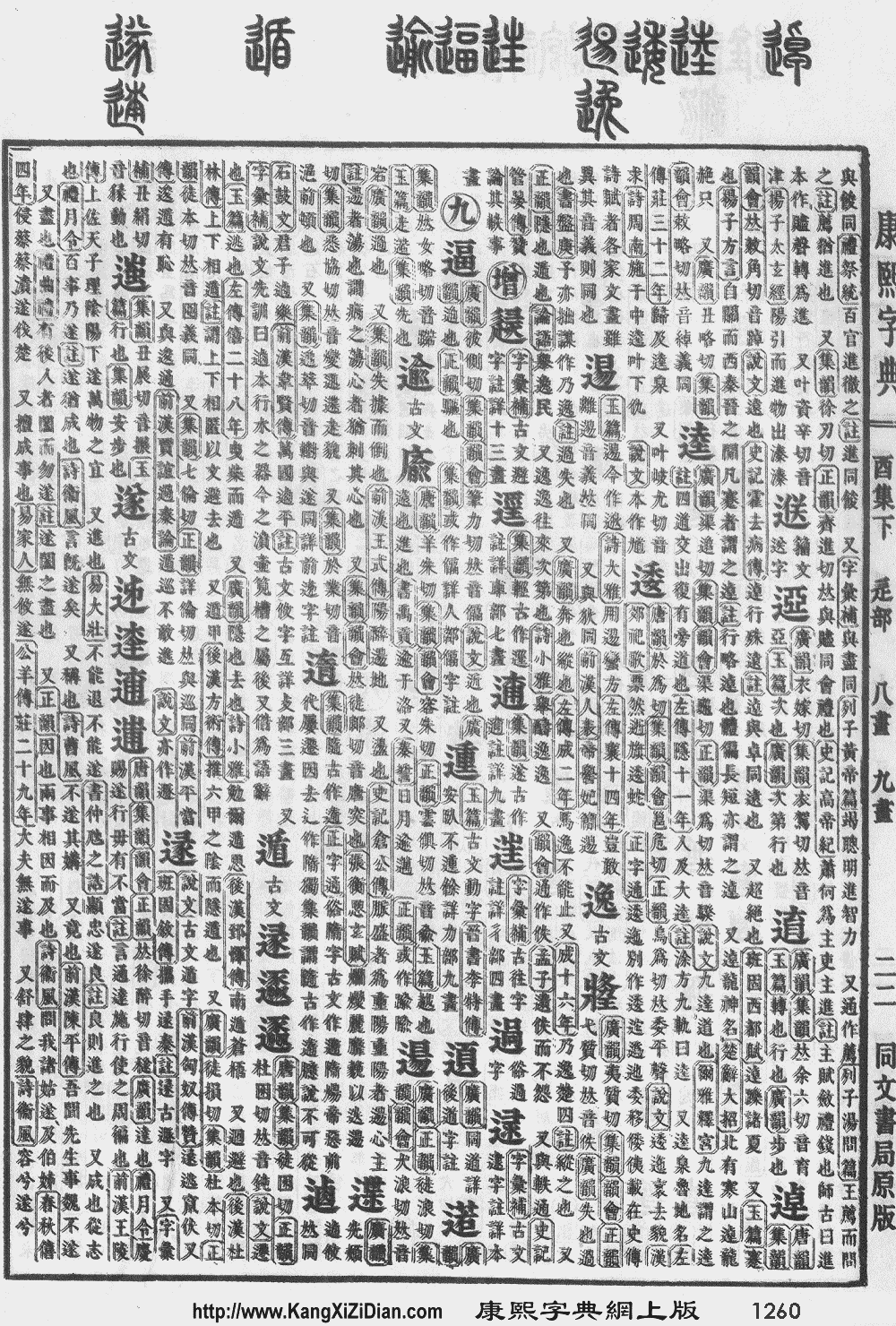
- Kangxi Dictionary: page 1260, character 7
- Dai Kanwa Jiten: character 38950
- Dae Jaweon: page 1750, character 3
- Hanyu Da Zidian (first edition): volume 6, page 3849, character 1
- Unihan data for U+9037
Chinese
| trad. | 逷 | |
|---|---|---|
| simp. # | 逷 | |
Glyph origin
| Historical forms of the character 逷 |
|---|
| Liushutong (compiled in Ming) |
| Transcribed ancient scripts |
 |
Characters in the same phonetic series (易) (Zhengzhang, 2003)
Phono-semantic compound (形聲/形声, OC *l̥ʰeːɡ) : semantic 辵 (“walk”) + phonetic 易 (OC *leːɡs, *leɡ)
Pronunciation
Japanese
References
- Akiyasu Tōdō [et al.] (2002) 漢字源, →ISBN: “衫”
This article is issued from Wiktionary. The text is licensed under Creative Commons - Attribution - Sharealike. Additional terms may apply for the media files.