醱
| ||||||||
Translingual
| Traditional | 醱 |
|---|---|
| Shinjitai (extended) |
醗 |
| Simplified | 酦 |
Han character
醱 (Kangxi radical 164, 酉+12, 19 strokes, cangjie input 一田弓人水 (MWNOE), four-corner 12647, composition ⿰酉發)
References
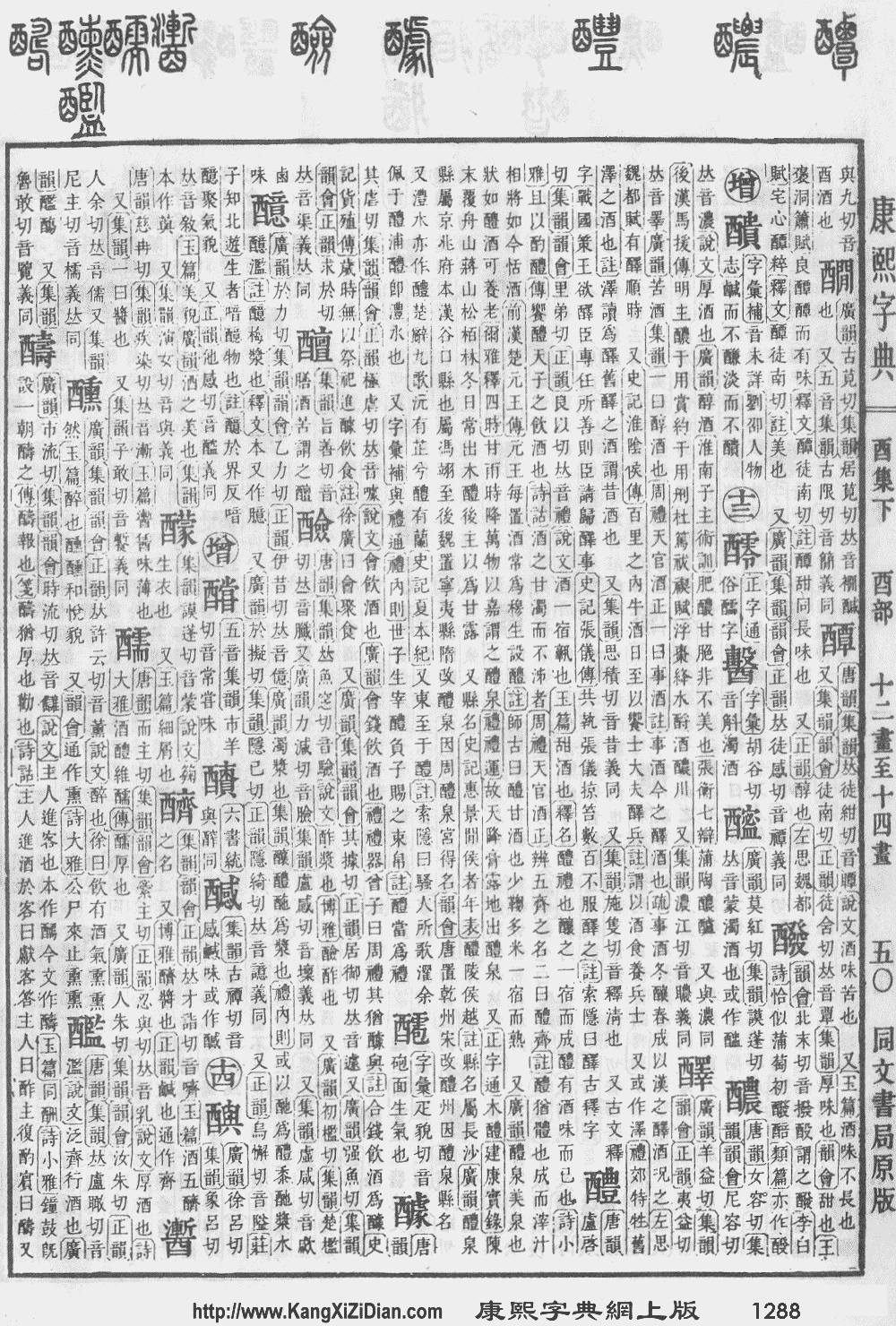
- Kangxi Dictionary: page 1288, character 3
- Dai Kanwa Jiten: character 40041
- Dae Jaweon: page 1788, character 21
- Hanyu Da Zidian (first edition): volume 6, page 3599, character 9
- Unihan data for U+91B1
Japanese
| 醗 | |
| 醱 |
Usage notes
In modern Japanese, 醱 is mostly replaced by 発, due to the deprecation of non-tōyō kanji caused by the Japanese script reform.
Japanese terms with 醱 replaced by daiyōji 発
Compounds
- 醱酵 (hakkō, “fermentation”)
- 醱醅 (hatsuhai, “vigorous bubbling of fermenting sake”) (also 潑醅)
References
“K'sBookshelf 辞典・用語 漢字林 酉部”, in ksbookshelf.com, accessed 2024-03-12
Korean
Etymology
From Middle Chinese 醱. Recorded as Middle Korean 발〮 (pál) (Yale: pal) in Hunmong Jahoe (訓蒙字會 / 훈몽자회), 1527.
This article is issued from Wiktionary. The text is licensed under Creative Commons - Attribution - Sharealike. Additional terms may apply for the media files.