醵

醵 U+91B5, 醵
CJK UNIFIED IDEOGRAPH-91B5
← 醴
[U+91B4]
CJK Unified Ideographs 醶 →
[U+91B6]

Translingual

Han character

醵 (Kangxi radical 164, 酉+13, 20 strokes, cangjie input 一田卜心人 (MWYPO), four-corner 11632, composition ⿰酉豦)

  1. contribute for drinks
  2. pool money

References

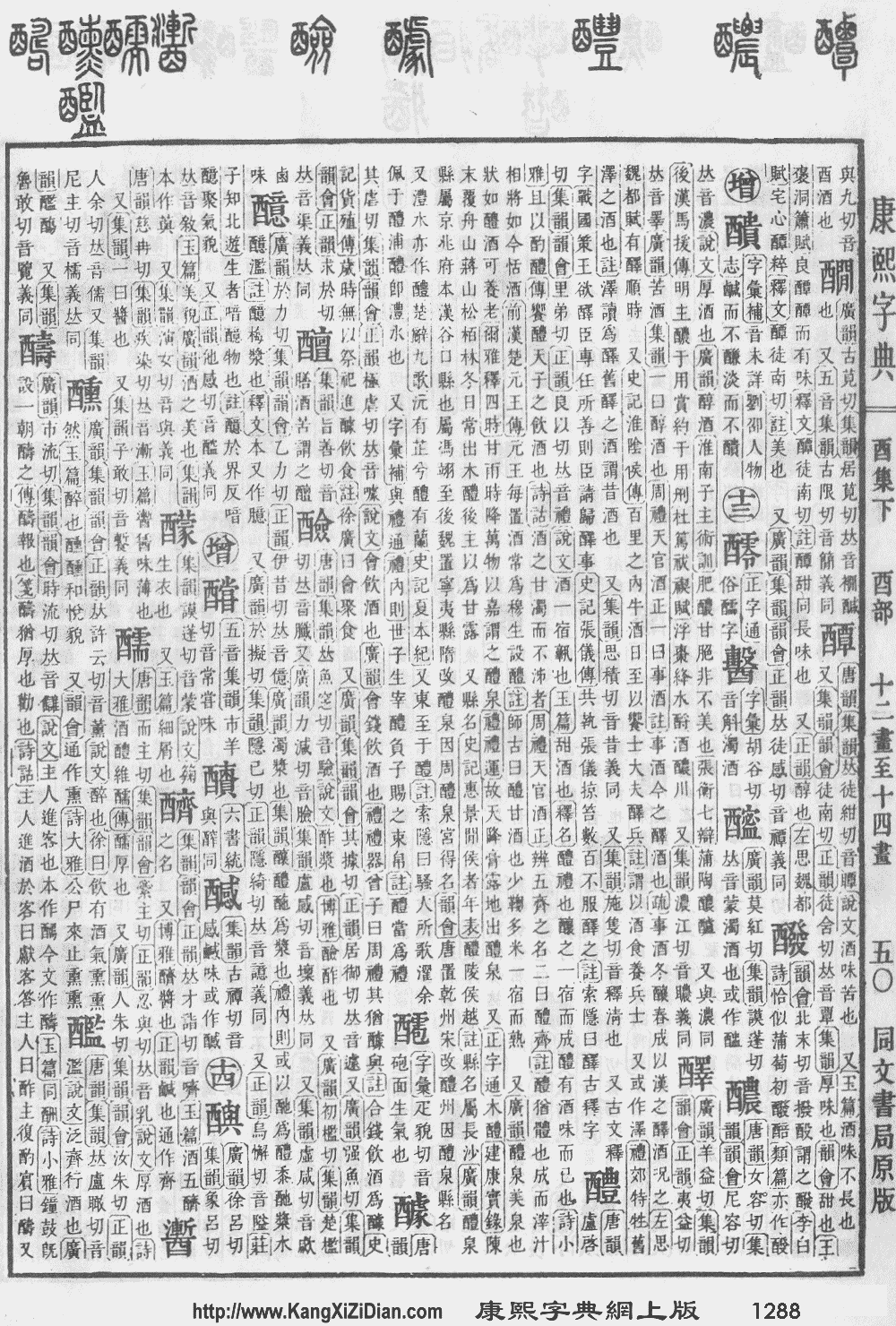
  • Kangxi Dictionary: page 1288, character 12
  • Dai Kanwa Jiten: character 40055
  • Dae Jaweon: page 1788, character 32
  • Hanyu Da Zidian (first edition): volume 6, page 3599, character 18
  • Unihan data for U+91B5

Chinese

trad. 醵
simp. # 醵

Pronunciation


Rime
Character 醵 醵 醵
Reading # 1/3 2/3 3/3
Initial (聲) 群 (30) 群 (30) 群 (30)
Final (韻) 魚 (22) 魚 (22) 藥 (107)
Tone (調) Level (Ø) Departing (H) Checked (Ø)
Openness (開合) Open Open Open
Division (等) III III III
Fanqie 強魚切 其據切 其虐切
Baxter gjo gjoH gjak
Reconstructions
Zhengzhang
Shangfang
/ɡɨʌ/ /ɡɨʌH/ /ɡɨɐk̚/
Pan
Wuyun
/ɡiɔ/ /ɡiɔH/ /ɡiɐk̚/
Shao
Rongfen
/ɡiɔ/ /ɡiɔH/ /ɡiɑk̚/
Edwin
Pulleyblank
/gɨə̆/ /gɨə̆H/ /gɨak̚/
Li
Rong
/ɡiɔ/ /ɡiɔH/ /ɡiak̚/
Wang
Li
/ɡĭo/ /ɡĭoH/ /ɡĭak̚/
Bernard
Karlgren
/gi̯wo/ /gi̯woH/ /gi̯ak̚/
Expected
Mandarin
Reflex
qú jù jué
Expected
Cantonese
Reflex
keoi4 geoi6 goek6
Baxter–Sagart system 1.1 (2014)
Character 醵
Reading # 1/1
Modern
Beijing
(Pinyin)
jù
Middle
Chinese
‹ gjoH ›
Old
Chinese
/*[ɡ](r)ak-s/
English subscription feast

Notes for Old Chinese notations in the Baxter–Sagart system:

* Parentheses "()" indicate uncertain presence;
* Square brackets "[]" indicate uncertain identity, e.g. *[t] as coda may in fact be *-t or *-p;
* Angle brackets "<>" indicate infix;
* Hyphen "-" indicates morpheme boundary;

* Period "." indicates syllable boundary.
Zhengzhang system (2003)
Character 醵 醵 醵
Reading # 1/3 2/3 3/3
No. 5261 5267 5281
Phonetic
component
虍 虍 虍
Rime
group
魚 魚 鐸
Rime
subdivision
0 0 0
Corresponding
MC rime
遽 噱
Old
Chinese
/*ɡa/ /*ɡas/ /*ɡaɡ/

Definitions

醵

  1. This term needs a translation to English. Please help out and add a translation, then remove the text {{rfdef}}.

Japanese

Kanji

醵

(uncommon “Hyōgai” kanji)

  1. This term needs a translation to English. Please help out and add a translation, then remove the text {{rfdef}}.

Readings

Korean

Etymology 1

From Middle Chinese 醵 (MC gjak).

Historical readings

Pronunciation

Hanja

Wikisource 醵 (eumhun 추렴할 갹 (churyeomhal gyak))

  1. Hanja form? of 갹 (“chip in; contribute; donate”).

Compounds

Etymology 2

From Middle Chinese 醵 (MC gjo).

Historical readings

From Middle Chinese 醵 (MC gjoH).

Historical readings

Pronunciation

  • (SK Standard/Seoul) IPA(key): [kɘ(ː)]
  • Phonetic hangul: [거(ː)]
    • Though still prescribed in Standard Korean, most speakers in both Koreas no longer distinguish vowel length.

Hanja

醵 (eumhun 추렴할 거 (churyeomhal geo))

  1. Hanja form? of 거 (“chip in; contribute; donate”).

Compounds

References

  • 국제퇴계학회 대구경북지부 (國際退溪學會 大邱慶北支部) (2007). Digital Hanja Dictionary, 전자사전/電子字典.
This article is issued from Wiktionary. The text is licensed under Creative Commons - Attribution - Sharealike. Additional terms may apply for the media files.