鉞
See also: 钺
| ||||||||
Translingual
Han character
鉞 (Kangxi radical 167, 金+5, 13 strokes, cangjie input 金戈女 (CIV), four-corner 83150, composition ⿰釒戉)
- broad-axe, a battle axe, halberd
References
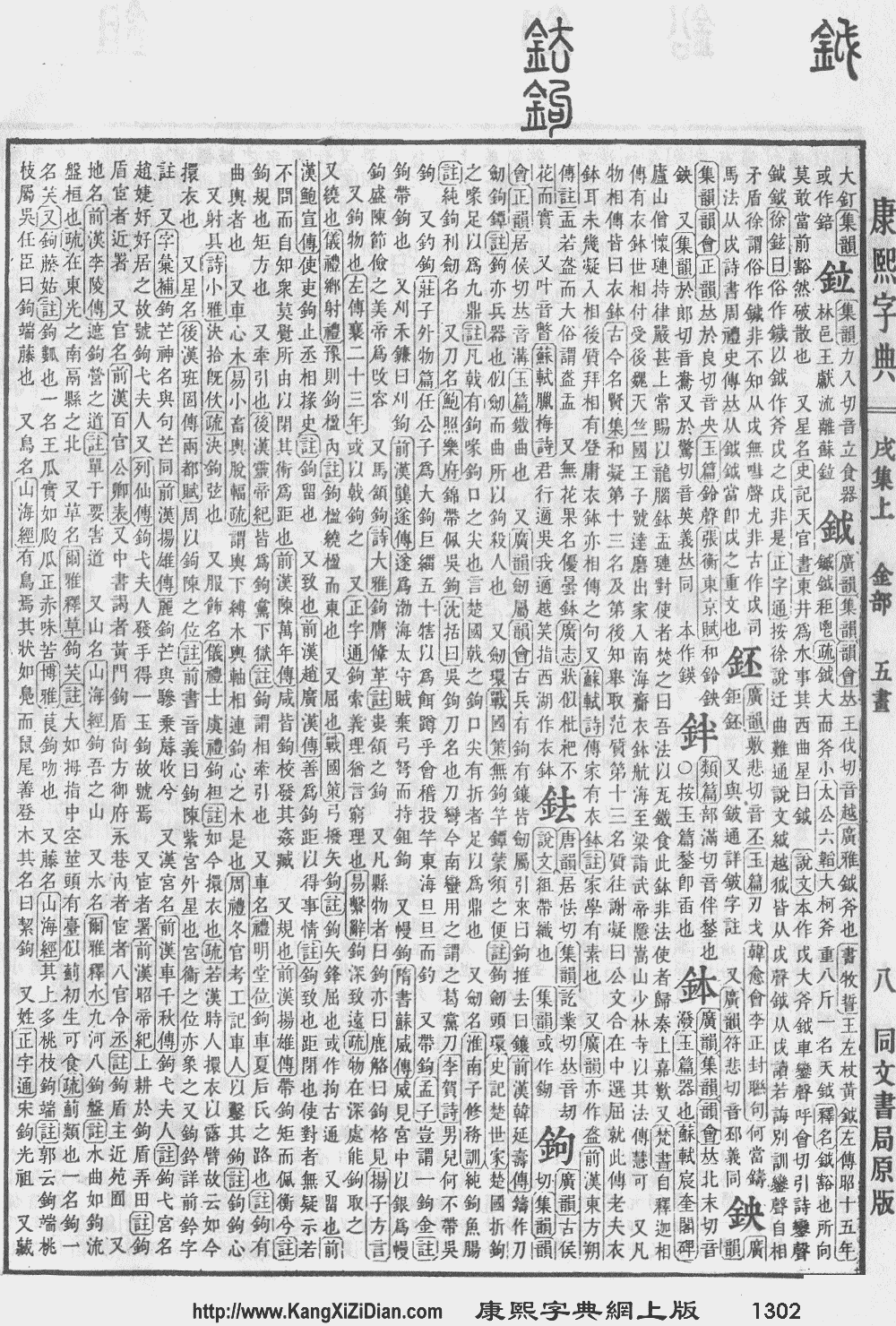
- Kangxi Dictionary: page 1302, character 2
- Dai Kanwa Jiten: character 40313
- Dae Jaweon: page 1803, character 22
- Hanyu Da Zidian (first edition): volume 6, page 4184, character 9
- Unihan data for U+925E
Chinese
| trad. | 鉞 | |
|---|---|---|
| simp. | 钺 | |
| alternative forms | 戉 | |

石鉞
Stone broad-axe (left)
Stone broad-axe (left)
Glyph origin
Characters in the same phonetic series (戉) (Zhengzhang, 2003)
Ideogrammic compound (會意/会意) and phono-semantic compound (形聲/形声, OC *ɢʷad) : semantic 金 (“metal”) + phonetic 戉 (OC *ɢʷad, “battle axe”).
Originally written 戉, see there for more.
Pronunciation
Definitions
鉞
- (historical) a type of battle axe used in ancient China
- 王左杖黃鉞,右秉白旄以麾,曰:「逖矣,西土之人!」 [Classical Chinese, trad.]
- From: The Book of Documents, circa 4th – 3rd century BCE
- Wáng zuǒ zhàng huáng yuè, yòu bǐng bái máo yǐ huī, yuē: “Tì yǐ, xītǔ zhī rén!” [Pinyin]
- In his left hand he carried a battle-axe yellow with gold, and in his right he held a white ensign, which he waved, saying, 'Far are ye come, ye men of the western regions!'
王左杖黄钺,右秉白旄以麾,曰:「逖矣,西土之人!」 [Classical Chinese, simp.]
Japanese
Etymology 1
| Kanji in this term |
|---|
| 鉞 |
| まさかり Hyōgaiji |
| kun’yomi |
The final -kari may be the nominalized form of 刈る (karu, “cut”).
Pronunciation
- IPA(key): [e̞t͡sɨᵝ]
Korean
Hanja
鉞 • (wol) (hangeul 월, revised wol, McCune–Reischauer wŏl, Yale wel)
- This term needs a translation to English. Please help out and add a translation, then remove the text
{{rfdef}}.
Vietnamese
This article is issued from Wiktionary. The text is licensed under Creative Commons - Attribution - Sharealike. Additional terms may apply for the media files.