伐
| ||||||||
Translingual
| Stroke order | |||
|---|---|---|---|
 | |||
| Stroke order (Taiwan) | |||
|---|---|---|---|
 | |||
Han character
伐 (Kangxi radical 9, 人+4, 6 strokes, cangjie input 人戈 (OI), four-corner 23250, composition ⿰亻戈)
References
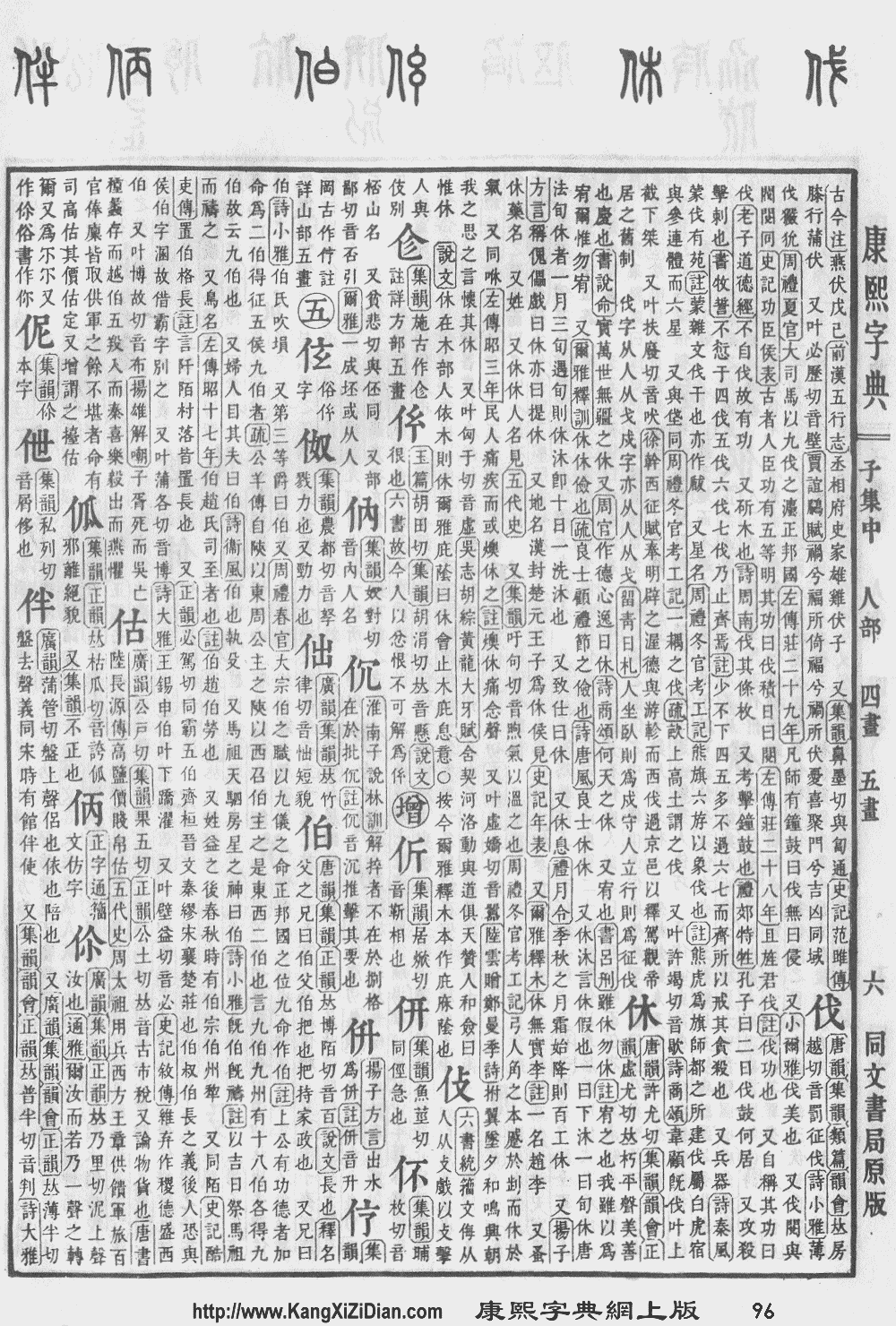
- Kangxi Dictionary: page 96, character 1
- Dai Kanwa Jiten: character 439
- Dae Jaweon: page 203, character 1
- Hanyu Da Zidian (first edition): volume 1, page 120, character 8
- Unihan data for U+4F10
Chinese
| simp. and trad. |
伐 | |
|---|---|---|
| alternative forms | 𪜁 ancient | |
Glyph origin
| Historical forms of the character 伐 | ||||||||||||||||||||||||||||||||||||||||||||||||||||||||||||||||||||||||||||||||||||||||||||||||||||||||||||||||||||||||||||||||||||||||||||||||||||||||||||||||||||||||||||||||||||||||||||||||||||||||
|---|---|---|---|---|---|---|---|---|---|---|---|---|---|---|---|---|---|---|---|---|---|---|---|---|---|---|---|---|---|---|---|---|---|---|---|---|---|---|---|---|---|---|---|---|---|---|---|---|---|---|---|---|---|---|---|---|---|---|---|---|---|---|---|---|---|---|---|---|---|---|---|---|---|---|---|---|---|---|---|---|---|---|---|---|---|---|---|---|---|---|---|---|---|---|---|---|---|---|---|---|---|---|---|---|---|---|---|---|---|---|---|---|---|---|---|---|---|---|---|---|---|---|---|---|---|---|---|---|---|---|---|---|---|---|---|---|---|---|---|---|---|---|---|---|---|---|---|---|---|---|---|---|---|---|---|---|---|---|---|---|---|---|---|---|---|---|---|---|---|---|---|---|---|---|---|---|---|---|---|---|---|---|---|---|---|---|---|---|---|---|---|---|---|---|---|---|---|---|---|---|
| Shang | Western Zhou | Shuowen Jiezi (compiled in Han) | Liushutong (compiled in Ming) | |||||||||||||||||||||||||||||||||||||||||||||||||||||||||||||||||||||||||||||||||||||||||||||||||||||||||||||||||||||||||||||||||||||||||||||||||||||||||||||||||||||||||||||||||||||||||||||||||||||
| Oracle bone script | Bronze inscriptions | Small seal script | Transcribed ancient scripts | |||||||||||||||||||||||||||||||||||||||||||||||||||||||||||||||||||||||||||||||||||||||||||||||||||||||||||||||||||||||||||||||||||||||||||||||||||||||||||||||||||||||||||||||||||||||||||||||||||||
 |
 |
 |
 | |||||||||||||||||||||||||||||||||||||||||||||||||||||||||||||||||||||||||||||||||||||||||||||||||||||||||||||||||||||||||||||||||||||||||||||||||||||||||||||||||||||||||||||||||||||||||||||||||||||
|||
|
References: Mostly from Richard Sears' Chinese Etymology site (authorisation),
| ||||||||||||||||||||||||||||||||||||||||||||||||||||||||||||||||||||||||||||||||||||||||||||||||||||||||||||||||||||||||||||||||||||||||||||||||||||||||||||||||||||||||||||||||||||||||||||||||||||||||


Pronunciation
Definitions
伐
- to kill; to slaughter; to behead
- to hack; to fell; to cut down; to hew
- 坎坎伐檀兮,寘之河之干兮,河水清且漣猗。 [Pre-Classical Chinese, trad.]
- From: The Classic of Poetry, c. 11th – 7th centuries BCE, translated based on James Legge's version
- Kǎnkǎn fá tán xī, zhì zhī hé zhī gān xī, héshuǐ qīng qiě lián yī. [Pinyin]
- Kan-kan go his blows on the sandal trees,
And he places what he hews on the river's bank,
Whose waters flow clear and rippling.
坎坎伐檀兮,寘之河之干兮,河水清且涟猗。 [Pre-Classical Chinese, simp.]
- to knock; to strike; to hit
- to send troops to suppress; to attack
- 4th cent. BC, 《竹書紀年》 (Bamboo Annals), s.v. "周宣王" (Xuan King):
- 五年... 秋八月,方叔帥師伐荊蠻
- Year 5 [c. 820 BC]... Autumn, Month 8: "Uncle" Fang led a force to slaughter the Jingman.
- 春,齊師伐我。 [Classical Chinese, trad.]
- From: Commentary of Zuo, c. 4th century BCE
- Chūn, Qí shī fá wǒ. [Pinyin]
- In the spring the Qi troops invaded us.
春,齐师伐我。 [Classical Chinese, simp.]- 諸侯相侵伐,暴虐百姓。 [Classical Chinese, trad.]
- From: The Records of the Grand Historian, by Sima Qian, c. 91 BCE
- Zhūhóu xiāng qīnfá, bàonüè bǎixìng. [Pinyin]
- The feudal lords raided one another and were violent and cruel against the common people.
诸侯相侵伐,暴虐百姓。 [Classical Chinese, simp.]
- 4th cent. BC, 《竹書紀年》 (Bamboo Annals), s.v. "周宣王" (Xuan King):
- to remove; to eliminate; to take away
- to damage; to harm; to endanger
- to defeat; to thwart
- to criticize; to blame
- (Chinese astronomy) the name of three stars in the Three Stars mansion: 42 Orionis, θ2 Orionis and ι Orionis
- ridge soil
- Alternative form of 閥/阀 (fá, “merit; achievement”)
- to brag about (oneself); to flaunt
- Alternative form of 瞂 (fá, “shield”)
- Alternative form of 罰/罚 (fá, “to punish”)
- (Min) to stride; to take a stride; to step forward; to step over
- (Min) step; footstep; stride
- (Min) Classifier for footsteps: step
- (Wu) Alternative form of 𠲎 (0va, “final interrogative particle on a yes/no question”)
- (Wu) Alternative form of 勿 (“not”)
- a surname
Compounds
- 不矜不伐
- 以夷伐夷
- 伐交
- 伐兵
- 伐冰
- 伐喪/伐丧
- 伐善
- 伐子都
- 伐性
- 伐性之斧
- 伐木 (fámù)
- 伐東吳/伐东吴
- 伐柯 (fákē)
- 伐柯人 (fákērén)
- 伐檀
- 伐毛洗髓
- 伐生
- 伐異黨同/伐异党同
- 伐罪
- 伐罪弔民/伐罪吊民
- 伐薪
- 伐藝/伐艺
- 伐謀/伐谋
- 伐鼓
- 作伐
- 剪伐
- 勛伐/勋伐 (xūnfá)
- 北伐 (běifá)
- 南征北伐
- 口伐
- 口誅筆伐/口诛笔伐 (kǒuzhūbǐfá)
- 吊伐
- 吳剛伐桂/吴刚伐桂
- 執伐/执伐
- 執柯作伐/执柯作伐
- 大張撻伐/大张挞伐
- 央人作伐
- 奉辭伐罪/奉辞伐罪
- 巴伐利亞/巴伐利亚
- 弔民伐罪/吊民伐罪
- 征伐 (zhēngfá)
- 捷克斯洛伐克 (Jiékèsīluòfákè)
- 撻伐/挞伐 (tàfá)
- 操斧伐柯
- 攻伐 (gōngfá)
- 斫伐
- 斬伐/斩伐
- 斬刈殺伐/斩刈杀伐
- 旦旦而伐
- 木伐
- 東討西伐/东讨西伐
- 標同伐異/标同伐异
- 步伐 (bùfá)
- 步伐異常/步伐异常
- 殺伐/杀伐 (shāfá)
- 殺伐決斷/杀伐决断
- 濫伐/滥伐
- 百馬伐驥/百马伐骥
- 盜伐/盗伐 (dàofá)
- 直木必伐
- 矜伐
- 矜功伐善
- 矜功自伐
- 砍伐 (kǎnfá)
- 自伐
- 討伐/讨伐 (tǎofá)
- 蹶石伐木
- 阿伐射線/阿伐射线
- 阿伐粒子
- 阿伐蛻變/阿伐蜕变
- 黨同伐異/党同伐异 (dǎngtóngfáyì)
Etymology 2
| For pronunciation and definitions of 伐 – see 𠲎 (“final interrogative particle on a yes/no question.”). (This character is a variant form of 𠲎). |
Etymology 3
| For pronunciation and definitions of 伐 – see 筏 (“raft”). (This character is the second-round simplified form of 筏). |
Notes:
|
Etymology 4
| For pronunciation and definitions of 伐 – see 閥 (“contribution; family status; etc.”). (This character is the second-round simplified and variant form of 閥). |
Notes:
|
Etymology 5
| For pronunciation and definitions of 伐 – see 垡. (This character is the second-round simplified form of 垡). |
Notes:
|