飪
| ||||||||
Translingual
| Traditional | 飪 |
|---|---|
| Simplified | 饪 |
| Japanese | 飪 |
| Korean | 飪 |
Alternative forms
- In Japanese kanji and Korean hanja, the left radical component is written 𩙿 which is the historical form found in the Kangxi dictionary.
- In modern Chinese scripts (in traditional form), the left radical component is written 飠 instead.
- In Taiwan, Hong Kong and Macau, the right component is written 壬 (the uppermost stroke is a horizontal 一 line).
- In mainland China, Japan and Korea, the right component is written 壬 (the uppermost stroke is a slanting ㇒ stroke written from the upper right position to the bottom left position).
Han character
飪 (Kangxi radical 184, 食+4, 12 strokes in Chinese, 13 strokes in Japanese and Korean, cangjie input 人戈竹土 (OIHG), four-corner 81714, composition ⿰飠壬(GHT) or ⿰𩙿壬(JK))
Derived characters
- 𤏼
Related characters
References
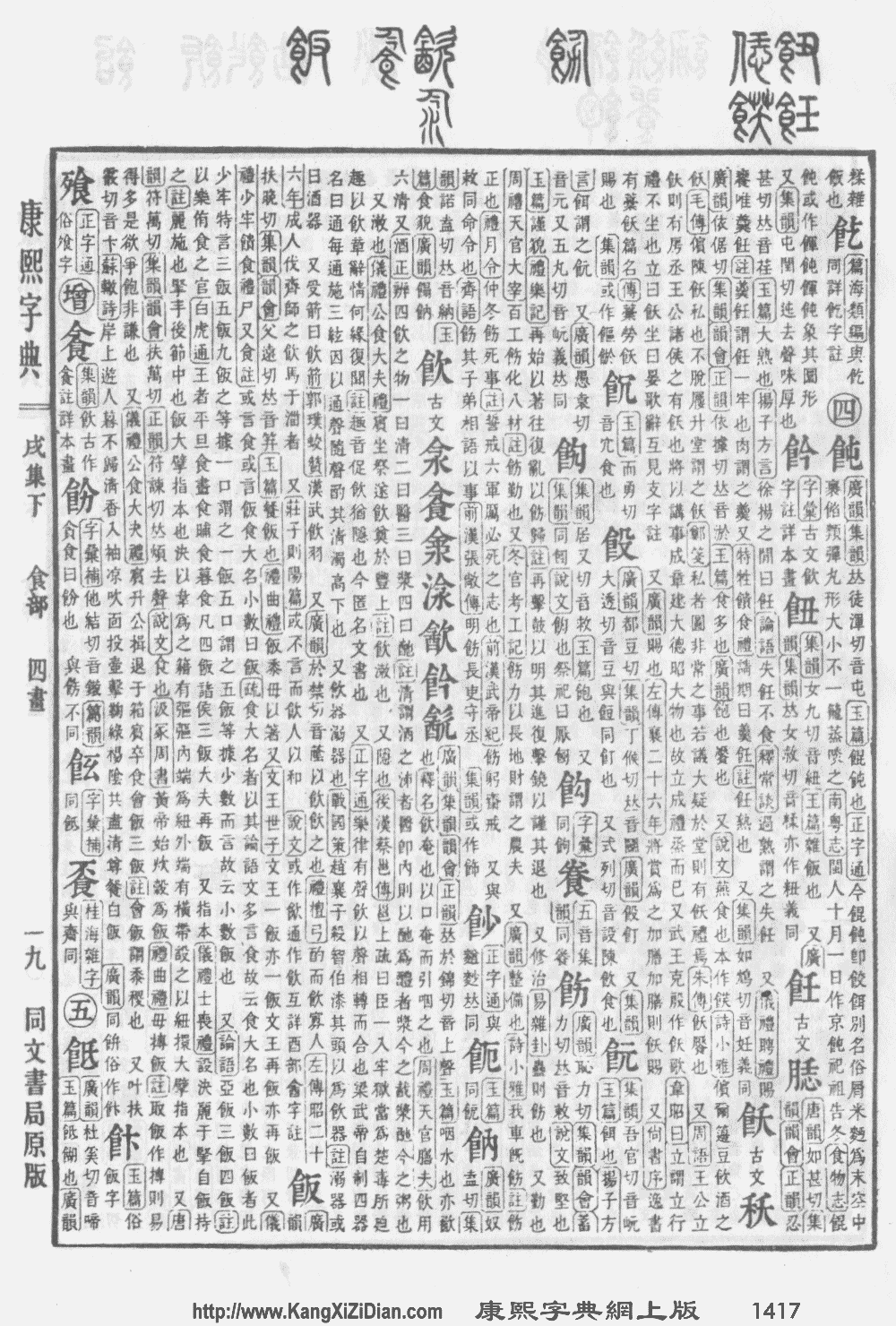
- Kangxi Dictionary: page 1417, character 5
- Dai Kanwa Jiten: character 44049
- Dae Jaweon: page 1941, character 5
- Hanyu Da Zidian (first edition): volume 7, page 4443, character 21
- Unihan data for U+98EA
Chinese
| trad. | 飪 | |
|---|---|---|
| simp. | 饪 | |
| alternative forms | ||
Glyph origin
Characters in the same phonetic series (壬) (Zhengzhang, 2003)
Phono-semantic compound (形聲/形声, OC *njɯmʔ) : semantic 食 (“food”) + phonetic 壬 (OC *l̥ʰeːŋʔ, *njɯm).
Pronunciation
References
- Dictionary of Chinese Character Variants (教育部異體字字典), A04584
- “飪”, in 漢語多功能字庫 (Multi-function Chinese Character Database), 香港中文大學 (the Chinese University of Hong Kong), 2014–
- (Cantonese) 粵音資料集叢
Japanese
Kanji
飪
- This term needs a translation to English. Please help out and add a translation, then remove the text
{{rfdef}}.
Korean
Hanja
飪 • (im) (hangeul 임, revised im, McCune–Reischauer im, Yale im)
- This term needs a translation to English. Please help out and add a translation, then remove the text
{{rfdef}}.
Vietnamese
Han character
飪: Hán Nôm readings: nhẫm, nhẩm
- This term needs a translation to English. Please help out and add a translation, then remove the text
{{rfdef}}.
References
Zhuang
This article is issued from Wiktionary. The text is licensed under Creative Commons - Attribution - Sharealike. Additional terms may apply for the media files.