髡

髡 U+9AE1, 髡
CJK UNIFIED IDEOGRAPH-9AE1
← 髠
[U+9AE0]
CJK Unified Ideographs 髢 →
[U+9AE2]

Translingual

Han character

髡 (Kangxi radical 190, 髟+3, 13 strokes, cangjie input 尸竹一山 (SHMU), four-corner 72211, composition ⿱髟兀)

References

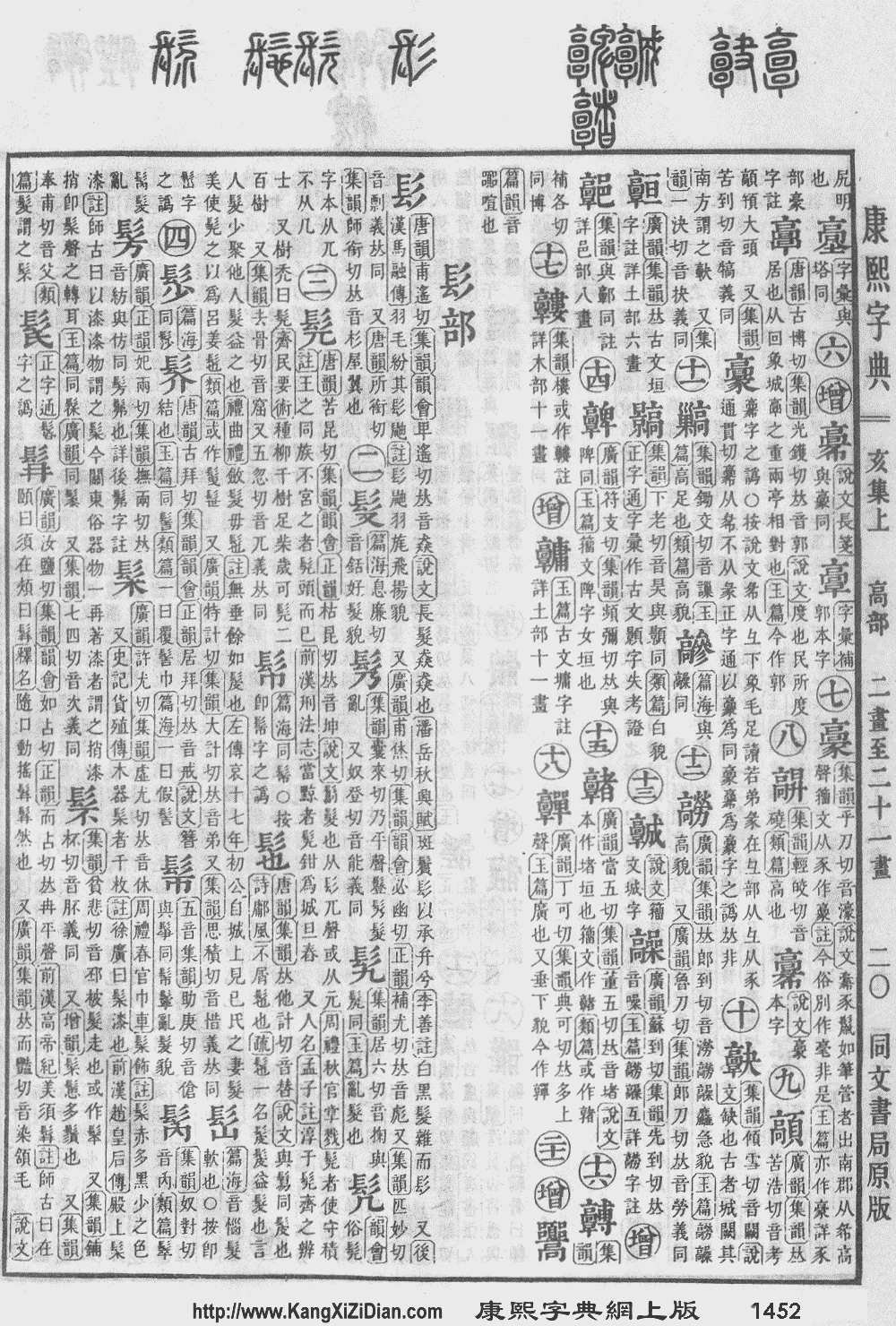
  • Kangxi Dictionary: page 1452, character 31
  • Dai Kanwa Jiten: character 45361
  • Dae Jaweon: page 1983, character 7
  • Hanyu Da Zidian (first edition): volume 7, page 4518, character 9
  • Unihan data for U+9AE1

Chinese

simp. and trad.
髡
alternative forms 髠
髨

Glyph origin

Pronunciation


Rime
Character 髡
Reading # 1/1
Initial (聲) 溪 (29)
Final (韻) 魂 (55)
Tone (調) Level (Ø)
Openness (開合) Closed
Division (等) I
Fanqie 苦昆切
Baxter khwon
Reconstructions
Zhengzhang
Shangfang
/kʰuən/
Pan
Wuyun
/kʰuon/
Shao
Rongfen
/kʰuən/
Edwin
Pulleyblank
/kʰwən/
Li
Rong
/kʰuən/
Wang
Li
/kʰuən/
Bernard
Karlgren
/kʰuən/
Expected
Mandarin
Reflex
kūn
Expected
Cantonese
Reflex
fan1
Zhengzhang system (2003)
Character 髡
Reading # 1/1
No. 13195
Phonetic
component
兀
Rime
group
文
Rime
subdivision
2
Corresponding
MC rime
坤
Old
Chinese
/*ŋ̊ʰuːn/

Definitions

髡

  1. (historical) to shave a male person's head as a punishment in ancient China
  2. (figuratively) Buddhist monk
  3. (figuratively) to trim the branches off a tree
  4. (Xiamen, Quanzhou and Taiwanese Hokkien) to shave; to peel; to scrape off; to pare
  5. (Xiamen Hokkien) to have the throat feel dry

Compounds

  • 留髡
  • 髡刀
  • 髡喉
  • 髡喙鬚/髡喙须
  • 髡殘/髡残
  • 髡鉗/髡钳
  • 髡面
  • 髡面毛
  • 髡髮/髡发
  • 髡鼎

Korean

Hanja

髡 • (gon) (hangeul 곤, revised gon, McCune–Reischauer kon, Yale kon)

  1. This term needs a translation to English. Please help out and add a translation, then remove the text {{rfdef}}.
This article is issued from Wiktionary. The text is licensed under Creative Commons - Attribution - Sharealike. Additional terms may apply for the media files.