丅
 | ||||||||
 | ||||||||
Translingual
Han character
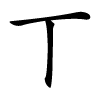
丅 (Kangxi radical 1, 一+1, 2 strokes, cangjie input 一中 (ML) or 難一中 (XML), four-corner 10200, composition ⿱一丨)
Usage notes
- (tally marks, 2): the count of two, see 正.
Descendants
References
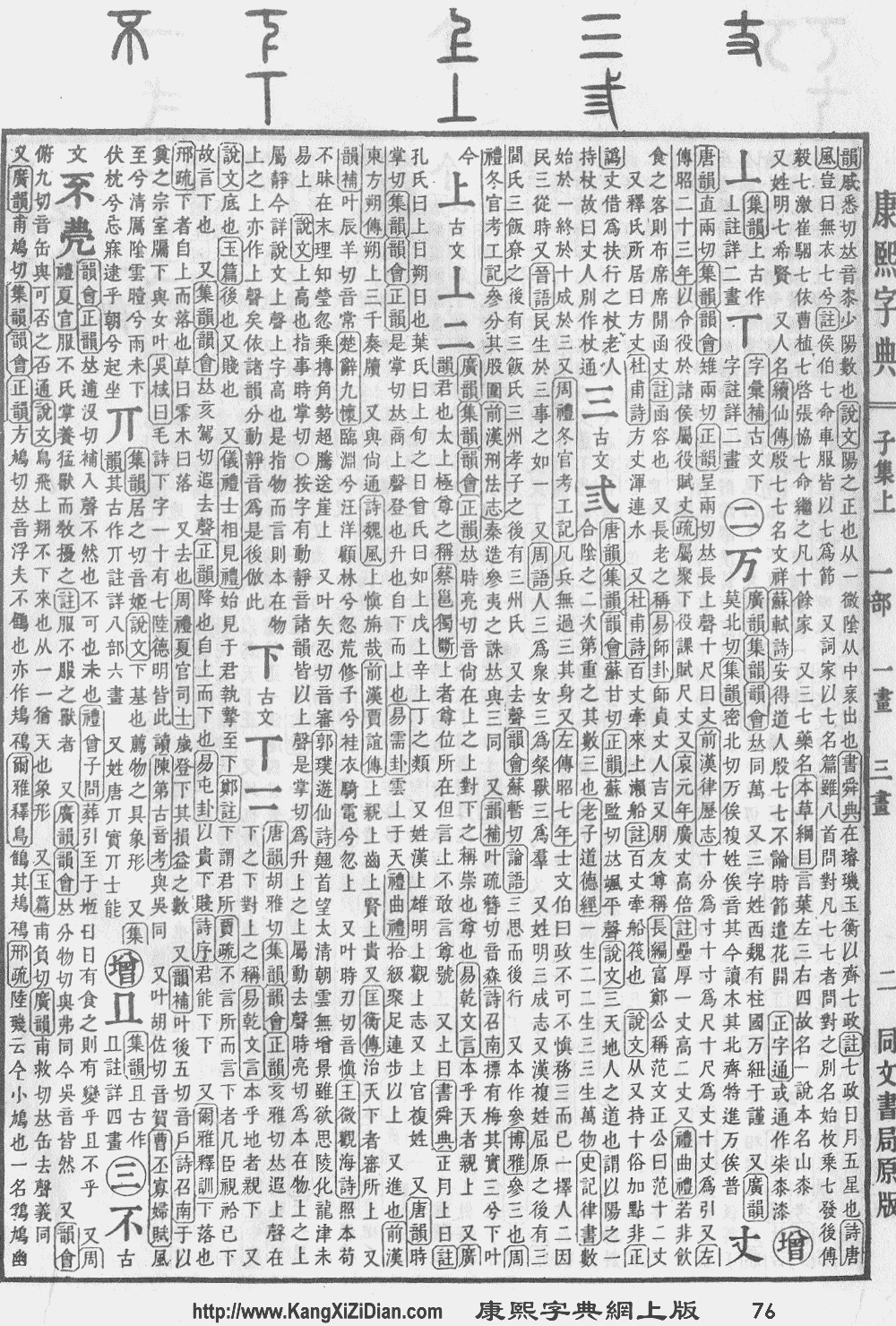
- Kangxi Dictionary: page 76, character 2
- Dai Kanwa Jiten: character 8
- Dae Jaweon: page 137, character 3
- Hanyu Da Zidian (first edition): volume 1, page 2, character 4
- Unihan data for U+4E05
Chinese
| Historical forms of the character 丅 | |
|---|---|
| |
|
References: Mostly from Richard Sears' Chinese Etymology site (authorisation),
|

Characters in the same phonetic series (下) (Zhengzhang, 2003)
| For pronunciation and definitions of 丅 – see 下. (This character is an ancient form of 下). |
Japanese
Usage notes
Non-standard for 下.
Korean
This article is issued from Wiktionary. The text is licensed under Creative Commons - Attribution - Sharealike. Additional terms may apply for the media files.