丞
See also: 氶
| ||||||||
Translingual
| Stroke order | |||
 | |||
Han character
丞 (Kangxi radical 1, 一+5, 6 strokes, cangjie input 弓水一 (NEM) or 難弓水一 (XNEM), four-corner 17103, composition ⿱氶一)
References
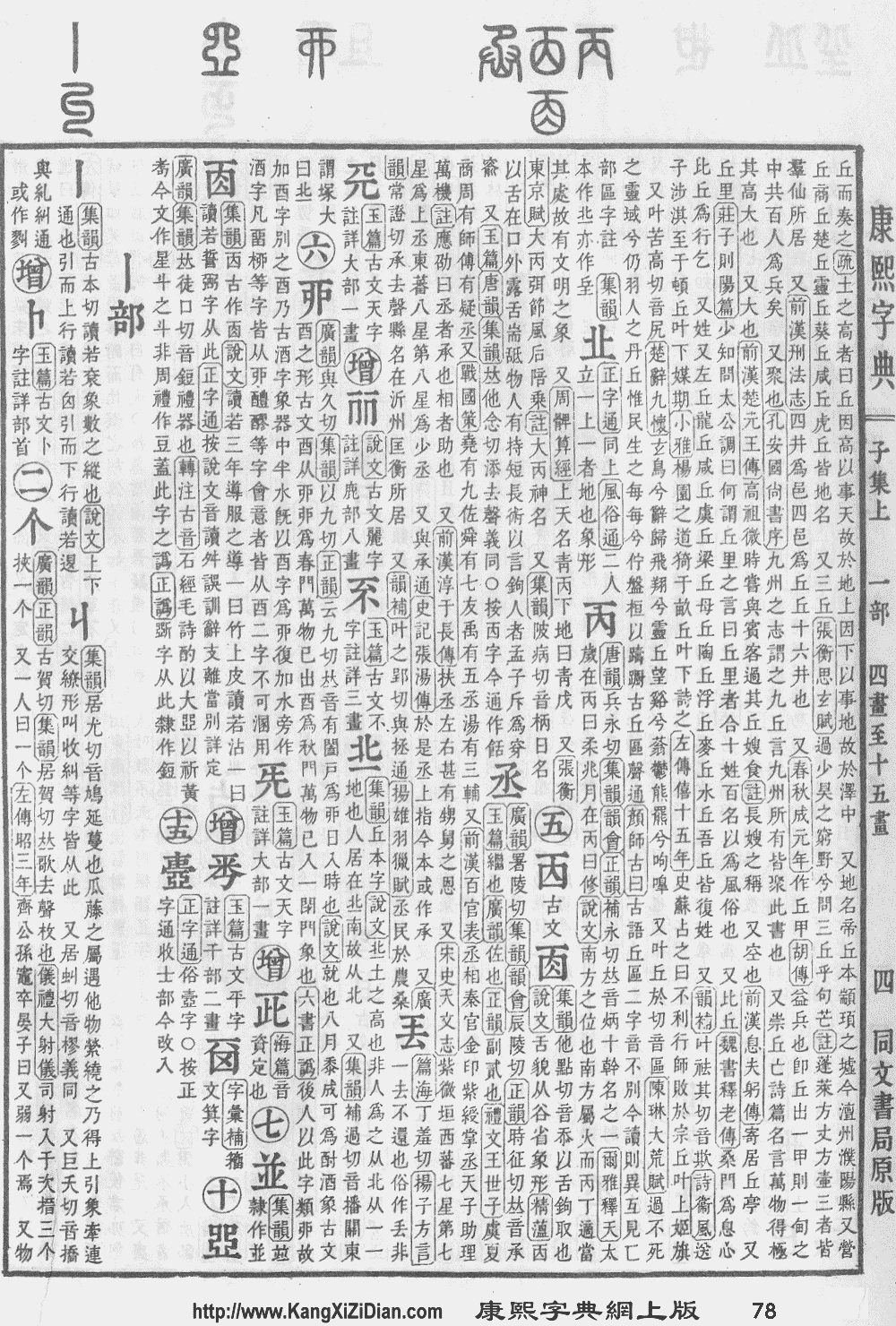
- Kangxi Dictionary: page 78, character 5
- Dai Kanwa Jiten: character 40
- Dae Jaweon: page 157, character 1
- Hanyu Da Zidian (first edition): volume 1, page 19, character 8
- Unihan data for U+4E1E
Chinese
| simp. and trad. |
丞 | |
|---|---|---|
Glyph origin
| Historical forms of the character 丞 | ||||||||||||||||||||
|---|---|---|---|---|---|---|---|---|---|---|---|---|---|---|---|---|---|---|---|---|
| Shang | Shuowen Jiezi (compiled in Han) | Liushutong (compiled in Ming) | ||||||||||||||||||
| Oracle bone script | Small seal script | Transcribed ancient scripts | ||||||||||||||||||
 |
 |
 | ||||||||||||||||||
||
|
References: Mostly from Richard Sears' Chinese Etymology site (authorisation),
| ||||||||||||||||||||


Characters in the same phonetic series (丞) (Zhengzhang, 2003)
Ideogrammic compound (會意/会意) : 卩 (“kneeling person”) + 廾 (“both hands”) + 凵 (“hole”) – to rescue a person from a hole. Compare 承.
Etymology
From Proto-Sino-Tibetan *s-tjaŋ (“upper part; rise; raise”).
Pronunciation 1
Definitions
丞
Compounds
- 丞相 (chéngxiàng)
Pronunciation 2
Japanese
Korean
Hanja
References
Vietnamese
Han character
丞: Hán Việt readings: thừa
丞: Hán Nôm readings: thừa, chẳng
- This term needs a translation to English. Please help out and add a translation, then remove the text
{{rfdef}}.
References
This article is issued from Wiktionary. The text is licensed under Creative Commons - Attribution - Sharealike. Additional terms may apply for the media files.