承
| ||||||||
Translingual
| Stroke order | |||
|---|---|---|---|
 | |||
Han character
承 (Kangxi radical 64, 手+4, 8 strokes, cangjie input 弓弓手人 (NNQO), four-corner 17232, composition ⿲㇇⿻了三⿺乀丿(GJKV) or ⿲㇇⿻了三⿱丿乀(HT))
References
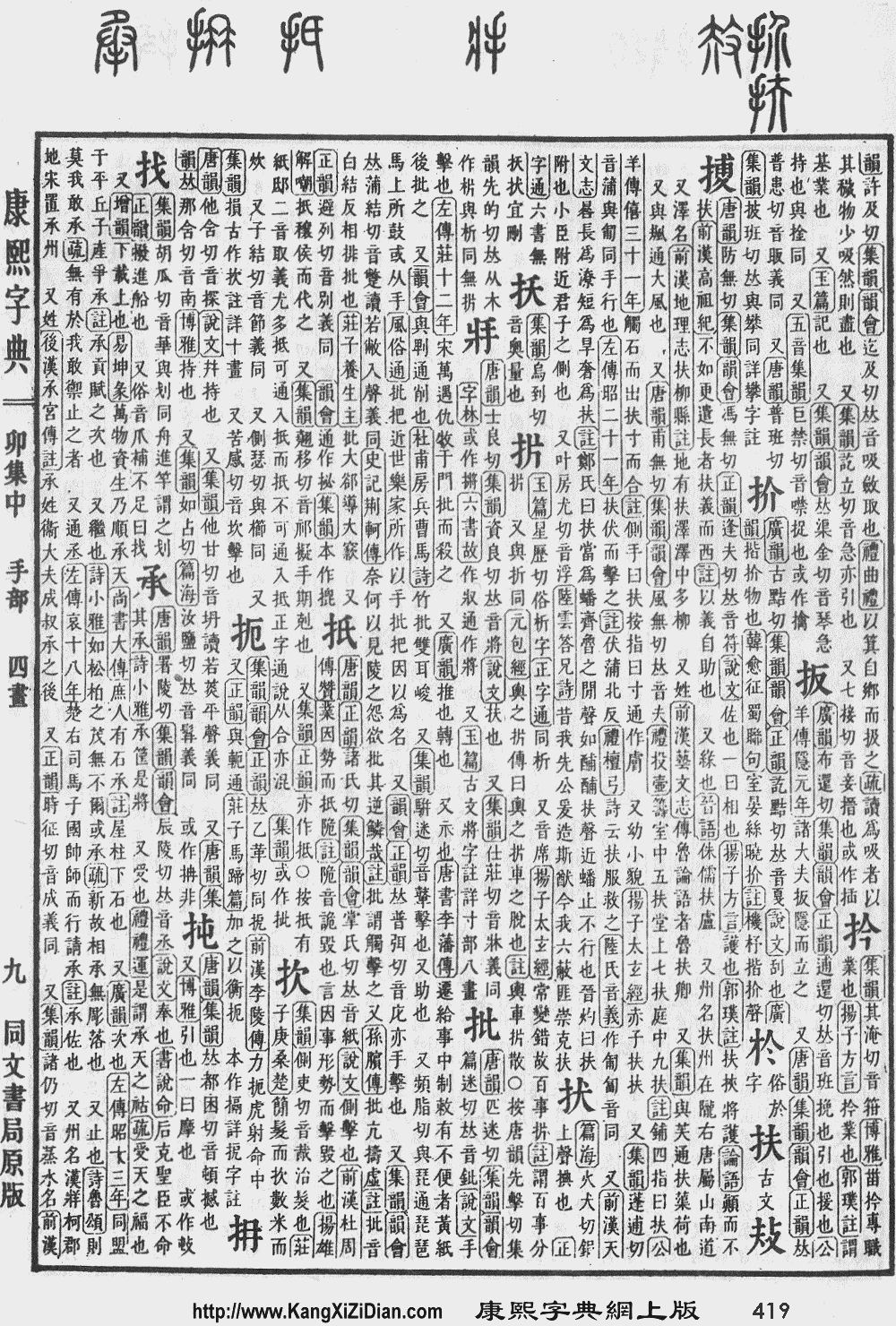
- Kangxi Dictionary: page 419, character 19
- Dai Kanwa Jiten: character 11852
- Dae Jaweon: page 766, character 11
- Hanyu Da Zidian (first edition): volume 1, page 54, character 3
- Unihan data for U+627F
Chinese
| trad. | 承 | |
|---|---|---|
| simp. # | 承 | |
| alternative forms | 丞 | |
Glyph origin
| Historical forms of the character 承 | |||
|---|---|---|---|
| Shang | Western Zhou | Shuowen Jiezi (compiled in Han) | Liushutong (compiled in Ming) |
| Oracle bone script | Bronze inscriptions | Small seal script | Transcribed ancient scripts |
 |
 |
 |
 |
Ideogrammic compound (會意/会意) : 卩 (“kneeling person”) + 廾 (“both hands”) – to hold; to carry. Compare 丞. In the seal script, an additional hand 手 was added.
Etymology
From Proto-Sino-Tibetan *s-tjaŋ (“upper part; rise; raise”) (STEDT).
Pronunciation 1
Definitions
承
Compounds
- 一力承當/一力承当
- 一手承運/一手承运
- 一脈相承/一脉相承 (yīmàixiāngchéng)
- 不承望
- 代位繼承/代位继承
- 仰承
- 供承
- 傳承/传承 (chuánchéng)
- 允承
- 先意承志
- 先意承旨
- 共同繼承/共同继承
- 勞承/劳承
- 嗣承
- 四海承風/四海承风
- 國家承認/国家承认
- 坦承 (tǎnchéng)
- 多承
- 奉令承教
- 奉天承運/奉天承运 (fèngtīanchéngyùn)
- 奉承 (fèngchéng)
- 奉承話/奉承话
- 嫡孫承重/嫡孙承重
- 子承父業/子承父业
- 屈意奉承
- 師承/师承 (shīchéng)
- 平均繼承/平均继承
- 待承
- 慷慨擔承/慷慨担承
- 應天承運/应天承运
- 應承/应承 (yìngchéng)
- 承上啟下/承上启下
- 承乏
- 承付 (chéngfù)
- 承任
- 承保 (chéngbǎo)
- 承修
- 承值
- 承做
- 承允
- 承先啟後/承先启后 (chéngxiānqǐhòu)
- 承兌/承兑
- 承前
- 承前啟後/承前启后 (chéngqiánqǐhòu)
- 承務/承务
- 承包 (chéngbāo)
- 承包商 (chéngbāoshāng)
- 承印
- 承受 (chéngshòu)
- 承問/承问
- 承嗣
- 承基
- 承塵/承尘 (chéngchén)
- 承奉
- 承宣
- 承審員/承审员
- 承寵/承宠
- 承局
- 承差
- 承平 (chéngpíng)
- 承建 (chéngjiàn)
- 承恩
- 承恩門/承恩门
- 承情
- 承意
- 承想 (chéngxiǎng)
- 承應/承应 (chéngyìng)
- 承托
- 承接 (chéngjiē)
- 承擔/承担 (chéngdān)
- 承攬/承揽 (chénglǎn)
- 承攬契約/承揽契约
- 承教
- 承旨
- 承望
- 承歡/承欢 (chénghuān)
- 承歡獻媚/承欢献媚 (chénghuān xiànmèi)
- 承歡膝下/承欢膝下 (chénghuān xīxià)
- 承當/承当 (chéngdāng)
- 承當不起/承当不起
- 承盤/承盘
- 承直
- 承睫
- 承祧
- 承租 (chéngzū)
- 承管
- 承籍
- 承繼/承继 (chéngjì)
- 承續/承续 (chéngxù)
- 承翼
- 承聞/承闻
- 承蒙 (chéngméng)
- 承蜩
- 承行 (chéngxíng)
- 承製/承制 (chéngzhì)
- 承襲/承袭 (chéngxí)
- 承認/承认 (chéngrèn)
- 承諾/承诺 (chéngnuò)
- 承諾值/承诺值
- 承讓/承让 (chéngràng)
- 承購/承购
- 承購權/承购权
- 承起
- 承載/承载
- 承轉/承转
- 承辦/承办 (chéngbàn)
- 承迎
- 承造
- 承運/承运 (chéngyùn)
- 承重 (chéngzhòng)
- 承重孫/承重孙
- 承重牆/承重墙 (chéngzhòngqiáng)
- 承銷/承销
- 承銷商/承销商
- 承霤
- 承露
- 承順/承顺
- 承順逢迎/承顺逢迎
- 承領/承领
- 承頭/承头
- 承顏/承颜
- 承題/承题 (chéngtí)
- 承顏候色/承颜候色
- 承顏接辭/承颜接辞
- 承顏順旨/承颜顺旨
- 承風希旨/承风希旨
- 招承
- 拒絕承付/拒绝承付
- 擔承/担承 (dānchéng)
- 擲級承矛/掷级承矛
- 望風承旨/望风承旨
- 概括承受
- 欽承/钦承
- 滿口應承/满口应承
- 直承
- 看承
- 相承 (xiāngchéng)
- 破承
- 破承題/破承题
- 祗承
- 秉承 (bǐngchéng)
- 稟承/禀承 (bǐngchéng)
- 空氣軸承/空气轴承
- 紹承/绍承
- 經承/经承
- 總承/总承
- 繼承/继承 (jìchéng)
- 繼承人/继承人 (jìchéngrén)
- 繼承權/继承权
- 繼承法/继承法 (jìchéngfǎ)
- 菽水承歡/菽水承欢 (shúshuǐ chénghuān)
- 被繼承人/被继承人 (bèijìchéngrén)
- 誰承望/谁承望
- 貫魚承寵/贯鱼承宠
- 起承轉合/起承转合 (qǐchéngzhuǎnhé)
- 趨承/趋承
- 軸承/轴承 (zhóuchéng)
- 辱承華翰/辱承华翰
- 迎意承旨
- 逢低承接
- 阿諛奉承/阿谀奉承 (ēyúfèngchéng)
Pronunciation 2
Japanese
Readings
- Go-on: じょう (jō)←じよう (zyou, historical)
- Kan-on: しょう (shō, Jōyō)←しよう (syou, historical)
- Kun: うけたまわる (uketamawaru, 承る, Jōyō)←うけたまはる (uketamafaru, 承る, historical); うけたまわり (uketamawari, 承)←うけたまはり (uketamafari, 承, historical); うけたまわり (uketamawari, 承り)←うけたまはり (uketamafari, 承り, historical); うける (ukeru, 承ける); ささげる (sasageru, 承げる); とどめる (todomeru, 承める); たすける (tasukeru, 承ける); こらす (korasu, 承らす); ついで (tsuide, 承で); すくう (sukuu, 承う)←すくふ (sukufu, 承ふ, historical)
- Nanori: うけ (uke); こと (koto); すけ (suke); つぎ (tsugi); つぐ (tsugu); よし (yoshi)
Compounds
Usage notes
This may be the only kanji with a six-mora reading, of uketamawari. However, this reading is more often spelled with the final -ri spelled in kana (as 承り; okurigana) to clarify and disambiguate the reading of the single kanji.
This kanji is also one of very few kanji with five-mora readings, and the only verb, namely 承る (uketamawaru, with the kanji comprising the five-mora uketamawa- part). Other kanji with five-mora readings are the nouns 志 (kokorozashi), 詔 / 勅 (mikotonori), and 宰 / 司 (mikotomochi). No kanji have a reading of more than six morae.
Etymology 1
| Kanji in this term |
|---|
| 承 |
| うけたまわ(り) Grade: 6 |
| kun’yomi |
| For pronunciation and definitions of 承 – see the following entry. | ||
| ||
| (This term, 承, is an alternative spelling of the above term.) |
Etymology 2
| Kanji in this term |
|---|
| 承 |
| しょう Grade: 6 |
| on’yomi |
Korean
Etymology 1
From Middle Chinese 承 (MC dzying).
Compounds
- 계승 (繼承, gyeseung, “inheritance”)
- 승낙 (承諾, seungnak, “consent, assent, agreement, acceptation”)