个
| ||||||||
Translingual
| Stroke order | |||
|---|---|---|---|
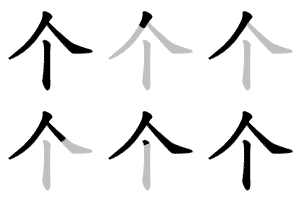 | |||
Han character
个 (Kangxi radical 2, 丨+2, 3 strokes, cangjie input 人中 (OL), four-corner 80200, composition ⿱𠆢丨)
References
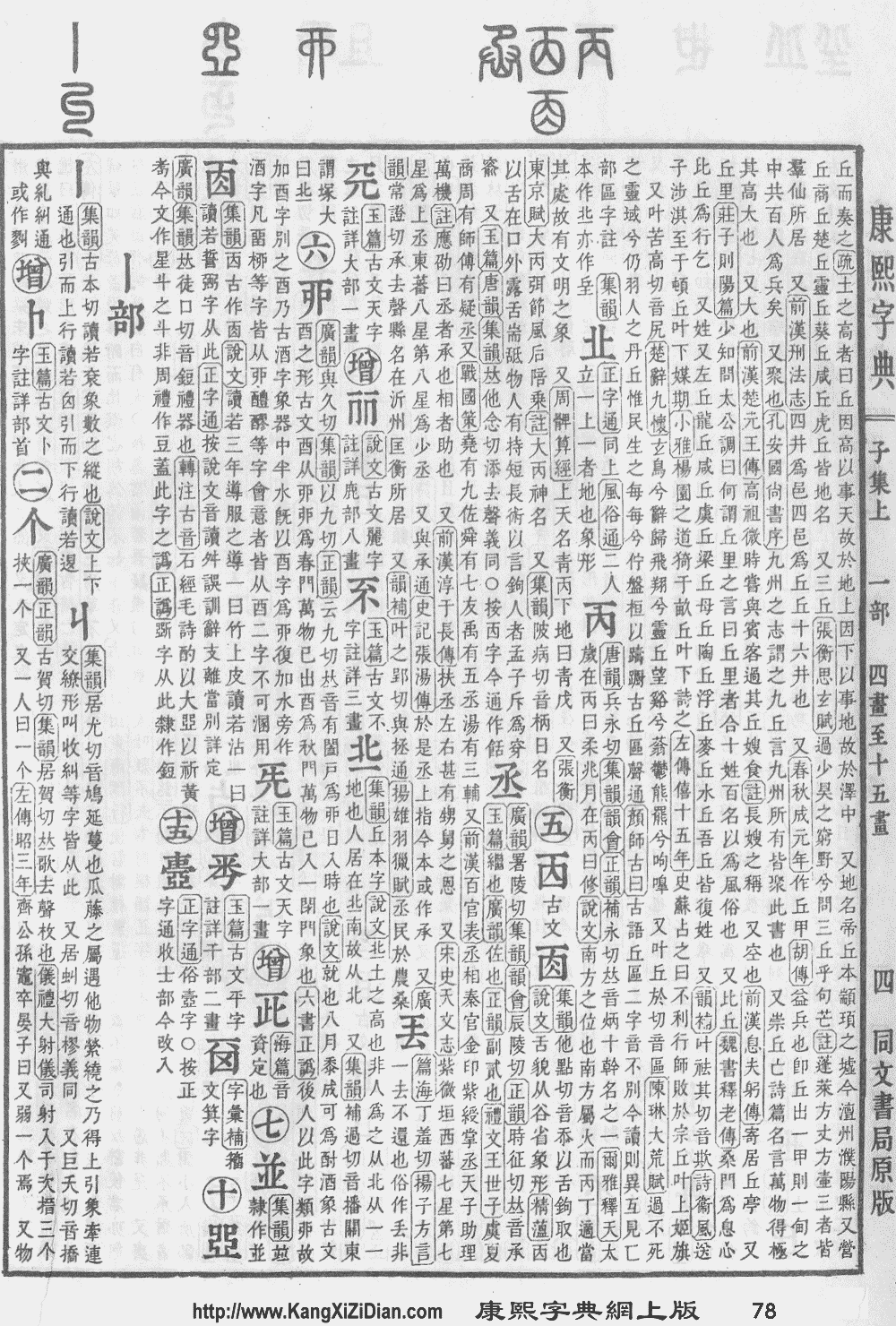
- Kangxi Dictionary: page 78, character 23
- Dai Kanwa Jiten: character 70
- Dae Jaweon: page 158, character 3
- Hanyu Da Zidian (first edition): volume 1, page 103, character 1
- Unihan data for U+4E2A
Chinese
Glyph origin
| Historical forms of the character 个 | ||
|---|---|---|
| Warring States | Shuowen Jiezi (compiled in Han) | Liushutong (compiled in Ming) |
| Bronze inscriptions | Small seal script | Transcribed ancient scripts |
 |
 |
 |
Definitions
| For pronunciation and definitions of 个 – see 個 (“single; alone; individual; height; build; stature; etc.”). (This character is the simplified and variant form of 個). |
Notes:
|
Japanese
Korean
Vietnamese
This article is issued from Wiktionary. The text is licensed under Creative Commons - Attribution - Sharealike. Additional terms may apply for the media files.