相
| ||||||||
Translingual
| Stroke order | |||
|---|---|---|---|
 | |||
Han character
相 (Kangxi radical 109, 目+4, 9 strokes, cangjie input 木月山 (DBU), four-corner 46900, composition ⿰木目)
References
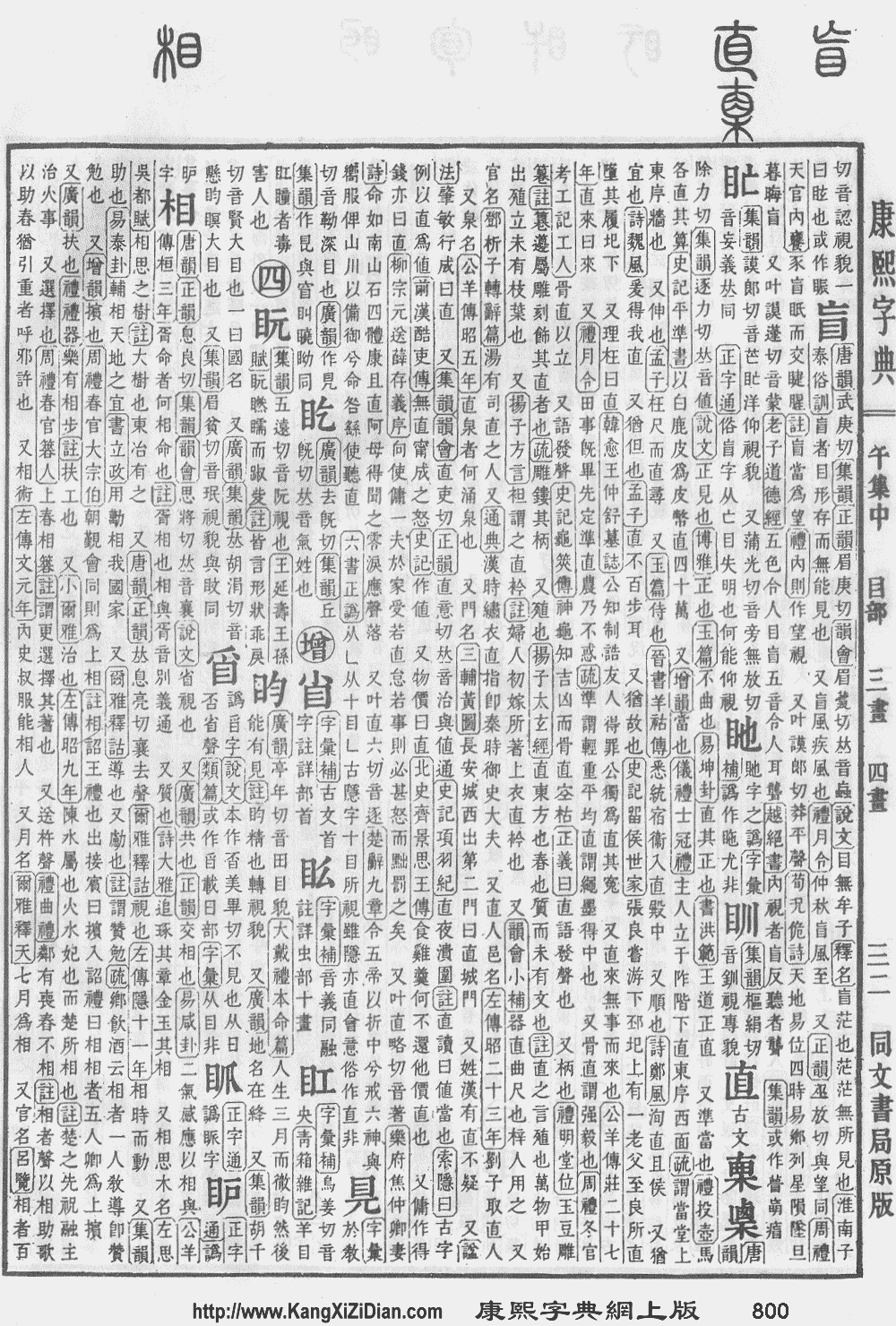
- Kangxi Dictionary: page 800, character 18
- Dai Kanwa Jiten: character 23151
- Dae Jaweon: page 1216, character 8
- Hanyu Da Zidian (first edition): volume 4, page 2470, character 13
- Unihan data for U+76F8
Chinese
| simp. and trad. |
相 | |
|---|---|---|
Glyph origin
Ideogrammic compound (會意/会意) : 木 (“tree”) + 目 (“eye”) – looking at, or watching the tree.
Etymology
An allofam is 胥 (OC *sŋa, *sŋaʔ, “each other; mutually; all; to observe; to assist”) (Gong, 1995; Schuessler, 2007).
Derivative: 想 (OC *slaŋʔ, “to think”) (“appearance > to visualise > to think”).
Pronunciation 1
Definitions
相
- to see for oneself; to evaluate by seeing for oneself
- 相女婿 ― xiāng nǚxù ― assess the suitability of a prospective son-in-law or husband
- mutually; reciprocally; towards each other; one another
- together; jointly
- successively; one after another
- towards; to
- a surname
Compounds
- 不相
- 不相容
- 不相干 (bùxiānggān)
- 不相投
- 不相登
- 不相稱/不相称
- 不相能
- 不相識/不相识
- 不相關/不相关
- 互相 (hùxiāng)
- 交相
- 似曾相識/似曾相识 (sìcéngxiāngshí)
- 兩相好/两相好
- 各相
- 單相思/单相思 (dānxiāngsī)
- 好相識/好相识
- 心心相印 (xīnxīnxiāngyìn)
- 惺惺相惜 (xīngxīngxiāngxī)
- 拉相好
- 掗相知/挜相知
- 攀相好
- 更相
- 病相思 (bìngxiāngsī)
- 相互 (xiānghù)
- 相交 (xiāngjiāo)
- 相交插 (sio-kau-chhap) (Min Nan)
- 相人偶
- 相仍
- 相仿 (xiāngfǎng)
- 相似 (xiāngsì)
- 相伴
- 相似形 (xiāngsìxíng)
- 相似詞/相似词
- 相依 (xiāngyī)
- 相併/相并
- 相信 (xiāngxìn)
- 相保
- 相倣/相仿 (xiāngfǎng)
- 相偕
- 相傳/相传 (xiāngchuán)
- 相像 (xiāngxiàng)
- 相切 (xiāngqiē)
- 相剋/相克 (xiāngkè)
- 相助 (xiāngzhù)
- 相勸/相劝 (xiāngquàn)
- 相厚
- 相去 (xiāngqù)
- 相反 (xiāngfǎn)
- 相反數/相反数 (xiāngfǎnshù)
- 相反詞/相反词
- 相叫
- 相向 (xiāngxiàng)
- 相合 (xiānghé)
- 相同 (xiāngtóng)
- 相和 (xiānghè)
- 相和歌
- 相商 (xiāngshāng)
- 相喚/相唤
- 相因 (xiāngyīn)
- 相坐 (xiāngzuò)
- 相失 (xiāngshī)
- 相契
- 相好 (xiānghǎo)
- 相安 (xiāng'ān)
- 相宜 (xiāngyí)
- 相宥
- 相容 (xiāngróng)
- 相將/相将
- 相尋/相寻
- 相對/相对 (xiāngduì)
- 相對論/相对论 (xiāngduìlùn)
- 相屬/相属
- 相左 (xiāngzuǒ)
- 相差 (xiāngchà)
- 相幫/相帮 (xiāngbāng)
- 相干 (xiānggān)
- 相形
- 相待 (xiāngdài)
- 相得 (xiāngdé)
- 相從/相从
- 相思 (xiāngsī)
- 相思債/相思债
- 相思卦
- 相思套
- 相思子
- 相思木
- 相思樹/相思树 (xiāngsīshù)
- 相思病 (xiāngsībìng)
- 相思草
- 相思豆
- 相思鳥/相思鸟
- 相愛/相爱 (xiāng'ài)
- 相應/相应
- 相戀/相恋 (xiāngliàn)
- 相成 (xiāngchéng)
- 相打 (xiāngdǎ)
- 相托
- 相承 (xiāngchéng)
- 相投 (xiāngtóu)
- 相抱 (xiāngbào)
- 相抵 (xiāngdǐ)
- 相持 (xiāngchí)
- 相接 (xiāngjiē)
- 相提並論/相提并论 (xiāngtíbìnglùn)
- 相搏
- 相撲/相扑 (xiāngpū)
- 相擾/相扰
- 相救 (xiāngjiù)
- 相於/相于
- 相易
- 相映 (xiāngyìng)
- 相會/相会 (xiānghuì)
- 相望 (xiāngwàng)
- 相期 (xiāngqī)
- 相次
- 相比 (xiāngbǐ)
- 相求 (xiāngqiú)
- 相沿
- 相激 (xiāngjī)
- 相濟/相济 (xiāngjì)
- 相為/相为 (xiāngwéi)
- 相煩/相烦 (xiāngfán)
- 相熟 (xiāngshú)
- 相爭/相争 (xiāngzhēng)
- 相狎
- 相率 (xiāngshuài)
- 相生 (xiāngshēng)
- 相異/相异 (xiāngyì)
- 相當/相当 (xiāngdāng)
- 相看 (xiāngkan)
- 相知 (xiāngzhī)
- 相視/相视 (xiāngshì)
- 相稱/相称
- 相符 (xiāngfú)
- 相等 (xiāngděng)
- 相約/相约 (xiāngyuē)
- 相結/相结 (xiāngjié)
- 相繼/相继 (xiāngjì)
- 相罵/相骂 (xiāngmà)
- 相羊 (xiāngyáng)
- 相聚 (xiāngjù)
- 相聯/相联
- 相背
- 相與/相与 (xiāngyǔ)
- 相若 (xiāngruò)
- 相處/相处 (xiāngchǔ)
- 相褒戲/相褒戏
- 相襯/相衬 (xiāngchèn)
- 相襲/相袭
- 相見/相见 (xiāngjiàn)
- 相覷/相觑
- 相訾
- 相認/相认 (xiāngrèn)
- 相識/相识 (xiāngshí)
- 相讓/相让 (xiāngràng)
- 相趁
- 相距 (xiāngjù)
- 相較/相较 (xiàngjiào)
- 相輕/相轻
- 相輔相成/相辅相成 (xiāngfǔxiāngchéng)
- 相近 (xiāngjìn)
- 相逢 (xiāngféng)
- 相通 (xiāngtōng)
- 相連/相连 (xiānglián)
- 相逼 (xiāngbī)
- 相過/相过
- 相遇 (xiāngyù)
- 相違/相违 (xiāngwéi)
- 相鄰/相邻 (xiānglín)
- 相配 (xiāngpèi)
- 相間/相间 (xiāngjiàn)
- 相關/相关 (xiāngguān)
- 相陪
- 相隔 (xiānggé)
- 相隨/相随 (xiāngsuí)
- 相離/相离 (xiānglí)
- 相類/相类 (xiānglèi)
- 端相
- 老相交
- 老相好
- 老相識/老相识 (lǎoxiāngshí)
- 肩相比
- 舊相識/旧相识
- 長相思/长相思
- 面面相覷/面面相觑 (miànmiànxiāngqù)
- 馬相如/马相如
Pronunciation 2
Definitions
相
- to look at; to examine the appearance and judge; to observe
- 相鼠有皮,人而無儀。 [Pre-Classical Chinese, trad.]
- From: The Classic of Poetry, c. 11th – 7th centuries BCE, translated based on James Legge's version
- Xiàng shǔ yǒu pí, rén ér wú yí. [Pinyin]
- Look at a rat, - it has its skin;
But a man should be without dignity of demeanour.
相鼠有皮,人而无仪。 [Pre-Classical Chinese, simp.]
- looks; appearance; features
- posture; bearing
- 站相 ― zhànxiàng ― standing posture
- demeanour; manners
- 吃相 ― chīxiàng ― table manners
- photo; picture; photograph (Classifier: 張/张 c; 幅 c)
- phase; exterior; stage; period
- (physics) phase
- 相空間/相空间 ― xiàngkōngjiān ― phase space
- 相位 ― xiàngwèi ― phase
- 月相 ― yuèxiàng ― lunar phase
- (geology) facies
- to physiognomise; to practise physiognomy; to tell fortune by reading the subject's facial features
- physiognomy; practice of physiognomy
- to choose; to pick
- to assist; to help; to oversee
- (Chinese mythology) Xiang of Xia (fifth king of the semi-legendary Xia dynasty)
- (historical) Chancellor of State
- (xiangqi) minister (on the red side)
- (historical) master of ceremonies
- (historical) attendant
- to administer; to govern
- to teach; to instruct
- a person who guides or leads a blind person
- 危而不持,顛而不扶,則將焉用彼相矣? [Classical Chinese, trad.]
- From: The Analects of Confucius, c. 475 – 221 BCE, translated based on James Legge's version
- Wéi ér bù chí, diān ér bù fú, zé jiāng yān yòng bǐ xiàng yǐ? [Pinyin (Taiwanese Mandarin)]
- How can he be used as a guide to a blind man, who does not support him when tottering, nor raise him up when fallen?
危而不持,颠而不扶,则将焉用彼相矣? [Classical Chinese, simp.]
- a surname
Synonyms
Coordinate terms
Compounds
- 上相 (shàngxiàng)
- 三相 (sānxiàng)
- 三相點/三相点 (sānxiàngdiǎn)
- 不識相/不识相
- 丞相 (chéngxiàng)
- 乞窮儉相/乞穷俭相
- 亮相 (liàngxiàng)
- 伍相廟/伍相庙 (Wǔxiàngmiào)
- 伴食宰相
- 倒楣相
- 傻瓜相機/傻瓜相机 (shǎguā xiàngjī)
- 儐相/傧相
- 內相/内相
- 八相
- 公相
- 六相圓融/六相圆融
- 共相 (gòngxiàng)
- 凶相畢露
- 出入將相/出入将相
- 出將入相/出将入相
- 出洋相 (chū yángxiàng)
- 分相
- 功同良相
- 劣相
- 十相具足
- 印相
- 印相箱
- 印相紙/印相纸
- 反相 (fǎnxiàng)
- 可厭相/可厌相
- 右相
- 吉人天相 (jíréntiānxiàng)
- 名相 (míngxiàng)
- 同緣同相/同缘同相
- 呂相/吕相
- 命相
- 命薄相窮/命薄相穷
- 品相 (pǐnxiàng)
- 單口相聲/单口相声
- 單相/单相 (dānxiàng)
- 單眼相機/单眼相机
- 四相
- 垃圾相
- 壽者相/寿者相
- 外相 (wàixiàng)
- 大相國寺/大相国寺
- 夫妻相 (fūqīxiàng)
- 天相吉人
- 女儐相/女傧相
- 媼相/媪相
- 字相學/字相学
- 孛相
- 宅相
- 定相
- 定睛一相
- 家相
- 宰相 (zǎixiàng)
- 寒傖相/寒伧相
- 寒相
- 實相/实相
- 察相
- 寶相/宝相
- 寶相莊嚴/宝相庄严
- 封侯拜相
- 將相/将相 (jiàngxiàng)
- 將相和/将相和
- 將相器/将相器
- 將相雙權/将相双权
- 尊相
- 對口相聲/对口相声
- 小器相
- 小相
- 小相公 (xiǎoxiànggōng)
- 屬相/属相
- 山中宰相
- 布衣卿相
- 布面相片
- 幻相
- 弄獐宰相
- 弄白相
- 形相 (xíngxiàng)
- 影快相
- 影相
- 快相機/快相机
- 怪物相
- 性相
- 急相 (jíxiàng)
- 恩相 (ēnxiàng)
- 惡相/恶相
- 戒相
- 手相 (shǒuxiàng)
- 手相學/手相学
- 打圓相/打圆相
- 扮相 (bànxiàng)
- 拈相
- 拜相
- 拗相公
- 拜相封侯
- 摸稜宰相/摸棱宰相
- 摸骨相
- 擯相/摈相
- 數位相機/数位相机
- 方相
- 方相氏
- 旺相
- 星相 (xīngxiàng)
- 月相 (yuèxiàng)
- 本相 (běnxiàng)
- 林相
- 業相/业相
- 死相 (sǐxiàng)
- 法相
- 法相宗
- 洞悉真相
- 洋相 (yángxiàng)
- 海相沉積/海相沉积
- 清氣相/清气相 (chheng-khì-siùⁿ) (Min Nan)
- 滅相/灭相
- 照相 (zhàoxiàng)
- 照相凸版
- 照相凹版
- 照相平版
- 照相打字
- 照相機/照相机 (zhàoxiàngjī)
- 照相測量/照相测量
- 照相版
- 照相紙/照相纸
- 照相著色
- 照相製版/照相制版
- 照相館/照相馆 (zhàoxiàngguǎn)
- 犯相
- 狂相
- 王侯將相/王侯将相 (wánghóujiàngxiàng)
- 玉質金相/玉质金相
- 生物相 (shēngwùxiāng)
- 生相 (shēngxiàng)
- 男儐相/男傧相 (nánbīnxiàng)
- 異相/异相
- 當朝宰相/当朝宰相
- 白搶白相/白抢白相
- 白相
- 白相人
- 白衣卿相
- 皮相 (píxiàng)
- 皮相士
- 相人
- 相位 (xiàngwèi)
- 相公
- 相公堂子
- 相匣子
- 相印
- 相印法
- 相命 (xiàngmìng)
- 相國/相国 (xiàngguó)
- 相士
- 相夫教子 (xiàngfūjiàozǐ)
- 相女配夫
- 相如病渴
- 相字
- 相府 (xiàngfǔ)
- 相時/相时
- 相時而動/相时而动
- 相書/相书
- 相框 (xiàngkuàng)
- 相機/相机 (xiàngjī)
- 相機而動/相机而动
- 相機而言/相机而言
- 相機行事/相机行事
- 相機觀變/相机观变
- 相法
- 相父
- 相片
- 相片光碟
- 相王
- 看相 (kànxiàng)
- 相禮/相礼
- 相簿 (xiàngbù)
- 相紙/相纸
- 相者 (xiàngzhě)
- 相聲/相声
- 相腳手/相脚手
- 相腳頭/相脚头
- 相臺/相台
- 相術/相术 (xiàngshù)
- 相親/相亲
- 相變/相变
- 相貌 (xiàngmào)
- 相貌堂堂 (xiàngmàotángtáng)
- 相轉移催化劑/相转移催化剂 (xiàngzhuǎnyícuīhuàjì)
- 相部宗
- 相門出相/相门出相
- 相門有相/相门有相
- 相面 (xiàngmiàn)
- 相風/相风
- 相風使帆/相风使帆
- 相馬/相马
- 相體/相体
- 相鼠
- 真相 (zhēnxiàng)
- 真相大白 (zhēnxiàng dàbái)
- 眾生相/众生相 (zhòngshēngxiàng)
- 睡相
- 破相 (pòxiàng)
- 碟式相機/碟式相机
- 祿相/禄相
- 福相 (fúxiàng)
- 空相
- 窮形盡相/穷形尽相
- 窮相/穷相 (qióngxiàng)
- 篾片相公
- 老相 (lǎoxiàng)
- 良將賢相/良将贤相
- 良相
- 色相 (sèxiàng)
- 花相
- 苦相
- 蔡澤看相/蔡泽看相
- 薄相
- 薄祿相/薄禄相
- 蝕相/蚀相
- 蠟燭相/蜡烛相
- 表相
- 說相聲/说相声
- 識相/识相 (shíxiàng)
- 變相/变相 (biànxiàng)
- 貌相 (màoxiàng)
- 財相/财相 (cáixiàng)
- 貴相/贵相
- 賢相/贤相
- 車頭相/车头相
- 輔相/辅相
- 醫卜星相/医卜星相
- 金相
- 金相學/金相学
- 金相玉式
- 金相玉質/金相玉质
- 鐵血宰相/铁血宰相
- 長相/长相 (zhǎngxiàng)
- 陸相沉積/陆相沉积
- 集錦照相/集锦照相
- 露相 (lòuxiàng)
- 面相 (miànxiàng)
- 頭廳相/头厅相
- 顯微照相/显微照相
- 風流宰相/风流宰相
- 首相 (shǒuxiàng)
- 麻衣相法
- 黑王相公
References
- “相”, in 漢語多功能字庫 (Multi-function Chinese Character Database), 香港中文大學 (the Chinese University of Hong Kong), 2014–
Japanese
Readings
From Middle Chinese 相 (MC sjang); compare Mandarin 相 (xiāng):
From Middle Chinese 相 (MC sjangH); compare Mandarin 相 (xiàng):
From native Japanese roots:
- Kun: あい (ai, 相, Jōyō)←あひ (afi, 相, historical); こもごも (komogomo, 相)←こもこも (komokomo, 相, historical); さが (saga, 相); みる (miru, 相る); たすける (tasukeru, 相ける)
- Nanori: あ (a); あい (ai); あう (au); あきら (akira); い (i); おう (ō); さ (sa); さが (saga); すけ (suke); たすく (tasuku); とも (tomo); はる (haru); まさ (masa); み (mi); みる (miru)
Compounds
- 相手 (aite, “companion, partner, opponent”)
- 液相 (ekisō, “liquid phase”)
- 気相 (kisō, “gaseous phase”)
- 固相 (kosō, “solid phase”)
- 相撲 (sumō, “sumo”)
- 相談 (sōdan, “consultation”)
Etymology 1
| Kanji in this term |
|---|
| 相 |
| あい Grade: 3 |
| kun’yomi |
| For pronunciation and definitions of 相 – see the following entry. | ||
| ||
| (This term, 相, is an alternative spelling of the above term.) |
Etymology 2
| Kanji in this term |
|---|
| 相 |
| こもごも Grade: 3 |
| kun’yomi |
| For pronunciation and definitions of 相 – see the following entry. | ||
| ||
| (This term, 相, is an alternative spelling of the above term.) |
Alternative forms
Noun
相 • (saga)
Synonyms
Etymology 4
| Kanji in this term |
|---|
| 相 |
| しょう Grade: 3 |
| kan’on |
From Middle Chinese 相 (“together, with”), from the way that a minister would always be with their lord. Kan'on, so likely a later borrowing than the sō reading.
Suffix
- minister of state
- 首相
- shushō
- prime minister
- 内相
- naishō
- minister of the interior
- 首相
Etymology 5
| Kanji in this term |
|---|
| 相 |
| そう Grade: 3 |
| goon |
From Middle Chinese. Goon, so likely an earlier borrowing than the shō reading.
Noun
- appearance, how something looks
- an aspect of something
- 大自然の色々な相
- daishizen no iroiro na sō
- various aspects of nature
- 大自然の色々な相
- (grammar) grammatical aspect
- (physics) a phase, as of matter
- (ikebana) the central supporting branch of an ikebana arrangement
Related terms
- (ikebana): 役枝 (yakueda)
References
- Matsumura, Akira, editor (2006), 大辞林 [Daijirin] (in Japanese), Third edition, Tōkyō: Sanseidō, →ISBN
- NHK Broadcasting Culture Research Institute, editor (1998), NHK日本語発音アクセント辞典 [NHK Japanese Pronunciation Accent Dictionary] (in Japanese), Tōkyō: NHK Publishing, →ISBN
Korean
Etymology 1
From Middle Chinese 相 (MC sjang, “mutual; together”).
| Historical Readings | ||
|---|---|---|
| Dongguk Jeongun Reading | ||
| Dongguk Jeongun, 1448 | Recorded as Middle Korean 샤ᇰ (Yale: syàng) in Dongguk Jeongun (東國正韻 / 동국정운), 1448. | |
| Middle Korean | ||
| Text | Eumhun | |
| Gloss (hun) | Reading | |
| Hunmong Jahoe, 1527 | 서르 샤ᇰ[1] | Recorded as Middle Korean 샤ᇰ (syang) (Yale: syàng) in Hunmong Jahoe (訓蒙字會 / 훈몽자회), 1527.[2] |
| Early Modern Korean | ||
| Text | Final (韻) | Reading |
| Samun Seonghwi, 1751 | 서ᄅᆞ 샹 | Recorded as Early Modern Korean 샹 (Yale: syang) in Juhae Cheonjamun (註解千字文 / 주해천자문), 1804. |
| ||
Pronunciation
- (SK Standard/Seoul) IPA(key): [sʰa̠ŋ]
- Phonetic hangul: [상]
Compounds
Etymology 2
From Middle Chinese 相 (MC sjangH, “appearance”).
| Historical Readings | ||
|---|---|---|
| Dongguk Jeongun Reading | ||
| Dongguk Jeongun, 1448 | Recorded as Middle Korean 샤ᇰ〮 (Yale: syáng) in Dongguk Jeongun (東國正韻 / 동국정운), 1448. | |
| Middle Korean | ||
| Text | Eumhun | |
| Gloss (hun) | Reading | |
| Hunmong Jahoe, 1527 | ᄌᆡ〯샤ᇰ〮[1] 샤ᇰ〮 | Recorded as Middle Korean 샤ᇰ〮 (syáng) (Yale: syáng) in Hunmong Jahoe (訓蒙字會 / 훈몽자회), 1527. |
| Early Modern Korean | ||
| Text | Final (韻) | Reading |
| Samun Seonghwi, 1751 | 졍승[2] 샹 | Recorded as Early Modern Korean 샹 (Yale: syang) in Juhae Cheonjamun (註解千字文 / 주해천자문), 1804. |
| ||
Pronunciation
- (SK Standard/Seoul) IPA(key): [sʰa̠ŋ]
- Phonetic hangul: [상]