侃
| ||||||||
Translingual
Han character
侃 (Kangxi radical 9, 人+6, 8 strokes, cangjie input 人口竹山 (ORHU), four-corner 26210, composition ⿰亻⿱口𫶧)
Derived characters
- 諐 𣵿 𨓲 𫺛 𩱡
References
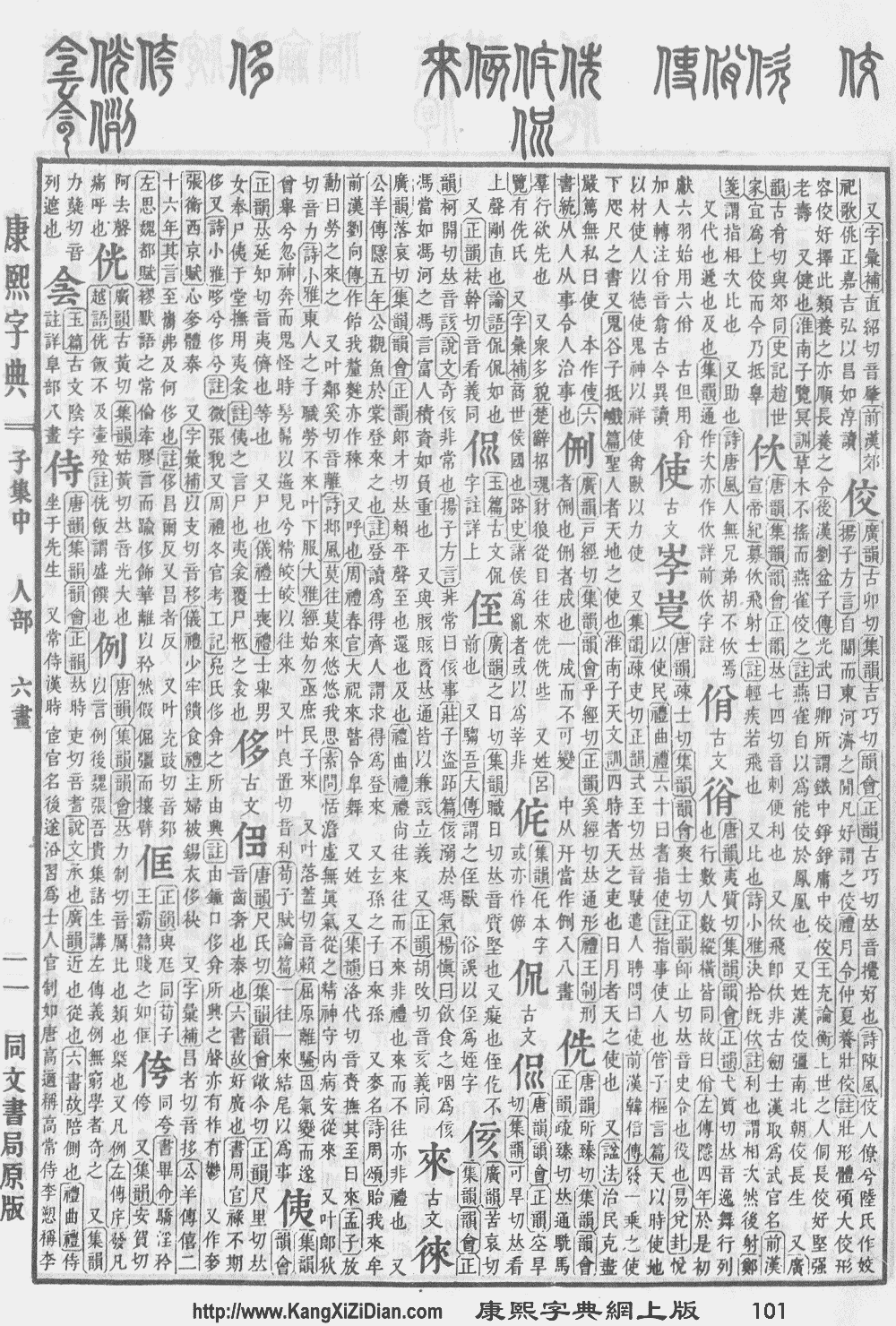
- Kangxi Dictionary: page 101, character 11
- Dai Kanwa Jiten: character 577
- Dae Jaweon: page 214, character 4
- Hanyu Da Zidian (first edition): volume 1, page 148, character 3
- Unihan data for U+4F83
Chinese
| trad. | 侃 | |
|---|---|---|
| simp. # | 侃 | |
| alternative forms | 偘 literary senses 砍 to chat | |
Glyph origin
| Historical forms of the character 侃 | |||||||||||||||
|---|---|---|---|---|---|---|---|---|---|---|---|---|---|---|---|
| Western Zhou | Shuowen Jiezi (compiled in Han) | Liushutong (compiled in Ming) | |||||||||||||
| Bronze inscriptions | Small seal script | Transcribed ancient scripts | |||||||||||||
 |
 |
 | |||||||||||||
||
|
References: Mostly from Richard Sears' Chinese Etymology site (authorisation),
| |||||||||||||||


Characters in the same phonetic series (侃) (Zhengzhang, 2003)
Multiple explanations. Most consider the character an Ideogrammic compound (會意/会意) .
Pronunciation
Definitions
侃
- (literary) upright; outspoken; straightforward
- (literary) harmonious and happy; congenial
- to boast; to tease
Compounds
References
- 胡明扬 (2003 January 1) ““续貂”两则”, in 咬文嚼字 (in Chinese), number 97, 上海: 上海文化出版社, pages 4-5
Japanese
Kanji
侃
(“Jinmeiyō” kanji used for names)
- This term needs a translation to English. Please help out and add a translation, then remove the text
{{rfdef}}.
Compounds
- 侃々諤々 (kankan gakugaku)
- 侃直 (kanchoku)
Korean
Hanja
侃 • (gan) (hangeul 간, revised gan, McCune–Reischauer kan)
- This term needs a translation to English. Please help out and add a translation, then remove the text
{{rfdef}}.
This article is issued from Wiktionary. The text is licensed under Creative Commons - Attribution - Sharealike. Additional terms may apply for the media files.