促
| ||||||||
Translingual
Han character
促 (Kangxi radical 9, 人+7, 9 strokes, cangjie input 人口卜人 (ORYO), four-corner 26281, composition ⿰亻足)
Derived characters
- 𮚼
References
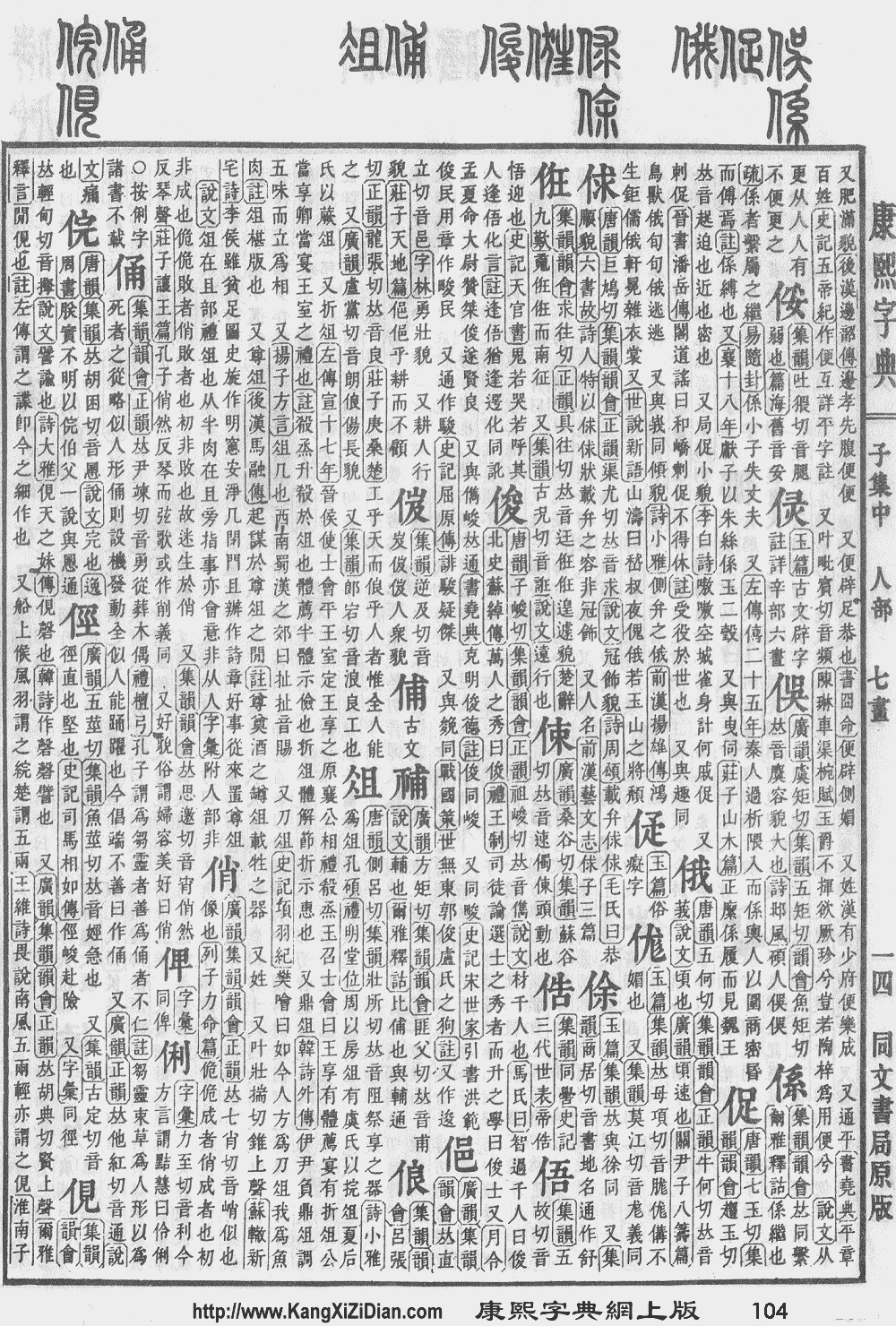
- Kangxi Dictionary: page 104, character 5
- Dai Kanwa Jiten: character 664
- Dae Jaweon: page 220, character 5
- Hanyu Da Zidian (first edition): volume 1, page 161, character 2
- Unihan data for U+4FC3
Chinese
| simp. and trad. |
促 | |
|---|---|---|
Glyph origin
| Historical forms of the character 促 | |
|---|---|
| |
|
References: Mostly from Richard Sears' Chinese Etymology site (authorisation),
|

Characters in the same phonetic series (足) (Zhengzhang, 2003)
Phono-semantic compound (形聲/形声, OC *sʰoɡ) : semantic 亻 + phonetic 足 (OC *ʔsoɡs, *ʔsoɡ).
Pronunciation
Definitions
促
Compounds
- 促使 (cùshǐ)
- 侷促 (júcù)
- 促促
- 侷促一隅
- 侷促不安
- 促坐
- 促席
- 促忙 (cùmáng)
- 促忙促急
- 促成 (cùchéng)
- 促拍
- 促掐
- 促步 (cùbù)
- 促狹/促狭 (cùxiá)
- 促狹鬼/促狭鬼
- 促病
- 促發/促发
- 促眉
- 促織/促织 (cùzhī)
- 促聲/促声 (cùshēng)
- 促脈/促脉
- 促膝
- 促膝談心/促膝谈心
- 促膝長談/促膝长谈
- 促裝/促装 (cùzhuāng)
- 促請/促请 (cùqǐng)
- 促趲/促趱
- 促迫 (cùpò)
- 促進/促进 (cùjìn)
- 促銷/促销 (cùxiāo)
- 促音 (cùyīn)
- 倉促/仓促 (cāngcù)
- 催促 (cuīcù)
- 刺促
- 匆促 (cōngcù)
- 局促 (júcù)
- 局促一隅
- 局促不安
- 急促 (jícù)
- 敦促 (dūncù)
- 督促 (dūcù)
- 短促 (duǎncù)
- 短壽促命/短寿促命
- 短局促
- 窘促 (jiǒngcù)
- 緊促/紧促 (jǐncù)
- 聯合促銷/联合促销
- 脆促
- 跼促 (júcù)
- 蹇促
- 迫促 (pòcù)
- 逼促
- 鬼促促
Descendants
- → Vietnamese: thúc
Etymology 2
| For pronunciation and definitions of 促 – see 齪 (“cautious; careful; meticulous; etc.”). (This character is a variant form of 齪). |
Etymology 3
| For pronunciation and definitions of 促 – see 蹙 (“to knit; to approach; to close in on; etc.”). (This character is the second-round simplified form of 蹙). |
Notes:
|
Japanese
Kanji
促
- This term needs a translation to English. Please help out and add a translation, then remove the text
{{rfdef}}.
Etymology
| Kanji in this term |
|---|
| 促 |
| そく Grade: S |
| goon |
(This etymology is missing or incomplete. Please add to it, or discuss it at the Etymology scriptorium.)
Pronunciation
- IPA(key): [so̞kɯ̟ᵝ]
Noun
促 • (soku)
- This term needs a translation to English. Please help out and add a translation, then remove the text
{{rfdef}}.
Korean
Hanja
促 (eum 촉 (chok))
- This term needs a translation to English. Please help out and add a translation, then remove the text
{{rfdef}}.
Vietnamese
Han character
促: Hán Nôm readings: xúc, thúc
- This term needs a translation to English. Please help out and add a translation, then remove the text
{{rfdef}}.
References
This article is issued from Wiktionary. The text is licensed under Creative Commons - Attribution - Sharealike. Additional terms may apply for the media files.