係
See also: 系
| ||||||||
Translingual
| Japanese | 係 |
|---|---|
| Simplified | 系 |
| Traditional | 係 |
Han character
係 (Kangxi radical 9, 人+7, 9 strokes, cangjie input 人竹女火 (OHVF), four-corner 22293, composition ⿰亻系)
References
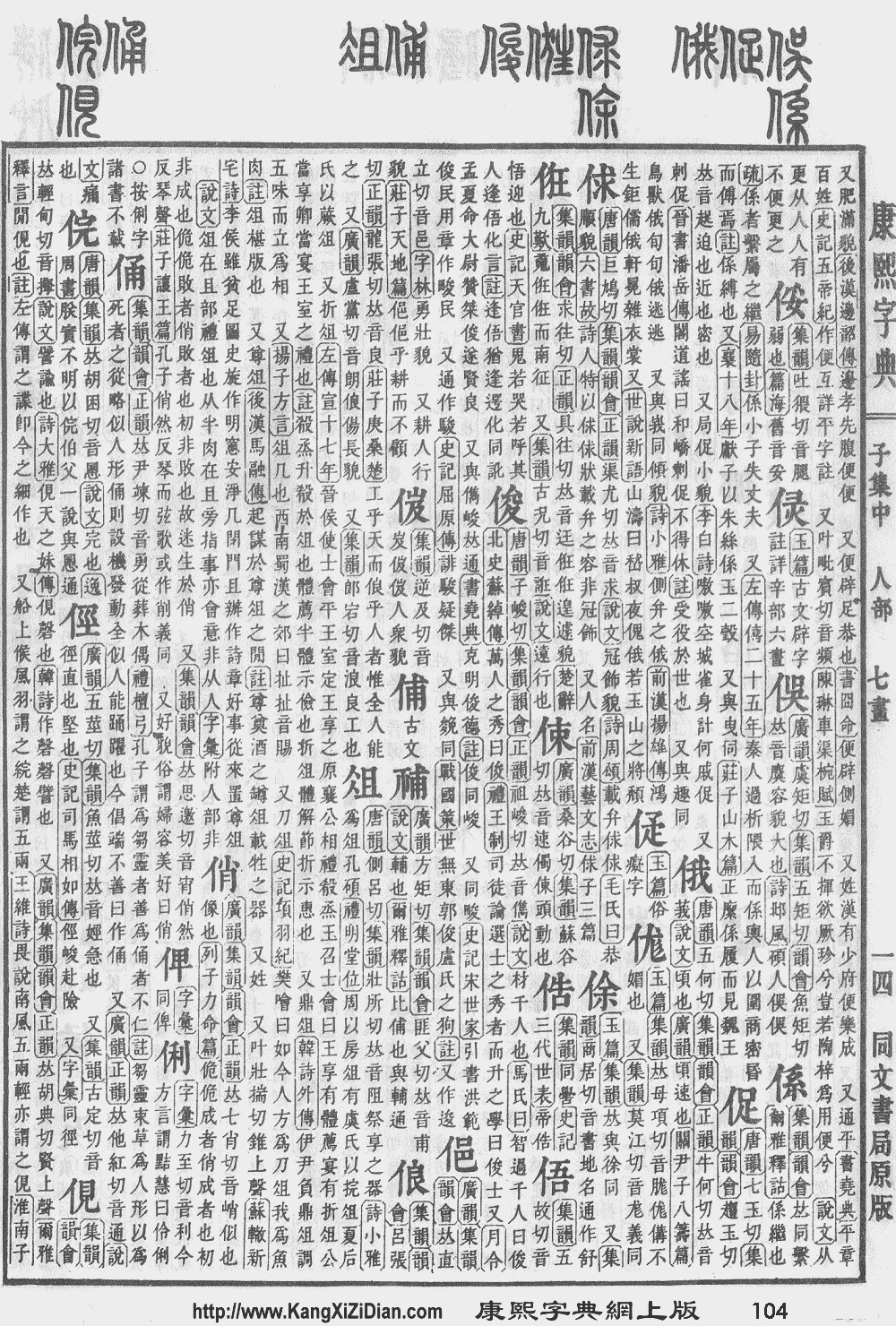
- Kangxi Dictionary: page 104, character 4
- Dai Kanwa Jiten: character 663
- Dae Jaweon: page 220, character 4
- Hanyu Da Zidian (first edition): volume 1, page 164, character 8
- Unihan data for U+4FC2
Chinese
| trad. | 係 | |
|---|---|---|
| simp. | 系* | |
Glyph origin
| Historical forms of the character 係 | |||||||||
|---|---|---|---|---|---|---|---|---|---|
| Shang | Western Zhou | Shuowen Jiezi (compiled in Han) | Liushutong (compiled in Ming) | ||||||
| Oracle bone script | Bronze inscriptions | Small seal script | Transcribed ancient scripts | ||||||
 |
 |
 |
 | ||||||
|||
|
References: Mostly from Richard Sears' Chinese Etymology site (authorisation),
| |||||||||


Phono-semantic compound (形聲/形声, OC *keːɡs) : semantic 人 + phonetic 系 (OC *ɡeːɡs).
The simplified form 系 also exists as a traditional character, and is also used to simplify 繫. In ancient times, 系, 係, and 繫 were usually interchangeable graphic variants, although in some compounds, only one form is acceptable (e.g. 世系 and 繋辭/繋辞).
Pronunciation
Definitions
係
Usage notes
Synonyms
Dialectal synonyms of 是 (“to be (+ noun)”) [map]
Compounds
- 人際關係/人际关系 (rénjìguānxì)
- 係數/系数 (xìshù)
- 係爭/系争
- 係爭物/系争物
- 係獲/系获
- 係累/系累
- 係臂/系臂
- 係踵/系踵
- 係蹄/系蹄
- 係頸/系颈
- 係頸闕庭/系颈阙庭
- 係風捕景/系风捕景
- 兩性關係/两性关系 (liǎngxìng guānxì)
- 公共關係/公共关系
- 利害關係/利害关系
- 初級關係/初级关系
- 勞資關係/劳资关系 (láozī guānxi)
- 因果關係/因果关系 (yīnguǒ guānxì)
- 國際關係/国际关系 (guójì guānxì)
- 外交關係/外交关系 (wàijiāo guānxì)
- 夫妻關係/夫妻关系
- 安全係數/安全系数 (ānquán xìshù)
- 干係 (gānxì)
- 并列關係/并列关系
- 拉關係/拉关系
- 接關係/接关系
- 擔干係/担干系
- 數字係數/数字系数
- 楊氏係數/杨氏系数
- 水面係數/水面系数
- 沒關係/没关系
- 相關係數/相关系数
- 社會關係/社会关系
- 群眾關係/群众关系
- 膨脹係數/膨胀系数
- 裙帶關係/裙带关系 (qúndài guānxì)
- 親子關係/亲子关系
- 貝他係數/贝他系数
- 連帶關係/连带关系
- 關係/关系
- 關係人/关系人
- 關係企業/关系企业 (guānxì qǐyè)
- 關係命題/关系命题
- 關係戶/关系户
- 關係詞/关系词
- 關係調/关系调
- 關係運算/关系运算
- 零係數/零系数
Descendants
- → Vietnamese: hễ
Japanese
Readings
Compounds
- 係船 (keisen)
- 係争 (keisō)
- 係属 (keizoku)
- 係留 (keiryū)
- 連係 (renkei)
- 係助詞 (kakarijoshi), 係り助詞 (kakarijoshi)
Alternative forms
- 掛かり (かかり, kakari)
Suffix
係 • (-gakari)
Descendants
- → Indonesian: gakari
Korean
Compounds
- 관계 (關係, gwan'gye, “relationship”)
Vietnamese
Han character
係: Hán Nôm readings: hệ, hể, hề, hễ
- This term needs a translation to English. Please help out and add a translation, then remove the text
{{rfdef}}.
References
This article is issued from Wiktionary. The text is licensed under Creative Commons - Attribution - Sharealike. Additional terms may apply for the media files.