俶
| ||||||||
Translingual
Han character
俶 (Kangxi radical 9, 人+8, 10 strokes, cangjie input 人卜火水 (OYFE), four-corner 27240, composition ⿰亻叔)
Derived characters
- 𦵦
References
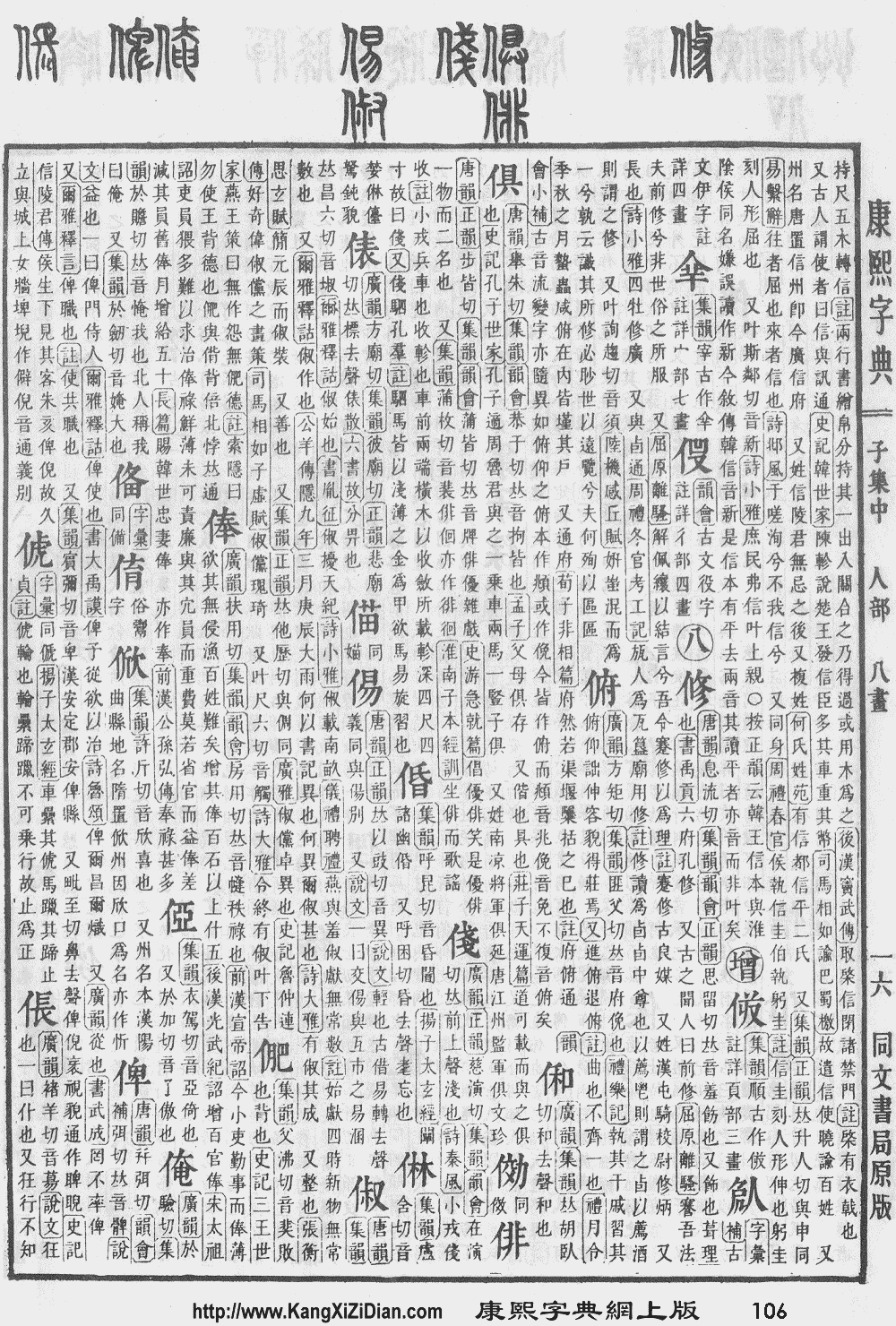
- Kangxi Dictionary: page 106, character 17
- Dai Kanwa Jiten: character 732
- Dae Jaweon: page 226, character 11
- Hanyu Da Zidian (first edition): volume 1, page 175, character 1
- Unihan data for U+4FF6
Chinese
| simp. and trad. |
俶 | |
|---|---|---|
Glyph origin
| Historical forms of the character 俶 | |
|---|---|
| Shuowen Jiezi (compiled in Han) | |
| Small seal script | |
 | |
| |
|
References: Mostly from Richard Sears' Chinese Etymology site (authorisation),
|

Characters in the same phonetic series (尗) (Zhengzhang, 2003)
| Old Chinese | |
|---|---|
| 椒 | *ʔsliw |
| 茮 | *ʔsliw |
| 踧 | *l'ɯːwɢ, *ʔslɯwɢ |
| 蔋 | *l'ɯːwɢ |
| 惄 | *nɯːwɢ |
| 戚 | *sʰlɯːwɢ |
| 慼 | *sʰlɯːwɢ |
| 鏚 | *sʰlɯːwɢ |
| 慽 | *sʰlɯːwɢ |
| 磩 | *sʰlɯːwɢ |
| 寂 | *zlɯːwɢ |
| 嘁 | *ʔsluːb |
| 墄 | *sʰlɯːɡ |
| 摵 | *srɯːɡ, *ʔslɯwɢ, *srɯwɢ |
| 督 | *ʔl'uːwɢ |
| 錖 | *ʔl'uːwɢ |
| 裻 | *ʔl'uːwɢ, *sluːwɢ |
| 傶 | *ʔslɯːwɢ |
| 蹙 | *ʔslɯwɢ |
| 槭 | *ʔslɯwɢ |
| 縬 | *ʔslɯwɢ, *ʔsrɯwɢ |
| 顣 | *ʔslɯwɢ |
| 敊 | *l̥ʰɯwɢ |
| 琡 | *ʔljɯwɢ, *l̥ʰjɯwɢ |
| 俶 | *l̥ʰjɯwɢ |
| 埱 | *l̥ʰjɯwɢ |
| 淑 | *ɦljɯwɢ |
| 婌 | *ɦljɯwɢ |
| 尗 | *hljɯwɢ |
| 叔 | *hljɯwɢ |
| 掓 | *hljɯwɢ |
| 菽 | *hljɯwɢ |
| 鮛 | *hljɯwɢ |
Phono-semantic compound (形聲/形声, OC *l̥ʰjɯwɢ) : semantic 人 + phonetic 叔 (OC *hljɯwɢ).
Pronunciation 1
Definitions
俶
Pronunciation 2
Pronunciation 3
Japanese
Kanji
俶
- This term needs a translation to English. Please help out and add a translation, then remove the text
{{rfdef}}.
Korean
Vietnamese
Han character
俶: Hán Nôm readings: thích, thục
- This term needs a translation to English. Please help out and add a translation, then remove the text
{{rfdef}}.
References
This article is issued from Wiktionary. The text is licensed under Creative Commons - Attribution - Sharealike. Additional terms may apply for the media files.