儡
| ||||||||
Translingual
Han character
儡 (Kangxi radical 9, 人+15, 17 strokes, cangjie input 人田田田 (OWWW), four-corner 26260, composition ⿰亻畾)
References
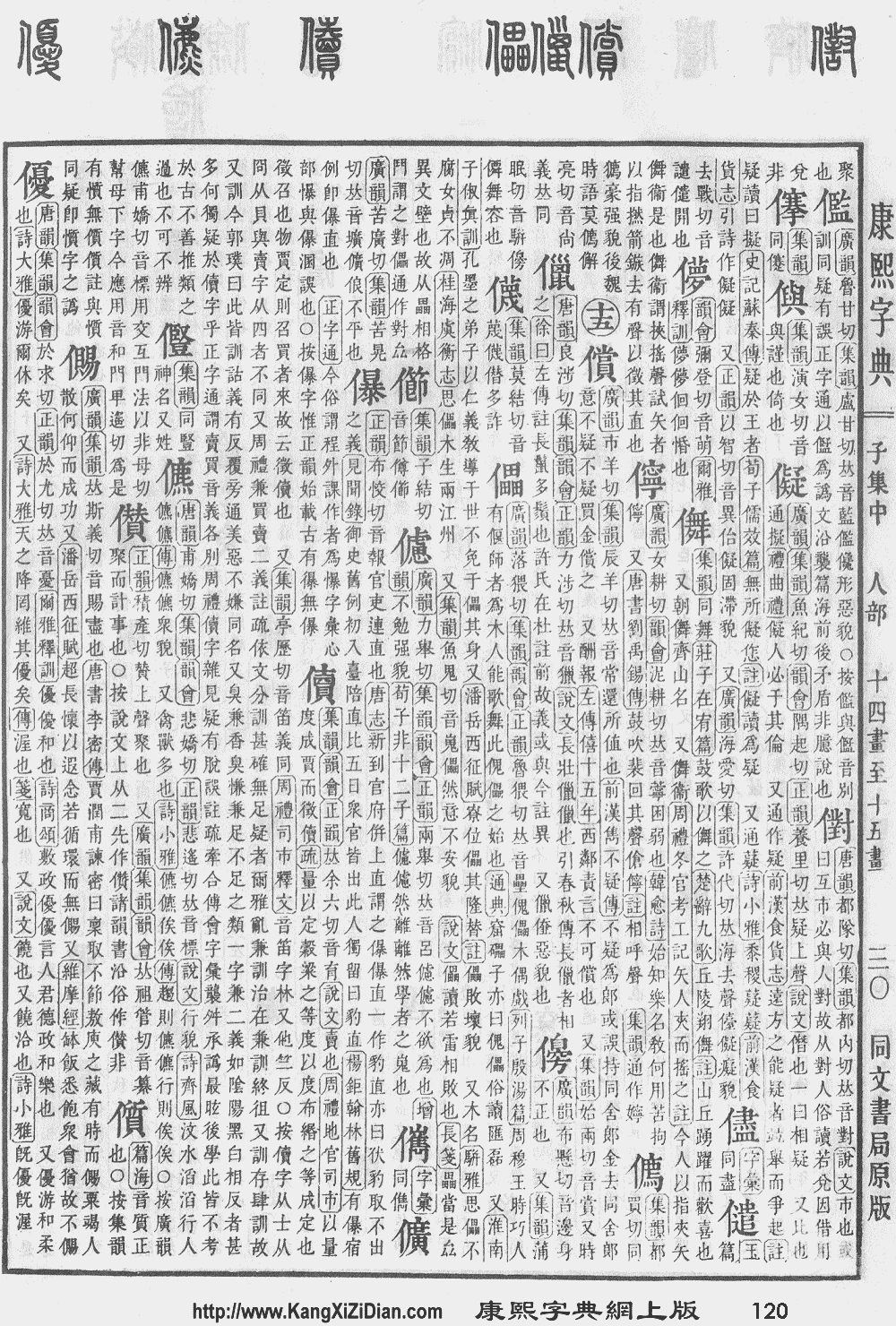
- Kangxi Dictionary: page 120, character 16
- Dai Kanwa Jiten: character 1249
- Dae Jaweon: page 254, character 14
- Hanyu Da Zidian (first edition): volume 1, page 234, character 6
- Unihan data for U+5121
Chinese
| simp. and trad. |
儡 | |
|---|---|---|
| 2nd round simp. | 厽 | |
Glyph origin
| Historical forms of the character 儡 | |
|---|---|
| |
|
References: Mostly from Richard Sears' Chinese Etymology site (authorisation),
|

Characters in the same phonetic series (畾) (Zhengzhang, 2003)
| Old Chinese | |
|---|---|
| 摞 | *roːl, *roːls |
| 騾 | *roːl |
| 螺 | *roːl |
| 蔂 | *roːl, *rul |
| 虆 | *roːl, *rul |
| 瘰 | *roːlʔ |
| 礌 | *ruːl, *ruːls |
| 雷 | *ruːl |
| 擂 | *ruːl, *ruːls |
| 攂 | *ruːl, *ruːls |
| 礧 | *ruːll, *ruːlʔ, *ruːls |
| 儡 | *ruːl, *ruːlʔ, *ruːls |
| 瓃 | *ruːl, *rul, *ruls |
| 櫑 | *ruːl, *ruːlʔ |
| 鑘 | *ruːl, *ruːlʔ |
| 鐳 | *ruːl |
| 畾 | *ruːl |
| 轠 | *ruːl, *rulʔ |
| 罍 | *ruːl |
| 蕾 | *ruːlʔ |
| 癗 | *ruːlʔ |
| 磥 | *ruːlʔ |
| 累 | *ruːls, *rolʔ, *rols |
| 儽 | *ruːls, *rul |
| 樏 | *rolʔ, *rul |
| 鸓 | *rul, *rulʔ |
| 嫘 | *rul |
| 纍 | *rul, *ruls |
| 欙 | *rul |
| 纝 | *rul |
| 壘 | *rulʔ |
| 櫐 | *rulʔ |
| 蘽 | *rulʔ |
| 藟 | *rulʔ |
| 讄 | *rulʔ |
Phono-semantic compound (形聲/形声, OC *ruːl, *ruːlʔ, *ruːls) : semantic 人 (“man”) + phonetic 畾 (OC *ruːl)
Pronunciation
Japanese
Korean
Etymology
From Middle Chinese 儡 (MC lwojX). Recorded as Middle Korean 뢰〯 (lwǒy) (Yale: lwǒy) in Hunmong Jahoe (訓蒙字會 / 훈몽자회), 1527.
Pronunciation
- (SK Standard/Seoul) IPA(key): [ɾwe̞] ~ [ɾø̞] ~ [nwe̞] ~ [nø̞]
- Phonetic hangul: [뤠/뢰/눼/뇌]
Compounds
Compounds
- 괴뢰 (傀儡, goeroe, “puppet”)
- 괴뢰군 (傀儡軍, goeroegun, “puppet army”)
Vietnamese
This article is issued from Wiktionary. The text is licensed under Creative Commons - Attribution - Sharealike. Additional terms may apply for the media files.