累
See also: 纍
| ||||||||
| ||||||||
Translingual
| Stroke order | |||
|---|---|---|---|
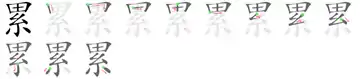 | |||
| Stroke order (Japan) | |||
|---|---|---|---|
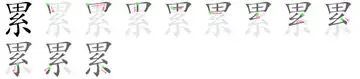 | |||
Han character
累 (Kangxi radical 120, 糸+5, 11 strokes, cangjie input 田女戈火 (WVIF), four-corner 60903, composition ⿱田糸)
References
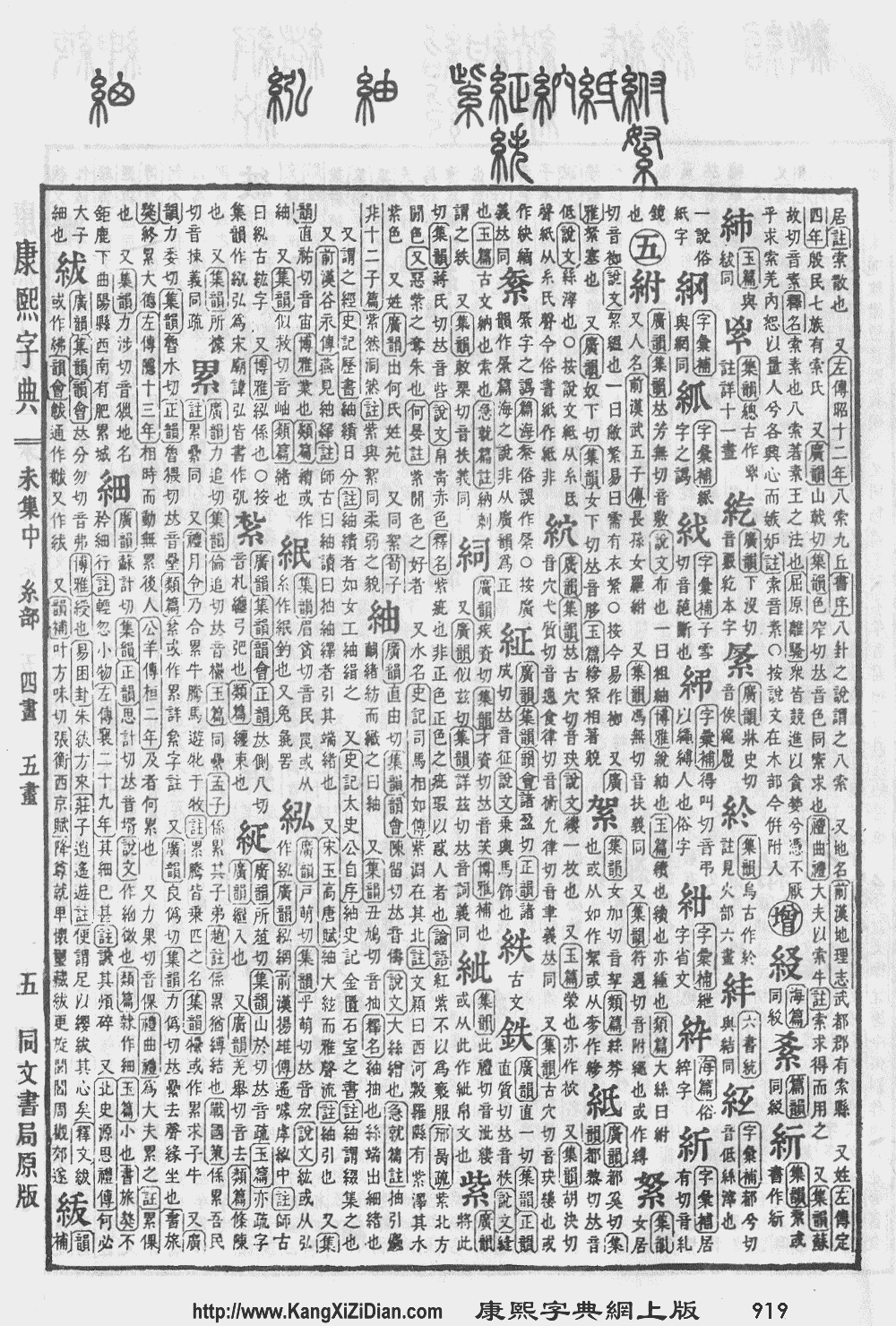
- Kangxi Dictionary: page 919, character 35
- Dai Kanwa Jiten: character 27343
- Dae Jaweon: page 1351, character 6
- Hanyu Da Zidian (first edition): volume 5, page 3381, character 4
- Unihan data for U+7D2F
- Unihan data for U+F94F
Chinese
Glyph origin
Characters in the same phonetic series (畾) (Zhengzhang, 2003)
| Old Chinese | |
|---|---|
| 摞 | *roːl, *roːls |
| 騾 | *roːl |
| 螺 | *roːl |
| 蔂 | *roːl, *rul |
| 虆 | *roːl, *rul |
| 瘰 | *roːlʔ |
| 礌 | *ruːl, *ruːls |
| 雷 | *ruːl |
| 擂 | *ruːl, *ruːls |
| 攂 | *ruːl, *ruːls |
| 礧 | *ruːll, *ruːlʔ, *ruːls |
| 儡 | *ruːl, *ruːlʔ, *ruːls |
| 瓃 | *ruːl, *rul, *ruls |
| 櫑 | *ruːl, *ruːlʔ |
| 鑘 | *ruːl, *ruːlʔ |
| 鐳 | *ruːl |
| 畾 | *ruːl |
| 轠 | *ruːl, *rulʔ |
| 罍 | *ruːl |
| 蕾 | *ruːlʔ |
| 癗 | *ruːlʔ |
| 磥 | *ruːlʔ |
| 累 | *ruːls, *rolʔ, *rols |
| 儽 | *ruːls, *rul |
| 樏 | *rolʔ, *rul |
| 鸓 | *rul, *rulʔ |
| 嫘 | *rul |
| 纍 | *rul, *ruls |
| 欙 | *rul |
| 纝 | *rul |
| 壘 | *rulʔ |
| 櫐 | *rulʔ |
| 蘽 | *rulʔ |
| 藟 | *rulʔ |
| 讄 | *rulʔ |
Folk etymology considers this character as an ideographic compound representing the tiredness after work. In ancient China, men were working in the field (田) while women sewed (糸).
Etymology
Various semantic fields can be distinguished:
- “to add; to accumulate”
- Related to 壘 (OC *rulʔ, “rampart; to build by piling rocks”), 厽 (OC *rolʔ), 絫 (OC *rolʔ) (Wang, 1982).
- “to damage; exhausted; tired”
- Related to 儽 (OC *ruːls, *rul, “tired”), 儡 (OC *ruːl, *ruːlʔ, *ruːls, “to injure”) (Schuessler, 2007). It can be compared with Khmer រួយ (ruəy, “tired; exhausted”), Mizo rawih (“weak; worn out; broken down”), Tibetan རུལ (rul, “to decay; to rot”), འབྲུལ ('brul, “to fall; to come out”), ཧྲུལ་པོ (hrul po, “torn; ragged”), སྲུལ (srul, “(archaic) to rot; to decompose”) (ibid.).
- “to bind; to wind around”
- See 纍 (OC *rul, *ruls).
Definitions
累
- to pile up; to heap up; to mount up; to accumulate
- repeated; numerous; unremitting; continuous; persistent
- 經年累月/经年累月 ― jīngniánlěiyuè ― for years and years
- 六藝經傳以千萬數,累世不能殫其學,當年不能究其禮。 [Classical Chinese, trad.]
- From: The Records of the Grand Historian, by Sima Qian, c. 91 BCE
- Liùyì jīngzhuàn yǐ qiānwàn shǔ, lěishì bùnéng dān qí xué, dāngnián bùnéng jiū qí lǐ. [Pinyin]
- (please add an English translation of this usage example)
六艺经传以千万数,累世不能殚其学,当年不能究其礼。 [Classical Chinese, simp.]
- (obsolete) to repeat; to replicate; to overlap
- (obsolete) to add (to); to increase; to grow
- (obsolete) to amount (to); to sum up (to)
- (obsolete) Alternative form of 絫 (lěi, “ancient weight unit”)
- a surname
Compounds
- 不差累黍 (bùchālěishǔ)
- 事危累卵
- 危如累卵 (wēirúlěiluǎn)
- 危於累卵/危于累卵
- 寸積銖累/寸积铢累
- 成千累萬/成千累万
- 成年累月
- 日積月累/日积月累 (rìjīyuèlěi)
- 疵蒙謬累/疵蒙谬累
- 盈千累百
- 盈千累萬/盈千累万
- 盈篇累牘/盈篇累牍
- 積年累月/积年累月
- 積德累仁/积德累仁
- 積德累功/积德累功
- 積累/积累 (jīlěi)
- 積金累玉/积金累玉
- 積銖累寸/积铢累寸
- 窮年累世/穷年累世
- 窮年累月/穷年累月
- 窮年累歲/穷年累岁
- 累七齋/累七斋
- 累世 (lěishì)
- 累世 (lěishì)
- 累丸
- 累代 (lěidài)
- 累加 (lěijiā)
- 累卵 (lěiluǎn)
- 累卵之危
- 累土至山
- 累塊積蘇/累块积苏
- 累增字
- 累年
- 累彰勛效/累彰勋效
- 累德
- 累戰/累战
- 累日 (lěirì)
- 累時/累时
- 累月經年/累月经年
- 累榭
- 累次
- 累次三番
- 累牆/累墙
- 累牘連篇/累牍连篇
- 累犯 (lěifàn)
- 累犯 (lěifàn)
- 累積/累积 (lěijī)
- 累積性傷害症候群/累积性伤害症候群
- 累積盈餘/累积盈余
- 累累 (lěilěi)
- 累計/累计 (lěijì)
- 累足
- 累足成步
- 累進/累进 (lěijìn)
- 累進稅/累进税
- 累進稅率/累进税率
- 累進處遇/累进处遇
- 累遷/累迁 (lěiqiān)
- 累重
- 累黍
- 經年累月/经年累月
- 經旬累月/经旬累月
- 脅肩累足/胁肩累足
- 蕪累/芜累
- 虧累/亏累
- 負債累累/负债累累 (fùzhài lěilěi)
- 連篇累幅/连篇累幅
- 連篇累牘/连篇累牍 (liánpiānlěidú)
- 連階累任/连阶累任
- 連章累牘/连章累牍
- 鄙言累句
- 重光累洽
- 重熙累洽
- 重規累矩/重规累矩
- 銖積寸累/铢积寸累
- 長年累月/长年累月 (chángniánlěiyuè)
- 長篇累牘/长篇累牍
- 食不累味
- 駢肩累足/骈肩累足
- 駢肩累跡/骈肩累迹
- 駢肩累踵/骈肩累踵
Definitions
累
- to involve; to implicate; to embroil; to entangle; to hinder
- (obsolete) burden; tribulation; affliction; problem
- (obsolete) to damage; to hurt; to do harm to; to stain; to sully
- (obsolete) to entrust; to delegate; to devolve
- to strain; to wear out; to cause to be tired
- (obsolete) suffering; misery; harm; disaster
- (obsolete) fault; crime; slip; defect
- to work hard; to toil; to overwork
- tired; weary; fatigued; exhausted
- (obsolete) wife and children; one's family
- (Changsha Xiang, polite) please; asking for help
Synonyms
- (tired):
Dialectal synonyms of 累 (“tired”) [map]
Compounds
- 俗累
- 倦累
- 勞累/劳累 (láolèi)
- 受累
- 同名之累
- 塵累/尘累
- 多累
- 家累
- 家累千金,坐不垂堂
- 帶累/带累 (dàilěi)
- 干累
- 忝累
- 房累
- 拖累 (tuōlěi)
- 掛累/挂累
- 波累 (bōlěi)
- 滯累/滞累
- 炊累
- 物累
- 牽累/牵累 (qiānlěi)
- 疲累 (pílèi)
- 私累
- 竿累
- 累乏
- 累人 (lèirén)
- 累及 (lěijí)
- 累句
- 累垮 (lèikuǎ)
- 累壞/累坏 (lèihuài)
- 累得慌
- 累德
- 累心
- 累懇/累恳
- 累手
- 累掯
- 累死 (lèi sǐ)
- 累死累活 (lěisǐlěihuó)
- 累活
- 累活兒/累活儿
- 累煩/累烦
- 累贅/累赘
- 累重
- 纏累/缠累 (chánlěi)
- 苦累
- 負累/负累 (fùlěi)
- 賠累/赔累 (péilèi)
- 賤累/贱累
- 連累/连累
- 遲累/迟累
- 鄙累
Pronunciation 4
| For pronunciation and definitions of 累 – see 纍 (“rope; to tie; bull in mating season”). (This character is the simplified and variant traditional form of 纍). |
Notes:
|
Definitions
累
- Only used in 謼遫累/呼遫累.
Definitions
累
- Only used in 肥累.
Japanese
Korean
Vietnamese
This article is issued from Wiktionary. The text is licensed under Creative Commons - Attribution - Sharealike. Additional terms may apply for the media files.