回
| ||||||||
Translingual
| Stroke order | |||
|---|---|---|---|
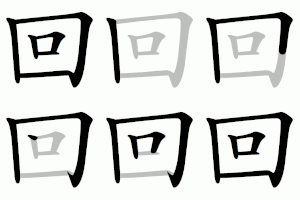 | |||
| Traditional | 迴 |
|---|---|
| Simplified | 回 |
| Japanese | 廻 |
| Korean | 廻 |
Han character
回 (Kangxi radical 31, 囗+3, 6 strokes, cangjie input 田口 (WR), four-corner 60600, composition ⿴囗口)
Derived characters
References
- Kangxi Dictionary: page 216, character 26
- Dai Kanwa Jiten: character 4690
- Dae Jaweon: page 422, character 4
- Hanyu Da Zidian (first edition): volume 1, page 712, character 2
- Unihan data for U+56DE

Chinese
Glyph origin
| Historical forms of the character 回 | |||
|---|---|---|---|
| Western Zhou | Shuowen Jiezi (compiled in Han) | Liushutong (compiled in Ming) | |
| Bronze inscriptions | Ancient script | Small seal script | Transcribed ancient scripts |
 |
 |
 |
 |
Characters in the same phonetic series (回) (Zhengzhang, 2003)
Pictogram (象形) : rotation (originally a spiral).
Etymology 1
| simp. and trad. |
回 | |
|---|---|---|
| alternative forms | 囬 囘 | |
(This etymology is missing or incomplete. Please add to it, or discuss it at the Etymology scriptorium.)
Pronunciation
Definitions
回
- to turn around
- to return; to go back
- Used after a verb to indicate a movement back to the original place; back
- to circle; to wind
- 倬彼雲漢,昭回于天。 [Pre-Classical Chinese, trad.]
- From: The Classic of Poetry, c. 11th – 7th centuries BCE, translated based on James Legge's version
- Zhuō bǐ yúnhàn, zhāo huí yú tiān. [Pinyin]
- Bright was that milky way,
Shining and revolving in the sky.
倬彼云汉,昭回于天。 [Pre-Classical Chinese, simp.]
- to reply; to respond; to answer
- to decline; to refuse
- to avoid
- Classifier for chapters.
- Classifier for number of occurrences of events: times
- 有幾回,鄰舍孩子聽得笑聲,也趕熱鬧,圍住了孔乙己。 [MSC, trad.]
- From: 1919, Lu Xun, 孔乙己 (Kung I-chi)
- Yǒu jǐ huí, línshè háizi tīng de xiàoshēng, yě gǎn rènào, wéi zhù le Kǒng Yǐjǐ. [Pinyin]
- Sometimes children in the neighbourhood, hearing laughter, came to join in the fun, and surrounded Kung I-chi.
有几回,邻舍孩子听得笑声,也赶热闹,围住了孔乙己。 [MSC, simp.]
- (~族) Hui ethnic group
- (dated in Mainland China) Muslim; anything related to Islam
Synonyms
Dialectal synonyms of 回 (“to return; to come/go back”) [map]
| Variety | Location | Words |
|---|---|---|
| Classical Chinese | 回, 歸 | |
| Formal (Written Standard Chinese) | 回, 返回, 回歸 | |
| Mandarin | Beijing | 回 |
| Taiwan | 回 | |
| Chengdu | 轉, 回 | |
| Guilin | 回 | |
| Malaysia | 回 | |
| Singapore | 回 | |
| Cantonese | Guangzhou | 返 |
| Hong Kong | 返 | |
| Macau | 返 | |
| Zhongshan (Shiqi) | 返 | |
| Taishan | 返 | |
| Kuala Lumpur (Guangfu) | 返 | |
| Singapore (Guangfu) | 返 | |
| Hakka | Meixian | 轉 |
| Miaoli (N. Sixian) | 轉 | |
| Pingtung (Neipu; S. Sixian) | 歸 | |
| Hsinchu County (Zhudong; Hailu) | 轉 | |
| Taichung (Dongshi; Dabu) | 轉 | |
| Hsinchu County (Qionglin; Raoping) | 轉 | |
| Yunlin (Lunbei; Zhao'an) | 轉 | |
| Kuching (Hepo) | 轉 | |
| Eastern Min | Fuzhou | 轉 |
| Singapore (Fuqing) | 轉 | |
| Southern Min | Xiamen | 轉, 倒 |
| Quanzhou | 轉 | |
| Zhangzhou | 轉 | |
| Zhao'an | 轉 | |
| Taipei | 轉 | |
| New Taipei (Sanxia) | 轉 | |
| Kaohsiung | 轉 | |
| Yilan | 轉 | |
| Changhua (Lukang) | 轉 | |
| Taichung | 轉 | |
| Tainan | 轉 | |
| Hsinchu | 轉 | |
| Kinmen | 轉 | |
| Penghu (Magong) | 轉 | |
| Penang (Hokkien) | 轉 | |
| Singapore (Hokkien) | 轉 | |
| Manila (Hokkien) | 倒 | |
| Chaozhou | 轉 | |
| Shantou | 轉 | |
| Haifeng | 轉 | |
| Singapore (Teochew) | 轉 | |
| Wenchang | 轉 | |
| Singapore (Hainanese) | 轉 | |
| Wu | Ningbo | 回, 轉 rare |
Dialectal synonyms of 次 (“time (frequency)”) [map]
Compounds
- 一回 (yīhuí)
- 一回事 (yīhuíshì)
- 上回 (shànghuí)
- 下回 (xiàhuí)
- 三回九曲
- 三回九轉/三回九转
- 三回五次
- 三回五轉/三回五转
- 三回兩轉/三回两转
- 不堪回首 (bùkānhuíshǒu)
- 不足回旋
- 乾回付/干回付
- 交回
- 人力回天 (rénlìhuítiān)
- 低回 (dīhuí)
- 來來回回/来来回回
- 來回/来回 (láihuí)
- 來回來去/来回来去 (láihuíláiqù)
- 來回的話/来回的话
- 來回票/来回票 (láihuípiào)
- 值回票價/值回票价 (zhíhuípiàojià)
- 兩回事/两回事 (liǎnghuíshì)
- 出一回神
- 前回
- 北回歸線/北回归线 (Běi-Huíguīxiàn)
- 南回歸線/南回归线 (Nán-Huíguīxiàn)
- 召回 (zhàohuí)
- 吃回頭草/吃回头草
- 回一回
- 回中 (huízhōng)
- 回九
- 回事
- 回佣
- 回來/回来 (huílái)
- 回信 (huíxìn)
- 回候
- 回儒 (huírú)
- 回光返照 (huíguāngfǎnzhào)
- 回光鏡/回光镜
- 回函 (huíhán)
- 回力棒
- 回力球
- 回升 (huíshēng)
- 回去 (huíqù)
- 回合 (huíhé)
- 回告
- 回味 (huíwèi)
- 回和
- 回味無窮/回味无穷 (huíwèiwúqióng)
- 回嗔作喜 (huíchēn zuòxǐ)
- 回嘴 (huízuǐ)
- 回回
- 回回曆/回回历 (Huíhuilì)
- 回回鼻子
- 回國/回国 (huíguó)
- 回執/回执 (huízhí)
- 回報/回报 (huíbào)
- 回塘
- 回天 (huítiān)
- 回天之力
- 回天乏術/回天乏术
- 回奉
- 回娘家 (huí niángjiā)
- 回子 (huízi)
- 回字
- 回定
- 回家 (huíjiā)
- 回容
- 回屋 (huíwū)
- 回山倒海
- 回帖
- 回師/回师 (huíshī)
- 回席 (huíxí)
- 回府 (huífǔ)
- 回復/回复 (huífù)
- 回復青春/回复青春
- 回心
- 回心轉意/回心转意 (huíxīnzhuǎnyì)
- 回忌
- 回思
- 回惶
- 回想 (huíxiǎng)
- 回應/回应 (huíyìng)
- 回憶/回忆 (huíyì)
- 回憶錄/回忆录 (huíyìlù)
- 回戲/回戏
- 回手 (huíshǒu)
- 回扣 (huíkòu)
- 回拜 (huíbài)
- 回援 (huíyuán)
- 回擊/回击 (huíjī)
- 回收 (huíshōu)
- 回教 (Huíjiào)
- 回教世界
- 回教徒 (huíjiàotú)
- 回教聖戰/回教圣战
- 回敬 (huíjìng)
- 回數票/回数票
- 回文 (huíwén)
- 回旋 (huíxuán)
- 回族 (Huízú)
- 回旋梯
- 回旨
- 回易
- 回春 (huíchūn)
- 回春作用
- 回暖 (huínuǎn)
- 回曆/回历 (Huílì)
- 回書/回书 (huíshū)
- 回朝 (huícháo)
- 回條/回条 (huítiáo)
- 回椎
- 回棋 (huíqí)
- 回檔/回档 (huídàng)
- 回歸/回归 (huíguī)
- 回歸年/回归年 (huíguīnián)
- 回歸潮/回归潮
- 回歸熱/回归热 (huíguīrè)
- 回歸線/回归线 (huíguīxiàn)
- 回民 (Huímín)
- 回波
- 回流 (huíliú)
- 回溯 (huísù)
- 回潮 (huícháo)
- 回灘/回滩
- 回火 (huíhuǒ)
- 回煞
- 回燈/回灯
- 回爐/回炉 (huílú)
- 回爐復帳/回炉复帐
- 回片
- 回狀/回状
- 回甘 (huígān)
- 回生 (huíshēng)
- 回生乏術/回生乏术
- 回生起死
- 回用
- 回疆 (Huíjiāng)
- 回盤/回盘
- 回眸一笑 (huímóuyīxiào)
- 回示
- 回票面
- 回祿/回禄 (Huílù)
- 回祿之災/回禄之灾
- 回禮/回礼 (huílǐ)
- 回程 (huíchéng)
- 回稟/回禀 (huíbǐng)
- 回答 (huídá)
- 回籍
- 回籠/回笼 (huílóng)
- 回紇/回纥 (Huíhé)
- 回納/回纳
- 回絕/回绝 (huíjué)
- 回翔
- 回老家 (huí lǎojiā)
- 回聲/回声 (huíshēng)
- 回背
- 回腸/回肠 (huícháng)
- 回腸九回/回肠九回
- 回腸蕩氣/回肠荡气
- 回航
- 回船轉舵/回船转舵
- 回西流
- 回覆 (huífù)
- 回訪/回访 (huífǎng)
- 回話/回话 (huíhuà)
- 回請/回请 (huíqǐng)
- 回護/回护
- 回買/回买
- 回贈/回赠
- 回贖/回赎 (huíshú)
- 回跌
- 回路 (huílù)
- 回身 (huíshēn)
- 回轉/回转 (huízhuǎn)
- 回遑
- 回過/回过
- 回避 (huíbì)
- 回邪
- 回部 (Huíbù)
- 回郵/回邮
- 回鄉/回乡 (huíxiāng)
- 回銷/回销 (huíxiāo)
- 回鋒/回锋 (huífēng)
- 回鍋/回锅 (huíguō)
- 回鑾/回銮
- 回門/回门
- 回闌/回阑
- 回防
- 回電/回电 (huídiàn)
- 回青
- 回音 (huíyīn)
- 回響/回响 (huíxiǎng)
- 回頭/回头 (huítóu)
- 回頭人/回头人 (huítóurén)
- 回頭兒/回头儿
- 回頭掣腦/回头掣脑
- 回頭是岸/回头是岸 (huítóu shì àn)
- 回頭書/回头书
- 回頭路/回头路
- 回頭車子/回头车子
- 回顧/回顾 (huígù)
- 回顧展/回顾展 (huígùzhǎn)
- 回風/回风
- 回飆/回飙
- 回飛棒/回飞棒 (huífēibàng)
- 回饋/回馈 (huíkuì)
- 回饋作用/回馈作用
- 回饋控制/回馈控制
- 回首 (huíshǒu)
- 回馬/回马 (huímǎ)
- 回馬槍/回马枪 (huímǎqiāng)
- 回駁/回驳
- 回魚箸/回鱼箸
- 回鶻/回鹘 (Huíhú)
- 回鶻文/回鹘文 (huíhúwén)
- 回黃倒皂/回黄倒皂
- 回黃轉綠/回黄转绿
- 回龍/回龙 (Huílóng)
- 回龍山/回龙山 (Huílóngshān)
- 垃圾回收 (lājī huíshōu)
- 大回
- 大回朝
- 大地回春 (dàdìhuíchūn)
- 大漲小回/大涨小回
- 妙手回春 (miàoshǒuhuíchūn)
- 守正不回
- 守節不回/守节不回
- 寶山空回/宝山空回 (bǎoshānkōnghuí)
- 帶回/带回 (dàihuí)
- 幾回/几回
- 幾回價/几回价
- 康回 (Kānghuí)
- 得勝回朝/得胜回朝
- 得勝頭回/得胜头回
- 復回/复回 (fùhuí)
- 心回意轉/心回意转
- 心意回轉/心意回转
- 悲回風/悲回风
- 意轉心回/意转心回
- 手到回春
- 打來回/打来回
- 打回票
- 打道回府 (dǎdàohuífǔ)
- 批回
- 扳回
- 折回 (zhéhuí)
- 扳回一城
- 挽回 (wǎnhuí)
- 掉回頭/掉回头
- 揮戈回日/挥戈回日
- 撤回 (chèhuí)
- 收回 (shōuhuí)
- 收回成命
- 敗子回頭/败子回头 (bàizǐhuítóu)
- 新疆回變/新疆回变
- 昭回 (zhāohuí)
- 春回大地 (chūnhuídàdì)
- 每回 (měihuí)
- 沒來回/没来回
- 油回磨轉/油回磨转
- 浪子回頭/浪子回头
- 湖北口回族鄉/湖北口回族乡 (Húběikǒu Huízú Xiāng)
- 無回豁/无回豁
- 片甲不回 (piànjiǎbùhuí)
- 牛回磨轉/牛回磨转
- 猛回頭/猛回头
- 班師回朝/班师回朝 (bānshīhuícháo)
- 璧回
- 發回/发回 (fāhuí)
- 百折不回 (bǎizhébùhuí)
- 目駭耳回/目骇耳回
- 空手而回
- 笑耍頭回/笑耍头回
- 者回
- 著手回春
- 蕩氣回腸/荡气回肠
- 藥到回春/药到回春
- 裴回
- 調回/调回
- 資源回收/资源回收
- 贖回/赎回 (shúhuí)
- 走回頭路/走回头路
- 起死回生 (qǐsǐhuíshēng)
- 踅回
- 輪回/轮回 (lúnhuí)
- 轉意回心/转意回心
- 轉日回天/转日回天
- 返回 (fǎnhuí)
- 返照回光
- 退回 (tuìhuí)
- 逃回
- 這回/这回
- 這回事/这回事
- 遣回
- 遲回/迟回
- 遲回觀望/迟回观望
- 邅回
- 雙回門/双回门
- 雲南回變/云南回变
- 章回小說/章回小说 (zhānghuí xiǎoshuō)
- 領回/领回
- 頭回/头回 (tóuhuí)
- 飭回/饬回
- 飯店回蔥/饭店回葱
- 駁回/驳回 (bóhuí)
- 驀然回首/蓦然回首
References
- “回”, in 漢語多功能字庫 (Multi-function Chinese Character Database), 香港中文大學 (the Chinese University of Hong Kong), 2014–
Etymology 2
| For pronunciation and definitions of 回 – see 迴 (“to revolve; to rotate; to avoid; etc.”). (This character is the simplified and variant form of 迴). |
Notes:
|
Pronunciation
Synonyms
Dialectal synonyms of 那 (“that”) [map]
Japanese
Readings
See also
- 廻 (this is the older spelling of at least some senses or homonyms)
Etymology 1
| Kanji in this term |
|---|
| 回 |
| まわ(り) Grade: 2 |
| kun’yomi |
Etymology 2
| Kanji in this term |
|---|
| 回 |
| かい Grade: 2 |
| kan’on |
From Middle Chinese 回 (MC hwoj).
The kan'on pronunciation, so likely a later borrowing.
Affix
Derived terms
Counter
Noun
Etymology 3
| Kanji in this term |
|---|
| 回 |
| え Grade: 2 |
| goon |
From Middle Chinese 回 (MC hwoj).
The goon pronunciation, so likely the initial borrowing.
Pronunciation
- IPA(key): [e̞]
References
- Matsumura, Akira, editor (2006), 大辞林 [Daijirin] (in Japanese), Third edition, Tōkyō: Sanseidō, →ISBN
Korean
Compounds
- 위화도회군 (威化島回軍, wihwadohoegun)
Vietnamese
Han character
- to return, to turn around
- a time or occurrence (especially in the past)
- a chapter, an act
- (only in compound) anything related to Islam
Compounds
References
- Trần (1999).
This article is issued from Wiktionary. The text is licensed under Creative Commons - Attribution - Sharealike. Additional terms may apply for the media files.