擂
| ||||||||
Translingual
Han character
擂 (Kangxi radical 64, 手+13, 16 strokes, cangjie input 手一月田 (QMBW), four-corner 51063, composition ⿰扌雷)
References
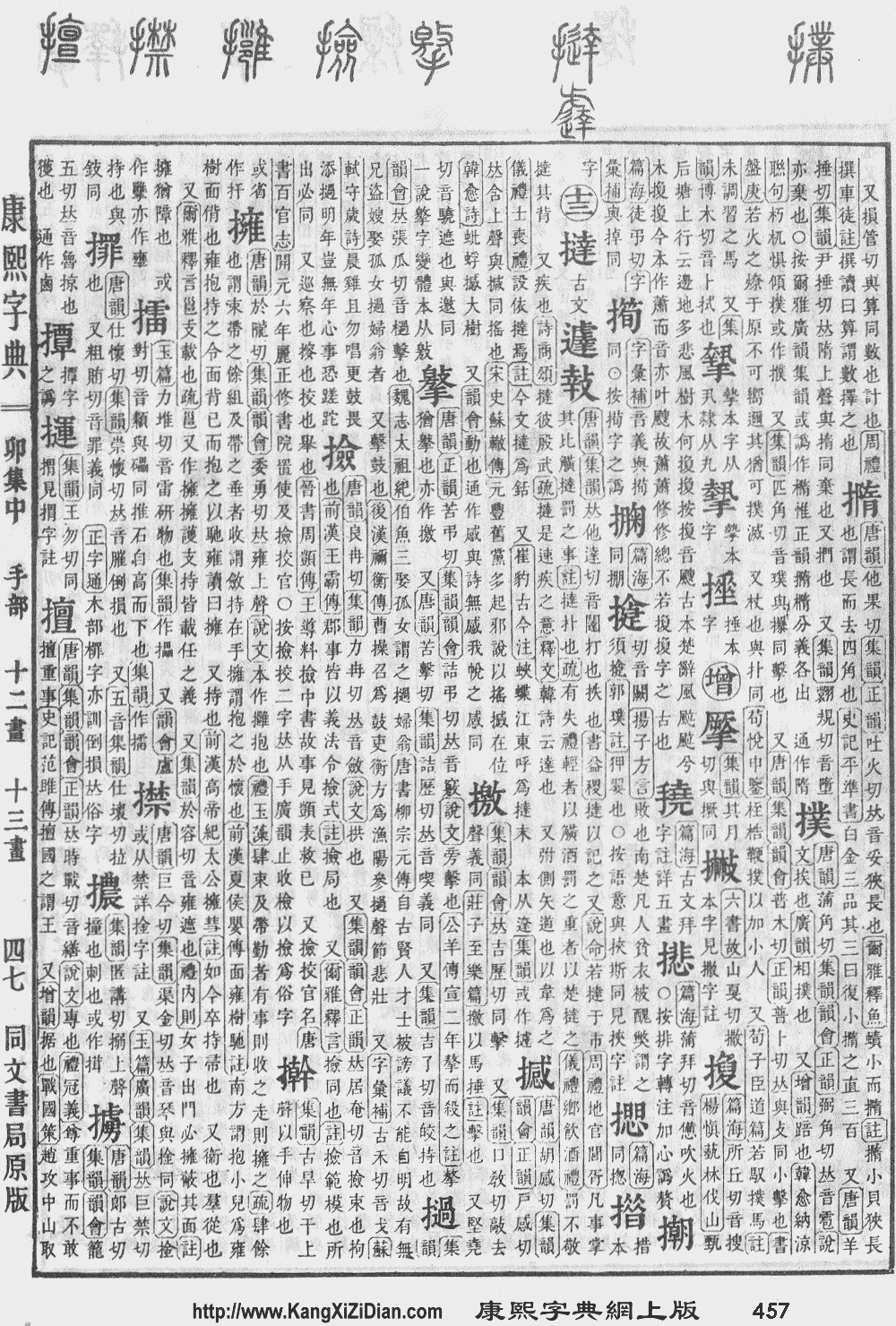
- Kangxi Dictionary: page 457, character 27
- Dai Kanwa Jiten: character 12783
- Dae Jaweon: page 806, character 11
- Hanyu Da Zidian (first edition): volume 3, page 1967, character 10
- Unihan data for U+64C2
Chinese
| trad. | 擂 | |
|---|---|---|
| simp. # | 擂 | |
| alternative forms | 攂 | |
Glyph origin
Characters in the same phonetic series (畾) (Zhengzhang, 2003)
| Old Chinese | |
|---|---|
| 摞 | *roːl, *roːls |
| 騾 | *roːl |
| 螺 | *roːl |
| 蔂 | *roːl, *rul |
| 虆 | *roːl, *rul |
| 瘰 | *roːlʔ |
| 礌 | *ruːl, *ruːls |
| 雷 | *ruːl |
| 擂 | *ruːl, *ruːls |
| 攂 | *ruːl, *ruːls |
| 礧 | *ruːll, *ruːlʔ, *ruːls |
| 儡 | *ruːl, *ruːlʔ, *ruːls |
| 瓃 | *ruːl, *rul, *ruls |
| 櫑 | *ruːl, *ruːlʔ |
| 鑘 | *ruːl, *ruːlʔ |
| 鐳 | *ruːl |
| 畾 | *ruːl |
| 轠 | *ruːl, *rulʔ |
| 罍 | *ruːl |
| 蕾 | *ruːlʔ |
| 癗 | *ruːlʔ |
| 磥 | *ruːlʔ |
| 累 | *ruːls, *rolʔ, *rols |
| 儽 | *ruːls, *rul |
| 樏 | *rolʔ, *rul |
| 鸓 | *rul, *rulʔ |
| 嫘 | *rul |
| 纍 | *rul, *ruls |
| 欙 | *rul |
| 纝 | *rul |
| 壘 | *rulʔ |
| 櫐 | *rulʔ |
| 蘽 | *rulʔ |
| 藟 | *rulʔ |
| 讄 | *rulʔ |
Phono-semantic compound (形聲/形声, OC *ruːl, *ruːls) : semantic 手 (“hand”) + phonetic 雷 (OC *ruːl).
Pronunciation
Definitions
擂
Compounds
Pronunciation
Japanese
Vietnamese
This article is issued from Wiktionary. The text is licensed under Creative Commons - Attribution - Sharealike. Additional terms may apply for the media files.