嚨
See also: 咙
| ||||||||
Translingual
| Traditional | 嚨 |
|---|---|
| Shinjitai (extended) |
𠺠 |
| Simplified | 咙 |
Han character
嚨 (Kangxi radical 30, 口+16, 19 strokes, cangjie input 口卜月心 (RYBP), four-corner 61011, composition ⿰口龍)
References
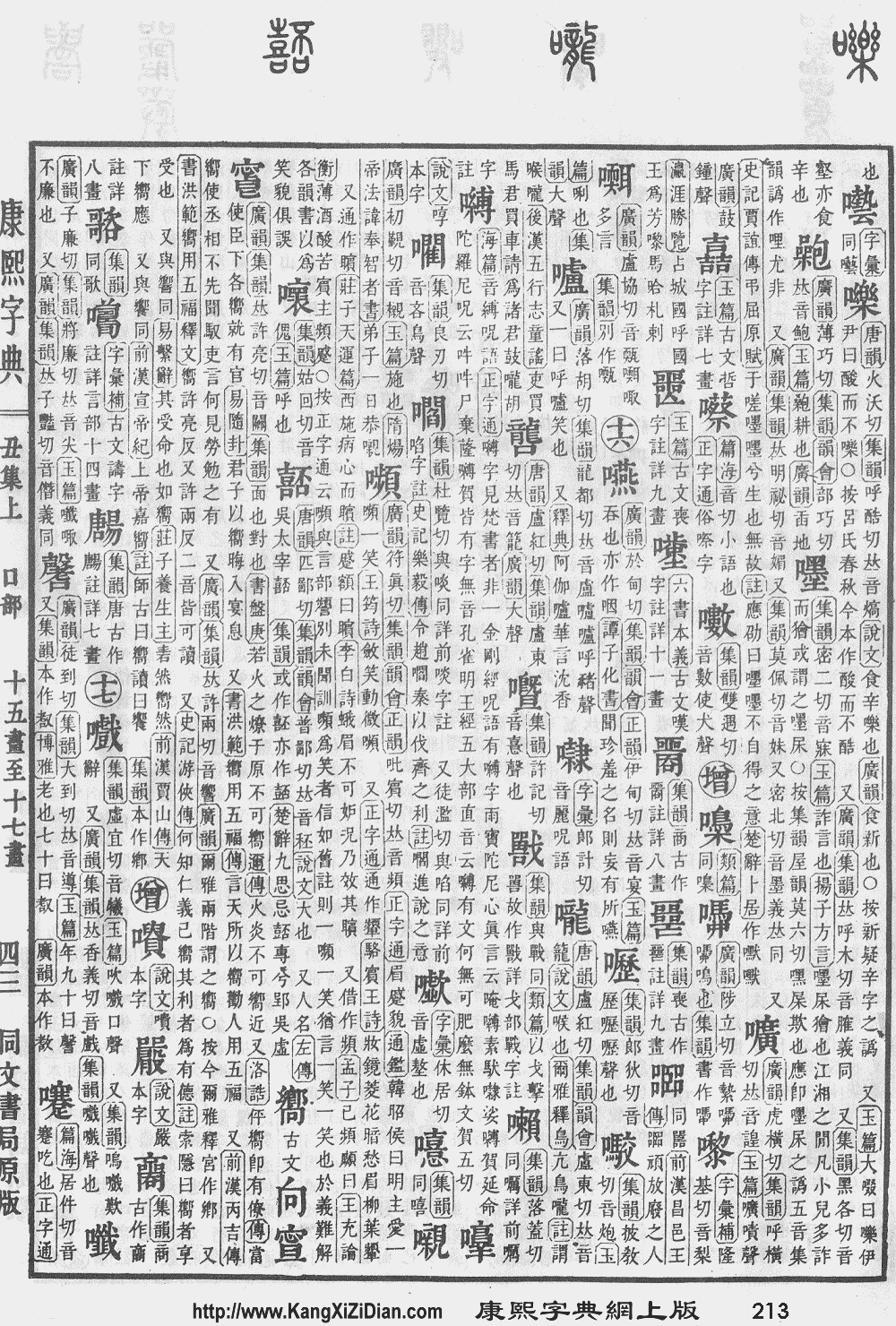
- Kangxi Dictionary: page 213, character 23
- Dai Kanwa Jiten: character 4550
- Dae Jaweon: page 436, character 4
- Hanyu Da Zidian (first edition): volume 1, page 703, character 11
- Unihan data for U+56A8
Chinese
| trad. | 嚨 | |
|---|---|---|
| simp. | 咙 | |
Glyph origin
Characters in the same phonetic series (龍) (Zhengzhang, 2003)
| Old Chinese | |
|---|---|
| 驡 | *ʔslaːŋʔ, *roŋ |
| 龐 | *broːŋ |
| 瀧 | *rroːŋ, *sroːŋ, *roːŋ |
| 籠 | *roːŋ, *roːŋʔ, *roŋ |
| 豅 | *roːŋ |
| 朧 | *roːŋ, *roŋs |
| 龓 | *roːŋ, *roːŋʔ |
| 聾 | *roːŋ |
| 礱 | *roːŋ, *roːŋs |
| 嚨 | *roːŋ |
| 蘢 | *roːŋ, *roŋ |
| 櫳 | *roːŋ |
| 襱 | *roːŋ, *roːŋʔ, *r'oŋʔ |
| 瓏 | *roːŋ |
| 曨 | *roːŋ, *roːŋʔ |
| 鸗 | *roːŋ, *roŋ |
| 蠪 | *roːŋ |
| 巃 | *roːŋʔ |
| 竉 | *roːŋʔ |
| 攏 | *roːŋʔ |
| 儱 | *roːŋʔ, *roŋs |
| 龍 | *b·roŋ, *mroːŋ |
| 躘 | *roŋ, *roŋs |
| 隴 | *roŋʔ |
| 壠 | *roŋʔ |
| 壟 | *roŋʔ |
| 寵 | *r̥ʰoŋʔ |
| 龏 | *kloŋ, *kloŋs, *qroːɡ |
Phono-semantic compound (形聲/形声, OC *roːŋ) : semantic 口 (“mouth”) + phonetic 龍 (OC *b·roŋ, *mroːŋ).
Etymology
(This etymology is missing or incomplete. Please add to it, or discuss it at the Etymology scriptorium.)
Pronunciation
Definitions
嚨
- Used in compounds.
Compounds
References
- “嚨”, in 漢語多功能字庫 (Multi-function Chinese Character Database), 香港中文大學 (the Chinese University of Hong Kong), 2014–
Japanese
| 𠺠 | |
| 嚨 |
Korean
Vietnamese
This article is issued from Wiktionary. The text is licensed under Creative Commons - Attribution - Sharealike. Additional terms may apply for the media files.