聾
See also: 聋
| ||||||||
| ||||||||
Translingual
Han character
聾 (Kangxi radical 128, 耳+16, 22 strokes, cangjie input 卜心尸十 (YPSJ), four-corner 01401, composition ⿱龍耳)
Derived characters
- 𭍎
References
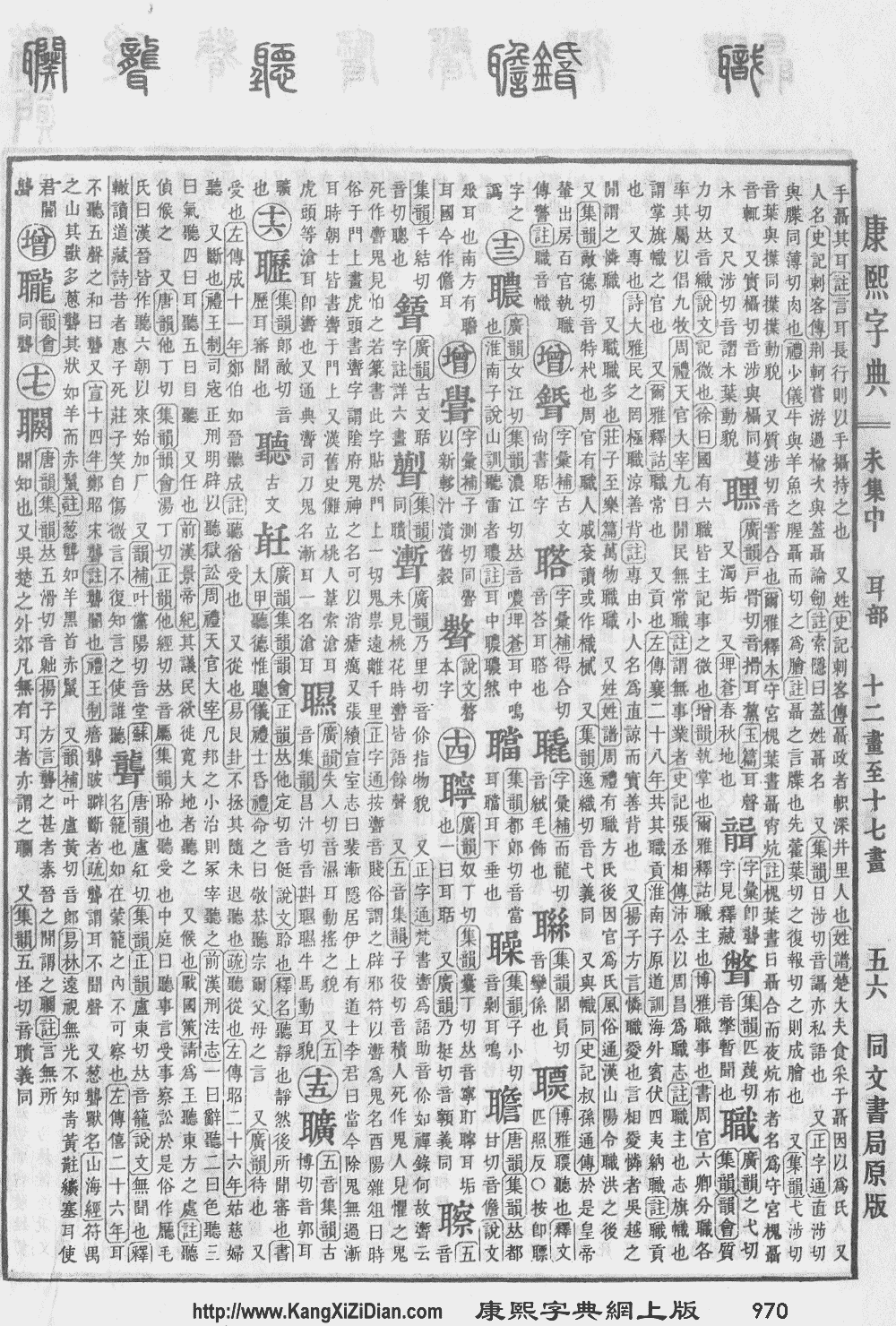
- Kangxi Dictionary: page 970, character 26
- Dai Kanwa Jiten: character 29212
- Dae Jaweon: page 1422, character 14
- Hanyu Da Zidian (first edition): volume 4, page 2800, character 5
- Unihan data for U+807E
- Unihan data for U+F945
Chinese
| trad. | 聾 | |
|---|---|---|
| simp. | 聋 | |
| alternative forms | 䏊/𰭹 | |
Glyph origin
Characters in the same phonetic series (龍) (Zhengzhang, 2003)
| Old Chinese | |
|---|---|
| 驡 | *ʔslaːŋʔ, *roŋ |
| 龐 | *broːŋ |
| 瀧 | *rroːŋ, *sroːŋ, *roːŋ |
| 籠 | *roːŋ, *roːŋʔ, *roŋ |
| 豅 | *roːŋ |
| 朧 | *roːŋ, *roŋs |
| 龓 | *roːŋ, *roːŋʔ |
| 聾 | *roːŋ |
| 礱 | *roːŋ, *roːŋs |
| 嚨 | *roːŋ |
| 蘢 | *roːŋ, *roŋ |
| 櫳 | *roːŋ |
| 襱 | *roːŋ, *roːŋʔ, *r'oŋʔ |
| 瓏 | *roːŋ |
| 曨 | *roːŋ, *roːŋʔ |
| 鸗 | *roːŋ, *roŋ |
| 蠪 | *roːŋ |
| 巃 | *roːŋʔ |
| 竉 | *roːŋʔ |
| 攏 | *roːŋʔ |
| 儱 | *roːŋʔ, *roŋs |
| 龍 | *b·roŋ, *mroːŋ |
| 躘 | *roŋ, *roŋs |
| 隴 | *roŋʔ |
| 壠 | *roŋʔ |
| 壟 | *roŋʔ |
| 寵 | *r̥ʰoŋʔ |
| 龏 | *kloŋ, *kloŋs, *qroːɡ |
Phono-semantic compound (形聲/形声, OC *roːŋ) : phonetic 龍 (OC *b·roŋ, *mroːŋ) + semantic 耳 (“ear”) – deaf.
Etymology
Perhaps related to 聳 (OC *sloŋʔ, “deaf”) (Schuessler, 2007).
Pronunciation
Usage notes
Synonyms
Dialectal synonyms of 耳聾 (“deaf”) [map]
Compounds
- 以聾辨聲/以聋辨声
- 借聽於聾/借听于聋
- 天聾地啞/天聋地哑
- 振聾發聵/振聋发聩 (zhènlóngfākuì)
- 推聾做啞/推聋做哑
- 推聾裝啞/推聋装哑
- 發聾振聵/发聋振聩
- 耳聾/耳聋 (ěrlóng)
- 耳聾目花/耳聋目花
- 聾人/聋人 (lóngrén)
- 聾俗/聋俗
- 聾啞/聋哑 (lóngyǎ)
- 聾啞學校/聋哑学校
- 聾啞症/聋哑症
- 聾子/聋子 (lóngzi)
- 聾盲瘖啞/聋盲瘖哑
- 聾者之歌/聋者之歌
- 聾聵/聋聩 (lóngkuì)
- 聾胞/聋胞
- 聾蟲/聋虫
- 臭耳聾/臭耳聋
- 舌弊耳聾/舌弊耳聋
- 裝聾作啞/装聋作哑 (zhuānglóngzuòyǎ)
- 裝聾裝啞/装聋装哑
- 詐啞佯聾/诈哑佯聋
- 鄭昭宋聾/郑昭宋聋
- 震耳欲聾/震耳欲聋 (zhèn'ěryùlóng)
Japanese
Etymology 1
| Kanji in this term |
|---|
| 聾 |
| つんぼ Hyōgaiji |
| kun’yomi |
| For pronunciation and definitions of 聾 – see the following entry. | ||
| ||
| (This term, 聾, is an alternative spelling of the above term.) |
Korean
Hanja
聾 • (rong>nong) (hangeul 롱>농, revised rong>nong, McCune–Reischauer rong>nong, Yale long>nong)
- This term needs a translation to English. Please help out and add a translation, then remove the text
{{rfdef}}.
This article is issued from Wiktionary. The text is licensed under Creative Commons - Attribution - Sharealike. Additional terms may apply for the media files.