嚳
See also: 喾
| ||||||||
Translingual
Han character
嚳 (Kangxi radical 30, 口+17, 20 strokes, cangjie input 竹月竹土口 (HBHGR), four-corner 77601, composition ⿱𦥯告(GHTK) or ⿱𦥯吿(J))
References
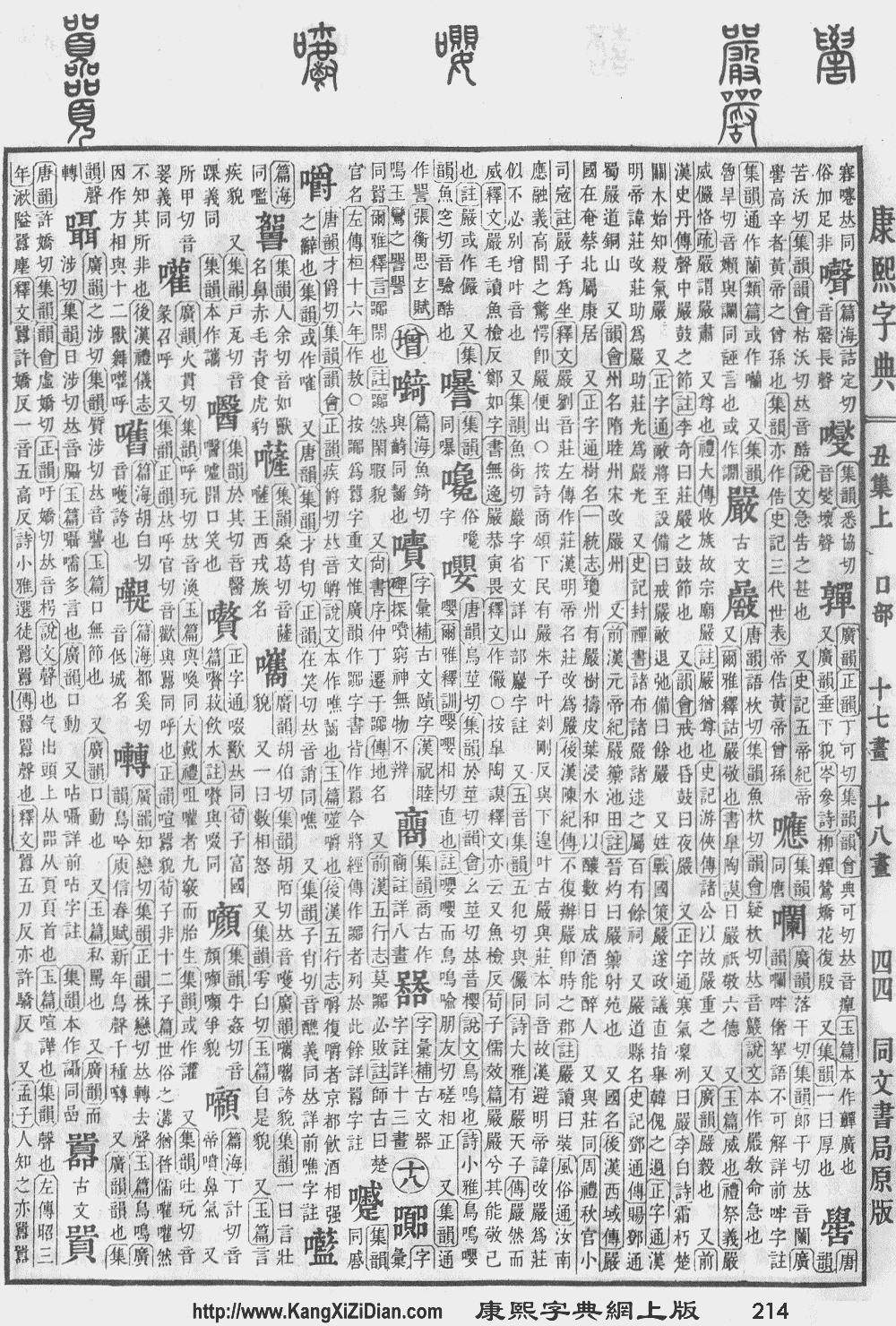
- Kangxi Dictionary: page 214, character 4
- Dai Kanwa Jiten: character 4586
- Dae Jaweon: page 436, character 31
- Hanyu Da Zidian (first edition): volume 1, page 704, character 4
- Unihan data for U+56B3
Chinese
| trad. | 嚳 | |
|---|---|---|
| simp. | 喾 | |
Glyph origin
| Historical forms of the character 嚳 |
|---|
| Shuowen Jiezi (compiled in Han) |
| Small seal script |
 |
Characters in the same phonetic series (告) (Zhengzhang, 2003)
Phono-semantic compound (形聲/形声, OC *kʰuːɡ) : phonetic 學 (OC *ɡruːɡ) + semantic 告 (“to tell”). 告 (OC *kuːɡs, *kuːɡ) may also be a phonetic component.
Pronunciation
References
- “嚳”, in 漢語多功能字庫 (Multi-function Chinese Character Database), 香港中文大學 (the Chinese University of Hong Kong), 2014–
Japanese
Korean
This article is issued from Wiktionary. The text is licensed under Creative Commons - Attribution - Sharealike. Additional terms may apply for the media files.