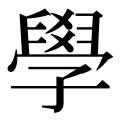
學
 | ||||||||
Translingual
| Japanese | 学 |
|---|---|
| Simplified | 学 |
| Traditional | 學 |
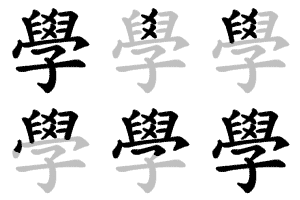
| Stroke order | |||
|---|---|---|---|
 | |||
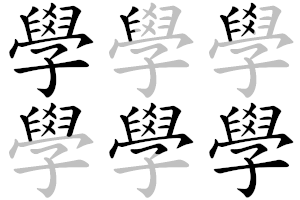
| Stroke order (alternative) | |||
|---|---|---|---|
 | |||
Han character
學 (Kangxi radical 39, 子+13, 16 strokes, cangjie input 竹月弓木 (HBND), four-corner 77407, composition ⿱𦥯子)
Related characters
- 学 (Japanese shinjitai and Simplified Chinese)
Further reading
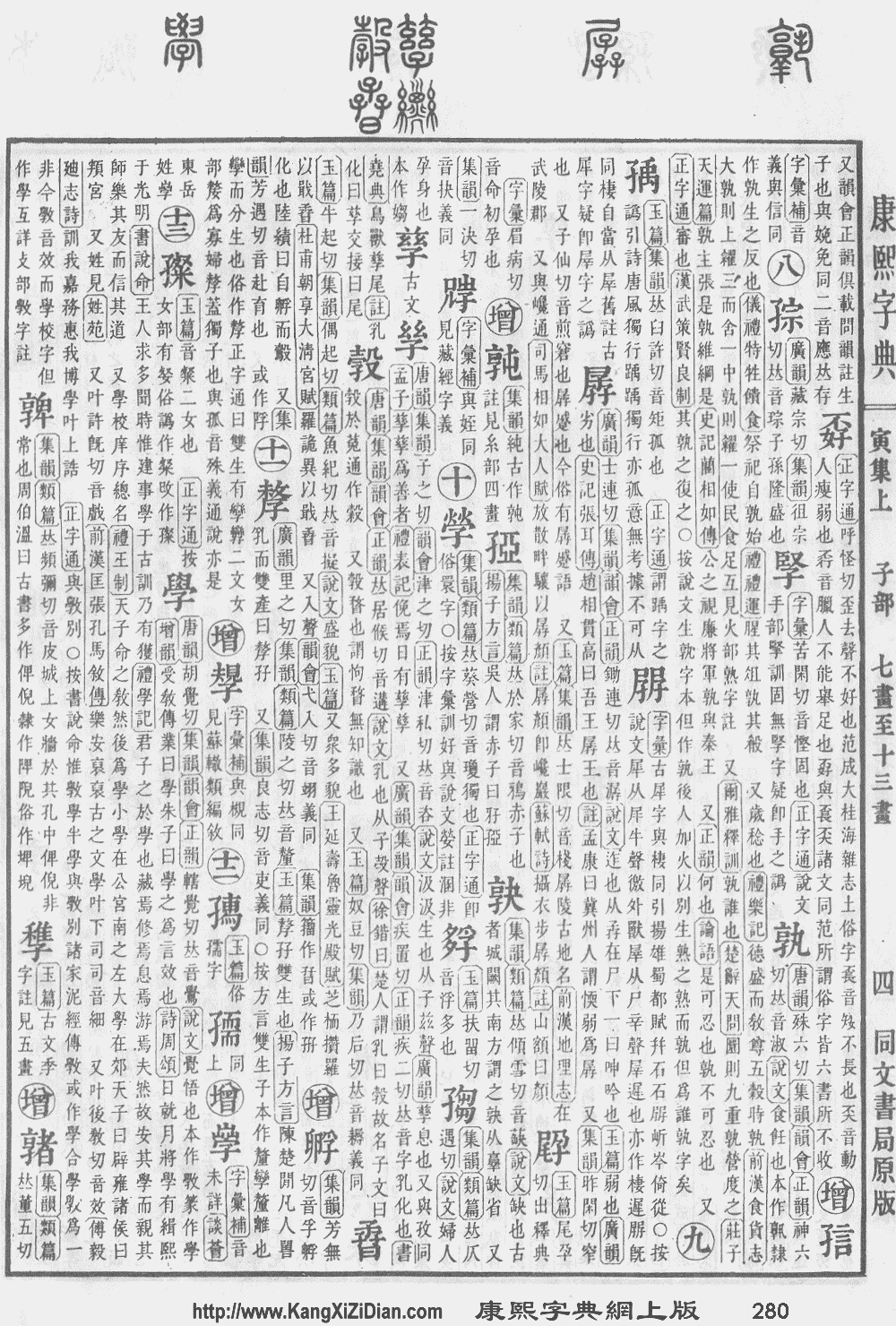
- Kangxi Dictionary: page 280, character 28
- Dai Kanwa Jiten: character 7033
- Dae Jaweon: page 549, character 27
- Hanyu Da Zidian (first edition): volume 2, page 1019, character 11
- Unihan data for U+5B78
Chinese
Glyph origin
| Historical forms of the character 學 | ||||||
|---|---|---|---|---|---|---|
| Shang | Western Zhou | Warring States | Shuowen Jiezi (compiled in Han) | Liushutong (compiled in Ming) | ||
| Oracle bone script | Bronze inscriptions | Bronze inscriptions | Chu slip and silk script | Qin slip script | Small seal script | Transcribed ancient scripts |
 |
 |
 |
 |
 |
 |
 |
Ideogrammic compound (會意/会意) : abbreviated 敎 (“to teach”) + 𦥑 (“mingling hands; hands-on learning”) + 宀 (“house; roofed building”) – a child learns in a roofed place. See 敎/教 for more.
In the modern form, 宀 has corrupted to 冖 (“cover”), and the hands 𦥑 around the 爻 have become connected with the roof 冖 on top of the child 子. Ancient forms include 斆 and 斅, which preserve more of 敎. Shuowen regards 𦥑 as the phonetic component in the character, which may be true according to some Old Chinese reconstructions such as that of Pan Wuyun's, though probably not others.
The earliest oracle bone script forms may be a phono-semantic compound (形聲/形声, OC *ɡruːɡ) : semantic 爻 + phonetic 六 (OC *ruɡ).
Etymology 1
| trad. | 學 | |
|---|---|---|
| simp. | 学* | |
| alternative forms | ||
May be an endopassive derivation of 覺 (OC *kruːɡs, *kruːɡ, “to awake, get insight”). Ultimately from Proto-Sino-Tibetan *kruk (“to rouse; to awaken; to disturb”).
Pronunciation
Definitions
學
- † to comprehend; to realise; to understand
- (transitive) to learn; to study
- to imitate; to copy; to mimic
- school
- learning; knowledge
- theory; doctrine
- subject; branch of learning; science; -ology
- (Cantonese) like; as
Synonyms
Compounds
- 下學/下学 (xiàxué)
- 三學/三学
- 上學/上学 (shàngxué)
- 三角學/三角学 (sānjiǎoxué)
- 中學/中学 (zhōngxué)
- 主日學/主日学 (zhǔrìxué)
- 人相學/人相学
- 人類學/人类学 (rénlèixué)
- 代數學/代数学 (dàishùxué)
- 休學/休学 (xiūxué)
- 仿生學/仿生学 (fǎngshēngxué)
- 佛學/佛学 (fóxué)
- 來學/来学
- 俗文學/俗文学
- 修學/修学 (xiūxué)
- 倫理學/伦理学 (lúnlǐxué)
- 修辭學/修辞学 (xiūcíxué)
- 停學/停学 (tíngxué)
- 做學問/做学问 (zuò xuéwèn)
- 假道學/假道学
- 傳播學/传播学 (chuánbōxué)
- 儒學/儒学 (rúxué)
- 優境學/优境学
- 優生學/优生学 (yōushēngxué)
- 光化學/光化学 (guānghuàxué)
- 光學/光学 (guāngxué)
- 兒童學/儿童学
- 入學/入学 (rùxué)
- 內學/内学
- 公學/公学
- 兵學/兵学
- 典學/典学
- 分類學/分类学 (fēnlèixué)
- 刑事學/刑事学
- 刑法學/刑法学
- 初學/初学 (chūxué)
- 初學記/初学记
- 力學/力学 (lìxué)
- 助學/助学 (zhùxué)
- 助學金/助学金 (zhùxuéjīn)
- 勤學/勤学
- 勸學/劝学 (quànxué)
- 勸學篇/劝学篇
- 化學/化学 (huàxué)
- 化學家/化学家 (huàxuéjiā)
- 化學式/化学式 (huàxuéshì)
- 化學戰/化学战 (huàxuézhàn)
- 化學能/化学能 (huàxuénéng)
- 化學鍵/化学键 (huàxuéjiàn)
- 化石學/化石学
- 北學/北学
- 升學 (shēngxué)
- 南北學/南北学
- 南學/南学
- 博學/博学 (bóxué)
- 博學篇/博学篇
- 博物學/博物学 (bówùxué)
- 印度學/印度学 (yìndùxué)
- 印章學/印章学
- 厚黑學/厚黑学 (hòuhēixué)
- 史學/史学 (shǐxué)
- 古學/古学
- 右學/右学
- 名學/名学 (míngxué)
- 向學/向学 (xiàngxué)
- 同學/同学 (tóngxué)
- 同學會/同学会 (tóngxuéhuì)
- 同學錄/同学录
- 和聲學/和声学
- 品學/品学
- 哲學/哲学 (zhéxué)
- 哲學家/哲学家 (zhéxuéjiā)
- 哲學系/哲学系
- 困學/困学
- 國學/国学 (guóxué)
- 園藝學/园艺学
- 土壤學/土壤学 (tǔrǎngxué)
- 在學/在学 (zàixué)
- 地理學/地理学 (dìlǐxué)
- 地質學/地质学 (dìzhìxué)
- 埃及學/埃及学 (āijíxué)
- 夜學/夜学 (yèxué)
- 大學/大学 (dàxué)
- 大學區/大学区
- 大學問/大学问
- 大學城/大学城 (dàxuéchéng)
- 大學士/大学士 (dàxuéshì)
- 大學服/大学服
- 大學法/大学法
- 大學生/大学生 (dàxuéshēng)
- 大學部/大学部
- 大學院/大学院 (dàxuéyuàn)
- 太學/太学 (tàixué)
- 太學生/太学生 (tàixuéshēng)
- 天文學/天文学 (tiānwénxué)
- 失學/失学 (shīxué)
- 女學/女学
- 女學士/女学士
- 好學/好学
- 婦學/妇学
- 字學/字学
- 字樣學/字样学
- 字相學/字相学
- 學乖/学乖
- 學人/学人 (xuérén)
- 學以致用/学以致用 (xuéyǐzhìyòng)
- 學伴/学伴
- 學位/学位 (xuéwèi)
- 學俸/学俸
- 學兄/学兄 (xuéxiōng)
- 學分/学分 (xuéfēn)
- 學分費/学分费
- 學制/学制 (xuézhì)
- 學前教育/学前教育 (xuéqián jiàoyù)
- 學前期/学前期 (xuéqiánqī)
- 學前班/学前班 (xuéqiánbān)
- 學力/学力 (xuélì)
- 學務/学务
- 學區/学区 (xuéqū)
- 學友/学友 (xuéyǒu)
- 學名/学名 (xuémíng)
- 學員/学员 (xuéyuán)
- 學問/学问 (xuéwèn)
- 學堂/学堂 (xuétáng)
- 學報/学报 (xuébào)
- 學塾/学塾
- 學壞/学坏 (xuéhuài)
- 學士/学士 (xuéshì)
- 學士服/学士服
- 學好/学好
- 學子/学子 (xuézǐ)
- 學官/学官
- 學宮/学宫
- 學富五車/学富五车
- 學年/学年 (xuénián)
- 學府/学府 (xuéfǔ)
- 學店/学店 (xuédiàn)
- 學廟/学庙 (xuémiào)
- 學徒/学徒 (xuétú)
- 學徒制/学徒制
- 學徒工/学徒工 (xuétúgōng)
- 學成/学成 (xuéchéng)
- 學政/学政
- 學時/学时 (xuéshí)
- 學曆/学历
- 學書紙/学书纸
- 學會/学会 (xuéhuì)
- 學期/学期 (xuéqī)
- 學案/学案
- 學校/学校 (xuéxiào)
- 學棍/学棍 (xuégùn)
- 學業/学业 (xuéyè)
- 學樣/学样 (xuéyàng)
- 學步/学步 (xuébù)
- 學步車/学步车 (xuébùchē)
- 學歷/学历 (xuélì)
- 學殖/学殖
- 學派/学派 (xuépài)
- 學海/学海 (xuéhǎi)
- 學海無涯/学海无涯 (xuéhǎiwúyá)
- 學海無涯,唯勤是岸/学海无涯,唯勤是岸 (xuéhǎiwúyá, wéiqínshì'àn)
- 學潮/学潮 (xuécháo)
- 學無常師/学无常师
- 學無止境/学无止境 (xuéwúzhǐjìng)
- 學理/学理 (xuélǐ)
- 學生/学生 (xuéshēng)
- 學生會/学生会 (xuéshenghuì)
- 學生腔/学生腔 (xuéshēngqiāng)
- 學生證/学生证 (xuéshēngzhèng)
- 學田/学田
- 學甲/学甲 (Xuéjiǎ)
- 學界/学界 (xuéjiè)
- 學監/学监
- 學科/学科 (xuékē)
- 學租/学租
- 學究/学究 (xuéjiū)
- 學窮/学穷
- 學童/学童 (xuétóng)
- 學籍/学籍 (xuéjí)
- 學籍卡/学籍卡
- 學籍簿/学籍簿
- 學系/学系 (xuéxì)
- 學級/学级 (xuéjí)
- 學統/学统
- 學習/学习 (xuéxí)
- 學老話/学老话
- 學者/学者 (xuézhě)
- 學而不厭/学而不厌 (xué'érbùyàn)
- 學臺/学台
- 學舌/学舌 (xuéshé)
- 學舍/学舍
- 學藝/学艺 (xuéyì)
- 學號/学号 (xuéhào)
- 學行/学行
- 學術/学术 (xuéshù)
- 學規/学规
- 學記/学记
- 學說/学说 (xuéshuō)
- 學課錢/学课钱
- 學識/学识 (xuéshí)
- 學費/学费 (xuéfèi)
- 學路/学路
- 學運/学运 (xuéyùn)
- 學道/学道
- 學部/学部 (xuébù)
- 學長/学长 (xuézhǎng)
- 學閥/学阀 (xuéfá)
- 學院/学院 (xuéyuàn)
- 學院派/学院派
- 學雜費/学杂费 (xuézáfèi)
- 學額/学额
- 學風/学风 (xuéfēng)
- 學養/学养 (xuéyǎng)
- 學館/学馆
- 學齡/学龄 (xuélíng)
- 宋學/宋学
- 宗學/宗学
- 官學/官学 (guānxué)
- 宗教學/宗教学 (zōngjiàoxué)
- 宦學/宦学
- 家傳學/家传学
- 宮學/宫学
- 家學/家学
- 宿學/宿学
- 實學/实学
- 小學/小学 (xiǎoxué)
- 小學生/小学生 (xiǎoxuéshēng)
- 就學/就学 (jiùxué)
- 岩石學/岩石学 (yánshíxué)
- 州學/州学
- 工學/工学 (gōngxué)
- 工學院/工学院 (gōngxuéyuàn)
- 工藝學/工艺学
- 左學/左学 (zuǒxué)
- 帖學/帖学 (Tièxué)
- 師範大學/师范大学 (shīfàn dàxué)
- 幼學/幼学
- 幾何學/几何学 (jǐhéxué)
- 府學/府学
- 廢學/废学
- 建築學/建筑学 (jiànzhùxué)
- 形上學/形上学 (xíngshàngxué)
- 形態學/形态学 (xíngtàixué)
- 後學/后学 (hòuxué)
- 後學兒/后学儿
- 復學/复学 (fùxué)
- 微分學/微分学
- 心學/心学 (xīnxué)
- 心理學/心理学 (xīnlǐxué)
- 志學/志学 (zhìxué)
- 性理學/性理学 (xìnglǐxué)
- 才學/才学 (cáixué)
- 手相學/手相学
- 拓撲學/拓扑学
- 捧心學/捧心学
- 提學/提学
- 提學道/提学道
- 放學/放学 (fàngxué)
- 放年學/放年学
- 政治學/政治学 (zhèngzhìxué)
- 教學/教学
- 教學法/教学法 (jiàoxuéfǎ)
- 教授學/教授学
- 教育學/教育学 (jiàoyùxué)
- 敦品勵學/敦品励学 (dūnpǐnlìxué)
- 數學/数学 (shùxué)
- 文字學/文字学 (wénzìxué)
- 文學/文学 (wénxué)
- 文學史/文学史 (wénxuéshǐ)
- 文學家/文学家 (wénxuéjiā)
- 新儒學/新儒学
- 新學/新学
- 新文學/新文学
- 新聞學/新闻学 (xīnwénxué)
- 方言學/方言学 (fāngyánxué)
- 易學/易学 (yìxué)
- 易漢學/易汉学
- 昆蟲學/昆虫学 (kūnchóngxué)
- 晚學/晚学
- 晚學生/晚学生
- 曲學/曲学
- 書學/书学
- 會計學/会计学 (kuàijìxué)
- 未來學/未来学 (wèiláixué)
- 末學/末学 (mòxué)
- 朱子學/朱子学 (Zhūzǐxué)
- 村學/村学
- 村學究/村学究
- 查學/查学
- 校勘學/校勘学 (jiàokānxué)
- 核化學/核化学 (héhuàxué)
- 梵學/梵学
- 森林學/森林学
- 植物學/植物学 (zhíwùxué)
- 樸學/朴学
- 武學/武学
- 歷史學/历史学 (lìshǐxué)
- 死亡學/死亡学 (sǐwángxué)
- 民俗學/民俗学 (mínsúxué)
- 氣候學/气候学 (qìhòuxué)
- 氣象學/气象学 (qìxiàngxué)
- 求學/求学 (qiúxué)
- 沒學問/没学问
- 治學/治学 (zhìxué)
- 法學/法学 (fǎxué)
- 法律學/法律学 (fǎlǜxué)
- 法理學/法理学 (fǎlǐxué)
- 法醫學/法医学 (fǎyīxué)
- 洛學/洛学
- 流行學/流行学
- 海洋學/海洋学 (hǎiyángxué)
- 淫學/淫学
- 淺學/浅学 (qiǎnxué)
- 游學/游学 (yóuxué)
- 湖學/湖学
- 測量學/测量学 (cèliángxué)
- 漢學/汉学 (hànxué)
- 為學/为学 (wéixué)
- 熱力學/热力学 (rèlìxué)
- 熱化學/热化学 (rèhuàxué)
- 熱學/热学 (rèxué)
- 熱工學/热工学
- 營養學/营养学 (yíngyǎngxué)
- 版本學/版本学 (bǎnběnxué)
- 物理學/物理学 (wùlǐxué)
- 獎學金/奖学金 (jiǎngxuéjīn)
- 獸醫學/兽医学 (shòuyīxué)
- 玄學/玄学 (xuánxué)
- 理則學/理则学
- 理學/理学 (lǐxué)
- 理學家/理学家
- 生物學/生物学 (shēngwùxué)
- 生理學/生理学 (shēnglǐxué)
- 甲骨學/甲骨学 (jiǎgǔxué)
- 留學/留学 (liúxué)
- 留學生/留学生 (liúxuéshēng)
- 畜牧學/畜牧学 (xùmùxué)
- 病理學/病理学 (bìnglǐxué)
- 發生學/发生学
- 發音學/发音学
- 目錄學/目录学 (mùlùxué)
- 省視學/省视学
- 督學/督学 (dūxué)
- 硬文學/硬文学
- 硬科學/硬科学 (yìngkēxué)
- 碑學/碑学
- 磁學/磁学 (cíxué)
- 礦物學/矿物学 (kuàngwùxué)
- 社學/社学
- 社會學/社会学 (shèhuìxué)
- 神學/神学 (shénxué)
- 視學/视学
- 禪學/禅学 (chánxué)
- 科學/科学 (kēxué)
- 科學家/科学家 (kēxuéjiā)
- 積分學/积分学
- 竺學/竺学
- 等韻學/等韵学
- 算學/算学 (suànxué)
- 篤學/笃学 (dǔxué)
- 簡牘學/简牍学
- 簿記學/簿记学
- 紅學/红学 (hóngxué)
- 純文學/纯文学 (chúnwénxué)
- 細胞學/细胞学 (xìbāoxué)
- 細菌學/细菌学 (xìjūnxué)
- 絕學/绝学 (juéxué)
- 統計學/统计学 (tǒngjìxué)
- 經學/经学 (jīngxué)
- 經濟學/经济学 (jīngjìxué)
- 縣學/县学
- 績學/绩学
- 繆學/缪学
- 繳學費/缴学费
- 美學/美学 (měixué)
- 義學/义学
- 老人學/老人学 (lǎorénxué)
- 考古學/考古学 (kǎogǔxué)
- 老同學/老同学
- 老學/老学
- 老學究/老学究 (lǎoxuéjiū)
- 考據學/考据学
- 耳學/耳学
- 聲學/声学 (shēngxué)
- 聲韻學/声韵学
- 胚胎學/胚胎学 (pēitāixué)
- 自學/自学 (zìxué)
- 興學/兴学 (xīngxué)
- 舊學/旧学
- 蒙學/蒙学 (méngxué)
- 藥學/药学 (yàoxué)
- 藥物學/药物学
- 行政學/行政学 (xíngzhèngxué)
- 行銷學/行销学
- 西學/西学 (xīxué)
- 規範學/规范学
- 解剖學/解剖学 (jiěpōuxué)
- 訓詁學/训诂学 (xùngǔxué)
- 詞典學/词典学 (cídiǎnxué)
- 詞學/词学
- 詞彙學/词汇学 (cíhuìxué)
- 詞義學/词义学
- 詩學/诗学 (shīxué)
- 語意學/语意学
- 語文學/语文学 (yǔwénxué)
- 語源學/语源学 (yǔyuánxué)
- 語言學/语言学 (yǔyánxué)
- 語音學/语音学 (yǔyīnxué)
- 論理學/论理学 (lùnlǐxué)
- 講學/讲学 (jiǎngxué)
- 謎學/谜学
- 譜學/谱学
- 譯學館/译学馆
- 警察學/警察学
- 賴學/赖学
- 軟文學/软文学
- 軟科學/软科学 (ruǎnkēxué)
- 輟學/辍学 (chuòxué)
- 轉學/转学 (zhuǎnxué)
- 辦學/办学 (bànxué)
- 辭典學/辞典学
- 農學/农学 (nóngxué)
- 退學/退学 (tuìxué)
- 逃學/逃学 (táoxué)
- 通學/通学
- 通學生/通学生
- 進學/进学 (jìnxué)
- 進學解/进学解
- 遊學/游学 (yóuxué)
- 道學/道学 (dàoxué)
- 道學味/道学味
- 遺傳學/遗传学 (yíchuánxué)
- 邏輯學/逻辑学 (luójíxué)
- 邯鄲學步/邯郸学步 (hándānxuébù)
- 鄉學/乡学
- 醫學/医学 (yīxué)
- 金屬學/金属学
- 金文學/金文学
- 金相學/金相学
- 金石學/金石学 (jīnshíxué)
- 開學/开学 (kāixué)
- 閩學/闽学
- 附學/附学
- 陰陽學/阴阳学
- 雜學/杂学 (záxué)
- 雙學位/双学位 (shuāngxuéwèi)
- 電學/电学 (diànxué)
- 靈物學/灵物学
- 音位學/音位学 (yīnwèixué)
- 音學/音学
- 音韻學/音韵学 (yīnyùnxué)
- 音響學/音响学
- 章學誠/章学诚
- 韻學/韵学
- 顯學/显学 (xiǎnxué)
- 飽學/饱学 (bǎoxué)
- 骨學/骨学 (gǔxué)
Descendants
Pronunciation
Definitions
學
- (obsolete) Alternative form of 斆/敩 (xiào, “to teach; to instruct; to train”)
- 魯人有因子墨子而學其子者,其子戰而死,其父讓子墨子。子墨子曰:「子欲學子之子,今學成矣,戰而死,而子慍。」 [Classical Chinese, trad.]
- From: Mozi, c. 4th century BCE, translated based on Y. P. Mei's version
- Lǔ rén yǒu yīn Zǐ Mòzǐ ér xiào qí zǐ zhě, qí zǐ zhàn ér sǐ, qí fù ràng Zǐ Mòzǐ. Zǐ Mòzǐ yuē: “Zǐ yù xiào zǐ zhī zǐ, jīn xuéchéng yǐ, zhàn ér sǐ, ér zǐ yùn.” [Pinyin]
- There was a man in Lu who sent his son to Mozi to study. The son perished in a battle. The father blamed Mozi for it. Mozi said: "You wanted to have your son trained. Now he had completed his training and died in battle. And you become sore."
鲁人有因子墨子而学其子者,其子战而死,其父让子墨子。子墨子曰:「子欲学子之子,今学成矣,战而死,而子愠。」 [Classical Chinese, simp.]- 凡學世子及學士,必時。 [Classical Chinese, trad.]
- From: The Book of Rites, c. 4th – 2nd century BCE, translated based on James Legge's version
- Fán xiào shìzǐ jí xiào shì, bì shí. [Pinyin]
- In teaching the heir-sons and young men, the subjects were different at different seasons.
凡学世子及学士,必时。 [Classical Chinese, simp.]- 《兌命》曰:「學學半。」 [Classical Chinese, trad.]
- From: The Book of Rites, c. 4th – 2nd century BCE, translated based on James Legge's version
- “Yuèmìng” yuē: “Xiào xué bàn.” [Pinyin]
- It is said in the Charge to Yue, "Teaching is the half of learning."
《兑命》曰:「学学半。」 [Classical Chinese, simp.]
Pronunciation
References
- Dictionary of Chinese Character Variants (教育部異體字字典), A01001
- “學”, in 漢語多功能字庫 (Multi-function Chinese Character Database), 香港中文大學 (the Chinese University of Hong Kong), 2014–
- “Entry #11643”, in 臺灣閩南語常用詞辭典 [Dictionary of Frequently-Used Taiwan Minnan] (overall work in Mandarin and Hokkien), Ministry of Education, R.O.C., 2023.
Korean
Etymology
From Middle Chinese 學 (MC haewk).
| Historical Readings | ||
|---|---|---|
| Dongguk Jeongun Reading | ||
| Dongguk Jeongun, 1448 | ᅘᅡᆨ〮 (Yale: hhák) | |
| Middle Korean | ||
| Text | Eumhun | |
| Gloss (hun) | Reading | |
| Hunmong Jahoe, 1527 | ᄇᆡ홀 (Yale: poyhwol) | ᄒᆞᆨ (Yale: hok) |
Pronunciation
- (SK Standard/Seoul) IPA(key): [ha̠k̚]
- Phonetic hangul: [학]
Compounds
- 학계 (學界, hakgye)
- 학과 (學科, hakgwa)
- 학과 (學課, hakgwa)
- 학교 (學校, hakgyo, “school”)
- 학구 (學區, hakgu)
- 학구 (學究, hakgu)
- 학급 (學級, hakgeup, “class”)
- 학기 (學期, hakgi, “semester, term”)
- 학년 (學年, hangnyeon, “school year”)
- 학당 (學堂, hakdang)
- 학덕 (學德, hakdeok)
- 학도 (學徒, hakdo)
- 학력 (學力, hangnyeok, “scholastic ability”)
- 학력 (學歷, hangnyeok, “academic background”)
- 학령 (學齡, hangnyeong)
- 학명 (學名, hangmyeong, “scientific name”)
- 학문 (學問, hangmun, “learning, knowledge”)
- 학번 (學番, hakbeon)
- 학벌 (學閥, hakbeol)
- 학비 (學費, hakbi)
- 학사 (學士, haksa)
- 학생 (學生, haksaeng, “student”)
- 학설 (學說, hakseol)
- 학술 (學術, haksul)
- 학습 (學習, hakseup)
- 학식 (學識, haksik)
- 학업 (學業, hageop)
- 학예 (學藝, hagye)
- 학우 (學友, hagu)
- 학원 (學園, hagwon)
- 학원 (學院, hagwon)
- 학위 (學位, hagwi)
- 학자 (學者, hakja)
- 학장 (學長, hakjang)
- 학적 (學籍, hakjeok)
- 학점 (學點, hakjeom)
- 학제 (學制, hakje)
- 학제 (學際, hakje)
- 학파 (學派, hakpa)
- 학행 (學行, hakhaeng)
- 학회 (學會, hakhoe)
- 가학 (家學, gahak)
- 강학 (講學, ganghak)
- 개학 (開學, gaehak)
- 견학 (見學, gyeonhak)
- 경학 (經學, gyeonghak)
- 고학 (苦學, gohak)
- 곡학 (曲學, gokhak)
- 곤학 (困學, gonhak)
- 공학 (共學, gonghak)
- 공학 (工學, gonghak, “engineering”)
- 과학 (科學, gwahak, “science”)
- 광학 (光學, gwanghak, “optics”)
- 구학 (舊學, guhak)
- 국학 (國學, gukhak)
- 근학 (勤學, geunhak)
- 농학 (農學, nonghak, “agronomy”)
- 대학 (大學, daehak, “college, university”)
- 도학 (道學, dohak)
- 독학 (獨學, dokhak)
- 독학 (篤學, dokhak)
- 동학 (同學, donghak)
- 면학 (勉學, myeonhak)
- 몽학 (蒙學, monghak)
- 무학 (無學, muhak)
- 문학 (文學, munhak, “literature”)
- 미학 (美學, mihak, “aesthetics”)
- 박학 (博學, bakhak)
- 박학 (薄學, bakhak)
- 방학 (放學, banghak, “school holiday”)
- 법학 (法學, beophak, “law (as a discipline)”)
- 보학 (譜學, bohak)
- 부학 (膚學, buhak)
- 사학 (史學, sahak)
- 사학 (斯學, sahak)
- 사학 (私學, sahak)
- 사학 (邪學, sahak)
- 산학 (算學, sanhak)
- 선학 (禪學, seonhak)
- 소학 (小學, sohak)
- 수학 (修學, suhak)
- 수학 (受學, suhak)
- 수학 (數學, suhak, “mathematics”)
- 신학 (神學, sinhak, “theology, divinity”)
- 실학 (實學, silhak)
- 야학 (夜學, yahak)
- 약학 (藥學, yakhak)
- 어학 (語學, eohak, “linguistics”)
- 역학/력학 (力學, yeokhak/ryeokhak)
- 예학/례학 (禮學, yehak/ryehak)
- 왕학 (王學, wanghak)
- 유학 (儒學, yuhak)
- 유학/류학 (留學, yuhak/ryuhak)
- 유학 (遊學, yuhak)
- 의학 (醫學, uihak)
- 이학 (理學, ihak)
- 입학 (入學, iphak)
- 잡학 (雜學, japhak)
- 장학 (獎學, janghak)
- 재학 (在學, jaehak)
- 정학 (停學, jeonghak)
- 중학 (中學, junghak)
- 지학 (志學, jihak)
- 진학 (進學, jinhak)
- 천학 (淺學, cheonhak)
- 철학 (哲學, cheolhak)
- 축학 (竺學, chukhak)
- 취학 (就學, chwihak)
- 통학 (通學, tonghak)
- 퇴학 (退學, toehak)
- 폐학 (廢學, pyehak)
- 한학 (漢學, hanhak)
- 향학 (鄕學, hyanghak)
- 현학 (玄學, hyeonhak)
- 현학 (衒學, hyeonhak)
- 호학 (好學, hohak)
- 화학 (化學, hwahak, “chemistry”)
- 후학 (後學, huhak)
- 휴학 (休學, hyuhak)
- 학구적 (學究的, hakgujeok)
- 학부모 (學父母, hakbumo)
- 학생증 (學生證, haksaengjeung)
- 학용품 (學用品, hagyongpum)
- 장학금 (奬學金, janghakgeum)
- 건축학 (建築學, geonchukhak)
- 경제학 (經濟學, gyeongjehak, “economics”)
- 고고학 (考古學, gogohak, “archaeology”)
- 고증학 (考證學, gojeunghak)
- 곤충학 (昆蟲學, gonchunghak)
- 골상학 (骨相學, golsanghak)
- 광화학 (光化學, gwanghwahak)
- 금석학 (金石學, geumseokhak)
- 기상학 (氣象學, gisanghak)
- 기하학 (幾何學, gihahak)
- 기후학 (氣候學, gihuhak)
- 노인학 (老人學, noinhak, “gerontology”)
- 논리학 (論理學, nollihak, “logic (as a discipline)”)
- 대수학 (代數學, daesuhak, “algebra”)
- 동물학 (動物學, dongmulhak, “zoolology”)
- 면역학 (免疫學, myeonyeokhak)
- 물리학 (物理學, mullihak, “physics”)
- 미래학 (未來學, miraehak, “futurology”)
- 민속학 (民俗學, minsokhak)
- 박물학 (博物學, bangmulhak)
- 발생학 (發生學, balsaenghak)
- 범죄학 (犯罪學, beomjoehak)
- 병리학 (病理學, byeongnihak)
- 분광학 (分光學, bun'gwanghak)
- 분류학 (分類學, bullyuhak)
- 사회학 (社會學, sahoehak, “sociology”)
- 생리학 (生理學, saengnihak)
- 생물학 (生物學, saengmulhak)
- 생태학 (生態學, saengtaehak)
- 생화학 (生化學, saenghwahak)
- 성리학 (性理學, seongnihak)
- 수문학 (水文學, sumunhak)
- 수사학 (洙泗學, susahak)
- 순문학 (純文學, sunmunhak)
- 식물학 (植物學, singmulhak)
- 심리학 (心理學, simnihak)
- 심미학 (審美學, simmihak)
- 약리학 (藥理學, yangnihak)
- 어원학 (語源學, eowonhak)
- 언어학 (言語學, eoneohak)
- 역사학/력사학 (歷史學, yeoksahak/ryeoksahak)
- 열역학 (熱力學, yeoryeokhak)
- 우생학 (優生學, usaenghak)
- 유전학 (遺傳學, yujeonhak)
- 윤리학 (倫理學, yullihak)
- 음성학 (音聲學, eumseonghak)
- 인류학 (人類學, illyuhak, “anthropology”)
- 정역학 (靜力學, jeong'yeokhak)
- 정주학 (程朱學, jeongjuhak)
- 정치학 (政治學, jeongchihak)
- 조직학 (組織學, jojikhak)
- 중국학 (中國學, junggukhak)
- 지리학 (地理學, jirihak)
- 지문학 (地文學, jimunhak)
- 지정학 (地政學, jijeonghak)
- 지진학 (地震學, jijinhak)
- 지질학 (地質學, jijilhak)
- 천문학 (天文學, cheonmunhak)
- 해부학 (解剖學, haebuhak)
- 화본학 (禾本學, hwabonhak)
- 화산학 (火山學, hwasanhak, “vulcanology”)
- 효소학 (酵素學, hyosohak)
- 고생물학 (古生物學, gosaengmulhak, “paleontology”)
- 기생충학 (寄生蟲學, gisaengchunghak, “parasitology”)
- 생물화학 (生物化學, saengmulhwahak, “biochemistry”)
- 양자역학 (量子力學, yangjayeokhak)
- 계량경제학 (計量經濟學, gyeryanggyeongjehak)
- 생물물리학 (生物物理學, saengmulmullihak)
Vietnamese
Compounds
- 學區 (học khu)
- 學期 (học kỳ)
- 學費 (học phí)
- 學生 (học sinh)
- 学士 (học sĩ)
- 學習 (học tập)
- 學術 (học thuật)
- 學說 (học thuyết)
- 學問 (học vấn)
- 學位 (học vị)
- 學員 (học viên)
- 學院 (học viện)
- 博學 (bác học)
- 高學 (cao học)
- 機學 (cơ học)
- 𠰺學 (dạy học)
- 藥學 (dược học)
- 大學 (đại học/Đại Học)
- 漢學 (Hán học)
- 好學 (hiếu học)
- 形學 (hình học)
- 化學 (hoá học)
- 學者 (học giả)
- 學校 (học hiệu)
- 科學 (khoa học)
- 美學 (mĩ học/mỹ học)
- 入學 (nhập học)
- 儒學 (Nho học)
- 光學 (quang học)
- 生學 (sinh học)
- 數學 (số học)
- 神學 (thần học)
- 小學 (tiểu học)
- 算學 (toán học)
- 哲學 (triết học)
- 中學 (trung học)
- 場學 (trường học)
- 文學 (văn học)
- 醫學 (y học)
- 音樂學 (âm nhạc học)
- 音位學 (âm vị học)
- 病理學 (bệnh lí học/bệnh lý học)
- 政治學 (chính trị học)
- 轉動學 (chuyển động học)
- 昆蟲學 (côn trùng học)
- 句法學 (cú pháp học)
- 民族學 (dân tộc học)
- 遺傳學 (di truyền học)
- 藥理學 (dược lí học/dược lý học)
- 大學士 (đại học sĩ)
- 代數學 (đại số học)
- 道德學 (đạo đức học)
- 地震學 (địa chấn học)
- 地質學 (địa chất học)
- 地名學 (địa danh học)
- 地理學 (địa lí học/địa lý học)
- 動力學 (động lực học)
- 動物學 (động vật học)
- 解剖學 (giải phẫu học)
- 海洋學 (hải dương học)
- 現象學 (hiện tượng học)
- 形態學 (hình thái học)
- 血清學 (huyết thanh học)
- 考古學 (khảo cổ học)
- 氣候學 (khí hậu học)
- 氣象學 (khí tượng học)
- 礦物學 (khoáng vật học)
- 經濟學 (kinh tế học)
- 理生學 (lí sinh học/lý sinh học)
- 倫理學 (luân lí học/luân lý học)
- 留學生 (lưu học sinh)
- 免疫學 (miễn dịch học)
- 言語學 (ngôn ngữ học)
- 語音學 (ngữ âm học)
- 語源學 (ngữ nguyên học)
- 人口學 (nhân khẩu học)
- 人類學 (nhân loại học)
- 人文學 (nhân văn học)
- 日本學 (Nhật Bản học)
- 年代學 (niên đại học)
- 分類學 (phân loại học)
- 分心學 (phân tâm học)
- 光譜學 (quang phổ học)
- 生病學 (sinh bệnh học)
- 生化學 (sinh hoá học)
- 生理學 (sinh lí học/sinh lý học)
- 生態學 (sinh thái học)
- 生物學 (sinh vật học)
- 心理學 (tâm lí học/tâm lý học)
- 罪犯學 (tội phạm học)
- 神經學 (thần kinh học)
- 天文學 (thiên văn học)
- 水文學 (thuỷ văn học)
- 植物學 (thực vật học)
- 中國學 (Trung Quốc học)
- 場大學 (trường đại học)
- 場小學 (trường tiểu học)
- 修辭學 (tu từ học)
- 辭源學/詞源學 (từ nguyên học)
- 死亡學 (tử vong học)
- 物理學 (vật lí học/vật lý học)
- 微菌學 (vi khuẩn học)
- 宇宙學 (vũ trụ học)
- 社會學 (xã hội học)
- 機學量子 (cơ học lượng tử)
- 古氣候學 (cổ khí hậu học)
- 古人類學 (cổ nhân loại học)
- 古生物學 (cổ sinh vật học)
- 古植物學 (cổ thực vật học)
- 寄生蟲學 (kí sinh trùng học)
- 水動力學 (thuỷ động lực học)
- 微生物學 (vi sinh vật học)
References
- Nguyễn (2014).
- Nguyễn et al. (2009).
- Trần (2004).
- Bonet (1899).
- Génibrel (1898).
- Taberd & Pigneau de Béhaine (1838).