造
| ||||||||
Translingual
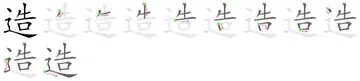
| Stroke order | |||
|---|---|---|---|
 | |||
Han character
造 (Kangxi radical 162, 辵+7, 11 strokes in traditional Chinese and Korean, 10 strokes in simplified Chinese and Japanese, cangjie input 卜竹土口 (YHGR), four-corner 34306, composition ⿺辶告)
References
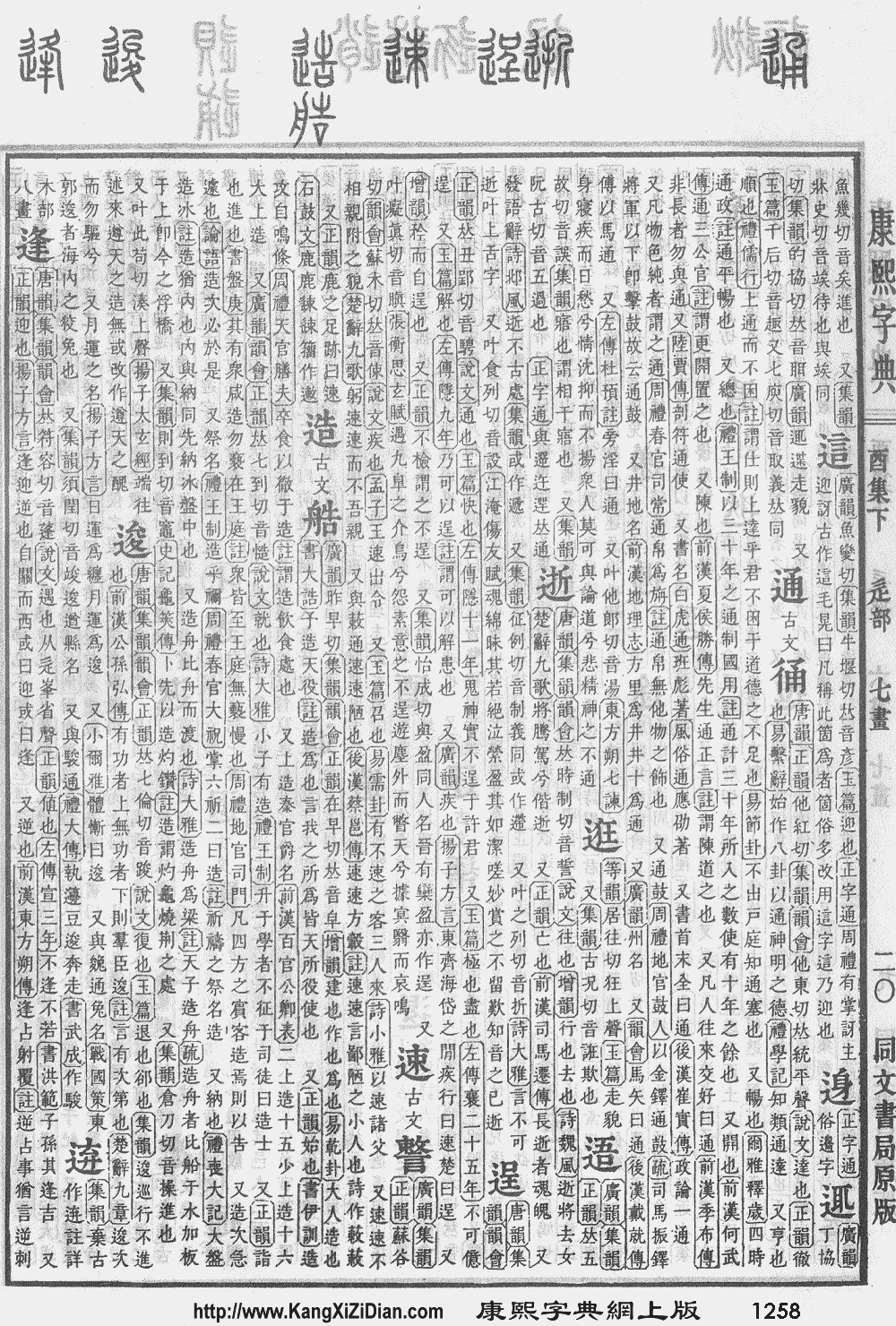
- Kangxi Dictionary: page 1258, character 12
- Dai Kanwa Jiten: character 38898
- Dae Jaweon: page 1746, character 6
- Hanyu Da Zidian (first edition): volume 6, page 3841, character 6
- Unihan data for U+9020
Chinese
| trad. | 造 | |
|---|---|---|
| simp. # | 造 | |
| alternative forms | 艁 | |
Glyph origin
Characters in the same phonetic series (告) (Zhengzhang, 2003)
Bronze script (per 漢語多功能字庫): Phono-semantic compound (形聲/形声, OC *skʰuːɡs, *sɡuːʔ) : semantic 辶 (“to walk”) + phonetic 屮 (sʰuːʔ) + semantic 口.
Shuowen: Phono-semantic compound (形聲/形声, OC *skʰuːɡs, *sɡuːʔ) : semantic 辶 (“to walk”) + phonetic 告 (OC *kuːɡs, *kuːɡ).
Pronunciation
Definitions
造
- to make; to build; to manufacture
- 造船 ― zàochuán ― to build a ship
- 仿造 ― fǎngzào ― to produce something after a model; to copy
- 創造/创造 ― chuàngzào ― to create
- 造房子 ― zào fángzǐ ― to build a house
- 造輿論/造舆论 ― zào yúlùn ― to manufacture public opinion
- 造軍艦/造军舰 ― zào jūnjiàn ― to manufacture a warship
- 萬物是藉著他造的;凡被造的,沒有一樣不是藉著他造的。 [MSC, trad.]
- From: 新標點和合本 (Chinese Union Version), 約翰福音 (John) 1:3
- Wànwù shì jièzhe tā zào de; fán bèi zào de, méiyǒu yī yàng bùshì jièzhe tā zào de. [Pinyin]
- All things were made by him; and without him was not any thing made that was made.
万物是借着他造的;凡被造的,没有一样不是借着他造的。 [MSC, simp.]
- to make up; to fabricate
- (colloquial) to spend money without constraint
- (literary, obsolete) to start
- (literary, obsolete) to establish
- (dialectal) harvest of crops
- 早造 ― zǎozào ― early crops
- (dialectal) Classifier for harvests.
- (law) party concerned in the suit
Synonyms
Dialectal synonyms of 蓋 (“to build; to construct (a building)”) [map]
Compounds
- 不造
- 主情造意
- 乾坤再造/干坤再造
- 乾造/干造
- 人造 (rénzào)
- 仿造 (fǎngzào)
- 修造 (xiūzào)
- 假造 (jiǎzào)
- 偽造/伪造 (wěizào)
- 偽造文書/伪造文书
- 儲油構造/储油构造
- 內造/内造
- 兩造/两造
- 再造 (zàizào)
- 再造之恩 (zàizàozhī'ēn)
- 創意造言/创意造言
- 創造/创造 (chuàngzào)
- 創造力/创造力 (chuàngzàolì)
- 向壁虛造/向壁虚造 (xiàngbìxūzào)
- 合造
- 坤造
- 埋鍋造飯/埋锅造饭 (mái guō zàofàn)
- 填海造地 (tiánhǎizàodì)
- 塑造 (sùzào)
- 壓枉造舌/压枉造舌
- 大造
- 天地造化
- 天造
- 天造地設/天造地设 (tiānzàodìshè)
- 好造化
- 媒體造勢/媒体造势
- 對造/对造 (duìzào)
- 屣履造門/屣履造门
- 嵌版構造/嵌版构造
- 嵌造 (qiànzào)
- 巧同造化
- 建造 (jiànzào)
- 恩同再造
- 憑空捏造/凭空捏造
- 打火造飯/打火造饭
- 打造 (dǎzào)
- 承造
- 抄造
- 指瑕造隙
- 捏造 (niēzào)
- 搬是造非
- 改造 (gǎizào)
- 新造邦
- 木造 (mùzào)
- 末造 (mòzào)
- 板塊構造/板块构造
- 構造/构造 (gòuzào)
- 構造地震/构造地震
- 模造紙/模造纸
- 沒造化/没造化
- 沒造化的/没造化的
- 深造 (shēnzào)
- 添造
- 混造黑白
- 濫造/滥造
- 為情造文/为情造文
- 營造/营造 (yíngzào)
- 營造尺/营造尺
- 營造法式/营造法式
- 生情造意
- 監造/监造
- 矯揉造作/矫揉造作 (jiǎoróuzàozuò)
- 秀才造反
- 積衰新造/积衰新造
- 空中造雨
- 空造
- 立馬造橋/立马造桥
- 筆參造化/笔参造化
- 筆補造化/笔补造化
- 粗製濫造/粗制滥造 (cūzhìlànzào)
- 締造/缔造 (dìzào)
- 編造/编造 (biānzào)
- 織造/织造
- 肇造
- 臆造 (yìzào)
- 良造
- 蒙恬造筆/蒙恬造笔
- 蓋造/盖造
- 製造/制造 (zhìzào)
- 製造品/制造品
- 製造商/制造商 (zhìzàoshāng)
- 製造業/制造业 (zhìzàoyè)
- 訂造/订造
- 變造/变造
- 變造文書/变造文书
- 貴造/贵造
- 賤造/贱造
- 趕造/赶造
- 造亂/造乱
- 造人 (zàorén)
- 造作
- 造假 (zàojiǎ)
- 造像
- 造像記/造像记
- 造價/造价 (zàojià)
- 造勢/造势 (zàoshì)
- 造化
- 造化小兒/造化小儿
- 造化弄人
- 造反 (zàofǎn)
- 造反派 (Zàofǎn pài)
- 造句 (zàojù)
- 造命
- 造園/造园
- 造型 (zàoxíng)
- 造士
- 造天立極/造天立极
- 造孽 (zàoniè)
- 造山運動/造山运动
- 造幣廠/造币厂
- 造府
- 造形 (zàoxíng)
- 造形藝術/造形艺术
- 造微入妙
- 造愛/造爱
- 造成 (zàochéng)
- 造林 (zàolín)
- 造格
- 造橋/造桥 (Zàoqiáo)
- 造次 (zàocì)
- 造次顛沛/造次颠沛
- 造父
- 造物 (zàowù)
- 造物主 (Zàowùzhǔ)
- 造物者 (zàowùzhě)
- 造畜稠棧/造畜稠栈
- 造福 (zàofú)
- 造端
- 造紙/造纸 (zàozhǐ)
- 造罪
- 造船 (zàochuán)
- 造船工業/造船工业
- 造船廠/造船厂 (zàochuánchǎng)
- 造言惑眾/造言惑众
- 造言生事
- 造詞/造词
- 造謠/造谣 (zàoyáo)
- 造謠惑眾/造谣惑众 (zàoyáo huòzhòng)
- 造謗生事/造谤生事
- 造謠生事/造谣生事 (zàoyáoshēngshì)
- 造陸/造陆 (zàolù)
- 造陸運動/造陆运动
- 造馬/造马 (zàomǎ)
- 鄉壁虛造/乡壁虚造 (xiàngbìxūzào)
- 釀造/酿造 (niàngzào)
- 鍛造/锻造 (duànzào)
- 鑄造/铸造 (zhùzào)
- 閉門造車/闭门造车
- 陳造/陈造
- 龍門造像/龙门造像
Pronunciation
Definitions
造
- (literary) to go to; to visit; to reach
- (literary) attainments; achievements
- (literary) to train
- (literary) to give a life
- 再造之恩 ― zàizàozhī'ēn ― great benevolence of saving one's life
- (literary) era
Compounds
Pronunciation
Pronunciation
Etymology 5
| For pronunciation and definitions of 造 – see 𢲵 (“(Sichuan) to stir; to flip over; to rummage”). (This character is a variant form of 𢲵). |
References
- “造”, in 漢語多功能字庫 (Multi-function Chinese Character Database), 香港中文大學 (the Chinese University of Hong Kong), 2014–
- Dictionary of Chinese Character Variants (教育部異體字字典), A04146
Japanese
| Shinjitai | 造 | |
| Kyūjitai [1][2][3] |
造󠄁 造+ 󠄁?(Adobe-Japan1) |
 |
| 造󠄃 造+ 󠄃?(Hanyo-Denshi) (Moji_Joho) | ||
| 造󠄄 造+ 󠄄?(Hanyo-Denshi) |
 | |
| The displayed kanji may be different from the image due to your environment. See here for details. | ||
Readings
From Middle Chinese 造 (MC dzawX); compare Mandarin 造 (zào):
- Go-on: ぞう (zō, Jōyō)←ざう (zau, historical)
- Kan-on: そう (sō)←さう (sau, historical)
From Middle Chinese 造 (MC tshawH); compare Mandarin 造 (zào, cào):
- Go-on: そう (sō)←さう (sau, historical)
- Kan’yō-on: ぞう (zō, Jōyō)←ざう (zau, historical)
From native Japanese roots:
Compounds
Compounds
- 造悪 (zōaku)
- 造意 (zōi)
- 造為 (zōi)
- 造営 (zōei)
- 造園 (zōen)
- 造化 (zōka)
- 造花 (zōka)
- 造艦 (zōkan)
- 造機 (zōki)
- 造鈞 (zōkin)
- 造宮 (zōgū)
- 造形 (zōkei), 造型 (zōkei)
- 造詣 (zōkei)
- 造血 (zōketsu)
- 造孼 (zōgetsu)
- 造言 (zōgen)
- 造語 (zōgo)
- 造構 (zōkō)
- 造石 (zōkoku)
- 造国 (zōkoku)
- 造作 (zōsa)
- 造材 (zōzai)
- 造作 (zōsaku)
- 造士 (zōshi)
- 造次 (zōji)
- 造寺 (zōji)
- 造酒 (zōshu)
- 造就 (zōshū)
- 造出 (zōshutsu)
- 造醸 (zōjō)
- 造進 (zōshin)
- 造成 (zōsei)
- 造請 (zōsei)
- 造設 (zōsetsu)
- 造説 (zōsetsu)
- 造船 (zōsen)
- 造像 (zōzō)
- 造猝 (zōsotsu)
- 造替 (zōtai)
- 造端 (zōtan)
- 造築 (zōchiku)
- 造注 (zōchū)
- 造第 (zōtei)
- 造反 (zōhan)
- 造畢 (zōhitsu)
- 造仏 (zōbutsu)
- 造物 (zōbutsu)
- 造兵 (zōhei)
- 造幣 (zōhei)
- 造訪 (zōhō)
- 造本 (zōhon)
- 造昧 (zōmai)
- 造命 (zōmei)
- 造面 (zōmen) (蔵面)
- 造謡 (zōyō)
- 造立 (zōryū)
- 造粒 (zōryū)
- 造林 (zōrin)
- 造暦 (zōreki)
- 営造 (eizō)
- 改造 (kaizō)
- 偽造 (gizō)
- 構造 (kōzō)
- 興造 (kōzō)
- 国造 (kuni no miyatsuko)
- 再造 (saizō)
- 修造 (shūzō)
- 新造 (shinzo)
- 新造 (shinzō)
- 深造 (shinzō)
- 製造 (seizō)
- 創造 (sōzō)
- 大造 (taizō)
- 築造 (chikuzō)
- 鋳造 (chūzō)
- 肇造 (chūzō)
- 捏造 (detsuzō)
- 捏造 (netsuzō)
- 末造 (batsuzō)
- 仿造 (hōzō)
- 末造 (matsuzō)
- 木造 (mokuzō)
- 模造 (mozō), 摸造 (mozō)
- 乱造 (ranzō)
- 両造 (ryōzō)
References
- “造”, in 漢字ぺディア (Kanjipedia) (in Japanese), 日本漢字能力検定協会, 2015–2024
- Haga, Gōtarō (1914) 漢和大辞書 [The Great Kanji-Japanese Dictionary] (in Japanese), Fourth edition, Tōkyō: Kōbunsha, , page 2107 (paper), page 1105 (digital)
- Shōundō Henshūjo, editor (1927), 新漢和辞典 [The New Kanji-Japanese Dictionary] (in Japanese), Ōsaka: Shōundō, , page 1214 (paper), page 620 (digital)
Korean
Etymology 1
From Middle Chinese 造 (MC dzawX).
| Historical readings |
|---|
|
Pronunciation
- (SK Standard/Seoul) IPA(key): [t͡ɕo̞(ː)]
- Phonetic hangul: [조(ː)]
- Though still prescribed in Standard Korean, most speakers in both Koreas no longer distinguish vowel length.
Compounds
Compounds
- 가조 (假造, gajo)
- 개조 (改造, gaejo)
- 건조 (建造, geonjo)
- 구조 (構造, gujo)
- 급조 (急造, geupjo)
- 날조 (捏造, naljo)
- 모조 (模造, mojo)
- 목조 (木造, mokjo)
- 변조 (變造, byeonjo)
- 석조 (石造, seokjo)
- 위조 (僞造, wijo)
- 인조 (人造, injo)
- 재조 (再造, jaejo)
- 제조 (製造, jejo)
- 조성 (造成, joseong)
- 조작 (造作, jojak)
- 조청 (造淸, jocheong)
- 축조 (築造, chukjo)
- 조선 (造船, joseon)
- 주조 (鑄造, jujo)
- 조화 (造化, johwa)
- 조물 (造物, jomul)
- 조어 (造語, jo'eo)
- 조차 (造次, jocha)
- 조폐 (造幣, jopye)
- 천조 (天造, cheonjo)
- 창조 (創造, changjo)
- 편조 (編造, pyeonjo)
Etymology 2
From Middle Chinese 造 (MC tshawH).
| Historical readings |
|---|
|
Pronunciation
- (SK Standard/Seoul) IPA(key): [t͡ɕo̞(ː)]
- Phonetic hangul: [조(ː)]
- Though still prescribed in Standard Korean, most speakers in both Koreas no longer distinguish vowel length.
Vietnamese
This article is issued from Wiktionary. The text is licensed under Creative Commons - Attribution - Sharealike. Additional terms may apply for the media files.